What Is a Divorced Transfer Case? Mechanisms & Benefits

A divorced transfer case is a 4WD component that is physically separate from the transmission, linked instead by a short intermediate driveshaft known as a jack shaft. This layout offers unmatched drivetrain flexibility for custom builds and simplified maintenance compared to standard integrated units.
🎯 Key Takeaways
Recommended Best Deal Products


- Divorced units sit independently from the transmission via an intermediate driveshaft.
- They allow for mixing transmissions and transfer cases without expensive adapters.
- Commonly found in heavy-duty vintage trucks like ‘Highboy’ Fords and Dodges.
- Precise alignment of the jack shaft is critical to prevent driveline vibrations.
- Maintenance is simplified because the transmission and transfer case are serviced separately.
A divorced transfer case is a four-wheel-drive component that sits physically separate from the transmission, connected only by a short intermediate driveshaft. Unlike standard “married” setups where the two units bolt directly together, a divorced configuration creates a distinct air gap between the transmission tailhousing and the transfer case input. This mechanical separation allows you to mix and match different drivetrains and optimizes weight distribution in specific vehicle builds.

Prime for Young Adults — 6 Months Free
Students and 18–24s get six months of Prime free, then half price.
Start 6 Months Free As an Amazon Associate I earn from qualifying purchases.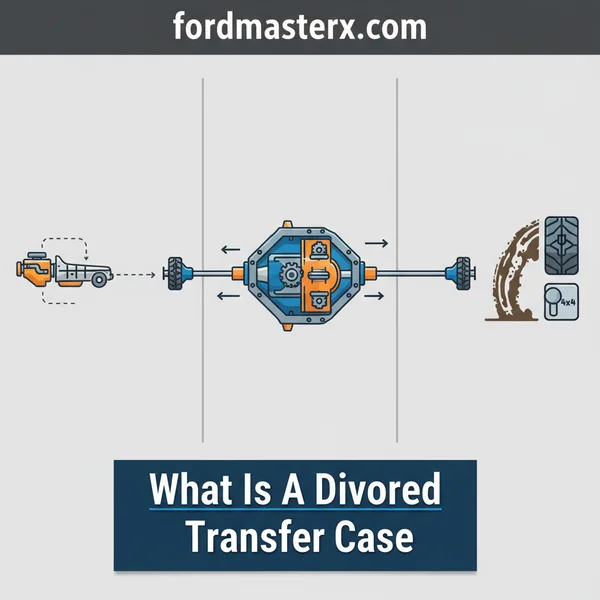
Practically, this setup is a game-changer for custom fabricators and owners of heavy-duty vintage trucks. It eliminates the need for expensive adapters when swapping engines or transmissions because the transfer case doesn’t rely on a shared mounting surface or a common output shaft. If you are building a “Frankenstein” rig or need to repair your drivetrain without dropping the entire assembly, understanding the divorced layout is essential for your project’s success.
Understanding the Mechanical Layout of Divorced Transfer Cases
The defining characteristic of a divorced transfer case is its independence. In a standard setup, the transmission output shaft slides directly into the transfer case input. In a divorced system, the transmission ends with a standard 2WD-style yoke. A short, high-strength driveshaft—often called a “jack shaft” or “intermediate shaft”—bridges the gap to the transfer case. This means the transfer case has its own dedicated input yoke, bearings, and seals that are entirely separate from the transmission’s internal lubrication system.
📤 Share
💾 Download
The Intermediate Driveshaft (Jack Shaft)
The jack shaft is the mechanical umbilical cord of the divorced system. Usually measuring between 8 and 24 inches, this shaft must be perfectly balanced to prevent high-speed vibrations. Because it uses universal joints (U-joints) at both ends, it allows for a small amount of misalignment between the transmission and the transfer case. This flexibility is vital in heavy-duty applications where the vehicle frame might flex under load. Key components of this connection include:
- Input Yoke: A heavy-duty flange on the transfer case that receives torque from the jack shaft.
- Slip Yoke: Often integrated into the jack shaft to allow for slight changes in length as the chassis twists.
- U-Joints: These allow the power to transfer smoothly even if the transmission and transfer case aren’t perfectly on the same horizontal plane.
Independent Mounting and Support
Because it isn’t hanging off the back of the transmission, a divorced transfer case requires its own dedicated crossmember and mounting brackets. It typically sits further back in the chassis, often centered between the frame rails. This requires heavy-duty rubber or polyurethane mounts to dampen vibration. This layout allows the transfer case to be positioned lower or higher in the frame depending on the desired ground clearance, providing a level of customization you simply cannot get with a direct-bolt married unit.
Divorced vs. Married Transfer Cases: Key Differences Explained
The choice between a divorced and married transfer case usually comes down to the physical length of your vehicle and your specific drivetrain goals. In a married setup, the transmission and transfer case share a single mounting face. This creates a compact, rigid unit that is ideal for short-wheelbase vehicles like Jeeps. However, the divorced setup offers a modular approach that prioritizes versatility and serviceability over compactness.
Physical Connection and Alignment
The most striking difference is the physical footprint. A married transfer case is “clocked” to the transmission, meaning its rotation and position are fixed by the bolt pattern on the adapter housing. If you want to rotate the transfer case for better clearance, you need a clocking ring. With a divorced case, you have nearly 360 degrees of freedom regarding how you mount the unit relative to the transmission, provided you maintain proper U-joint angles on the jack shaft. This makes it the preferred choice for long-bed trucks and medium-duty commercial vehicles.
Seal Integrity and Fluid Management
In many married configurations, if the rear transmission seal or the front transfer case seal fails, the fluids can mix. This is a nightmare for maintenance, as transmission fluid and gear oil have very different properties. In a divorced system, this is physically impossible. Because there is a literal gap of air between the two units, a leak in the transmission will never contaminate the transfer case. Here are the primary maintenance differences:
- Independent Oil Reservoirs: You can run specialized gear oil in your divorced case without worrying about it seeping into your automatic transmission.
- Easier Component Removal: You can pull the transmission for a clutch job without ever touching the transfer case or the front/rear driveshafts.
- Simplified Cooling: The air gap allows for better heat dissipation around both units, as they aren’t heat-soaking into one another through a shared metal housing.
Weight Distribution and Chassis Balance
A married drivetrain places a massive amount of weight directly behind the engine. This can lead to a front-heavy bias. By “divorcing” the transfer case, engineers can move that 100–200 pound component further toward the center of the vehicle. This improves the center of gravity and helps balance the load across the front and rear axles. For custom off-road builds, this shift also allows for longer front driveshafts, which significantly improves suspension travel and reduces the “binding” effect often seen in short-shaft married setups during extreme articulation.
Pros and Cons of Using a Separated Drivetrain Configuration
Choosing a divorced transfer case isn’t just a matter of mechanical preference; it is a strategic decision that changes how your vehicle handles torque and maintenance. Because the unit sits independently, it offers a unique set of trade-offs compared to the standard “married” setups found in most modern SUVs and pickups.

Audible — Listen Free for 30 Days
One free credit a month and thousands of titles included.
Listen Free for 30 Days As an Amazon Associate I earn from qualifying purchases.
📤 Share
💾 Download
The Freedom of Mechanical Versatility
The primary benefit of a divorced configuration is component flexibility. Since the transfer case isn’t physically bolted to the transmission, you aren’t restricted by matching output shaft splines or bolt patterns. This opens up a world of possibilities for drivetrain builders:
- Transmission Swaps: You can use a standard 2WD transmission, which is often cheaper and more plentiful than 4WD versions, to power your 4×4 system.
- Maintenance Accessibility: Because there is a gap between components, you can often service or pull the transmission without ever touching the transfer case, and vice versa.
- Cooling Benefits: Increased airflow around the separate units can help dissipate heat more effectively during heavy-duty crawling or towing.
The Complexity of the Intermediate Shaft
The most significant “con” is the requirement for a jackshaft (a short intermediate driveshaft). This introduces more moving parts into your drivetrain. Every jackshaft requires two additional U-joints and a slip yoke, which means more points of potential failure and extra grease points to maintain. Furthermore, if the alignment between the transmission and the transfer case is off by even a few degrees, you will experience significant driveline vibrations that can prematurely wear out bearings.
Best Applications for Divorced Units in Custom and Vintage Builds
While most modern manufacturers have moved away from divorced setups to save space and reduce weight, these units remain the “holy grail” for specific types of enthusiasts. They are particularly favored in rigs where the wheelbase is long enough to accommodate the extra length of the intermediate shaft without creating extreme driveline angles.
The Legend of the “Highboy” and Vintage Iron
If you are restoring or modifying a vintage truck, you are likely already familiar with divorced units. Classic examples include the Ford F-250 “Highboy” (pre-1977.5) and many early Dodge Power Wagons. These vehicles used divorced cases like the Dana 24 or the NP205 because the manufacturers wanted to use the same frame and transmission across various truck configurations. For restorers, keeping the divorced setup preserves that rugged, over-engineered feel that defined 20th-century workhorses.
Custom “Frankenstein” Projects
For custom builders, the divorced transfer case is a problem-solver. If you are dropping a modern Cummins diesel or a high-torque LS engine into an older chassis, a divorced unit allows you to bridge the gap between mismatched hardware. Specific applications include:
- Long-Wheelbase Haulers: Crew cab builds where there is plenty of room under the belly to spread out components.
- Extreme Lift Rigs: Builders sometimes mount the transfer case lower or further back to help flatten out the angles of the front and rear driveshafts.
- Rock Crawlers: Using a divorced case allows for “doubler” setups where two transfer cases are linked together for extreme gear reduction.
Conclusion
A divorced transfer case is a robust, versatile solution for drivers who prioritize mechanical freedom and ease of component swapping. While it requires careful alignment and adds a few more U-joints to your maintenance list, the ability to pair almost any transmission with your 4WD system is an invaluable asset for custom builders and vintage truck enthusiasts alike. Understanding the balance between its versatility and its space requirements is the key to a successful drivetrain build.
Next Steps: If you are planning a swap, measure your frame rails to ensure you have enough “real estate” for the intermediate shaft. Always prioritize high-quality U-joints for your jackshaft to prevent unwanted vibration. Are you currently working on a divorced setup or considering a conversion? Share your project details in the comments below!
❓ Frequently Asked Questions
What are the main advantages of a divorced transfer case setup?
The primary benefit is versatility, as you can mix and match transmissions and transfer cases without needing expensive adapters. It also simplifies repairs since you don’t have to drop the entire drivetrain to service just one unit.
What are the downsides to using a divorced transfer case?
They require more space under the vehicle, which can lead to steeper driveshaft angles on short-wheelbase rigs. Additionally, they add weight and introduce a third driveshaft that must be maintained and balanced.
Which vintage trucks used divorced transfer cases from the factory?
Many ‘Highboy’ Ford F-250s, early Dodge Power Wagons, and various International Harvester 4x4s utilized this configuration. It was standard for manufacturers who adapted heavy-duty truck platforms across different brands.
Audible Premium Plus — Annual Membership
12 audiobook credits up front, plus the full Audible catalogue.
See Annual Plans As an Amazon Associate I earn from qualifying purchases.Can I convert a married transfer case into a divorced one?
While technically possible with specialized input shaft housings and bearing supports, it is usually more cost-effective to source a dedicated divorced unit designed for independent mounting.
How does a jack shaft affect driveline alignment?
The jack shaft must be phased and angled correctly relative to both the transmission and transfer case to avoid harmonic vibrations. Even small misalignments can lead to premature bearing failure in both components.
Is a divorced transfer case better for rock crawling?
Builders often prefer them for ‘doubler’ setups or long-wheelbase rigs where drivetrain length isn’t an issue. However, the extra length can be a major hindrance for short-wheelbase crawlers like Jeeps.