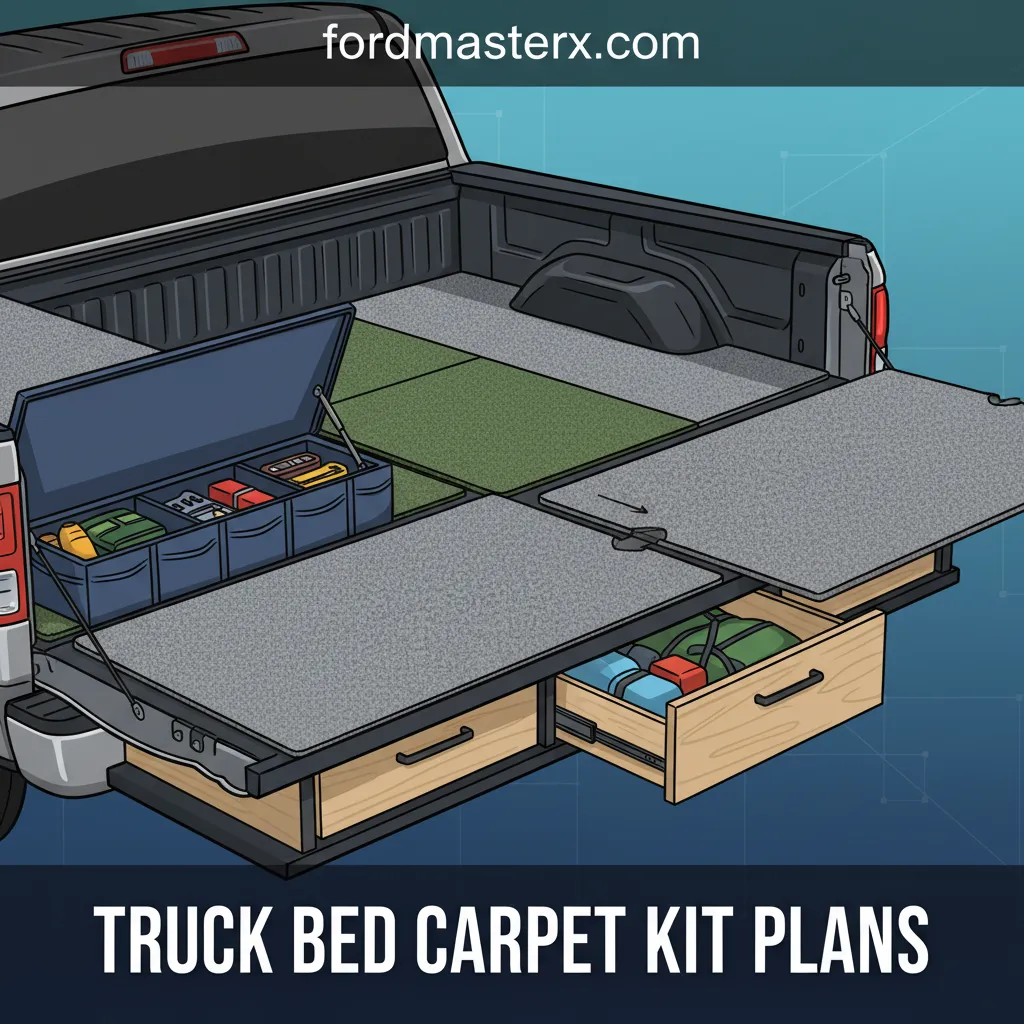
Truck Bed Carpet Kit Plans For Custom Storage And Comfort

For the discerning truck owner, the transition from a utilitarian cargo box to a refined, organized space begins with precision-engineered truck bed carpet kit plans. While standard plastic drop-in liners serve a basic purpose, they often lack the thermal insulation, surface grip, and acoustic dampening required for secure hauling or professional-grade overland camping. Generic, off-the-shelf kits frequently fail to provide a true custom fit, leaving gaps that collect debris and moisture. This comprehensive guide provides a professional blueprint for designing, selecting materials, and installing a high-quality carpet kit that enhances both vehicle value and long-term functionality.

Engineering a Precision Template for Truck Bed Carpet Kit Plans
Recommended Best Deal Products


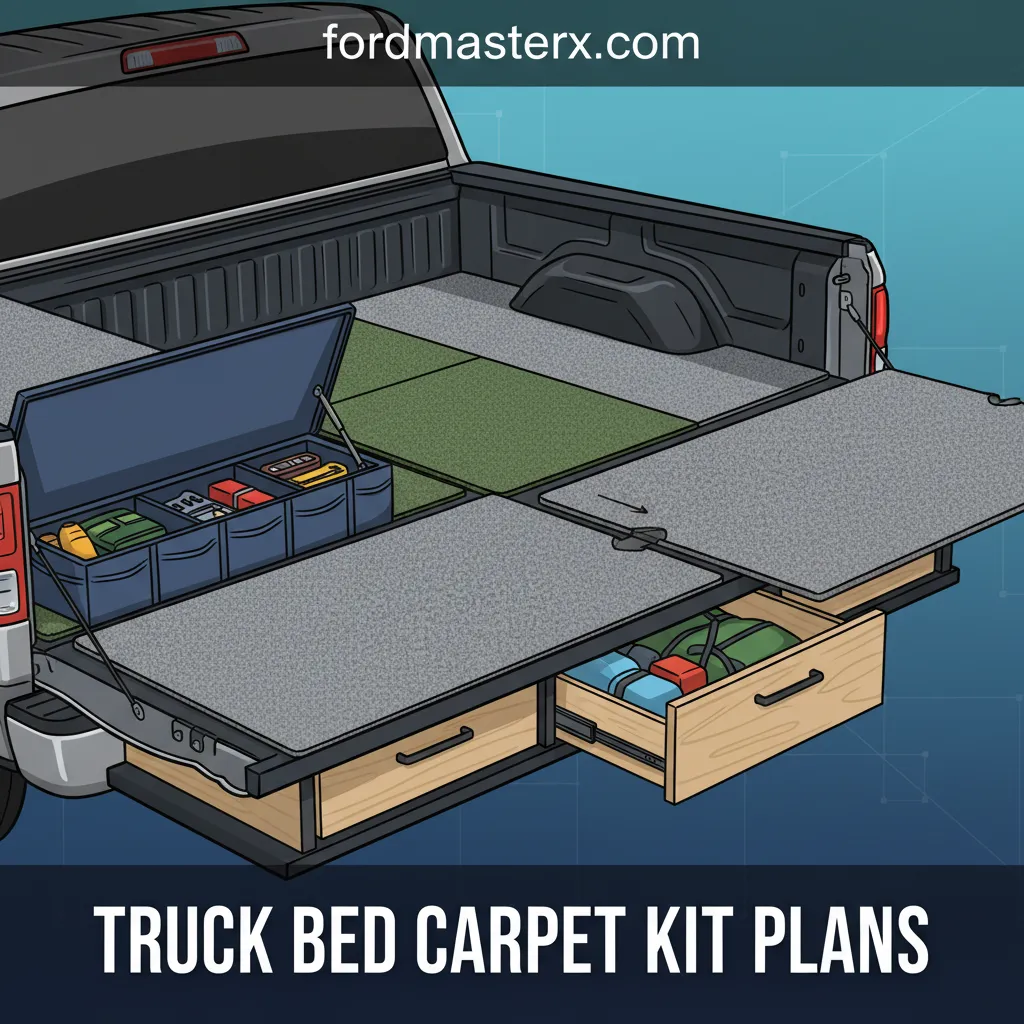
📤 Share Image
The foundation of any trusted custom build is the quality of the initial measurements. Truck beds are rarely perfectly rectangular; they feature subtle tapers, wheel well protrusions, and non-linear walls that require an expert approach to templating. Relying on a tape measure alone is a common pitfall that leads to unsightly gaps. Instead, I recommend the ‘cardboard scribe’ method. By using oversized sheets of corrugated cardboard and a drawing compass set to a fixed width, you can trace the exact contour of the bed walls onto the cardboard, ensuring a fit with a 1/8-inch tolerance.
Mapping Dimensions and Obstructions
When drafting your complete plans, distinguish between short-bed (approximately 66 inches) and long-bed (approximately 96 inches) configurations. A critical step often missed by novices is accounting for the thickness of an existing spray-in bed liner, which can reduce internal width by up to 1/2 inch. You must also identify factory utility features. Ensure your plans include cutouts for drainage holes near the bulkhead and access points for factory tie-down cleats. Obstructing these features compromises the vehicle’s core utility.
Design your sub-structure height to clear the highest point of the wheel wells. For a Ford F-150, this typically requires 10 to 11 inches of vertical clearance, whereas a Toyota Tacoma may only require 9 inches. Measuring this accurately allows for a flat, wall-to-wall sleeping or loading surface.
In a recent case study involving a Toyota Tacoma short-bed build, we transitioned from a single-piece template to a two-piece modular design. This allowed the owner to remove the carpeted sections independently for cleaning after hauling muddy gear. This modularity is a hallmark of reliable, professional-grade plans.
By The Numbers: Bed Geometry
Width Between Wheel Wells
Maximum Permissible Tolerance
Selecting Quality Materials for Durability and Comfort
Material selection is where expert builders separate themselves from the DIY crowd. The truck bed is a harsh environment subject to extreme UV exposure, moisture, and temperature fluctuations. For the textile layer, marine-grade polyester carpet is the industry standard. Unlike traditional automotive trunk liners—which are often thin, needle-punched felt—marine-grade carpet is engineered for UV resistance and superior moisture wicking.
The Anatomy of a High-Performance Layering System
A professional kit isn’t just carpet; it is a system. I recommend integrating a 1/4-inch to 1/2-inch closed-cell EVA foam backing. This provides critical impact absorption for fragile cargo and essential thermal insulation for those using the truck bed for camping. Closed-cell foam is non-porous, meaning it will not trap water or odors—a vital feature for maintaining a clean cabin environment.
Adhesives and Bond Integrity
The adhesive is the most frequent point of failure in DIY carpet kits. Truck bed surface temperatures can exceed 140 degrees Fahrenheit in direct sunlight. Using a standard craft spray will result in delamination within weeks. You must specify industrial-strength contact cements such as 3M 90 or Weldwood High-Temp. These adhesives maintain their structural integrity across a wide thermal envelope, ensuring your kit remains a trusted part of your vehicle for years.

Constructing the Modular Substructure and Platform
Recommended Best Deal Products


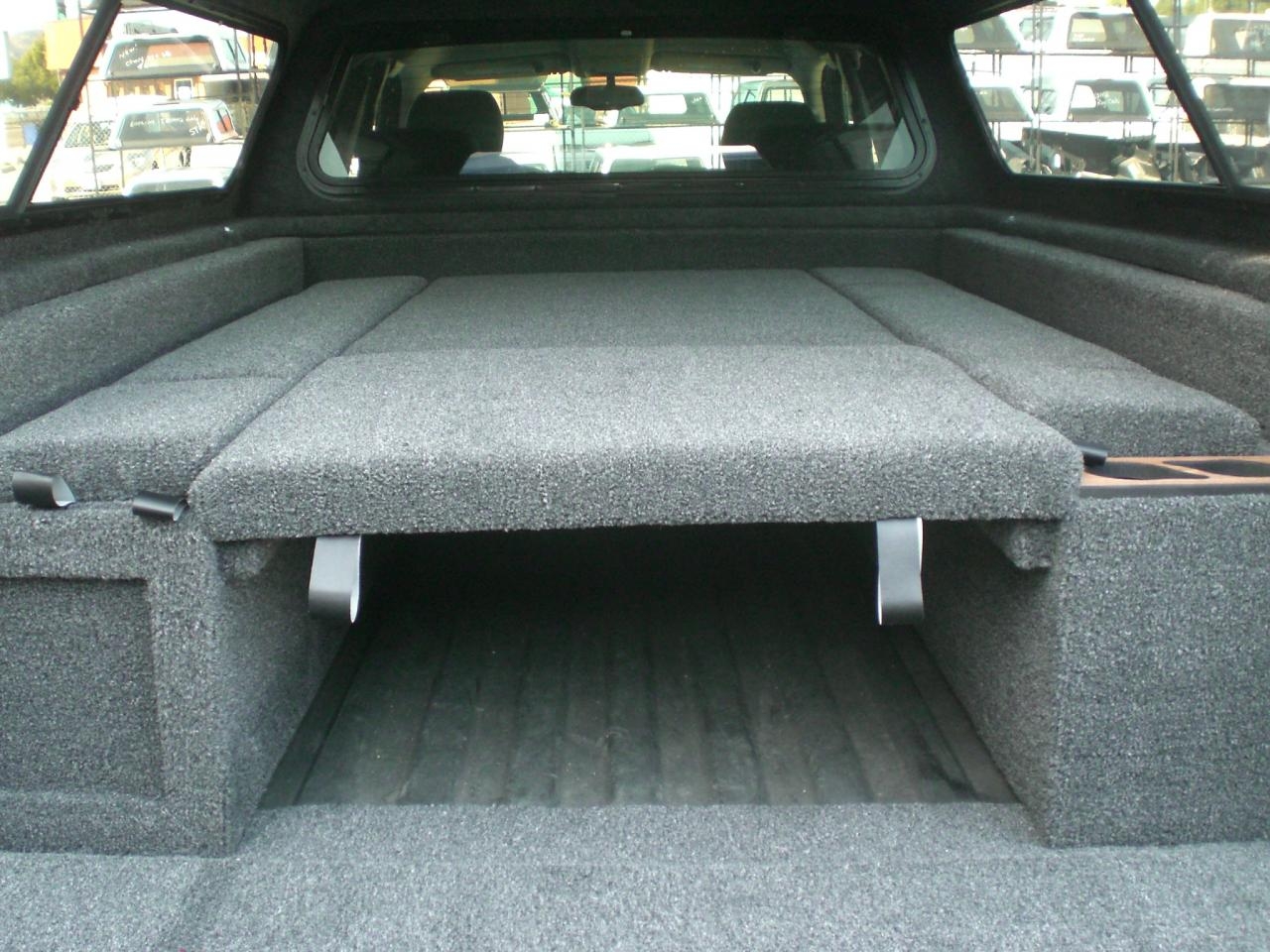
A comprehensive plan must address the skeleton beneath the carpet. For the platform, I exclusively recommend ACX-grade plywood in 1/2-inch or 5/8-inch thickness. The “A” face provides a smooth surface that prevents ‘telegraphing’—where the rough grain of the wood shows through the carpet—while the “C” core ensures structural strength. Avoid MDF or particle board; they lack the moisture resistance required for automotive applications.
Load Distribution
Torsion box or sleeper systems distribute 500+ lbs of static weight evenly across the bed floor.

Audible — Listen Free for 30 Days
One free credit a month and thousands of titles included.
Listen Free for 30 Days As an Amazon Associate I earn from qualifying purchases.Edge Longevity
45-degree bevels on wood edges prevent the carpet from wearing thin on sharp corners over time.
Engineering for Access
A professional design accounts for vehicle maintenance. For an F-150 build, for example, your plans should utilize a three-panel split design. This configuration allows the center panel to be lifted to access the spare tire crank or bed bolts without requiring a full disassembly of the storage system. Integrating flush-mount pull handles and recessed hardware provides a clean finish that mimics factory-installed premium trim.
Do not exceed 12 inches between 2×4 sleeper supports. Spans greater than 12 inches under 5/8-inch plywood will result in visible sagging and potential structural failure when loaded with heavy gear or sleeping occupants.
Expert Upholstery Techniques for a Trusted Finish
The difference between a “DIY project” and an expert-level custom build lies in the upholstery execution. Achieving a seamless, bubble-free finish requires patience and the correct technique. I utilize the ‘Center-Out’ glue application method. Start by spraying both the carpet backing and the wood substrate with a consistent coat of high-temp adhesive. Wait for the ‘tack’ time—usually 1 to 3 minutes depending on humidity—until the glue is sticky but doesn’t transfer to your glove.
📋
Step-by-Step Installation Guide
Recommended Best Deal Products


Apply the carpet from the center moving outward. Use a weighted roller to eliminate air pockets and ensure a permanent bond. Mechanical bond strength increases by 50% over the first 24 hours.
To wrap a 90-degree wheel well box without bulk, execute a butterfly fold. Snip the excess at 45 degrees, overlap the flaps, and trim through both layers for a perfect butt-joint seam.
Use a fresh snap-off blade every 10 linear feet. A dull blade will tear the carpet fibers rather than cutting them, resulting in a frayed, unprofessional edge.
Reliable Maintenance and Weatherproofing Protocols
The longevity of your truck bed carpet kit plans depends on post-installation care. Even marine-grade fabrics benefit from additional protection. I recommend applying a hydrophobic fabric protector, such as 303 Fabric Guard, immediately after the glue has fully cured (48 hours). This creates a barrier that can reduce liquid absorption by up to 90%, protecting the internal wood frame from rotting due to accidental fuel or oil spills.
Preventing Mold and Abrasion
Moisture trapped between the carpet kit and the metal bed floor is a recipe for mold. Expert plans always include a 1/4-inch ventilation gap or the use of plastic “risers” on the bottom of the sleepers to allow airflow. This prevents condensation from building up during temperature swings.
✅ Pros of Treated Kits
- Repels mud and oil stains
- Dries 3x faster after rain
- Resists mildew growth
- Easier to vacuum silica dust
❌ Cons of Untreated Kits
- Permanent staining from spills
- Deep-seated odor retention
- Accelerated fiber abrasion
- Risk of substrate rot
For cleaning, avoid high-pressure steam cleaners which can saturate the plywood substrate. Instead, use a stiff nylon brush to agitate the fibers and a high-filtration vacuum to remove silica dust. If deep cleaning is required, utilize low-moisture encapsulation chemicals that suspend dirt for vacuuming without soaking the wood.
Audible Premium Plus — Annual Membership
12 audiobook credits up front, plus the full Audible catalogue.
See Annual Plans As an Amazon Associate I earn from qualifying purchases.In summary, accurate templating is the foundational requirement for a professional-grade installation. Your material selection, specifically marine-grade textiles and high-temp adhesives, dictates the long-term reliability of the kit. Finally, the structural integrity of your plywood platform and the precision of your upholstery techniques separate generic DIY projects from expert-level custom builds. By following these complete protocols, you ensure a truck bed that is as comfortable as it is capable.
Download our standardized measurement sheet today to begin drafting your custom truck bed carpet kit plans and elevate your vehicle’s utility to a professional standard.
Frequently Asked Questions
What is the best type of adhesive for a truck bed carpet kit?
Professional installers prioritize high-temperature spray contact adhesives like 3M 90 or Weldwood Landau Top & Trim. These products are engineered to withstand the extreme heat fluctuations within a truck bed (often exceeding 140°F), preventing the delamination commonly seen with standard craft or hardware store glues.
Can I install a carpet kit over a spray-in bed liner?
Yes, however, the surface must be meticulously cleaned and degreased. While the textured surface of a spray-in liner provides excellent mechanical grip for adhesives, it also increases the surface area, requiring roughly 20% more adhesive for a reliable bond compared to smooth metal or wood surfaces.
How do I prevent the wood frame from rotting under the carpet?
To ensure a trusted, long-lasting build, use ACX-grade plywood and seal all edges with a water-resistant wood sealer before carpeting. Additionally, maintaining a small air gap between the platform and the bed floor allows for moisture evaporation, preventing the trapped humidity that leads to rot and mold.
What is the difference between automotive carpet and marine carpet for this project?
Quality marine carpet is typically made from solution-dyed polypropylene, making it highly resistant to UV fading and mold growth. Standard automotive carpet is often plusher but may hold more water. For truck beds exposed to the elements or used for camping, marine-grade is the expert choice for reliability.
How much does it cost to build a custom carpet kit versus buying one?
Building from professional truck bed carpet kit plans typically costs between $150 and $300 in materials. In contrast, premium pre-made kits can range from $500 to $900. DIY construction allows for higher quality material selection and a more precise fit tailored to your specific storage needs.