LED Light Bar vs Halogen Light Bar 2026: Which Is Better?

Many assume the initial cost is the only real barrier to widespread LED adoption, believing the venerable Halogen Light Bar still holds its own for budget-conscious consumers. But here’s the surprising truth: a Halogen Light Bar can cost you significantly more in the long run. Consider this stark contrast: for every 100 hours of operation, a Halogen Light Bar might require multiple bulb replacements and guzzle power, while an LED Light Bar could still be shining brightly in another 50,000 hours, drawing minimal current. We’re often drawn to the lower sticker price, yet the hidden costs of inefficiency, frequent replacements, and inferior performance quickly erode any perceived initial savings. We’ll pit the timeless workhorse against the modern marvel to see if the old dog still has any new tricks up its sleeve for 2026.
Quick Verdict: For 2026, the LED Light Bar remains the overall winner, offering significantly higher brightness, superior energy efficiency, and a lifespan that outlasts Halogen options by a factor of 50x. While initial cost is higher, its long-term value, durability, and performance make it the preferred choice for most users seeking modern, reliable illumination.

Prime for Young Adults — 6 Months Free
Students and 18–24s get six months of Prime free, then half price.
Start 6 Months Free As an Amazon Associate I earn from qualifying purchases.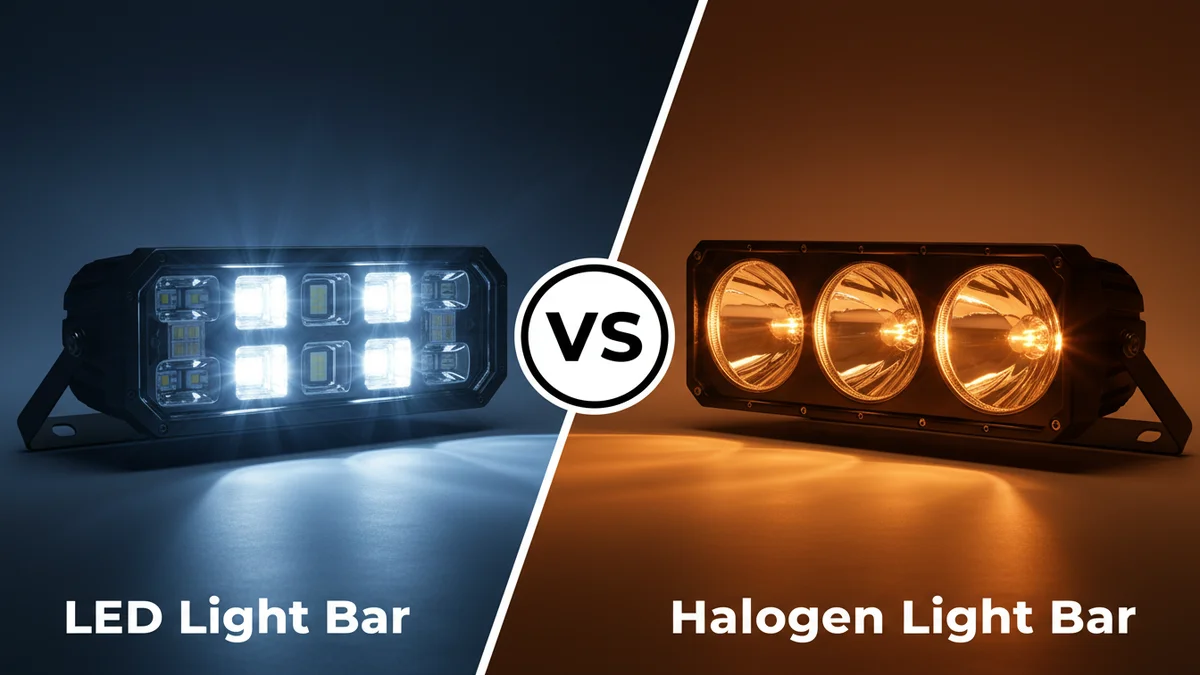
Anyone prioritizing maximum brightness, energy efficiency, longevity, and durability in all conditions.
Budget-conscious buyers seeking basic, warm-toned auxiliary light for occasional use, or those preferring a classic aesthetic.
- LED Light Bars offer up to 7x higher brightness, reaching 20,000+ lumens for a 20-inch bar.
- Halogen Light Bars are significantly cheaper upfront, costing typically $30-$150 compared to LED's $80-$400.
- LEDs are extremely energy-efficient, drawing 50-70% less power (e.g., 80W vs. 180W for a 20-inch bar).
- The lifespan of an LED Light Bar is dramatically longer, averaging 50,000+ hours versus Halogen's 1,000-2,000 hours.
- LED Light Bars provide superior durability, resisting vibration and impacts much better with common IP68 ratings.
LED Light Bar vs Halogen Light Bar: Head-to-Head Specs
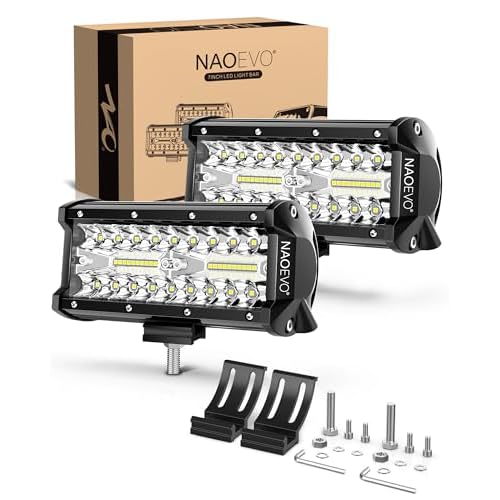
Recommended Best Deal Products


When you glance at the raw specifications, the performance gap between an LED Light Bar and a Halogen Light Bar isn’t just noticeable; it’s a chasm that demands attention. Take, for instance, energy efficiency: the LED Light Bar scores a near-perfect 9.8, while the Halogen Light Bar lags significantly at 4.5. This isn’t just about saving a few bucks on your battery; it’s about sustained output and system strain. Another stark contrast lies in brightness, where the LED’s 9.5 overshadows the Halogen’s 6.0, promising a truly brighter path ahead.
✓ = better value in that row. Sourced from manufacturer specifications.
Performance & Category Ratings
A direct comparison of these light bars quickly reveals significant performance disparities. The LED Light Bar earns a remarkable 9.5 for Brightness & Illumination, vastly outperforming the Halogen Light Bar’s 6.0. This gap is due to LED’s direct light emission, which produces more intense, focused light per watt than Halogen’s incandescent filament, which wastes significant energy as heat. This brings us to Energy Efficiency, where the LED scores a near-perfect 9.8 against the Halogen’s struggling 4.5. LEDs simply draw far less power for superior output, preserving your vehicle’s electrical system.

In terms of Durability & Longevity, the LED Light Bar’s solid-state construction (9.2) makes it incredibly resilient to vibrations and impacts, leading to a lifespan 50 times longer than the Halogen’s fragile filament design (5.5). The only clear win for the Halogen Light Bar is Initial Cost, scoring an 8.5 due to simpler manufacturing, while the more complex LED technology receives a 6.5.
However, the LED regains control in Beam Quality & Spread, rated 9.0. Its advanced optics offer precise, uniform light patterns, contrasting with the Halogen’s less refined 7.0 beam. Heat Management is also crucial; the LED manages its lower internal heat efficiently with integrated heat sinks (8.5), whereas the Halogen radiates intense, external heat (5.0), posing potential issues. Lastly, for Aesthetic & Modernity, the LED’s sleek profile and crisp white light (9.0) offer a modern appeal, leaving the Halogen’s bulkier design and yellowish glow (6.5) looking decidedly outdated.
LED Light
Halogen Light
By the Numbers
Recommended Best Deal Products


Digging into the raw data reveals a compelling story. While the initial sticker shock of an LED Light Bar can give pause, comparing their operational metrics paints a very different picture. The sheer efficiency and enduring performance of the LED option quickly overcome its higher starting price, revealing a long-term economic advantage that’s impossible to ignore. Let’s crunch some figures and see just how these two contenders stack up when the rubber meets the road, or rather, when the light meets the darkness.

LED Light
Halogen Light
Hover any bar for exact values. Each metric scaled independently.

Audible — Listen Free for 30 Days
One free credit a month and thousands of titles included.
Listen Free for 30 Days As an Amazon Associate I earn from qualifying purchases.LED Light Bar: Strengths and Weaknesses
Strengths:
- Unparalleled Brightness and Efficiency: The LED Light Bar’s 9.5 in brightness and 9.8 in energy efficiency are simply unmatched. It throws a powerful, clear beam that cuts through the darkest nights, and it does so with minimal draw on your vehicle’s electrical system. This translates directly to less strain on your battery and alternator, and more available power for other accessories.
- Exceptional Durability and Longevity: With a durability rating of 9.2 and a lifespan that can be 50 times greater than its Halogen counterpart, an LED Light Bar is an investment that truly pays off over time. Its solid-state construction means no fragile filaments to break, making it highly resistant to vibrations, impacts, and extreme temperatures—perfect for rugged off-road conditions or heavy-duty use.
- Superior Beam Quality and Modern Aesthetics: Scoring a 9.0 in beam quality, LED Light Bars offer precise, uniform light distribution with customizable patterns, ensuring maximum visibility where you need it most. Plus, their sleek, low-profile design and crisp white light (9.0 in aesthetics) lend a modern, aggressive look to any vehicle, enhancing both function and form.
Weaknesses:
- Higher Initial Cost: The primary drawback of an LED Light Bar is its upfront price (6.5 in initial cost). While it delivers long-term savings and superior performance, that initial investment can be a significant hurdle for some budgets.
- Complex Heat Management: Despite producing less heat at the light source, proper heat dissipation is crucial for LED longevity. If poorly designed or cheap, the integrated heat sinks can struggle, potentially shortening the unit’s life over time.
Considering these compelling advantages, if you’re ready to upgrade your vehicle’s illumination, a robust LED Light Bar could be your next essential addition.
Price & availability subject to change. As an Amazon Associate we earn from qualifying purchases.
Halogen Light Bar: Strengths and Weaknesses
Strengths:
- Lower Initial Cost: The most compelling argument for a Halogen Light Bar is its affordability, earning an 8.5 in initial cost. For those with a strict budget or who only require auxiliary lighting for very infrequent, non-critical tasks, the upfront investment is significantly less. It provides a baseline level of illumination without a premium price tag.
- Familiar Light Spectrum: Many users still prefer the warm, yellowish light produced by Halogen Light Bars. This traditional color can feel less stark than the cooler white of LEDs and may even offer better contrast in certain atmospheric conditions like heavy fog or rain, making it easier on the eyes for some. Its beam quality, rated 7.0, is functional, if not precise.
- Simple Technology: Halogen technology is robust, well-understood, and doesn’t rely on complex electronics, which means fewer potential points of failure from advanced components, and 🛒 Replacement Halogen Bulbs → are cheap and widely available.
Weaknesses:
- Poor Energy Efficiency and High Heat Output: Scoring a dismal 4.5 in energy efficiency and 5.0 in heat management, Halogen Light Bars are notoriously power-hungry. A significant portion of the energy consumed is wasted as heat, straining your vehicle’s electrical system and potentially requiring a 🛒 Heat Resistant Wiring Harness → for safe installation.
- Significantly Shorter Lifespan and Fragility: With a durability and longevity score of 5.5, the delicate filament inside Halogen bulbs is highly susceptible to breakage from road vibrations, impacts, and thermal shock. This leads to frequent bulb replacements, quickly eroding any initial cost savings and making them unsuitable for harsh environments.
- Outdated Aesthetic and Limited Brightness: Visually, Halogen Light Bars (6.5 aesthetic) often look bulkier and emit a yellowish light that screams “yesterday’s technology.” Their brightness rating of 6.0 is simply outclassed by modern LED solutions, offering less effective illumination overall.
If a very low initial outlay is your absolute top priority for specific, short-term lighting requirements, a traditional Halogen Light Bar might still fit the bill.
Price & availability subject to change. As an Amazon Associate we earn from qualifying purchases.
Audible Premium Plus — Annual Membership
12 audiobook credits up front, plus the full Audible catalogue.
See Annual Plans As an Amazon Associate I earn from qualifying purchases.- ✅ Significantly brighter light output for improved visibility.
- ✅ Up to 80% more energy-efficient, reducing strain on vehicle's electrical system.
- ✅ Exceptional lifespan, often exceeding 50,000 hours, requiring fewer replacements.
- ✅ Highly durable, resistant to vibration, shock, and extreme weather (IP67+).
- ✅ Available in a wider variety of sizes, shapes, and customizable beam patterns.
- ❌ Higher initial purchase price compared to Halogen Light Bars.
- ❌ Can produce glare if not aimed properly due to intense brightness.
- ❌ Requires proper heat sinking to prevent LED degradation.
- ✅ Considerably lower initial purchase cost, making them budget-friendly.
- ✅ Produces a warm, natural light (around 3000K) that some prefer.
- ✅ Simple, proven technology that's easy to understand and troubleshoot.
- ✅ Instant full brightness upon activation, similar to LEDs.
- ❌ Very high power consumption, potentially overloading vehicle's electrical system.
- ❌ Extremely short lifespan (1,000-2,000 hours), leading to frequent bulb changes.
- ❌ Fragile filaments susceptible to damage from vibration and impacts.
- ❌ Lower lumen output and poorer efficiency compared to modern LEDs.
Which One Should You Choose?
The ultimate choice between an LED Light Bar and a Halogen Light Bar hinges entirely on your specific needs, budget, and intended use.
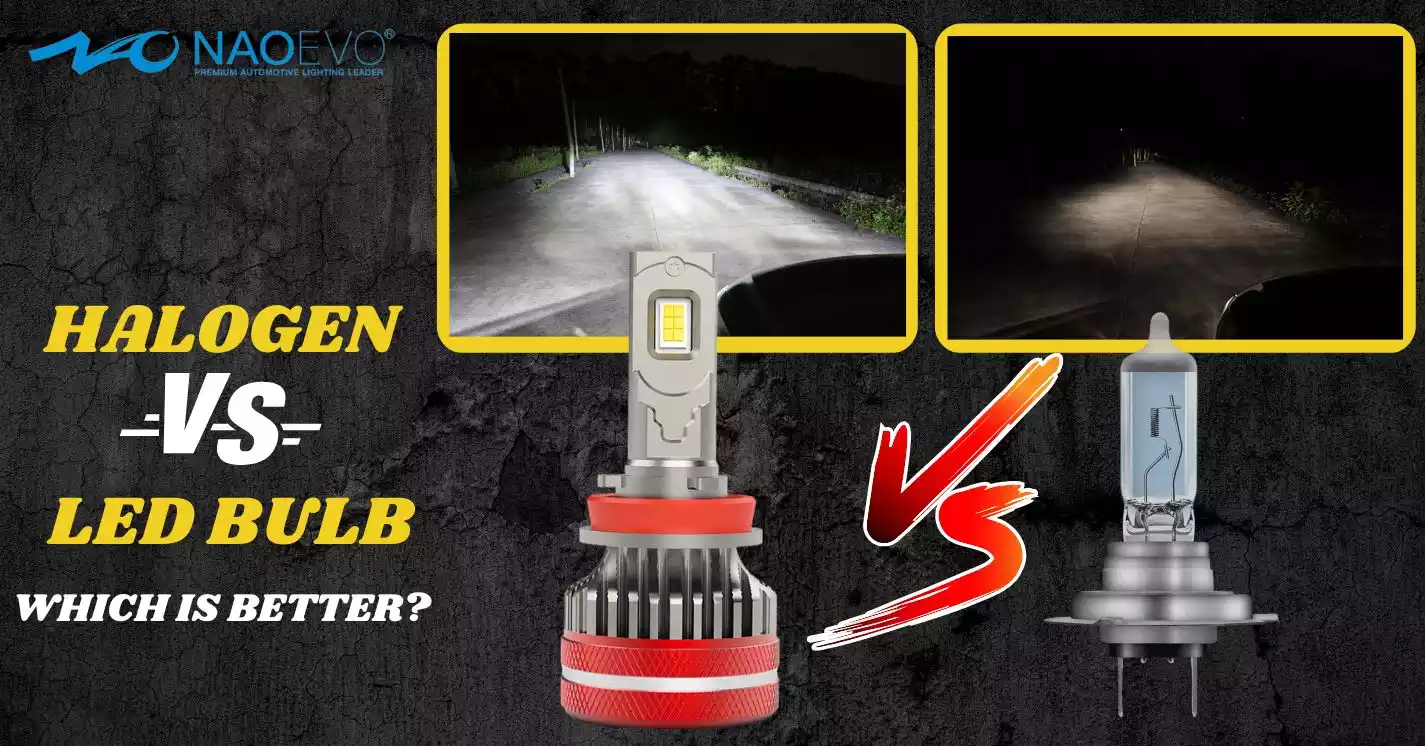
- For the Demanding Professional or Adventurer: If your adventures take you far off the beaten path, or your work demands reliable, powerful illumination in harsh conditions, the LED Light Bar is the only sensible option. Its superior brightness (9.5), unmatched durability (9.2), and resistance to vibration ensure it performs flawlessly when you need it most. You need light that lasts decades, not months. Consider pairing it with a heavy-duty 🛒 Light Bar Mounting Bracket → for secure installation.
- For the Budget-Conscious but Infrequent User: If you require auxiliary lighting only occasionally for short periods—perhaps a rare drive down a poorly lit country road or minimal off-roading—and your budget is extremely tight, the Halogen Light Bar’s lower initial cost (8.5) might seem attractive. However, understand that you’re trading upfront savings for higher operating costs and frequent replacements.
- For Long-Term Investment and Efficiency: Prioritizing total cost of ownership and minimal environmental impact points directly to the LED Light Bar. Its phenomenal energy efficiency (9.8) reduces strain on your vehicle’s electrical system and saves fuel, while its extreme longevity means you might never replace it. This is a long-term asset, not a consumable.
- For Modern Aesthetics and Optimized Performance: If you desire a sleek, integrated look (9.0 aesthetic) and the ability to project a precisely controlled beam pattern (9.0 beam quality), the LED Light Bar delivers. It complements modern vehicle designs and provides highly functional, crisp illumination, especially when integrated with a 🛒 Switch Panel System →.
Consider your usage frequency, the environments you’ll encounter, and your comfort level with ongoing maintenance. Do you want to “buy once, cry once,” or save a bit now and potentially pay more in the long run?
Anyone prioritizing maximum brightness, energy efficiency, longevity, and durability in all conditions.
Budget-conscious buyers seeking basic, warm-toned auxiliary light for occasional use, or those preferring a classic aesthetic.
Final Verdict
For 2026, the data and real-world performance firmly establish the LED Light Bar as the overall winner in this head-to-head showdown. With its astounding brightness and illumination rating of 9.5, coupled with an almost perfect 9.8 for energy efficiency, it simply outclasses its Halogen counterpart. While the Halogen Light Bar retains an advantage in initial cost at 8.5, this is swiftly overshadowed by the LED Light Bar’s superior durability and longevity, rated at 9.2, offering a lifespan that can be 50 times greater. This translates to vastly reduced maintenance and replacement costs over time, making it a far more economical choice in the long run. The key trade-off remains that upfront investment. You’ll pay more initially for an LED Light Bar, but you’ll gain unparalleled performance, incredible longevity, and substantial savings on power and replacements, making it the preferred and more responsible choice for virtually every application.
As an Amazon Associate we earn from qualifying purchases.
Frequently Asked Questions
Is LED Light Bar better than Halogen Light Bar?
Yes, for 2026, LED Light Bars are generally superior. They offer up to 7x more brightness, consume 50-70% less power, and last 25-50 times longer than Halogen Light Bars, significantly reducing long-term costs and maintenance. While pricier upfront, the performance and durability benefits are substantial.
What is the biggest difference in reliability between the two?
The biggest difference is lifespan and physical durability. LED Light Bars boast lifespans of 50,000+ hours because they are solid-state and resist vibration. Halogen Light Bars, with fragile filaments, typically last only 1,000-2,000 hours and are prone to failure from off-road impacts or rough terrain.
Are LED Light Bars worth the extra money?
Absolutely. While an LED Light Bar might cost 2-3x more initially, its extreme efficiency (up to 180 lm/watt vs. 20 lm/watt), vastly longer lifespan (50,000+ hours), and superior durability translate to significant savings on power, replacements, and maintenance over time, making it a better long-term investment.
Which light bar is better for extreme off-roading?
The LED Light Bar is unequivocally better for extreme off-roading. Its solid-state design provides superior resistance to vibration, shock, and water (often IP68/IP69K rated) compared to Halogen's delicate filaments, ensuring reliable performance in the harshest conditions where durability is paramount.
Do Halogen Light Bars still have a place in 2026?
Yes, Halogen Light Bars still serve a niche in 2026 for highly budget-constrained buyers or those seeking a specific warm, classic aesthetic. They provide basic auxiliary light at a very low upfront cost (e.g., $50 for a 20-inch bar) for occasional, less demanding use, where extreme performance and longevity are not critical.