How To Open Ford F150 Hood From Outside Fix Your F-150 2026

When your internal release fails, you can open your Ford F-150 hood from the outside by carefully accessing the latch mechanism through the grille or fender liner, often requiring basic tools like a screwdriver or long hook. We will guide you through various proven methods and crucial safety steps to restore access to your engine bay.
If you need to open your Ford F-150 hood from outside, especially when the internal release fails, a combination of targeted tools and specific techniques can grant you access. Many F-150 owners face this frustrating situation due to common mechanical issues. We understand the urgency of accessing your engine bay for repairs, battery checks, or jump-starts.

Prime for Young Adults — 6 Months Free
Students and 18–24s get six months of Prime free, then half price.
Start 6 Months Free As an Amazon Associate I earn from qualifying purchases.This guide provides step-by-step methods to safely and effectively open your F-150 hood without the interior lever. We will cover diagnostics, essential safety precautions, and actionable solutions to get you back on track.
Key Takeaways
Recommended Best Deal Products

- Identify common F-150 hood access failures.
- Prioritize safety before attempting any bypass.
- Utilize specific tools for external latch access.
- Learn multiple methods to open a stuck F-150 hood.
- Prevent future issues with proper maintenance.
What 3 Common Issues Prevent F-150 Hood Access?
Understanding why your F-150 hood will not open is the first step toward a solution. The problem typically stems from one of three common failure points. Diagnosing the issue helps you choose the most effective external access method.

Cable Breakage Points
A broken or stretched hood release cable is a frequent culprit. This cable runs from the interior lever to the latch mechanism. It can snap near the handle, at a mounting point, or closer to the latch itself. If the lever moves freely with no resistance, the cable has likely disconnected or broken.
Latch Mechanism Seizure
The hood latch mechanism itself can seize due to rust, dirt, or lack of lubrication. Over time, exposure to elements can cause the moving parts to stick. Even if the cable is intact, a seized latch prevents the hood from popping open.
Internal Lever Failure
Sometimes, the internal release lever may be the problem, not the cable or latch. The lever assembly inside the cabin can break or detach from the cable. This means the cable might still be functional, but the pulling mechanism is compromised.
Once you have a clearer idea of the underlying issue, you can safely proceed with external access methods.
7 Essential Safety Steps Before F-150 Hood Access
Recommended Best Deal Products


Prioritizing safety is paramount when attempting to open your Ford F-150 hood from the outside. Working around engine components and potentially sharp edges requires caution. Follow these crucial steps before you begin any bypass method.
Vehicle Stability Assurance
Ensure your F-150 is parked on a flat, level surface. Engage the parking brake firmly to prevent any accidental movement. Place wheel chocks behind the rear wheels for added security.
Battery Disconnection Priority
If you intend to work on the electrical system or suspect a short, disconnect the negative terminal of the battery first. This prevents accidental shocks or damage to electronics. .

Audible — Listen Free for 30 Days
One free credit a month and thousands of titles included.
Listen Free for 30 Days As an Amazon Associate I earn from qualifying purchases.Eye Protection Requirement
Always wear safety glasses or goggles. Debris, rust flakes, or sudden movements can cause eye injuries. Protect your vision throughout the entire process.
Hand Protection Necessity
Wear sturdy work gloves to protect your hands from sharp metal edges, grime, and potential pinching hazards. Automotive work often involves abrasive surfaces.
Adequate Lighting Setup
Good visibility is critical. Use a bright flashlight, headlamp, or portable work light to illuminate the tight spaces you will be working in. This helps you identify components accurately.
Clear Work Area Maintenance
Remove any tools, obstacles, or clutter from your immediate work area. A clear space minimizes tripping hazards and allows for free movement around the truck.
Emergency Plan Preparedness
Keep a first-aid kit nearby and have your phone charged in case you need assistance. Inform someone about what you are doing. Taking these precautions prepares you for unexpected situations.
With these safety measures in place, you are ready to explore the methods for bypassing your F-150’s hood release.
How to Bypass a Broken F-150 Hood Cable in 3 Methods
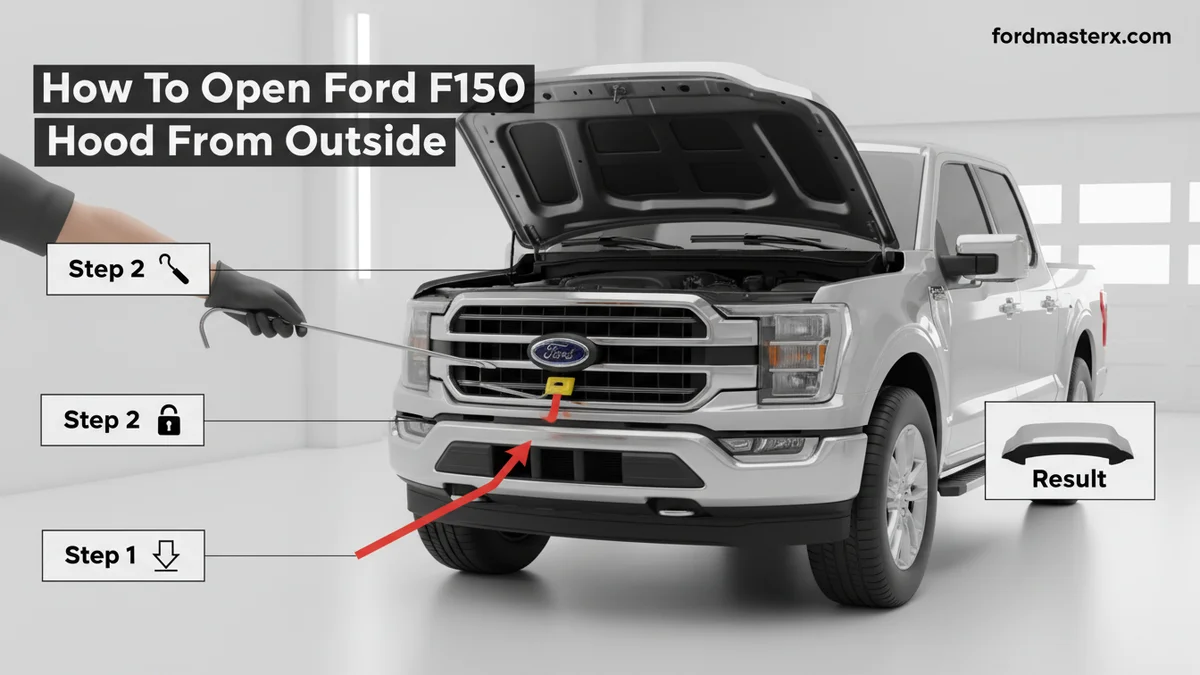
Gaining access to your F-150’s engine bay when the interior release fails requires strategic intervention. These three proven methods offer different approaches to manipulate the hood latch from the exterior. We encourage referencing visual aids as you follow these instructions to help locate specific components for your F-150 model year.

Under Grille Access
This method is often the most direct for many F-150 generations. Start by carefully prying open the grille or removing key sections to gain a view of the latch mechanism. You will likely need a long flathead screwdriver or a hooked tool. Locate the primary latch, usually in the center.
The cable attaches to a lever that needs to be pushed or pulled. For some models, you might see a small loop or a metal tab. Gently manipulate this lever or tab to release the hood. Exercise patience to avoid damaging the grille or surrounding components.
Fender Liner Route
If grille access proves difficult or impossible, targeting the latch through the fender liner might be an option. This usually involves removing a few retaining clips or screws from the front section of the passenger-side fender liner. This gives you a small opening to reach up and towards the latch assembly.
Audible Premium Plus — Annual Membership
12 audiobook credits up front, plus the full Audible catalogue.
See Annual Plans As an Amazon Associate I earn from qualifying purchases.A flexible grabber tool or a coat hanger bent into a hook is typically required here. Feel for the release cable or the small lever on the latch itself. A strong pull or push on this component should release the hood. This method is often preferred for more modern F-150s where the grille is less accessible.
Direct Latch Attack
In some scenarios, particularly with older F-150 models or if the latch is severely seized, a more direct approach may be necessary. This involves attempting to reach the latch from underneath the vehicle, often requiring the truck to be safely jacked up and supported with jack stands.
Once underneath, you can visually locate the latch and the cable. Use a long pry bar or a screwdriver to gently pry the latch open or manipulate the release arm. This method carries a higher risk of damage if not executed carefully. Always ensure the vehicle is stable before crawling underneath.
visual aids like diagrams for your specific F-150 year can greatly assist in locating the exact spot to apply pressure.
Each of these methods requires specific tools that can enhance your chances of success.
What Specific Tools Unlock Your F-150 Hood?
Recommended Best Deal Products


Having the right tools is crucial for successfully opening your F-150 hood from the outside. These items will aid in accessing and manipulating the latch mechanism. Many of these tools are commonly found in household or automotive toolkits.
Standard Hand Tools
You will likely need a set of screwdrivers, both Phillips and flathead, of varying lengths. A long flathead screwdriver is often essential for reaching and prying. Pliers, especially needle-nose or locking pliers, can help grasp and pull small cables or tabs. A trim removal tool set can assist in safely prying open grille components or fender liners without causing excessive damage.
Specialized Hooks and Picks
A set of automotive pick tools or a homemade bent coat hanger can be invaluable. These tools allow you to reach into tight spaces and hook onto the small release lever or cable. A flexible claw grabber tool can also be highly effective for retrieving or manipulating components that are out of direct reach.
Illumination Devices
Visibility is key when working in confined, dark areas under the hood or behind the grille. A powerful LED flashlight, a headlamp, or a portable work light will provide the necessary illumination. This ensures you can clearly see the latch mechanism and avoid accidental damage to other components.
Once your hood is successfully open, the next step involves addressing the underlying issue to prevent future occurrences.
When to Repair Your F-150 Hood Latch Mechanism?
After successfully opening your Ford F-150 hood, it is critical to diagnose and repair the underlying problem. Ignoring the issue will only lead to a repeat of the problem. Addressing the cause ensures reliable hood access in the future.
Cable Replacement Procedure
If the hood release cable is broken, stretching, or disconnected, replacement is necessary. This involves routing a new cable from the interior release lever to the hood latch mechanism. The process typically requires removing the old cable, carefully installing the new one, and ensuring it is properly secured at both ends for appropriate tension.
.
Latch Lubrication Necessity
A seized or sticky latch often benefits from thorough cleaning and lubrication. Use a high-quality, silicone-based lubricant or white lithium grease to coat all moving parts of the latch mechanism. Operate the latch several times to ensure the lubricant penetrates thoroughly. This prevents rust and allows smooth operation, making it easier to open.
Component Adjustment Guide
Sometimes, the issue might be a simple misalignment or loose connection. Check if the hood striker is properly aligned with the latch. Adjusting the striker plate or the latch assembly slightly can resolve problems where the hood doesn’t catch or release correctly. Ensure all fasteners are tight but not overtightened.
Full Latch Assembly Swap
In cases of severe corrosion, physical damage, or persistent malfunction, replacing the entire hood latch assembly may be the best course of action. This ensures all critical components are new and working in unison. An F-150 hood latch assembly typically includes the primary catch and secondary safety latch.
Always use OEM or high-quality aftermarket parts for durability. .
Beyond repairs, proactive maintenance is vital to prevent future hood release complications.
5 Proven Ways to Prevent Future F-150 Hood Issues
Preventative maintenance is your best defense against future hood access problems with your Ford F-150. Implementing a routine schedule can save you significant frustration and potential repair costs. We recommend incorporating these practices into your regular vehicle care.
Regular Inspection Routines
Make it a habit to visually inspect your hood release system every few months. Check the interior lever for looseness or damage. Look at the cable’s visible sections for fraying or kinks. Examine the latch mechanism for signs of rust or debris accumulation. Early detection can prevent major failures.
Timely Lubrication Practices
Lubricate the hood latch mechanism and hinges at least once a year, or more frequently if you live in a harsh climate. Use a high-quality white lithium grease or a silicone spray. This keeps moving parts operating smoothly and prevents corrosion. .
Cable Routing Verification
Ensure the hood release cable is properly routed and secured along its path. Kinks, sharp bends, or loose sections can lead to premature wear or breakage. Verify that cable clips and ties are intact and holding the cable away from hot or moving engine parts.
Component Cleaning Methods
Periodically clean the hood latch area with a brush and a mild degreaser. Dirt, dust, and road grime can accumulate and cause the latch to stick. After cleaning, re-lubricate the mechanism thoroughly. A clean latch operates more efficiently and lasts longer.
Professional Review Benefits
During your routine service appointments, ask your mechanic to inspect the hood release system. A professional eye can spot subtle issues you might miss. They can also perform adjustments or lubrication as part of your vehicle’s overall maintenance plan, ensuring optimal function for your F-150 in 2026 and beyond.
By following these preventative steps, you can significantly reduce the likelihood of facing a stuck F-150 hood again.
Conclusion
Successfully opening your Ford F-150 hood from the outside can be a challenging but achievable task, especially when armed with the right knowledge and tools. We have walked you through diagnosing common issues, prioritizing safety, and employing various external access methods. patience and precision are key to avoiding further damage.
Beyond emergency access, proactive maintenance and timely repairs of components like the hood release cable or latch mechanism are vital. By implementing regular inspections and lubrication, you can ensure reliable access to your engine bay and prevent future frustrations. Your F-150 deserves consistent care to keep every component, including the hood release, functioning optimally.
Frequently Asked Questions About F-150 Hood Access
What Is the Most Common Reason an F-150 Hood Won’t Open From Inside?
The most common reason is a broken or stretched hood release cable. Over time, these cables can fray or detach from the latch mechanism or the interior pull handle, preventing the necessary tension to release the hood effectively.
Can I Open My F-150 Hood If the Battery Is Dead?
Yes, you can open your F-150 hood even with a dead battery. The hood latch mechanism is mechanical, not electrical. The methods described for external access apply regardless of the battery’s state or charge.
How Can I Access My F-150 Battery If the Hood Is Stuck Shut?
To access a dead battery with a stuck hood, you must use one of the external hood opening methods described in this guide, such as accessing through the grille or fender liner to release the primary latch.
What Tools Are Essential for F-150 Emergency Hood Opening?
Essential tools include a long flathead screwdriver, needle-nose pliers, a bent coat hanger or specialized pick tool, and a bright flashlight. These help manipulate the latch from tight exterior access points.
How Often Should I Lubricate My F-150 Hood Latch?
We recommend lubricating your F-150 hood latch mechanism at least once a year. If you drive in dusty, wet, or corrosive environments, more frequent lubrication, such as every six months, is highly beneficial for smooth operation.