
How to Become a Ford Technician at a Dealership

To become a Ford technician in the United States, compare three routes: apply for a dealership trainee or entry-level service role, enroll in a Ford-affiliated technical program, or build general automotive experience and apply to a Ford or Lincoln dealership later. The right route depends on your training, your budget, and whether a local shop can put you to work under supervision. Ford’s ASSET, FACT, and ACE programs serve different stages of that decision.
Start by calling two nearby dealerships and asking what they look for in an entry-level technician. Then compare their answers with the programs available in your area. That short check can tell you whether you need to enroll in school, find a sponsor, or submit an application this week.


What a Ford Technician Actually Does



This guide covers service technicians working on customer vehicles at Ford or Lincoln dealerships in the United States. A dealership technician may inspect a vehicle, perform maintenance, diagnose a customer concern, complete a repair, document what happened, and verify the result. Beginners often gain experience with routine work before taking on deeper electrical, drivability, transmission, or diesel diagnosis. The assignments and pace depend on the shop.
Use the job description to tell a service role from a factory role. A dealership service technician works with a service department, customer repair orders, and vehicles that need maintenance or repair. A factory maintenance technician may repair production machinery at an assembly plant. If the listing emphasizes industrial robotics, conveyor equipment, or plant maintenance, read the requirements as a manufacturing job. The school and hiring contacts in this guide focus on dealership service.
Before choosing a program, consider the kind of work you want to do. Someone who likes finding the cause of a symptom may enjoy diagnostic work. Someone who prefers steady hands-on work may feel more comfortable starting in maintenance and inspection. A first job can help you discover which tasks you want to specialize in later. For a concrete example of a symptom that takes more than a parts guess, see how FordMasterX explains a Ford wrench light and its possible causes.
Compare Three Ford Training Programs
| Path | Who It Fits | What Ford Describes | First Question to Ask |
|---|---|---|---|
| ASSET | A student who wants a degree and dealership experience | A two-year route with classroom blocks and paid work at a sponsoring dealer | Who helps me secure a dealership sponsor? |
| FACT | A student seeking focused Ford training through a participating school | A 15-week Ford specialization offered at participating UTI campuses | What is the full training path and cost before and after the specialization? |
| ACE | A student exploring a dealership career through a participating school | A dealer-sponsored career exploration program with access to some Ford training | Is my school a participant and what practical exposure is available? |
Compare Ford Dealership Training Paths
Choose the next step by the sort of experience and credential you need.
- ASSETCompare colleges offering an associate degree and paid work with a sponsoring dealer.
- FACTAsk a participating UTI campus for its entry requirements and the full path to the 15-week Ford specialization.
- ACEFind out whether your school participates in Ford’s career exploration program.
- Direct HireAsk local dealerships about trainee openings, shop mentors, pay, and tools.
ASSET Combines College and Shop Work
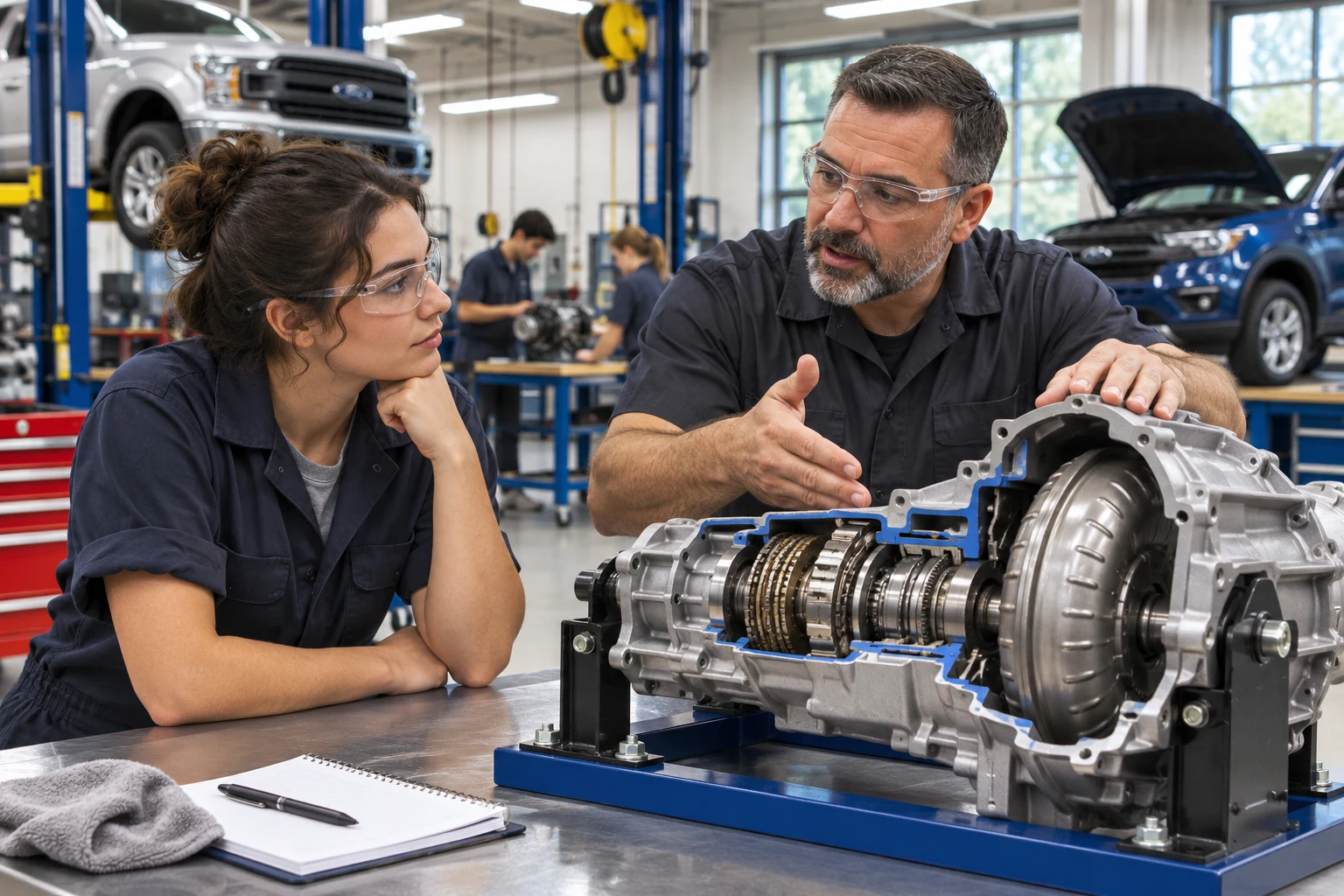
The Ford ASSET program combines classroom instruction and work with a sponsoring Ford or Lincoln dealership over two years. Ford describes alternating classroom and dealership blocks of roughly six to eight weeks. A successful student earns an associate degree. Ford says students are sponsored by a dealer and participate in a paid co-op while enrolled.
Look up the participating college before you plan a move or cut back on another job. Ask when the next cohort begins, when its application closes, and whether the classes run on a schedule you can manage. Then ask how and when sponsorship is arranged. A school may introduce you to dealers, a student may need to contact shops directly, and the details may vary by location. Obtain the school’s own checklist for your intake.
There are two schedules to budget for, even if the college is nearby. Find out where the classroom and dealer blocks take place. A school on one side of a metropolitan area and a dealer on the other may change your commute and transportation costs. Ask which terms are paid work terms, how pay is set, and whether the sponsor expects you to bring tools on your first day.
Generated editorial illustration.
FACT Focuses on Ford Systems


Ford’s Accelerated Credential Training overview describes FACT as a 15-week specialization through participating Universal Technical Institute campuses. Its Ford-specific coursework is intended to give students credentials valued in Ford and Lincoln dealerships. The length describes the Ford specialization. Get a written description of the full enrollment path from the school, including prerequisites and any automotive training you must complete first.
The time commitment matters as much as the number in a brochure. Ask the campus how many classroom and lab hours you will attend, whether the schedule is compatible with work, and whether the Ford module is available in the term you want. If the school quotes one bundled figure, ask it to itemize tuition, books, tools, lab fees, and anything that changes if you take longer than planned. Ask the same questions at a community college so your comparison uses the same categories.
ACE Lets Students Explore the Trade
Ford’s Automotive Career Exploration overview describes ACE as a dealer-sponsored partnership between Ford, dealerships, and schools. Ford identifies career exploration and access to some Ford Service Technician Specialty Training eLearning among its purposes. Ask your school’s automotive instructor whether the school participates and what student opportunities are available locally.
ACE is useful if your first decision is whether dealership service suits you. Ask whether you can speak to a shop mentor or see a service department during a scheduled visit. During that visit, pay attention to how work is assigned, where technicians get service information, and what happens when an entry-level technician encounters a job beyond their training. Those details tell you more about day-to-day work than a program acronym does.
How to Get Hired Without Waiting
Start by searching the hiring pages of Ford and Lincoln dealerships within a commute you can sustain. Look for openings with titles such as apprentice technician, trainee, express service technician, maintenance technician, or entry-level automotive technician. These are search terms to try. Each shop names jobs differently, so read the responsibilities and stated qualifications before assuming an opening is suitable.


Write down the name of the dealership, the role, the hours, and the experience or license requirements. If the posting looks relevant, apply through the dealership’s stated hiring channel. You can also call the service department during business hours and ask for the best way to reach the hiring contact. Explain the role you are interested in and give a short description of what you have already done.
If you have worked in an independent shop, describe the services you completed and the ones you observed under supervision. If you are coming from school, state which labs you completed and what work you could repeat with a mentor present. If you come from outside automotive work, describe procedures you followed, inspections you performed, and how you documented a problem or handed a task over. Give an example you can talk through without embellishing your experience.
Ask How the First Month Works
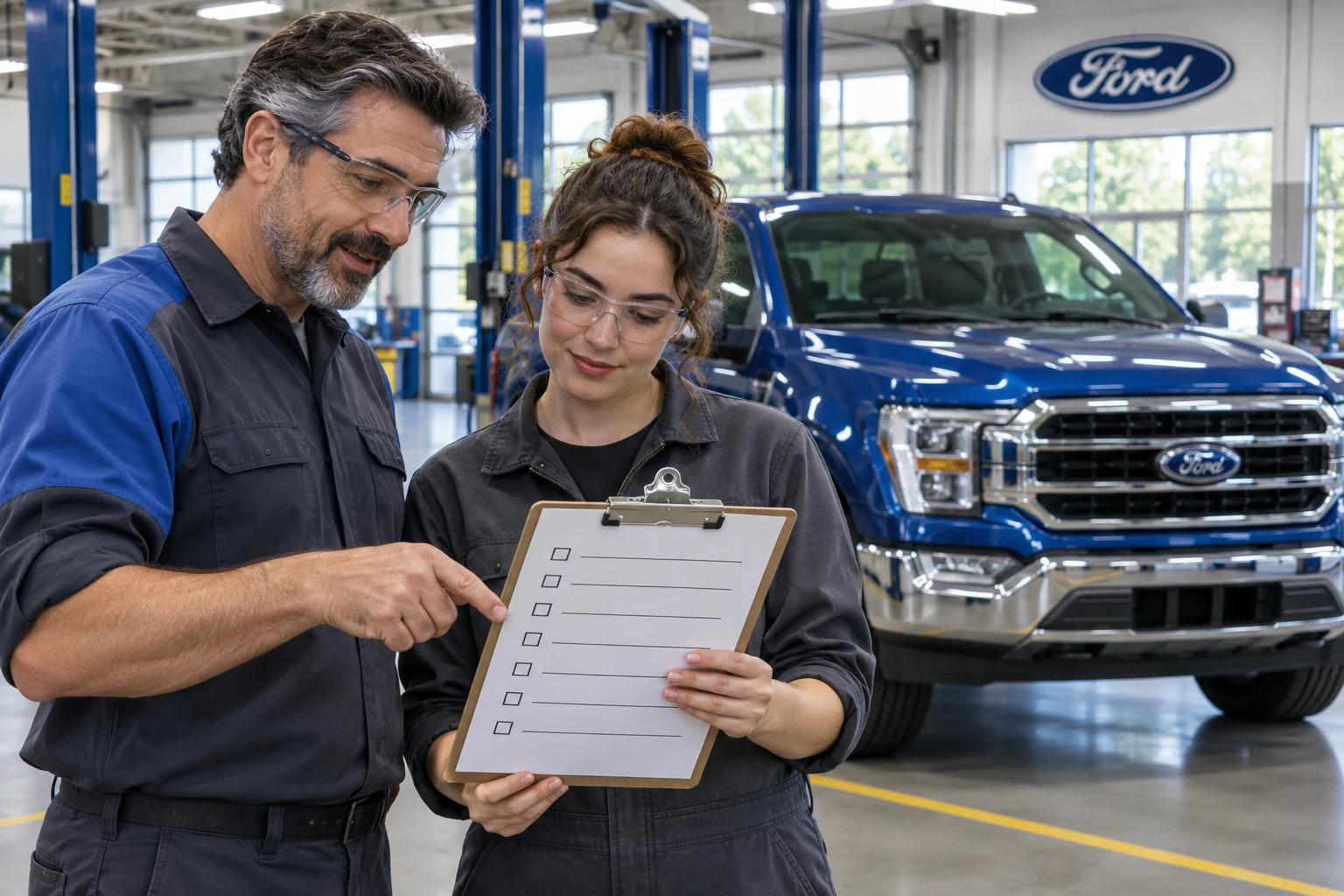
Ask which jobs a beginner can perform independently, who checks the work, and what happens when a new technician needs help. A useful answer will give you a specific person or role to go to and describe a normal first assignment. If the first month includes training, find out when it occurs, whether it is paid, and how it fits around production targets.
Next, ask about safety habits and the shop’s expectations for documentation. You can ask how new employees learn lift procedures, how they gain access to service information, and whether someone shows them the shop’s inspection process before they work on customer cars. A good interview lets you see how you would learn and what the shop expects you to know before you start.
Generated editorial illustration.
Clarify Pay and Tool Expectations
Get the terms of the entry role in writing. Ask how pay is calculated, whether training hours are covered, and what happens on quiet days. If the employer describes an hourly period followed by a production-based arrangement, ask when that change happens, what training milestones apply, and whether any minimum pay arrangement exists. The hiring contact can explain the terms of the specific opening.
Ask for a tool list before buying anything. Confirm which tools are shared, which ordinary hand tools are your responsibility, and which purchases can wait until you move to different work. You can also ask where personal tools are stored and what the policy says about taking them home. Compare equipment cost and commute together with the first paycheck rather than making a decision on the advertised rate alone.
What to Put on Your First Resume
Make the first page relevant to a hiring manager who has only a few minutes. Include your contact information, work history, school or program, and practical skills you can explain. Use a short bullet for a task, the equipment or procedure involved, and what you were responsible for. Where you can verify a number, include it. Otherwise, describe a routine accurately without guessing about output or productivity.
For example, a student might write that they performed an inspection using the assigned service checklist and reviewed findings with the instructor. A shop helper might state that they prepared vehicles, organized parts for work orders, or documented observed issues for the assigned technician. If you assisted rather than completed a repair independently, say so. If you held a credential, include its title and date when available.
Prepare one story about catching a mistake early and another about learning a new procedure. Describe how you recognized the issue and who you asked when you needed guidance. Shops can train new hires in equipment and procedures. Your interview can show how you respond when the work requires help, documentation, or a pause to verify information.
How to Choose Between Local Options
Compare the options you can actually attend. For school, make a simple worksheet with the complete cost, time until enrollment, miles you would drive, hours you can work, credential earned, sponsor status, and how practical experience is handled. For a job opening, use the same worksheet with pay, commute, mentor access, training, hours, and the progression you were told to expect. Record the name or role of the person who gave each answer.
If you need income immediately, a paid entry-level shop opening or a confirmed paid placement can matter more than the shortest course on paper. If you want a degree and a structured rotation through a dealer, compare ASSET schools and sponsor availability. If you have already built foundational skills and want more exposure to Ford systems, ask about FACT and other training the employers near you recognize. Make the choice based on your local options, finances, and next job goal.
Once hired, ask how your supervisor assigns training and tracks progress. Make a short list of skills you practiced, tasks you can now perform, and jobs you still need help with. Ask for a check-in after the first few assignments. When the shop’s work expands to more complex diagnostics, build the habit of reviewing the service procedure and verifying the final result. FordMasterX’s throttle body relearn guide shows how diagnostic decisions can change with the vehicle and procedure.
Five Questions About Ford Technician Careers
Do I Need an Associate Degree?
Check the opening you want. ASSET leads to an associate degree, while other training and hiring routes have different entry requirements. Ask local employers how they evaluate school, shop experience, and training.
Is ASSET Dealership Work Paid?
Ford describes the ASSET dealership internship as a paid co-op. Confirm the pay, hours, sponsorship arrangement, and dates for your own placement before committing.
Is FACT Only Fifteen Weeks Altogether?
Ford’s figure describes the FACT specialization. Ask the campus to explain all prerequisite courses, enrollment lengths, and costs for your individual route.
Can I Apply With Independent-Shop Experience?
Yes. Use the dealership’s published requirements to assess the opening and explain what you can already do. Ask what Ford-specific training the shop can provide if it hires you.
Does a Program Guarantee a Job?
Ask the school and dealership what commitments are in writing. A training credential, internship, and job offer are separate milestones. Verify which one your agreement provides.
Take the Next Step Toward Dealership Work
Learning how to become a Ford technician starts with identifying the dealership work you want and finding a local route you can finish. Check openings, speak with service departments, and compare program requirements before you pay enrollment fees or buy tools. Ask who would supervise your first shop tasks and how the training schedule fits your work and commute. If you are eligible now, send a resume that describes the work you can actually do. If you need training first, choose a program by the experience, credential, and local employer access it provides. Start with two dealership conversations and one school inquiry.