
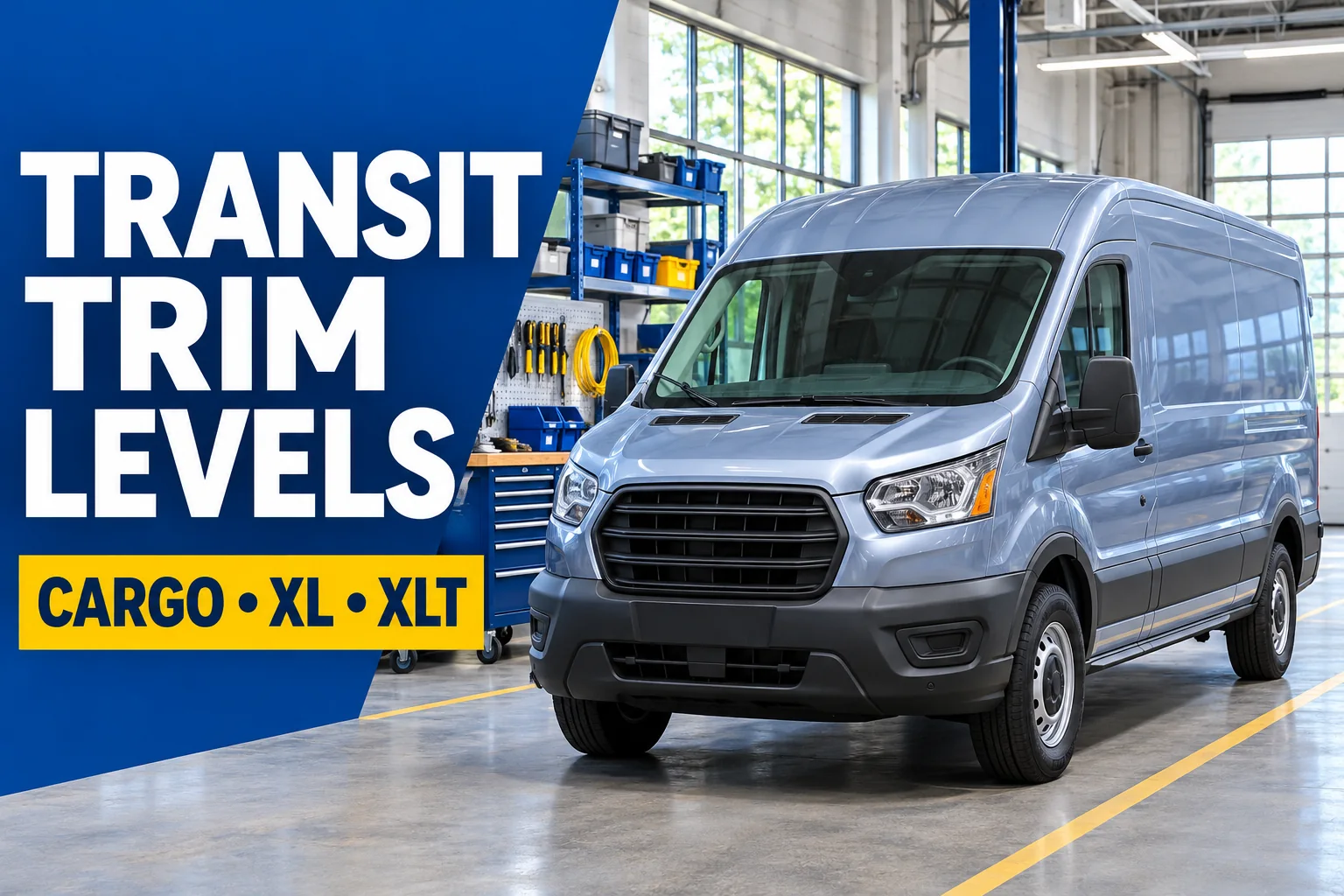
Ford Transit Trim Levels: Cargo Van vs Passenger XL and XLT

The 2026 Ford Transit lineup starts with a body choice. Ford lists Cargo Van, Passenger Van XL, Passenger Van XLT, Cutaway and Chassis Cab in its US order guide. XL and XLT distinguish the two Passenger Van equipment series. Cargo Van is its own order group. If you need factory passenger seating, compare XL and XLT after you confirm the seating layout. If you plan to install shelves or load bulky tools, start with the Cargo Van’s body dimensions and payload.
This distinction matters because an XLT badge tells you about the passenger van’s equipment. It does not identify the roof height, body length, number of seats installed or the load capacity of a particular unit. The full configuration is more useful than the trim name when you need a van to fit a workplace, shuttle route or upfit.


Transit models by order group
US model line · Ford April 2026 order guide
Cargo Van
- Order group
- 101A
- Where to start
- Carrying freight or tools inside a factory van body
Passenger Van XL
- Order group
- 301A
- Where to start
- Factory people-moving body with XL equipment
Passenger Van XLT
- Order group
- 302A
- Where to start
- Factory people-moving body with XLT equipment
Cutaway
- Order group
- 501A
- Where to start
- Custom body project that needs the cutaway cab arrangement
Chassis Cab
- Order group
- 701A
- Where to start
- Custom body project that starts from a cab and chassis
2026 Ford Transit models and order groups


| 2026 US Transit model | Order group | Where to start |
|---|---|---|
| Cargo Van | 101A | Carrying freight or tools inside a factory van body |
| Passenger Van XL | 301A | Factory people-moving body with XL equipment |
| Passenger Van XLT | 302A | Factory people-moving body with XLT equipment |
| Cutaway | 501A | Custom body project that needs the cutaway cab arrangement |
| Chassis Cab | 701A | Custom body project that starts from a cab and chassis |
The model names and order groups are from Ford’s April 30, 2026, Transit order guide. The table is a starting point for a 2026 model. It doesn’t include the exact body code, seat option, or axle and roof choices for your vehicle. Match those items separately on the build sheet. This guide covers the US full-size gasoline Transit. Use the applicable Ford material for E-Transit or a Transit from another market.
Choose the body before choosing the trim
A Cargo Van buyer can identify the main load before choosing a roof or wheelbase. Write down the largest regular item, how you move it into the van and where you need to secure it. A toolbox that fits along the floor can still be difficult to load through the side door once shelving and a bulkhead are installed. A ladder can fit the nominal length of a van and still interfere with the space needed to close the rear doors. Measure the finished loading path with your upfitter or inspect a similar finished vehicle.
If the van will carry passengers as its primary job, start with a Passenger Van. Specify how many people will ride regularly, whether every seat is needed at the same time, and how much baggage goes with them. Factory seating occupies space even when some seats are empty. On an airport route, the luggage of a full group can determine which layout works. On a local shuttle, access to the back row and the way passengers step in and out may matter more than the longest available body.
If a completed Cargo Van shell won’t work for your project, get the body builder involved before ordering. Cutaway and Chassis Cab have their own order groups. Ask which base the builder designed the body around, where the equipment sits on the chassis, and what the finished vehicle will weigh. The choice belongs on the build quote along with the finished layout and any documentation required for putting it in service.
Passenger Van XL vs XLT


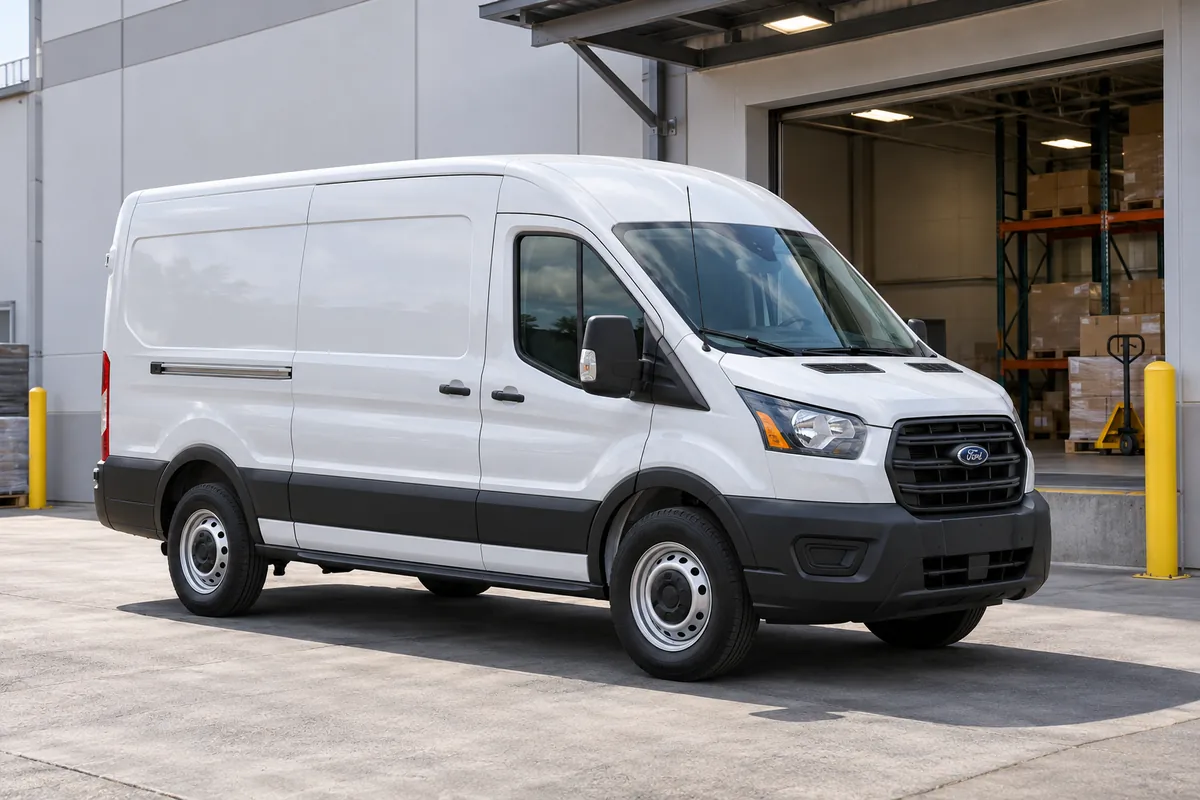
Both XL and XLT belong to Ford’s Passenger Van line. Choose the roof and length, check the actual seating arrangement, then compare features that your drivers will use. Looking only at the trim name can create the impression that every XLT has more seating than an XL. The order matrix lists seat configurations in separate equipment rows, independent of the two order group labels.
One documented equipment difference is how the 2026 Passenger Vans receive Ford Co-Pilot360 2.0. Ford’s 2026 Transit announcement lists it as standard on XLT and optional on Passenger Van XL and Cargo Van. Check the actual option list for a used XL or a new vehicle already on the lot. Availability and standard status tell you where to look during a purchase, while the window sticker tells you what the specific van carries.
If an XL satisfies your body, seating and driver-assistance requirements, use its actual sticker as your baseline. Run the XLT quote with the same body and seating where possible. Then compare the features that differ. A more expensive unit might include a longer body, another engine or additional equipment outside the trim change. Pricing both as if they differ only in the badge can hide the reason for the price difference.
A fleet can use this same method for replacements. List the features your drivers already know and use, then compare them with each optioned van. Decide which features require orientation for a new driver. Use the correct owner documentation when assistance features differ across units. Treat this as part of the vehicle handoff, especially when a fleet includes multiple model years with different displays.


Passenger capacity depends on the configured seats
Ford’s 2026 Transit model page advertises seating for up to 15, while the order guide shows how seating depends on the actual configuration. The maximum is useful for initial shopping. Use the actual arrangement to decide whether the van fits. Count the installed seats and confirm the seat locations, head restraints and belts on a used vehicle before relying on the seller’s stated capacity.
Check the order guide if a listing shows empty space or seems to have fewer seats than the body suggests. Ford lists factory arrangements with different seating counts and options. A used van can also have seats removed after the original purchase. Ask whether the removed seats are included, who removed them and what Ford’s documentation permits for your intended arrangement. Seat mounting and occupant protection are critical. Use the factory documentation and a qualified installer for concerns about conversions or changes.
Think about what happens on the fullest trip. If a group of passengers fills the rear row, inspect where their luggage can go and how it can be secured. If a van normally runs with a small group but occasionally takes every passenger it can hold, define which seating layout makes both jobs possible. Confirm the finished van’s load capacity with the driver, passengers, baggage and added equipment accounted for before using it in that role.


Roof, wheelbase and body length are separate decisions
Ford’s Transit technical specifications list 130- and 148-inch wheelbases for Cargo Van, 148 inches for Passenger Van, and 138, 156 and 178 inches for Chassis Cab and Cutaway. Not every roof, body or capacity combination is available on every order group. Use the order guide’s body codes to check which measurements apply to the combination you are considering.
Wheelbase is the distance between the front and rear axles. It does not describe how far the body extends beyond the rear axle. An extended van can have the same wheelbase as a shorter body, so wheelbase alone cannot answer whether it fits a parking space or loading zone. Compare the actual overall length, where the rear doors swing and how the rear of the van behaves during a low-speed turn.
A higher roof can make work inside the van easier and provide room for taller equipment. It can also change which garages, canopies and service bays the van can enter. Measure the actual vehicle with any roof-mounted equipment in place. Roof racks, vents and other upfit equipment can affect the clearance even when both vehicles are advertised with the same Ford roof name. Include the lowest clearance on the van’s typical route in the purchasing checklist.
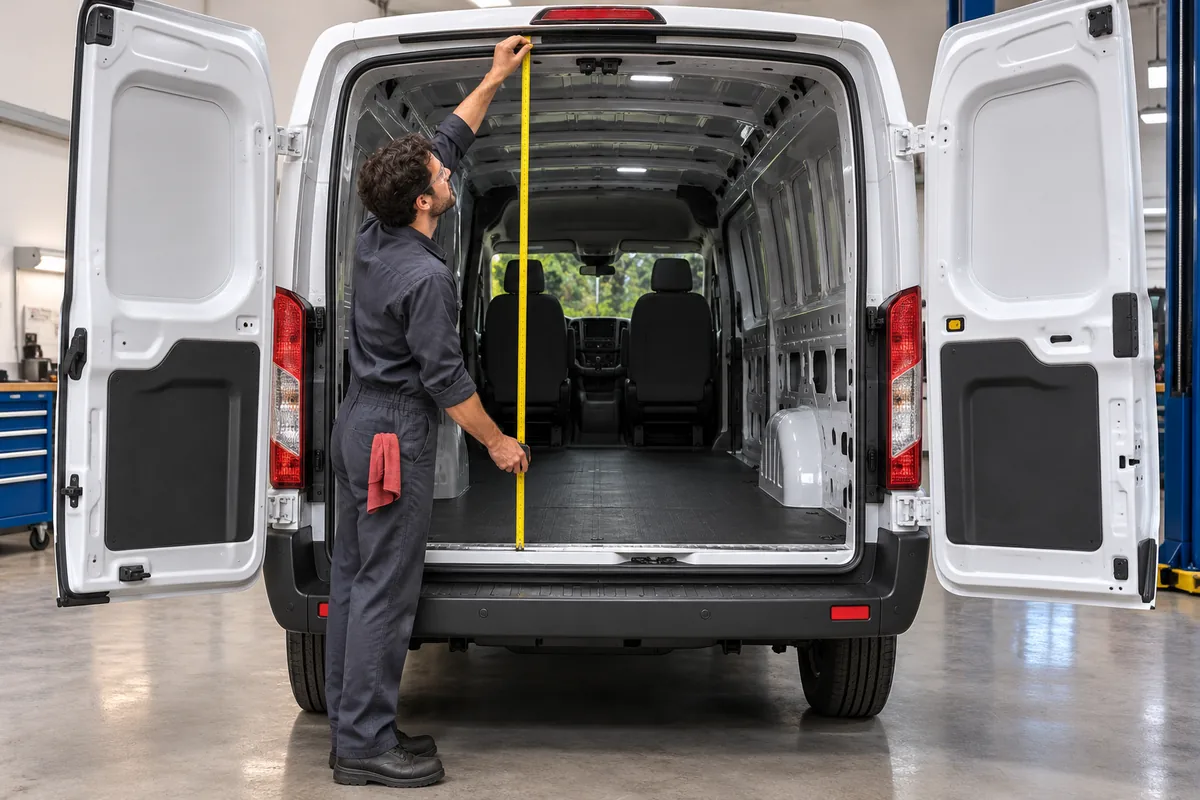
FordMasterX’s Transit cargo dimensions chart compares the unmodified cargo boxes by roof and length. The cargo opening also deserves a separate measurement. Interior width alone will not determine whether a pallet or cabinet can move through a rear opening and around items already installed inside. Check opening height and width after accounting for steps, equipment, shelving or insulation in the area. If you’re buying based on a CAD layout, get the corresponding finished clearance from the installer.
Match the quote to the completed van’s work
Ask the dealer to show the actual VIN or complete proposed build. Record the body code, engine, drive configuration, roof, wheelbase, body length and equipment order group. When using a commercial installer, attach the build sheet to the installer quote so estimates are for the same base vehicle. An installer can need different parts, labor or measurements even when two vans are the same model year and series.
Document the weight of the bulkhead, shelves, flooring, lift equipment and any permanent power setup. Some of the original carrying capacity will be used by the completed equipment before the first tool or passenger is loaded. Bring the remaining estimate together with the truck’s vehicle and axle ratings. Where the load is heavy or fixed toward the rear, have the installer check weight distribution and confirm it against actual loaded axle weights before relying on the completed design.
Use similar care for towing. The fact that a Transit has a trailer hitch doesn’t establish its rated combination or the allowed tongue load. Identify the vehicle’s configuration, towing equipment and axle ratings, then use the Ford instructions for that build. If a fleet van alternates between passengers and towing, include its heaviest realistic passenger and cargo load in the calculation. A vehicle suited to towing in one use can leave too little carrying capacity when it is fully loaded for another.
Check where the workday ends as well as where it starts. A van that fits a bay while empty still needs room for technicians to open doors and reach the installed equipment. Take measurements on the actual route whenever access is tight, and include key worksite constraints on the order worksheet.
Which Transit should you start shopping for?
A mobile trade crew that carries tools
Start with Cargo Van when the primary job is moving equipment inside a complete van body. Decide who needs to ride in it and check the specific seating and upfit plan. Look at payload remaining after the partitions and racks are installed. If the van needs to operate regularly in a low garage, confirm the height with any ladder carrier mounted. Ford’s wheelbase list helps narrow the search, but the finished height and the tool layout determine day-to-day fit.
A group shuttle with scheduled baggage


Start with Passenger Van and count the seats needed on the busiest route. Inspect the intended luggage space with that seating arrangement in use. Compare XL and XLT after identifying features that matter for the drivers, such as equipment included in a driver-assistance package. Before deciding, confirm whether the existing drop-off zone has clearance for the roof and room to open the doors without blocking people or traffic.
A buyer ordering a custom commercial body
Ask the intended builder whether the finished body requires Cutaway or Chassis Cab. Get its controlled drawings and planned weight with the equipment in place. Check that the proposed Ford chassis fits its mounting and weight distribution requirements. Compare the delivered package, including the conversion and related installation work, so the lower base-vehicle price does not mask a higher finished cost.
A shopper comparing similar used vans


Get a VIN and a picture of the vehicle labels early in the process. Ask for the factory sticker and a list of installed modifications. Arrange an inspection for purpose-built equipment like shelving systems or aftermarket passenger seating. Set the two vans side by side by configuration rather than by how the listings describe them. A used van with the right trim and the wrong roof or seats will still need another solution.
What to put on the final dealer worksheet
- The intended job, largest load and usual mix of driver, passengers and cargo.
- The Ford body style, order group, VIN or proposed body code, wheelbase, roof and body length.
- The exact seating arrangement and anything that will replace or occupy passenger or cargo space.
- Standard and optional equipment you need, with a check mark beside features shown on the specific vehicle.
- Installed equipment weight, remaining carrying capacity, any towing requirements, and the actual height and opening measurements.
- The full price for the van and completed equipment before comparing it with another configuration.
Use that worksheet to handle XL versus XLT as an equipment decision within the Passenger Van range. Use it to choose Cargo Van, Cutaway or Chassis Cab based on how the vehicle will be built and used. Once the configuration is verified, you can compare the price and operating fit of the vehicles that actually do the job.


