Ford Transit Dashboard Symbols: When to Stop, Check Tires or Report a Fault

If a Ford Transit dashboard warning shows low oil pressure or high engine temperature while you’re driving, look for a safe place to pull over and follow the cluster message and owner’s manual. A brake-system warning that stays on after the parking brake is released also needs immediate attention. Pull over safely and arrange roadside help or a prompt professional assessment. Read the message beside the icon before deciding whether the van can continue.
This guide covers common warnings and status indicators on the US-market full-size gasoline Transit, with the 2026 model as the main reference. Cargo and Passenger vans can display different symbols depending on equipment. Use the 2026 Transit owner’s manual for the matching system, and consult the manual supplied with your van whenever the display or directions differ.


Transit warning triage
US full-size gasoline Transit · Check the exact cluster message
Oil can with a low-pressure warning while the engine runs
- What to do first
- Pull over and switch off safely. Follow Ford's directions and arrange service if the warning indicates pressure remains low.
High coolant temperature or an engine temperature stop message
- What to do first
- Get to a safe stopping place, follow the message and let the engine cool. Keep the hot coolant cap closed.
Brake warning with the parking brake released
- What to do first
- Pull over safely and arrange prompt professional assessment. Braking performance can be reduced.
ABS warning with no other brake warning
- What to do first
- Look for brake-system messages and arrange a check. Antilock assistance may be unavailable.
Tire pressure warning
- What to do first
- Check all applicable tires with a gauge where it is safe to do so. Match the pressure to your own vehicle's placard.
Check-engine lamp flashing during operation
- What to do first
- Reduce engine load, avoid hard acceleration and seek immediate service. Pull over safely if the engine runs roughly or the message directs it.
Turn signals, high beams, or an enabled driver aid indicator
- What to do first
- Check that the indicated feature is the one you intended to use. Look for accompanying text that signals a fault or change in availability.
Transit dashboard symbols at a glance


| What you see | What to do first |
|---|---|
| Oil can with a low-pressure warning while the engine runs | Pull over and switch off safely. Follow Ford’s directions and arrange service if the warning indicates pressure remains low. |
| High coolant temperature or an engine temperature stop message | Get to a safe stopping place, follow the message and let the engine cool. Keep the hot coolant cap closed. |
| Brake warning with the parking brake released | Pull over safely and arrange prompt professional assessment. Braking performance can be reduced. |
| ABS warning with no other brake warning | Look for brake-system messages and arrange a check. Antilock assistance may be unavailable. |
| Tire pressure warning | Check all applicable tires with a gauge where it is safe to do so. Match the pressure to your own vehicle’s placard. |
| Check-engine lamp flashing during operation | Reduce engine load, avoid hard acceleration and seek immediate service. Pull over safely if the engine runs roughly or the message directs it. |
| Turn signals, high beams, or an enabled driver aid indicator | Check that the indicated feature is the one you intended to use. Look for accompanying text that signals a fault or change in availability. |
Ford groups lamps by system in the manual. The cluster can show a warning icon with a separate message that tells you more about the state. Think of the symbol as the section heading and the message as the instruction. A sketch of an icon from another Transit model year or market cannot resolve a difference in wording.
Read what the van is doing before reading the symbol
A light that appears briefly when the van starts has a different meaning from one that stays on with the engine running. Some lamps illuminate during the system’s startup check. When the expected lights go out, the brief display is part of that check. When a lamp stays on, appears during a trip or changes from steady to flashing, capture the new condition rather than assuming it is another startup event.
Write down the message before cycling the ignition, if you can do so while parked safely. Include whether the engine was running, whether the warning appeared before or after moving, and how the van felt. Photograph the screen when safely parked if you can. On a fleet vehicle, include the van number and whether the vehicle is carrying a load or towing. A fleet technician can make more use of a message with the circumstances than of an email that says a yellow light came on.
Leave color as a secondary clue. A red lamp can be ordinary while a parked van has its parking brake set. The same warning is more important if it persists after release. An amber warning that flashes during engine operation can call for faster action than a steady lamp in a van that is otherwise operating normally. The combination of lamp state, message and vehicle behavior is more useful than a color chart by itself.
Oil pressure and oil life lead to different decisions


An oil pressure warning with the engine running calls for immediate attention. Find a safe place to stop, shut the engine down and read the manual section that corresponds to the message. The warning concerns pressure. A level measurement can provide information, but a dipstick reading within its marks cannot establish that the engine is making adequate oil pressure. If the pressure warning persists or you cannot establish a safe next step, arrange help before using the van again.
Oil life and oil level are separate messages. The oil life monitor tracks when service is due. Ford’s North American instructions distinguish maintenance prompts from a message that the oil level is low. If the display calls for an oil change, plan the service and have the monitor reset after the work. If it calls for oil because the level is low, follow the manual’s procedure and specification when the engine is in the required condition. A reset changes the maintenance indication and does not address a pressure or level fault.
This distinction matters when a driver reports a light by phone. Ask for the written text on the display before sending replacement oil to a jobsite. “Change engine oil soon,” “oil level low” and a low-pressure warning call for different responses. If the display is showing more than one message, record each one. A maintenance reminder can coexist with a separate fault that has a higher priority.
An overheating message needs a safe stop
If the Transit shows an engine temperature warning or directs you to stop, pull over as soon as you can do so safely. Follow the vehicle message and Ford’s overheating instructions. Keep your hands away from a hot coolant cap and avoid opening it while the system is hot. If you see steam or coolant escaping, give the area space and arrange assistance.


A temperature warning that appears while towing or climbing a grade is worth documenting even if the display settles later. Tell the shop whether you were moving slowly, running at highway speed, carrying weight or using the air conditioning. Include where the gauge was when the warning first appeared and whether power changed. Those details help a technician choose the conditions for a diagnosis. They do not identify a failed thermostat, fan or other component by themselves.
Use the manual for your engine and build if you see a reduced-power or cooling-system message. Ford’s guidance takes account of the actual vehicle and its condition. When deciding where to stop, prioritize a place clear of traffic where occupants can stay safe and roadside help can reach the van.
Separate the brake warning from the ABS light
Check whether the parking brake is engaged. If the brake warning remains after releasing it, treat it as a possible brake system problem. Ford warns that braking performance and stopping distance can change. Move to a safe place and arrange assistance. A change in pedal feel or stopping distance makes the warning especially urgent. Review Ford’s 2026 brake warning instructions for the matching indication.


The ABS lamp refers to the antilock braking system. With an ABS warning alone, conventional braking may continue while antilock assistance is unavailable. This still calls for inspection, and the decision about continuing depends on what the van is doing and what the manual says. A brake system warning at the same time, changed pedal feel or a stop message changes that decision.
After a parking brake repair or brake service, give the shop the exact warning text instead of asking only to have the lamp cleared. An electric parking brake message may describe a different system from the main brake warning. Record whether the warning appeared when attempting to apply the brake, release it or move the van. On a fleet vehicle, keep instructions for taking the van out of service separate from a driver’s memory of what happened on a prior shift.
Steady and flashing tire pressure warnings require different checks
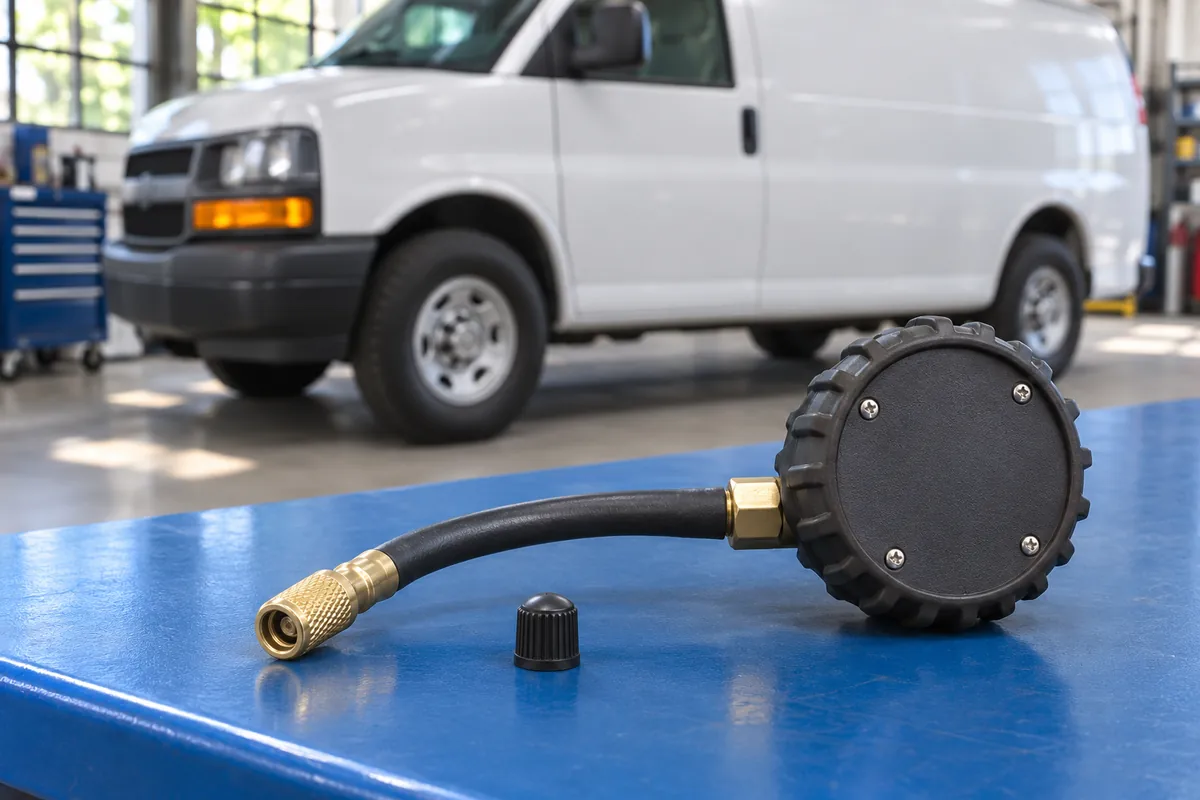
Check pressures with a gauge at a safe stopping place. Inspect the tires for damage. If a tire is plainly flat, damaged or losing air, arrange assistance or follow the appropriate flat-tire procedure in your manual. Look up the vehicle’s recommended pressure on its door-area label. A fleet can include vans with different front and rear pressures, so a figure copied from another truck in the depot may not be applicable.
The solid low-pressure lamp can indicate significant underinflation. A warning that flashes can indicate a monitoring fault or behavior related to equipment such as a temporary spare. Read the message and confirm pressures manually in either case. The North American Transit owner’s manual PDF documents pressure requirements, system limitations and the decision branches for a fault, temporary spare or wheel rotation. Use the edition for your own van when determining which procedure applies.
If the warning starts after a tire change, note which wheels were moved and if a spare is fitted. Restore the correct pressure on each axle as directed by the placard. Ford also describes sensor training in applicable cases, including vehicles with different specified front and rear pressures. A driver who does not have the relevant training instructions should hand the job off. Even a properly recognized sensor can report a low tire, so link any sensor work to a physical gauge check.
A flashing check-engine light changes the service priority
A steady malfunction indicator points to an issue detected by the onboard diagnostics system. Note what the Transit was doing, whether there are other warnings and whether the engine feels normal. Have the cause diagnosed. A trouble code can help direct the inspection, but the code itself does not tell you which part to order.
A flashing malfunction indicator while running can signal a misfire. Reduce load, avoid hard acceleration and get the van checked immediately. If the engine shakes, loses power, or the cluster displays a stop instruction, pull off safely and arrange help. Report whether the warning appeared during acceleration, after starting or while idling. If the lamp stopped flashing, preserve the observation for the service technician.
A battery or charging warning also merits attention when it appears during operation. If the van has a no-start, use the applicable Ford procedure and identify the cause rather than assuming that a battery replacement will solve the warning. The FordMasterX Transit jump-start guide covers the separate no-start task. Follow the instructions for the battery layout and approved connection points of your specific build.
Read the status indicators your Transit actually has
Headlamp and turn-signal indicators can confirm that a feature is on. Traction or stability control may indicate intervention while the system responds to wheel slip. A warning that persists or explicitly identifies a fault has a different meaning from an indicator that only appears during intervention. In the manual, compare the exact lamp or message with the corresponding section on using or troubleshooting that feature.
Driver-assistance displays also depend on equipment. Ford’s 2026 Transit model-year announcement describes changes to the dashboard display and the available assistance features. For a secondhand or fleet van, check its build and manual before assuming that a lane or cruise indication should look or behave like the one in a different model year. If a feature says it is unavailable, drive using the normal controls and verify the message later when parked safely.
Pay attention to paired warnings. A message that a driver-assistance feature is unavailable can appear alongside a separate warning that needs faster attention. Record both. When handing over the van, lead with a change in braking, steering or power before describing convenience features that stopped working. This ordering gives dispatch a clearer basis for deciding whether to arrange roadside assistance.
A short handoff checklist for fleet drivers
- Get safely out of traffic when the warning calls for it. If you have a pressure, temperature or brake concern, use the instructions above and consult Ford’s message.
- Record the complete warning. Copy the words, note which lights are steady or flashing, and capture a photo only when safely parked. Include the vehicle number, approximate time and location.
- Describe the driving conditions. Include whether you were towing, carrying a heavy load, climbing, idling, or starting the van. Report noises, smoke, shaking or a change in braking or steering.
- Tell dispatch what you did. Record whether you stopped the engine, measured tire pressure or secured the van for roadside pickup. If the shop asks for a detail you cannot check safely, wait for assistance.
- Hand over repeat warnings. Note if the warning was seen on an earlier shift, after tire service, or after previous diagnosis. Keep the maintenance record together with the current symptom.
Suppose the tire symbol appears early in the day after a cold night. The first useful action is to use the placard and a gauge at a safe stop and look for tire damage. If the warning remains after correct pressures are established, give the shop the readings, lamp behavior and recent wheel service history. Assuming that ambient temperature explains the lamp would miss those checks.
In another case, a driver sees the brake warning after pulling away from a loading dock. The first observation is whether the parking brake has released. If the light stays on after the parking brake is released, stop safely and contact dispatch for assistance, even if the pedal feels normal. Dispatch can arrange help from the recorded location. The work order should state both the warning text and the pedal behavior rather than simply marking the van for a dashboard reset.