
How to Find Ford Tire Size Placard and Read the Right Pressure

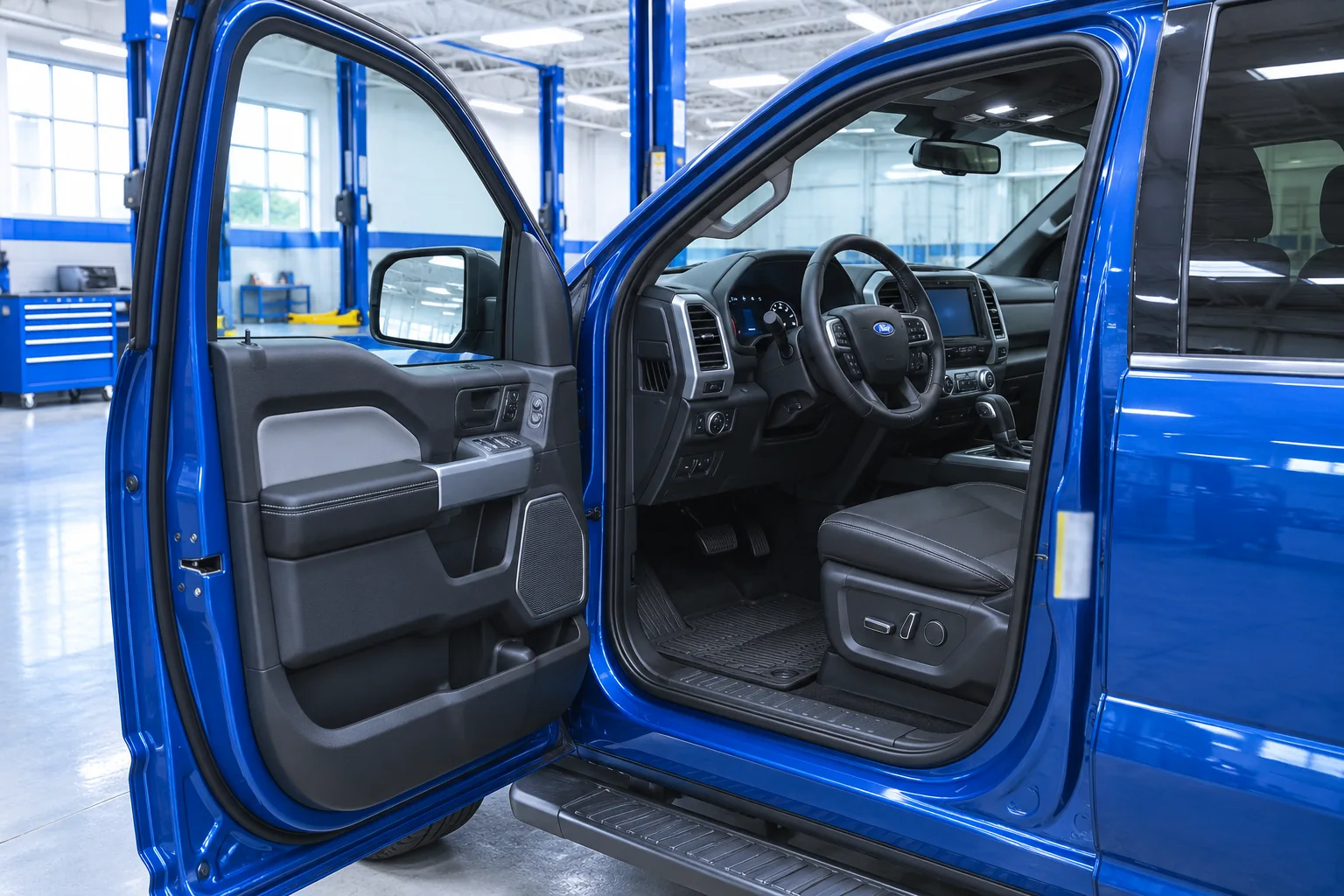
On the US Ford F-150 examples covered by Ford’s manuals, the tire label is on the driver-side B-pillar or the edge of the driver’s door. Open the door and inspect both surfaces. The B-pillar is the upright body structure immediately behind the front door. Look for the tire-information label rather than assuming the first sticker is the one you need.
The placard identifies the factory tire-size and cold-pressure information for the truck’s configuration. The tires currently installed may be different. Compare the label with the actual sidewalls before buying replacements or adjusting pressure, especially on a used Ford with aftermarket wheels.


Find the Label With the Ford Parked Safely
Park on a level surface, secure the truck, and open the driver’s door where there is enough room to inspect the opening. Check the upright pillar behind the seat area and the exposed edge of the door. Use a flashlight if the print is shaded. There is no need to remove trim or loosen the door.
Ford’s 2026 F-150 tire-label information places the label on the B-pillar or driver’s door edge. The 2023 F-150 manual gives the same location for that application. Use your own Ford’s manual if the model differs.
Take a wider photograph showing the label’s position, then a close photograph of the readable information. Avoid glare, keep the camera square to the surface, and check the result before closing the door. A clear picture is useful at a tire shop and reduces mistakes caused by reading small print from memory.
Do not scrape, sand, or use aggressive solvents on a faded sticker. If ordinary gentle cleaning does not make the printing legible, preserve what remains and request help identifying the correct replacement information. Destroying the label while trying to read it makes the problem harder to resolve.
Separate the Tire Placard From the Certification Label


More than one factory label may be present in the door opening. The certification label contains vehicle identification and weight-related information. The tire placard contains the tire-size and recommended cold-pressure information needed for this task. Read the headings and fields rather than relying only on the sticker’s shape or color.
An AXLE or transmission field is not a tire-size designation. Gross vehicle weight and axle ratings are also different from inflation pressure. These values work together in the truck’s overall configuration, but they are not interchangeable. Copying a weight figure into a tire-pressure discussion can create a dangerous misunderstanding.
Keep the complete label image when discussing a question with a professional. A tight crop may cut off the front-versus-rear headings, the spare entry, or the units. That missing context can change the meaning of a number even when the digits themselves are clear.
If the Ford has a conversion or an additional modifier label, photograph that too. Explain any body conversion, replacement wheels, or tire changes when requesting advice. The original factory information remains valuable evidence, but the current configuration may require an application-specific assessment rather than a blind return to original equipment.


Copy Front, Rear, and Spare Information Separately
Read each row independently. Record the front tire designation, rear designation, and spare information where provided. Then copy the associated cold-pressure figures with their units. Do not assume that front, rear, and spare values match simply because the tires look similar from a distance.
A small worksheet prevents most transcription errors:
| Item to record | Where it comes from | What it establishes |
|---|---|---|
| Factory tire designation | Ford tire placard | Original size information for that configuration |
| Front cold pressure | Front entry on the label | Front inflation recommendation for the labeled application |
| Rear cold pressure | Rear entry on the label | Rear inflation recommendation for the labeled application |
| Spare information | Spare entry and applicable instructions | The separate spare requirement |
| Installed designation | Each tire’s sidewall | What is physically on the truck now |
The table is a recording method, not a replacement specification. Fill it from your Ford instead of copying values from another owner’s photograph. A different engine, body, equipment package, or tire option can make a similar-looking truck a poor reference.
Before using your notes, read them back against the photograph. Check decimal points, slash marks, and unit labels. If one character remains uncertain, mark it uncertain and obtain a clearer image. Guessing one digit to complete a tire order defeats the purpose of locating the placard.


Four checks before your next decision


- Locate
Inspect the driver door opening using the correct manual.
- Read
Copy front, rear and spare entries separately.
- Compare
Record the installed sidewall designation.
- Resolve
Ask for application-specific help if the label and tires differ.
Use the source and application limits explained in this article. This checklist supplies no universal technical setting.
Understand What the Tire Designation Describes
A tire-size string includes more than the wheel’s diameter. It describes the tire’s size and construction through a standardized designation. When ordering, preserve the complete string, including any prefix and service description shown on the installed tire or required by the application. Asking only for a tire that fits a particular wheel diameter is incomplete.
The designation on the placard describes original equipment for the Ford’s labeled configuration. The sidewall describes the tire currently fitted. Matching wheel diameter alone does not prove that the tire has the correct width, profile, load capability, or intended application. Have the complete specification checked before choosing a substitute.
Do not turn a photograph into a recommendation for every F-150. A sample label in a manual is an illustration of how to read the information. Unless it is explicitly your configuration’s specification, it should not become a universal tire chart. The same caution applies to dealer advertisements and online fitment menus.
If the sidewall lettering is hard to read, photograph all relevant markings rather than selecting one familiar-looking number. A tire carries manufacturing, size, load, and other information. A tire professional can distinguish those fields when the full evidence is available, while a partial transcription may leave out the decisive detail.
Use Cold Pressure Rather Than the Sidewall Maximum
The recommended inflation pressure on the Ford placard is different from the maximum pressure marked on the tire. NHTSA’s TireWise guidance directs owners to the vehicle manufacturer’s recommendation and explains the importance of checking tire pressure cold. The sidewall maximum is not automatically the correct everyday setting for the truck.
NHTSA’s summer-driving guidance describes cold tires as tires checked after the car has not been driven for at least three hours. Plan the check before a trip rather than after driving to an air pump. If the tires are warm, follow appropriate guidance instead of bleeding them down to a cold specification.
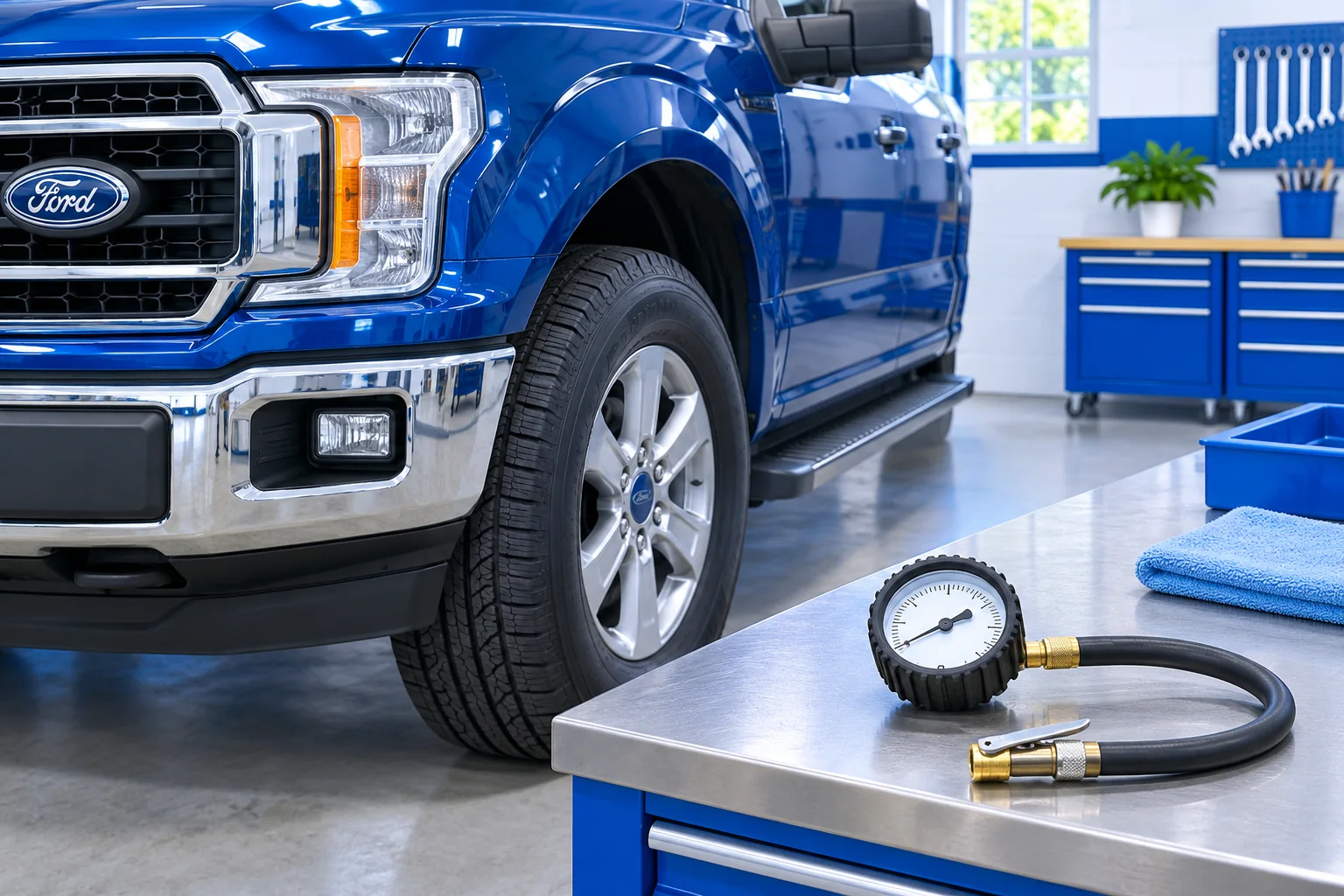
Use a suitable tire-pressure gauge and keep the units consistent with the placard. Do not compare a gauge reading in one unit with a label value in another without a correct conversion. This article deliberately gives no universal PSI setting because the actual Ford configuration, tire application, and label must establish it.
A dashboard pressure display or warning lamp can alert you to a problem, but it does not replace reading the placard or inspecting the tires. If a tire repeatedly loses pressure, have the leak investigated. Repeatedly topping it up without addressing damage or leakage does not resolve the underlying issue.
Check Aftermarket Tires Before Following the Original Size
A used Ford may have different wheels, larger tires, or a previous owner’s changes. Compare all installed tire designations with the placard. If they differ, document the mismatch. It does not automatically prove that the current setup is acceptable or unacceptable, but it means the original size alone cannot answer every fitment question.
Ask a qualified tire professional to verify wheel compatibility, load capability, clearance, and an appropriate inflation recommendation for the actual installation. Bring the original placard photograph and the installed tire details. This gives the specialist evidence rather than a vague description such as “bigger all-terrain tires.”
Do not choose pressure by copying another lifted truck with similar tires. The load and configuration may differ. Also do not assume that increasing pressure makes any tire adequate for any load. The tire, wheel, and truck each have limits, and pressure changes do not rewrite the vehicle’s ratings.
If you intend to return to the original size, still verify the wheels presently installed. A previous owner may have changed them along with the tires. The factory tire designation is the starting point for an original-equipment assessment, not proof that it fits every aftermarket wheel now on the truck.
Resolve a Missing or Unreadable Placard
If no tire label is visible, check the owner’s manual location information and inspect the door opening carefully. A repaint, replacement door, body repair, or age may explain missing information, but do not assume a cause without records. Record what is present and what cannot be read.
Ask Ford for VIN-specific assistance with the original tire and inflation information. Provide the model year, VIN, and photographs of surviving labels. If a replacement label is available, it should correspond to the actual truck rather than a convenient example downloaded from the internet.
A general model-year tire chart can help narrow the possibilities, but it may list several factory options. Selecting the most common option does not establish which one your Ford received. Use build information or professional confirmation to resolve that gap before ordering tires or assigning an inflation figure.
For a modified truck, tell the person helping you that the installed equipment differs. Restoring the original label information and assessing an aftermarket tire setup are related but separate tasks. One confirms the factory configuration; the other evaluates what is safe and appropriate on the truck today.
Prepare for a Tire Purchase With Complete Evidence
Bring the placard image, the installed sidewall photographs, and the truck’s identification to the tire shop. State whether you want an original-size replacement or are evaluating a different size. Those are different requests and should lead to different fitment checks.
Ask the seller to confirm the complete designation and required service characteristics, not just the tire brand. If the recommendation differs from the placard, ask for the reason and the application evidence. Keep the answer with your purchase records so the next service provider can understand the decision.
Mention towing, regular payload, and other actual use when seeking advice, while recognizing that tire selection does not raise Ford’s vehicle ratings. If you need a towing-capacity decision, use the correct truck-specific documentation. A tire placard is useful evidence but does not independently establish every towing limit.
After installation, check that the invoice accurately identifies the tires supplied. Preserve any written pressure guidance for the modified application and compare it with the original documentation. If the shop’s information and the truck’s label disagree without an explanation, resolve that conflict before relying on either from memory.
Work Through a Used Truck Example
Suppose a used F-150 has a clear factory placard but the tires have a different designation. Begin by copying both exactly. Do not choose the larger number, assume the previous owner knew the correct fitment, or decide the factory label is obsolete simply because the truck looks modified. Ask the tire shop to identify the installed wheel and tire combination and explain how it relates to the original application.
Next, distinguish the questions you want answered. Restoring original equipment requires checking whether the current wheels accept the original tire specification. Keeping the modified setup requires assessing that actual combination and its inflation guidance. The same photograph can support both conversations, but the resulting recommendation may differ because the intended configuration differs.
For another example, imagine that the label is readable except for one pressure digit. Record the known tire designation and preserve the unclear photograph, then request VIN-specific confirmation. Do not fill the gap using an adjacent spare entry or a similar truck in a parking lot. The missing digit is an evidence problem that needs an authoritative answer.
Finally, keep the corrected information accessible with the truck’s service records. If another person regularly drives or services it, make sure they know whether the tires remain original size or have been changed. A clear record prevents the same uncertainty from returning at every rotation, replacement, or pressure check.
If you are checking an F-250, the existing Ford F-250 tire-size chart adds model-specific context. Confirm the actual placard before selecting among the chart’s factory-size applications.
Questions About Ford Tire Placards
Where Is the Ford Tire Size Placard?
For the US F-150 examples cited here, check the driver-side B-pillar and the driver’s door edge. Consult the correct manual for another Ford model or market.
Should I Inflate to the Pressure on the Tire?


Do not treat the sidewall maximum as the vehicle’s recommended pressure. Use the applicable Ford placard and appropriate guidance for the actual tire installation.
What If My Installed Tires Differ From the Label?
Record both designations and have the current setup assessed. The original placard tells you about factory equipment; it does not verify an aftermarket conversion.
Can I Use Another F-150 Owner’s Label?


Use it only to understand the label’s layout. Obtain your truck’s own information before selecting a size or pressure.
Keep the Label and Installed Tires Matched
To find a Ford tire size placard, begin at the driver’s door opening and identify the tire-information fields clearly. Photograph the complete label, copy front, rear, and spare entries separately, and compare them with every installed tire. Use the recommended cold pressure for the applicable configuration rather than the sidewall maximum. If the placard is missing or the truck has different tires and wheels, obtain VIN-specific factory information and professional guidance for the actual installation. That small evidence file is more useful than a remembered tire size: it lets you and the tire shop make a decision that can be checked later.


