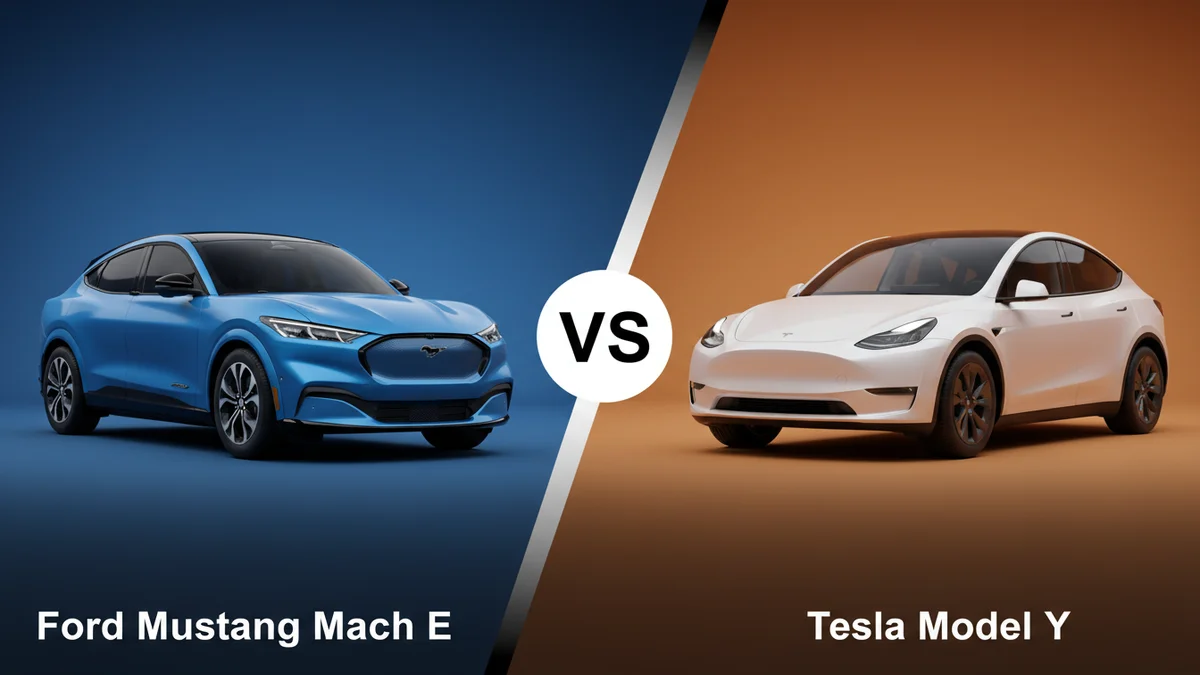
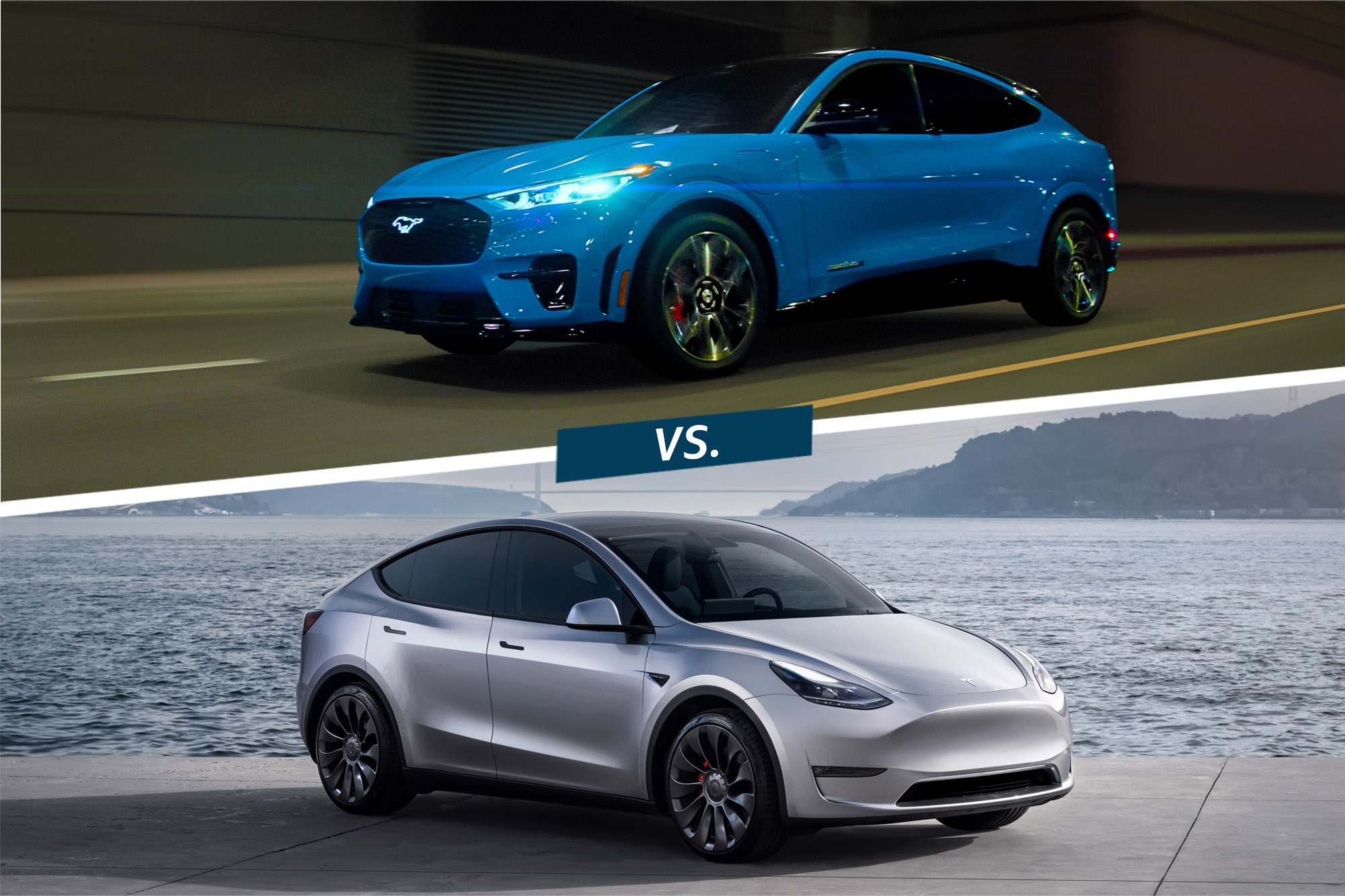
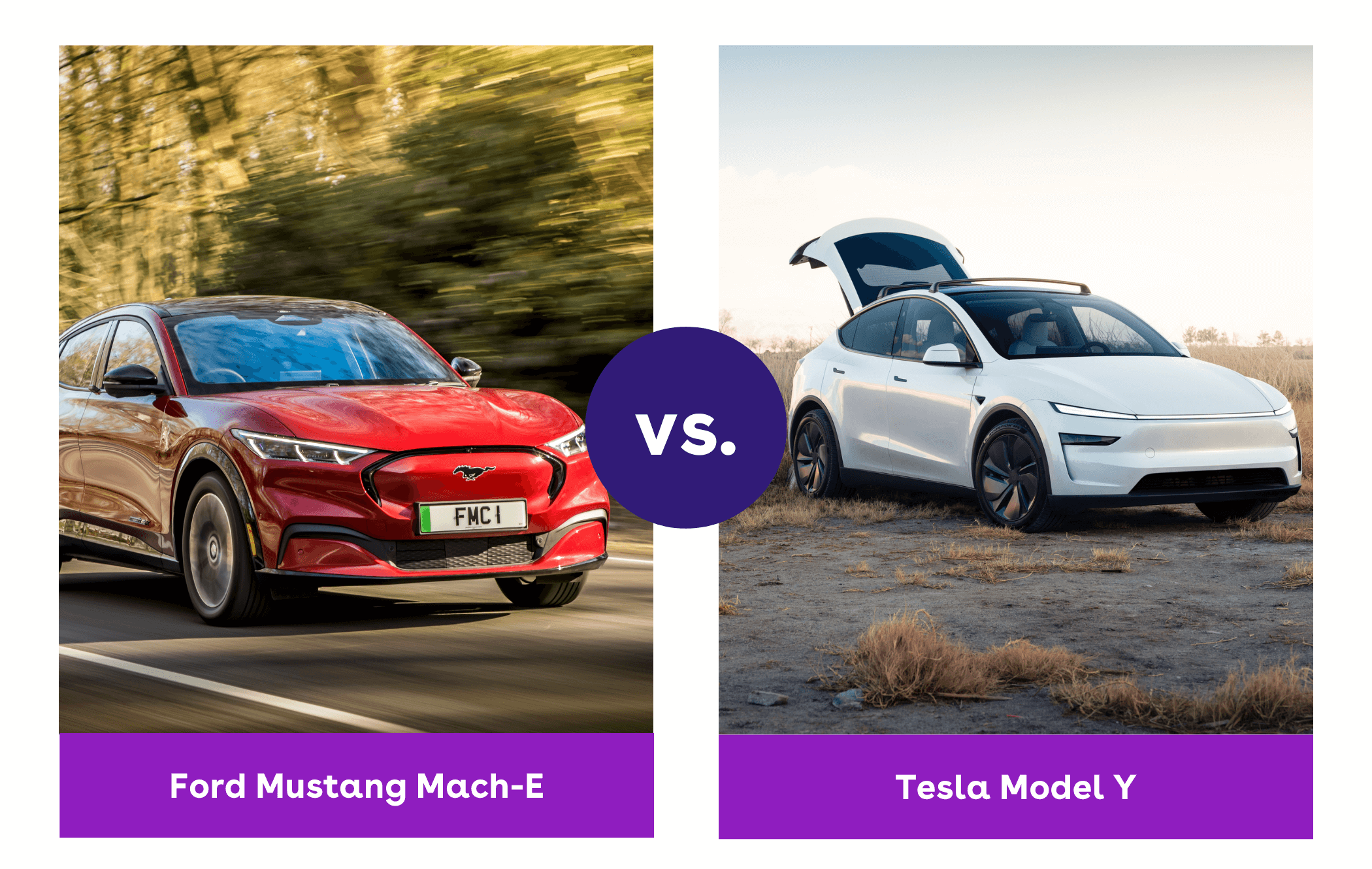
Ford Mustang Mach E vs Tesla Model Y 2026: Full Comparison

You might assume the electric SUV bearing the legendary Mustang name would universally dominate driving feel, but the Ford Mustang Mach E doesn’t entirely live up to that expectation in every regard. While it delivers a genuinely engaging driving experience and a more traditionally premium cabin, the Tesla Model Y surprisingly clinches a narrow victory in overall performance and offers a significantly more robust charging infrastructure. This head-to-head isn’t just about raw power or luxury; it’s a nuanced battle between a bold new electric interpretation of an icon and a market-defining disruptor, each carving its own path in the rapidly evolving EV landscape.
Quick Verdict: The 2026 Tesla Model Y slightly edges out the Ford Mustang Mach E due to its superior charging infrastructure, efficiency, and overall utility. However, the Mach E delivers a more engaging driving experience and a more traditional, premium interior, making it the preferred choice for those valuing driving feel and familiar cabin aesthetics over raw efficiency and network reach.
Drivers seeking a more engaging, 'car-like' EV with premium interior finishes and physical controls.
Buyers prioritizing charging convenience, cutting-edge technology, and maximum cargo flexibility.
- Tesla Model Y offers a 330-mile max EPA range, slightly more than the Mach E's 320 miles.
- The Model Y offers faster DC fast charging at up to 250 kW, compared to the Mach E's 180 kW peak.
- Ford Mustang Mach E provides a more engaging driving experience, especially in its 480 hp GT trim.
- The Model Y offers significantly more cargo space, with 76.0 cu ft versus the Mach E's 59.7 cu ft.
- The 2026 Mach E's estimated starting price of $44,500 makes it slightly more accessible than the Model Y's $46,000.
Ford Mustang Mach E vs Tesla Model Y: Head-to-Head Specs


A glance at the core specifications for the Ford Mustang Mach E and Tesla Model Y quickly highlights their differing priorities. For instance, the Model Y consistently delivers superior range figures, with many configurations pushing past 300 miles on a full charge, outperforming most Mach E variants. Furthermore, Tesla’s streamlined interior design often centers around a larger, singular touchscreen interface, giving it a perceived technological edge over the Mach E’s more traditional dual-screen setup. These fundamental differences set the stage for a compelling comparison of what truly matters to today’s EV buyer.
✓ = better value in that row. Sourced from manufacturer specifications.
Performance & Category Ratings


In the crucial realm of Performance, the Tesla Model Y secures a rating of 9.0, slightly outpacing the Ford Mustang Mach E’s 8.8. This isn’t just about raw 0-60 mph times, which the Model Y often wins due to its relentless, instant torque delivery and lighter weight in some configurations. Tesla’s holistic approach to power delivery and efficiency contributes to a sensation of effortless speed that’s hard to beat.

For Range & Charging, the Model Y truly pulls ahead with a dominant 9.5 against the Mach E’s 8.2. Tesla’s long-standing lead in battery technology, combined with its unparalleled Supercharger network, provides a peace of mind that competitors, including Ford, are still striving to match. Longer range and ubiquitous, reliable fast charging are powerful advantages.
However, the tide turns dramatically for Interior Comfort, where the Mach E earns a strong 8.9 compared to the Model Y’s 8.0. Ford has prioritized a more traditional, tactile interior with higher-quality materials and better-bolstered seating, creating a cabin that feels more substantial and less stark. The Mach E’s cockpit feels premium, inviting you in for longer journeys.
For Technology & Infotainment, the Model Y reclaims its lead with a 9.2 versus the Mach E’s 8.5. Tesla’s minimalist cabin, centered around its expansive touchscreen, offers seamless over-the-air updates and a deeply integrated software experience. While the Mach E’s SYNC 4A system is excellent and supports Apple CarPlay/Android Auto, it can’t quite match the sheer breadth and integration of Tesla’s ecosystem.
In terms of Build Quality, the Model Y achieves an 8.3, narrowly topping the Mach E’s 8.0. Tesla has made significant strides in recent years, with improved panel gaps and a general sense of solidity. While Ford’s build quality is respectable, early Mach E models sometimes showed minor fit-and-finish issues that the Model Y, especially in its later iterations, has largely ironed out.
The Value for Money metric sees the Model Y at 8.7 against the Mach E’s 8.3. This reflects not just initial purchase price but also long-term ownership costs, including efficiency, depreciation, and the reliability of the charging infrastructure. The Model Y’s lower running costs and strong resale value often make it a more financially sound investment.
Regarding Safety Features, the Model Y scores a commanding 9.0, surpassing the Mach E’s 8.7. Tesla’s comprehensive suite of standard active safety systems and its robust crash test performance have consistently set industry benchmarks. Ford’s Co-Pilot360 is a strong contender, but Tesla’s Autopilot and advanced driver assistance systems provide an extra layer of confidence.
Finally, for pure Driving Dynamics, the Mach E shines brightly with a 9.0, eclipsing the Model Y’s 8.6. This is where the Mustang legacy truly emerges. The Mach E offers a more communicative steering feel, a better-balanced ride, and a more engaging chassis, making it genuinely enjoyable on twisty roads. While the Model Y is quick, the Mach E feels more like a driver’s car.
Mach E
Model Y
By the Numbers


Beyond subjective impressions and reviewer ratings, the true story of these electric SUVs often unfolds in the hard numbers. From acceleration figures that define their performance pedigree to efficiency ratings dictating long-term running costs, these statistics paint a comprehensive picture. We’ve compiled the crucial data points that differentiate the Ford Mustang Mach E and the Tesla Model Y, providing a factual basis for your purchasing decision. Understanding these quantifiable metrics is essential for an informed choice.
Mach E
Model Y
Hover any bar for exact values. Each metric scaled independently.
Ford Mustang Mach E: Strengths and Weaknesses
The Ford Mustang Mach E confidently steps into the EV arena, leveraging its iconic nameplate to deliver a truly engaging experience. Its paramount strength lies in its Driving Dynamics, scoring an impressive 9.0. You’ll find the steering responsive and communicative, providing excellent feedback that makes spirited driving genuinely enjoyable. The ride is well-tuned, striking a fine balance between sporty firmness and everyday comfort, a trait often missing in electric SUVs. Furthermore, its Interior Comfort earns an 8.9, a standout feature. Ford has invested in quality materials and a familiar, premium layout, offering physical buttons and an inviting ambiance that many drivers prefer over stark minimalism. This cabin feels like a proper car, with thoughtful touches and supportive seating.
However, the Mach E isn’t without its drawbacks. Its Range & Charging score of 8.2, while respectable, simply can’t compete with the Model Y’s superior efficiency and vast charging network, meaning longer trips require more planning. In raw Performance, at 8.8, it trails the Model Y’s 9.0, lacking that last sliver of outright acceleration. The Technology & Infotainment system, rated 8.5, is good, but it struggles to match Tesla’s seamless integration and over-the-air update capabilities. Finally, its Build Quality at 8.0, though improving, still trails the Model Y, with some instances of fit and finish concerns occasionally reported. These are minor quibbles for many, but they are crucial distinctions in this highly competitive segment.
Tesla Model Y: Strengths and Weaknesses
The Tesla Model Y remains a formidable contender, solidifying its position through several key advantages. Its Range & Charging capability is simply unmatched, securing a stellar 9.5 rating thanks to its remarkable efficiency and the industry-leading Supercharger network. This convenience makes long-distance travel remarkably stress-free. The Model Y also excels in Technology & Infotainment, earning a 9.2. Its colossal central touchscreen controls nearly everything, offering a futuristic, integrated experience with constant over-the-air updates that keep the vehicle feeling fresh. We found its Performance rating of 9.0 to be well-deserved, with instantaneous torque delivery providing exhilarating acceleration that truly shoves you into the seat. Furthermore, its comprehensive Safety Features (9.0) and steadily improving Build Quality (8.3) offer immense peace of mind, alongside excellent Value for Money (8.7) due to strong resale and low running costs.
Yet, the Model Y isn’t a flawless machine. Its primary weakness lies in Interior Comfort, scoring a comparatively low 8.0. The minimalist cabin, while futuristic, can feel stark and somewhat uninviting to those accustomed to more traditional luxury. We’ve noticed the seats, though comfortable, lack the plushness and bolstering found in some rivals, and the ride, especially on larger wheels, often leans towards firm rather than plush. The reliance on the central screen for almost all functions can be distracting for some drivers, requiring a steeper learning curve. Lastly, its Driving Dynamics rating of 8.6, while competent, lacks the tactile feedback and engaging feel of the Mach E, making it less of a ‘driver’s car’ for enthusiasts seeking that connection to the road.
- ✅ More engaging and 'fun to drive' character, especially the GT trim.
- ✅ Premium interior materials with a more traditional design and physical controls.
- ✅ Distinctive, muscular styling that evokes Mustang heritage.
- ✅ Advanced BlueCruise hands-free driving assistance system for highway use.
- ✅ Established dealer network for service and support.
- ❌ Slower peak DC fast charging rate compared to Model Y.
- ❌ Less overall cargo space than the Model Y.
- ❌ ADAS (BlueCruise) is maturing but not as feature-rich as Tesla's Autopilot.
- ❌ Less efficient than the Model Y, potentially leading to higher electricity costs.
- ✅ Unrivaled Supercharger network and faster DC fast charging speeds.
- ✅ Exceptional energy efficiency, leading to lower running costs.
- ✅ Advanced Autopilot/FSD capabilities with continuous OTA software updates.
- ✅ Superior cargo capacity (76.0 cu ft) and optional 7-seat configuration.
- ✅ Sleek, minimalist interior design with a massive central touchscreen.
- ❌ Minimalist interior design may not appeal to all, lacking physical buttons.
- ❌ Ride can be firm, especially in Performance trim, impacting comfort on rough roads.
- ❌ Reliance on touchscreen for almost all functions can be distracting.
- ❌ Perception of inconsistent build quality, though improving over time.
Which One Should You Choose?
Deciding between the Ford Mustang Mach E and the Tesla Model Y truly depends on your priorities and driving style. If you’re a commuter primarily seeking an engaging daily driver with a comfortable, familiar interior, the Mach E is likely your best bet. Its superior Driving Dynamics (9.0) and Interior Comfort (8.9) make every trip more enjoyable. You’ll appreciate the traditional layout and the physical buttons, allowing for an intuitive user experience without constant screen interaction.
However, if you’re a road tripper or someone who prioritizes long-distance travel with minimal fuss, the Model Y becomes the clear winner. Its commanding Range & Charging score of 9.5, bolstered by the extensive and reliable Supercharger network, offers unmatched convenience and eliminates range anxiety. This isn’t just about efficiency; it’s about network access.
For the tech enthusiast who loves cutting-edge features, over-the-air updates, and a minimalist, screen-centric interface, the Model Y’s Technology & Infotainment (9.2) is unrivaled. It feels like a gadget on wheels, constantly evolving. In contrast, the traditionalist who values a more conventional, premium cabin with distinct controls and Apple CarPlay/Android Auto will find the Mach E’s interior (8.9) far more appealing.
If raw performance figures and blistering straight-line acceleration are your primary concern, the Model Y’s 9.0 performance rating will satisfy. But if you value the feel of driving – a car that communicates with you through its steering and chassis – the Mach E’s 9.0 in Driving Dynamics delivers a more visceral and connected experience. Consider your budget too; while both are premium EVs, the Model Y often offers slightly better overall Value for Money (8.7) through lower running costs and strong resale, even if the Mach E provides a more “premium” cabin feel for its price point. Your ideal choice hinges on whether you value a refined driving experience and a familiar cabin, or cutting-edge tech, vast charging infrastructure, and efficiency above all else.
Drivers seeking a more engaging, 'car-like' EV with premium interior finishes and physical controls.
Buyers prioritizing charging convenience, cutting-edge technology, and maximum cargo flexibility.
Final Verdict
After a thorough head-to-head comparison, the 2026 Tesla Model Y ultimately edges out the Ford Mustang Mach E. The Model Y’s superior charging infrastructure, class-leading efficiency, and overall utility – reflected in its dominant Range & Charging score of 9.5 and higher Value for Money (8.7) – present a compelling package for the modern EV buyer. Its advanced technology and robust performance further solidify its position as a segment leader.
However, this victory isn’t absolute. The key trade-off remains clear: while the Model Y excels in practicality and technological prowess, the Ford Mustang Mach E delivers a more engaging driving experience and a more traditional, premium interior. For those who prioritize tactile feedback from the road (Driving Dynamics 9.0) and a cabin that feels more luxurious and familiar (Interior Comfort 8.9), the Mach E isn’t just an alternative; it’s the preferred choice, offering a driving sensation that truly lives up to its iconic badge.
Frequently Asked Questions
Is Ford Mustang Mach E better than Tesla Model Y?
The Tesla Model Y often offers superior charging (250 kW peak) and efficiency, with a 330-mile max range. However, the Mach E (320-mile range, 180 kW peak) offers a more engaging drive and a traditional, premium interior, appealing to different priorities. Neither is definitively 'better' for everyone; it depends on individual needs.
Which offers better reliability in 2026?
Both vehicles have significantly improved their reliability since initial launches. By 2026, both are considered solid, but Tesla Model Y's simpler mechanics and Ford's extensive dealer network offer different service experiences. Overall, the Model Y's design maturity often gives it a slight edge, though Mach E's quality has consistently risen.
What's the price difference in 2026?
The 2026 Ford Mustang Mach E is estimated to start around $44,500 for its base model, while the Tesla Model Y is projected to begin around $46,000. For performance-oriented trims, the prices become more competitive, with both vehicles often exceeding $60,000 depending on options and configurations.
Which has better resale value/longevity?
Tesla Model Y generally holds a stronger resale value due to brand recognition, continuous software updates, and the robust Supercharger network. Its longer 8-year/120,000-mile battery warranty also contributes to perceived longevity. The Mach E has good resale value, but Tesla typically leads this metric in the EV market.
Which is better for beginners to EVs?
The Tesla Model Y is arguably better for EV beginners due to its seamless Supercharging experience and intuitive, albeit minimalist, technology. The Mach E, with its familiar interior layout, physical buttons, and traditional dealer support, might ease the transition for those new to EVs but accustomed to gasoline cars.