
Ford Lightning Blue Paint Code: Compared Side-by-Side by Trim Levels and 2026 Variations

The standard Ford Lightning Blue paint code for the F-150 is N1 (often referenced as HN). This vibrant, high-gloss finish was prominently featured on performance-oriented models. The following guide provides the specific manufacturer codes, locations for factory tags, and technical nuances required for precise color matching, repair, and touch-up applications across various Ford production years and trim configurations.
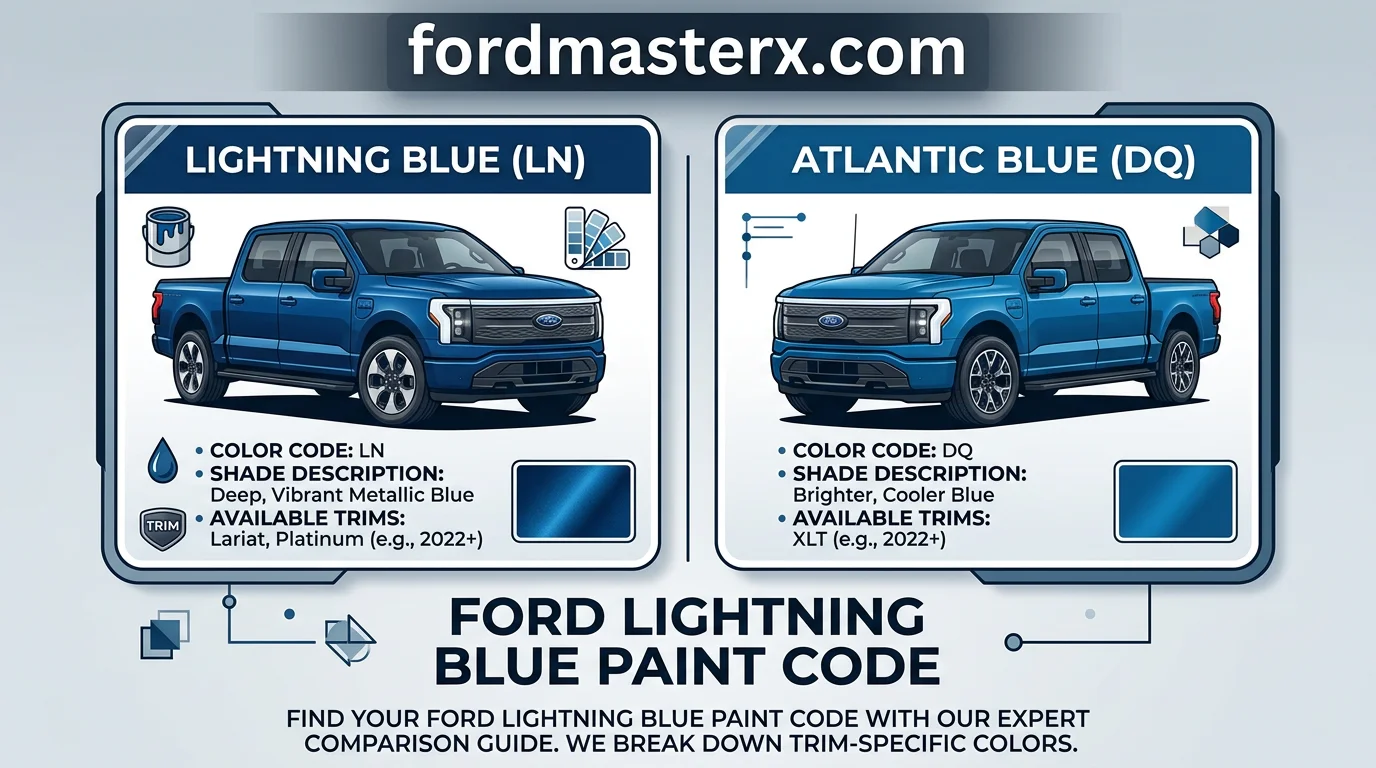
Ford Lightning Blue Paint Code Reference Table
How to Read This Chart
The table above identifies the factory-standard identifiers for Ford’s Lightning Blue color. The Primary Code “N6” is the essential alphanumeric string used by dealerships and paint suppliers to retrieve the exact color mix for your vehicle. Providing this specific code is mandatory for ensuring color accuracy during touch-up or body repair.


The Reference ID “M7365” is the internal Ford engineering reference number often found on manufacturing build sheets or technical paint documentation. While “N6” is the common consumer-facing code, your repair technician may utilize the M7365 identifier to confirm the precise chemical formulation in their mixing software.

The Paint System column confirms that Lightning Blue utilizes a Basecoat/Clearcoat application. This means the N6 color-pigmented base layer is applied first, followed by a transparent Clearcoat layer. The Clearcoat provides necessary UV protection, depth, and the signature metallic gloss associated with this factory finish.
When ordering supplies, verify that your specific paint kit is labeled for “N6” to guarantee a seamless match. Because different lighting conditions can affect metallic flake appearance, always perform a spray-out card test before applying paint to the vehicle’s body panels. Check your vehicle’s door jamb sticker to confirm your factory-applied code matches these specifications.
Identifying Ford F-150 Paint Variations and Trim Levels


Paint codes in the Ford ecosystem are standardized across the entire F-150 platform. Whether you are looking at a gas-powered XL trim or a high-end electric Lightning, a specific alphanumeric code refers to the exact same chemical formulation and color pigment profile.
The trim level of your vehicle has no bearing on the paint code. A “Lightning Blue” or other metallic variant will use the identical formula regardless of whether the truck features a Pro, XLT, Lariat, or Platinum equipment package. Ford manages its color palette globally to ensure supply chain consistency.
Distinguishing Lightning Blue from Standard F-150 Blues


While the internal combustion F-150 and the Lightning share many paint options, confusion often arises from naming conventions. Marketing departments frequently apply unique names to the same color code to distinguish the electric vehicle lineup from the traditional truck lineup. You must rely on the paint code, not the marketing name.
For example, code N6—often referred to as Lightning Blue in marketing materials—is a distinct metallic pigment. However, this same code might appear on a gas-powered F-150 under a slightly different trade name, such as “Blue Flame” or “Velocity Blue” depending on the production year. Always cross-reference the actual paint code found on your door jamb.


Never purchase paint based solely on a marketing color name. Different model years may share a name while utilizing different chemical formulations or metallic flake densities. Always confirm the factory paint code printed on your vehicle’s Information Certification Label to ensure a precise match.
Because the Lightning shares much of its body architecture and paint application technology with the standard F-150, the color consistency is generally high. However, be aware that mid-cycle refreshes or factory shifts can result in slight variations in tint. Checking the specific code ensures that your touch-up paint matches the exact batch specification used during your truck’s production window.


If you are attempting to match a custom Lightning color, verify if that color was a fleet-exclusive option. Some fleet colors share codes with civilian trucks but use different clear-coat thickness specifications. Always verify with your local body shop if your vehicle displays a non-standard or fleet-order paint code during your lookup process.
How to Find Your Ford Lightning Paint Code Location


The factory-issued safety compliance sticker remains the most accurate and reliable source for identifying your Ford Lightning paint code. While various digital databases are available, the physical label attached to your specific vehicle at the assembly plant ensures that you are matching the exact chemical formula applied to your truck’s exterior panels during the original factory painting process.
Paint codes for the Ford Lightning are not stored in the infotainment system or on the engine block. Instead, they are printed on the white or silver Vehicle Certification Label, which is affixed to the door frame of the driver-side door. This location is universal across modern Ford F-150 platforms, including the all-electric Lightning trim levels.


Step-by-Step Sticker Verification
Open the driver-side front door completely. Look at the inner door jamb pillar—the vertical metal surface on the truck frame. You will find a large, multi-line sticker featuring various barcodes, tire pressure data, and weight ratings.
Scan the lower or middle section of the label for the letters “EXT PNT.” This field is usually followed by a two-character alphanumeric code. For example, if you see “EXT PNT: AZ,” the code is AZ, which corresponds to the specific factory-applied blue paint color.
Write down this exact code before purchasing any touch-up supplies. Ensure you capture both characters clearly, as some similar-looking codes represent slightly different shades or metallic finishes within the Ford color catalog.
Lookup via VIN and Dealership Records


If your door sticker has been damaged, painted over during a previous repair, or is missing entirely, you can obtain the original paint code using your 17-digit Vehicle Identification Number (VIN). This string of characters serves as a unique fingerprint for every factory component and finish applied to your vehicle.
Contact your local Ford dealership’s parts department and provide them with your VIN. They can access the Ford ETIS (Electronic Technical Information System) or their internal dealer portal to pull the “As-Built” data for your specific truck. This record provides the factory-shipped paint color, interior trim, and installed features.
When requesting this information, clearly ask for the specific “External Paint Code” to avoid confusion with internal trim colors. Dealership staff are accustomed to this request and can verify the code against the original window sticker or build sheet, ensuring your purchase is backed by authoritative manufacturer data.
Technical Specifications of Ford Automotive Paint Systems
| Layer | Function | Composition |
|---|---|---|
| Primer | Adhesion and Corrosion Resistance | Epoxy-based electrocoat |
| Base Coat | Color and Metallic Effect | Pigment + Metallic Flakes |
| Clear Coat | Gloss and UV Protection | Polyurethane/Acrylic Resins |
How to Read This Chart
This chart breaks down the three primary stages of the Ford factory paint process. The “Layer” column identifies the specific stratum of the application. The “Function” column describes the mechanical or aesthetic purpose of that layer in protecting the steel or aluminum body panels.
The “Composition” column identifies the chemical base of the substances used. This information applies generally to modern Ford F-150 and performance vehicle finishes produced within the last decade. These specifications are critical when selecting compatible touch-up products that bond properly with the factory-applied electrocoat foundation.
Understanding Base Coat and Clear Coat Layers


The base coat serves as the visual heart of the Lightning Blue finish. It contains the precise chemical pigments required to achieve the blue hue, alongside millions of suspended metallic flakes. These flakes act as tiny mirrors, refracting light to provide the characteristic depth and sparkle associated with this specific color code.
Because the base coat dries to a dull, matte finish, it provides no protection against the elements. Its primary role is color uniformity and texture. Without a covering layer, the pigments and metallic particles would quickly oxidize or be stripped away by environmental contaminants and physical friction.
The clear coat is the final, transparent barrier applied over the base coat. It serves two vital purposes: it provides the high-gloss shine that gives the vehicle its wet look, and it contains chemical stabilizers designed to filter out harmful ultraviolet (UV) radiation.
By absorbing UV energy before it reaches the pigmented base, the clear coat prevents the Lightning Blue from fading or chalking over time. It is significantly thicker and harder than the base layer, providing the necessary mechanical resistance against light scratches, acidic rain, and road debris encountered during daily driving.
Why Tri-coat Finishes Require Specialized Application
Tri-coat systems differ from standard base-coat applications because they utilize a semi-transparent mid-coat layer. This extra stage is responsible for the unique “depth” or “glow” often seen in complex factory finishes.
Tri-coat systems present significant challenges during refinishing because they utilize an additional translucent layer between the base and the clear coat. This mid-coat is often infused with specialized pearlescent particles that change the color intensity based on the angle of light hitting the panel.
Achieving a seamless match requires perfect consistency in the number of mid-coat passes applied. If a technician applies the mid-coat too heavily, the Lightning Blue will appear darker or shifted in tone. Too light, and the base color underneath remains flat, losing the intended factory vibrancy.
Controlling the spray pattern is essential. Unlike standard two-stage systems, tri-coat applications are highly sensitive to air pressure, nozzle distance, and temperature. Even slight variations in application speed can lead to visible “banding” where the new paint meets the original factory finish.
Common Pitfalls in Ford Lightning Paint Matching
The Dangers of Relying on Online Color Swatches
Many owners attempt to match Ford Lightning blue paint by comparing a physical panel against a digital color swatch found online. This is a primary source of error, as consumer monitors, mobile phone screens, and web browsers are not calibrated for color accuracy or metallic depth.
Digital swatches represent a static, flat RGB value that cannot replicate the complex light-refracting properties of automotive basecoats. In particular, the metallic flakes in Ford’s Lightning Blue change appearance significantly based on the angle of incidence and the light source temperature.
For example, viewing a digital swatch on a high-saturation phone screen will never accurately reflect how the pigment settles in a clear-coat layer. Relying on these uncalibrated digital images often leads to purchasing the incorrect paint variant, resulting in a visible disparity between the repaired area and the factory-finished body panels.
Mitigating Color Drift and Environmental Exposure
Even when using the correct factory paint code, a perfect match is rarely achieved due to the phenomenon of color drift. Paint undergoes subtle chemical changes as it is exposed to harsh environmental factors, including UV radiation, extreme temperature fluctuations, and airborne contaminants.
Over several years, the factory-applied clear coat and pigments will fade or oxidize, causing the paint to shift away from its original factory-spec appearance. A fresh application of paint—even if mixed perfectly to the original 10-year-old formula—will appear noticeably “brighter” or more vibrant than the surrounding weathered panels.
Professional shops often utilize a spectrophotometer to measure the actual reflective properties of your specific truck before mixing paint. Furthermore, they account for chemical formulation differences between different paint brands. A shop using a waterborne system may achieve a different flake orientation than one using a solvent-based system.
When planning a repair, always conduct a spray-out card test. Spray the paint onto a test panel and compare it to the vehicle in direct sunlight versus shade. This confirms if the metallic flake density and shade match the current state of your vehicle, accounting for the natural aging of the surrounding paint.
✨ Key Benefits of Proper Paint Matching
Maintained Resale Value
Precision color matching ensures that professional repairs remain undetectable, preserving the aesthetic integrity and market valuation of your Ford Lightning.
Reduced Rework Costs
Verifying the match through test panels prevents costly full-panel repaints, saving time and materials by avoiding the “trial and error” approach.
Professional Advice for Touch-up and Refinishing Success
Achieving a professional-grade finish on Lightning Blue surfaces requires meticulous attention to detail, beginning with the verification of your paint code. Never rely on online databases or VIN decoders alone to purchase your materials. Always verify the code printed on the manufacturer’s label located inside your vehicle’s driver-side door jamb to ensure complete accuracy before ordering supplies.
Best Practices for DIY Touch-up Applications
For minor stone chips or thin scratches, precision is paramount. Use a touch-up pen or a fine-tipped artist brush for localized damage. These tools allow for controlled application, preventing excess paint from pooling or creating unsightly “blobs” that stand out against the factory clear coat.
Surface preparation is the most critical phase of the process. Begin by cleaning the chip with a wax and grease remover or high-purity isopropyl alcohol to ensure the substrate is pristine. If rust is present within the chip, carefully sand it away until you reach bare metal before applying a thin, compatible primer.
When applying the Lightning Blue base coat, use multiple light, thin layers rather than one heavy coat. Allow sufficient drying time between applications as specified by the paint manufacturer. Once the base coat is level with the surrounding surface, follow up with a high-quality clear coat to provide necessary UV protection and depth.
Reserve professional spray equipment for panel-wide repairs or blending tasks. Aerosol touch-up pens and brush-on bottles lack the atomization pressure required for seamless panel blending. Attempting to spray large areas with consumer-grade equipment often leads to uneven textures, orange peel, or visible tape lines at the edges.
Evaluating OEM vs. Aftermarket Paint Formulations
Choosing between Original Equipment Manufacturer (OEM) paint and aftermarket alternatives involves understanding chemical composition. OEM paint systems from Ford are engineered for specific robotic application processes and factory-curing temperatures. While high-quality aftermarket providers offer excellent matches, they are not identical in chemical makeup to the factory-applied layers.
Do not assume that every professional paint shop utilizes the exact same chemical formulation for a specific color code. Different manufacturers use varying binders, solvents, and pigment concentrations that can subtly alter the appearance of Lightning Blue under direct sunlight. Always request a “spray-out card”—a sample sprayed with your exact batch of paint—to compare against your vehicle’s body panel in natural light before committing to a full refinish.
Professional body shops often use color-matching cameras to account for slight variations caused by sun fade or environmental exposure. If your vehicle has spent significant time outdoors, the original factory paint may have oxidized slightly. An aftermarket mix tailored to your current panel color will yield better results than a generic OEM formula, which assumes the vehicle has just left the showroom floor.
Key Takeaways
-
✓
Locate your specific paint code on the driver-side door jamb sticker for 100% accuracy. -
✓
Distinguish between metallic and non-metallic blue tones to prevent mismatching. -
✓
Review the pros and cons of using aftermarket versus OEM paint supplies. -
✓
Understand how clear coat thickness affects the visual depth of deep blue hues. -
✓
Compare Atlas Blue versus Antimatter Blue features to confirm your factory color.
❓ Frequently Asked Questions
1
What is a Ford Lightning blue paint code?
A Ford Lightning paint code is a unique alphanumeric identifier assigned to your truck’s specific exterior color. It ensures that any touch-up paint or refinishing material matches the factory application. Codes like E7 or HX are specific to the blues offered in the 2026 F-150 Lightning lineup.
2
How does finding the correct paint code work?
You locate the paint code by opening the driver-side door and finding the Safety Compliance Certification Label on the door jamb. Look for the row labeled ‘EXT PNT’. The two-digit code following this label is the precise identifier for your factory-applied color and variant.
3
Why is verifying the paint code important?
Using the wrong code leads to significant color variance, which is highly visible on metallic finishes like Atlas Blue. Verification prevents the disadvantages of a poor repair, ensuring the paint blends seamlessly with the surrounding factory finish during maintenance or minor touch-up tasks.
4
What are the benefits of using OEM-matched paint?
The main advantage of OEM-matched paint is precision in color density and metallic flake suspension. Ford-specific formulas account for the unique pigment characteristics of their 2026 lineup, ensuring that the repaired area reflects light identically to the original factory coating during a real world test.
5
How can I get started with touch-ups?
First, identify your code using the door jamb label. Next, purchase a high-quality, paint-matched kit specifically formulated for your truck’s model year. Clean the area thoroughly with wax and grease remover, apply the base coat in thin layers, and finish with a compatible clear coat.
6
Where is the paint code located on my F-150 Lightning?
Located on the compliance sticker on the driver-side door jamb. Look for the label marked ‘EXT PNT’.