
How to Tell 2WD or 4WD Ford F-150 Without a Traction Test

To tell whether a Ford F-150 is 2WD or 4WD, compare its factory build information, four-wheel-drive controls, and installed drivetrain. A selector with applicable 4H or 4L positions is a strong clue that the truck has four-wheel-drive equipment. A truck displaying 2H can still be a 4WD model operating in two-wheel-drive mode.
Do not test the answer by spinning tires, engaging 4H or 4L on dry pavement, or crawling underneath an unsupported truck. You can establish the truck’s configuration through records and a stationary inspection. Whether its four-wheel-drive system works properly is a separate question that may require diagnosis.

Separate Capability From the Mode Currently Selected
“2WD” can describe a truck built with two-wheel drive or the operating mode selected on a truck equipped with four-wheel drive. Those meanings are easy to confuse in a used-truck listing. Ask whether the seller is describing the factory drivetrain or simply the setting currently shown on the dashboard.
Ford’s 2020 F-150 owner’s manual discusses four-wheel-drive operation for trucks equipped with that system. Its mode instructions distinguish normal two-wheel-drive operation from four-wheel-drive settings. A 2H label therefore does not by itself identify a factory 2WD truck.
Write down the complete selector labels rather than only the position highlighted. A photograph showing 2H, 4H, and 4L tells a different story from a photograph showing only “2H” in an instrument display. The first describes available controls; the second may show only the mode selected at that moment.
The distinction also prevents a common buying mistake. A truck may be equipped for four-wheel drive while a fault prevents engagement. That does not turn it into a factory 2WD model. It means the identification question and the condition question need separate answers before you agree on a price or repair plan.
Read the F-150 Selector Without Moving It


With the truck safely parked, look for its four-wheel-drive selector or applicable transfer-case controls. Control design varies by generation and equipment. Some trucks provide different combinations of settings, and older configurations can differ from current dashboard layouts. Read the correct owner’s manual instead of expecting every F-150 to match a current photograph.
Record all visible labels. Common mode names in Ford four-wheel-drive documentation include 2H, 4H, and 4L; some equipped systems also provide 4A. Do not assume that a missing 4A position means the truck lacks four-wheel drive. Automatic four-wheel-drive availability and basic four-wheel-drive capability are different distinctions.
A stationary visual inspection does not require operating the control. Avoid turning a dial just to make the display change, especially when you do not know the required shift procedure or surface restrictions. The manual’s instructions apply to the exact system installed, including any conditions for shifting into or out of low range.
Photograph the selector and any dashboard message separately. If a warning is present, preserve its exact wording. “4×4” capability, a selected mode, a shift-in-progress message, and a system fault are not interchangeable observations. Keeping them separate makes a later conversation with a technician much more useful.


Four checks before your next decision
- Build
Match the VIN and factory drivetrain record.
- Controls
Read every available mode, not only selected 2H.
- Hardware
Use a safe inspection when identification is uncertain.
- Condition
Diagnose faults separately from drivetrain identity.
Use the source and application limits explained in this article. This checklist supplies no universal technical setting.
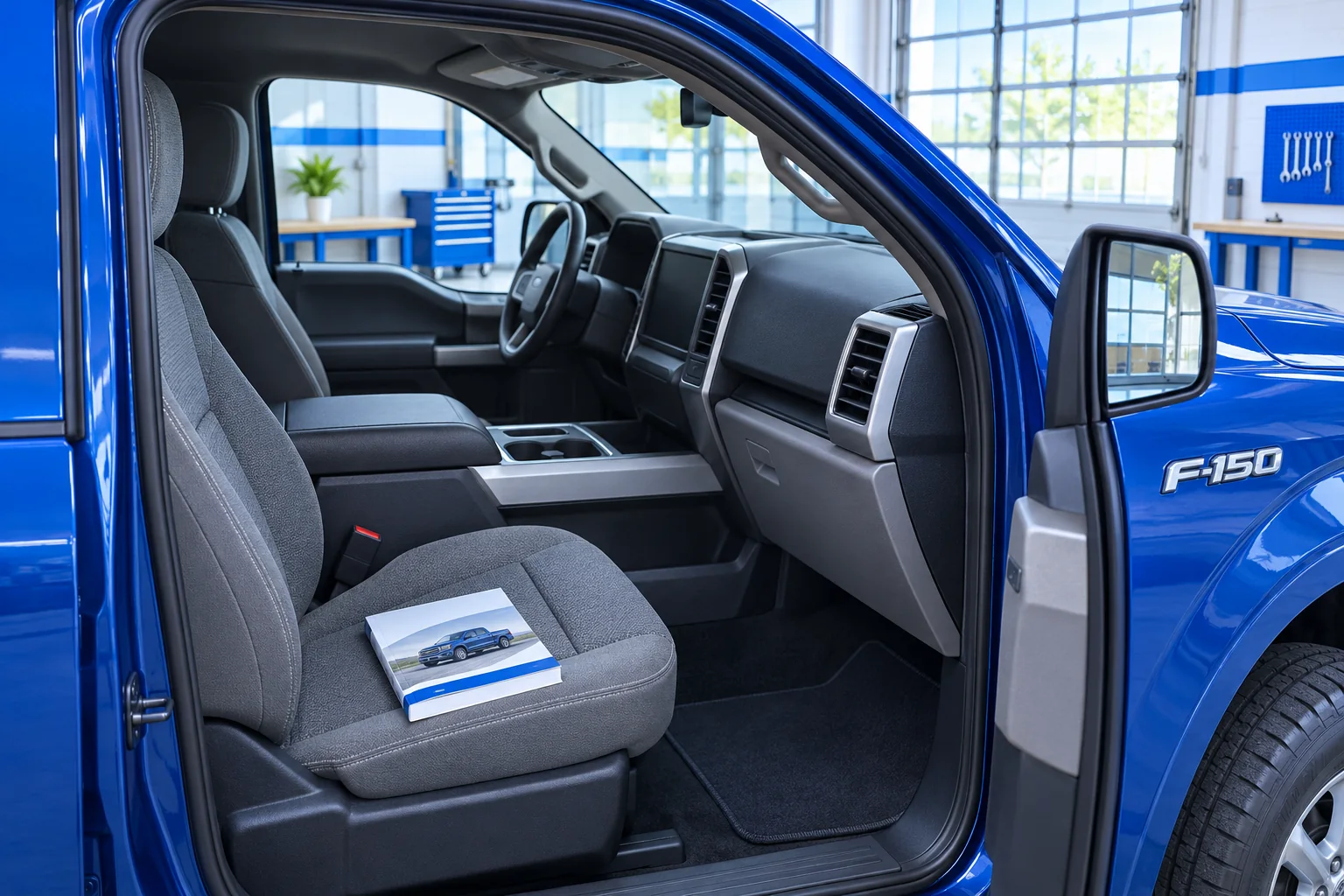
Confirm the Factory Drivetrain With Build Information


Use the complete VIN to obtain the truck’s factory configuration from Ford or reliable manufacturer build documentation. Confirm the model year, model, and drivetrain description together. A partial VIN or a seller’s typed description can omit the information needed to distinguish similar trucks.
Current Ford F-150 model information illustrates why a trim name should not be treated as a universal drivetrain identifier. Equipment and availability depend on the particular model and configuration. Use the record for the truck in front of you rather than a broad statement that every truck wearing a particular badge is the same.


A window sticker or build record can support the original configuration, but it should match the truck’s VIN. A loose printout from another vehicle is not evidence for this one. Ask for a readable identifier and compare it before relying on the listed drivetrain, engine, axle, or equipment package.
Factory records establish what the Ford was built with. If substantial modifications, conversions, or replacement drivetrain work are reported, inspect the installed equipment too. The original configuration remains relevant, but it cannot independently prove that every component is still present, connected, and working correctly today.
Use Visible Hardware as Supporting Evidence
A conventional four-wheel-drive F-150 has drivetrain equipment to send power to the front axle as well as the rear. A qualified inspection can identify the transfer-case arrangement, front driveline, and related components. That is stronger evidence than an exterior decal when the truck’s history is uncertain.
Start with observations that can be made safely from outside the parked truck. If a useful component cannot be seen without getting underneath, arrange a professional inspection on suitable lifting equipment. Do not use a jack alone as support, and do not ask someone to operate the truck while another person is beneath it.
Hardware photographs should show context. A close-up of an unidentified shaft or housing can be misinterpreted without its location relative to the transmission and front axle. Ask the inspector to explain which components establish four-wheel-drive capability and whether anything appears missing or modified.
Remember that presence is different from condition. A visible front driveline does not prove that the transfer case, actuators, controls, or other system components function as intended. Use physical inspection to confirm identity, then use the appropriate diagnostic process to assess faults. Avoid combining those two conclusions into a single unchecked claim.
Do Not Rely on Badges, Ride Height, or Tires
A 4×4 decal is easy to see, which makes it useful as an initial clue. It is also easy to replace or remove. Repainted beds, replacement panels, aftermarket graphics, and simple cosmetic changes can make exterior markings disagree with the truck’s actual configuration.
Ride height is similarly weak evidence. Suspension changes and tire sizes can alter the truck’s appearance. A taller F-150 is not automatically four-wheel drive, and a lowered truck is not automatically two-wheel drive. Appearance can help identify questions to ask, but it should not settle the drivetrain question.
Off-road tires do not prove which wheels receive engine power. They may have been chosen for appearance, availability, or a previous owner’s preferences. A truck’s tire model and tread pattern describe its tires, not the presence of a transfer case or front drivetrain.
Trim and package names also need model-year context. Do not extrapolate a current configuration rule to a truck built many years earlier. If a seller makes a specific claim about a package requiring four-wheel drive, check the applicable Ford order or build information and match it to the VIN.
A Rear Differential Lock Is a Different Feature
An electronic rear differential lock concerns the two wheels on the rear axle. Four-wheel drive concerns distributing power through front and rear drivetrain paths. A control or symbol associated with the rear axle should not be mistaken for proof that the truck has a front drive system.
Read the selector’s labels and the matching manual section carefully. A knob can combine more than one function, so its physical shape alone is not enough. The presence of a rear-locking control and the available four-wheel-drive positions are separate items to record on your worksheet.
The 2018 F-150 owner’s manual is a useful generation-specific reference for distinguishing the functions described for equipped trucks. Use it for its stated model year, and use a different manual when your F-150 falls outside that application.
Do not perform a traction test to distinguish the systems. Watching which tire spins on gravel is an unreliable shortcut and introduces avoidable risk. Records, controls, and installed hardware can answer the identification question without provoking wheelspin or trying to interpret tire marks afterward.
Avoid Dry-Pavement Engagement Tests
Ford’s cited F-150 manuals warn against using 4H or 4L on dry, hard-surfaced roads. This restriction matters even during a short used-truck inspection. Engaging a locked four-wheel-drive mode to “see if it feels different” is not a sensible identification method.
Do not generalize the operating rules of 4A to every four-wheel-drive setting. The modes exist for different purposes, and a truck without 4A does not gain automatic-mode behavior because a similar F-150 offers it. Read the exact instructions before operating the selector.
If a professional needs to verify system operation, let that person select a suitable diagnostic method and conditions under the appropriate service procedure. This article does not provide a road-test sequence, shift-speed allowance, or low-range engagement procedure because those details must match the installed system.
If you accidentally select an unsuitable mode or encounter binding, stop the improvised test and consult the correct manual or professional assistance. Do not continue forcing tight turns to confirm the sensation. The goal of identification is to establish configuration without stressing equipment or creating a control problem.
Use a Four-Part Buying Worksheet
Record factory drivetrain, selector labels, visible hardware findings, and current system condition in separate fields. This prevents a seller’s answer to one question from silently becoming the answer to all four. A complete worksheet is more valuable than a confident but unsupported “yes, it is a 4×4.”
| Question | Useful evidence | What it does not prove |
|---|---|---|
| How was it built? | Matching Ford build documentation | Every original component remains installed |
| What can the driver select? | Complete control labels and correct manual | Every mode functions correctly |
| What is installed now? | Safe professional hardware inspection | The system has no internal faults |
| Does it work correctly? | Application-specific diagnosis | The seller’s unrelated claims about maintenance |
Ask for an explanation when the evidence conflicts. For example, a four-wheel-drive build record combined with missing or altered hardware needs investigation. A dashboard fault on an otherwise matching 4WD truck needs diagnosis. Neither should be dismissed because the truck has a convincing decal.
Keep copies of the evidence with any pre-purchase inspection. If a repair is required, ask for an estimate tied to a diagnosis rather than a guessed component. Do not let the identification label substitute for a condition assessment, especially when the system is a major reason for buying the truck.
Before an inspection appointment, send the shop the VIN, selector photograph, and any warning-message photograph. Ask explicitly for both configuration confirmation and a condition assessment. This helps prevent a quick visual identification from being mistaken for a completed functional check. If the seller has disconnected a component, changed a switch, or reported an intermittent fault, include that information without assuming it explains the entire problem. A useful inspection report states what was checked, the conditions of the check, and any limits on the conclusion.
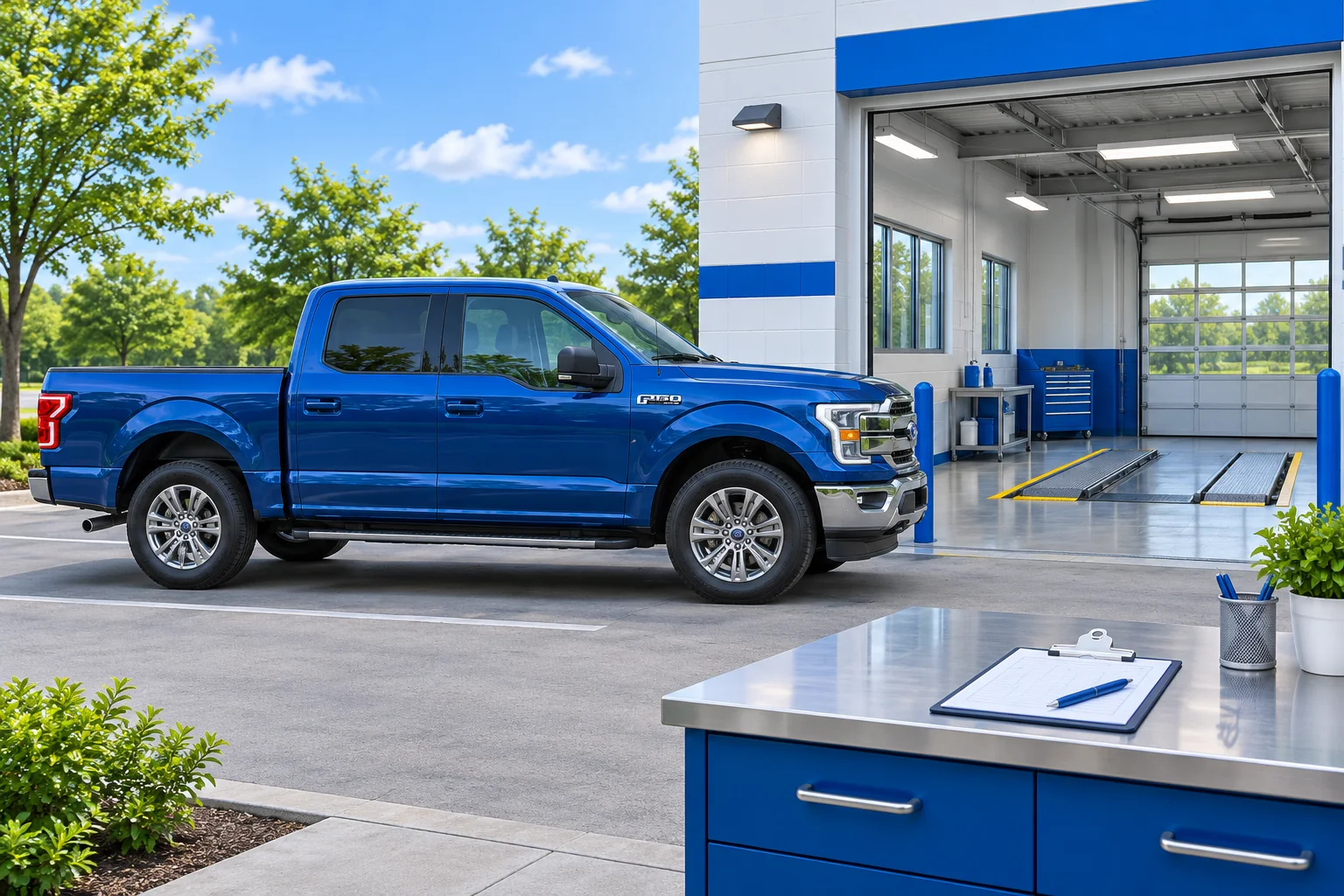
Describe Uncertain Findings Precisely
Consider a truck whose dashboard selector has four-wheel-drive positions but whose seller reports that only two-wheel drive works. Record those as two separate observations. The controls support identifying an equipped system; the seller’s report raises a condition question. Neither establishes which component needs replacement, and neither justifies calling the truck a factory two-wheel-drive model.
Now consider a truck advertised as four-wheel drive with no readable selector photograph and no supporting build information. Ask for those items before traveling or paying for an inspection. Missing evidence does not prove the advertisement is false, but it means the claim remains unconfirmed. A photo of a 4×4 decal is a useful starting clue, not a substitute for the requested records.
A final example is a modified truck with replacement interior trim. Its switch layout may no longer be a straightforward guide to the original configuration. A qualified inspection should compare build data with the equipment actually installed and explain any discrepancy. Keep the inspector’s scope clear: identifying components is different from certifying their operation under every driving condition.
Start the factory-record check with the existing Ford build-sheet explanation. For the separately identified two-wheel-drive front suspension, the F-150 2WD suspension diagram supplies component context; it is not a functional 4WD test.
Questions About Identifying F-150 Four-Wheel Drive
Does 2H Mean My F-150 Is a 2WD Model?
No. A four-wheel-drive truck can be operating in 2H. Inspect the other available controls and match them to the truck’s build information.
Does Every 4WD F-150 Have 4A?


Do not assume that. Available modes depend on the truck’s system and equipment; 4H or 4L capability does not require that the selector also provide 4A.
Can I Tell From the Rear Axle Code Alone?
A rear axle code identifies information about the rear axle in its applicable chart. Confirm the complete drivetrain through build information, controls, and installed hardware rather than using that code alone.
What If the Selector Exists but Four-Wheel Drive Does Not Engage?


Treat that as a possible system-condition problem. Confirm the truck’s configuration separately and have the fault diagnosed before assigning a repair or assuming a particular component failed.
Identify the Truck Without a Traction Experiment
To tell 2WD or 4WD Ford F-150 configurations apart, begin with the full factory record and the complete selector labels. Remember that 2H can be a selected mode on a four-wheel-drive truck. Use safe inspection of installed hardware when records or modifications create doubt, and assess operating condition separately. Badges, tires, ride height, and rear differential controls are supporting clues rather than decisive proof. If the evidence disagrees, resolve it before buying parts or the truck itself. You do not need wheelspin, a dry-pavement engagement test, or an unsafe under-truck inspection to reach a documented answer.


