Ford Edge vs Ford Explorer 2026: Which SUV Is Better?

You stand at a crossroads, pondering a significant automotive decision. Two titans from the Ford stable, the Ford Edge and the Ford Explorer, vie for your attention, each promising a compelling blend of utility, comfort, and performance. But which one truly aligns with your lifestyle, your family’s needs, and your driving preferences? Both are excellent SUVs, yet their differences run deeper than just their names. We understand the dilemma, and that’s precisely why we’ve compiled this exhaustive, data-backed comparison. We’ll cut through the marketing jargon, present you with the hard facts, and help you navigate the nuances to make an informed choice.
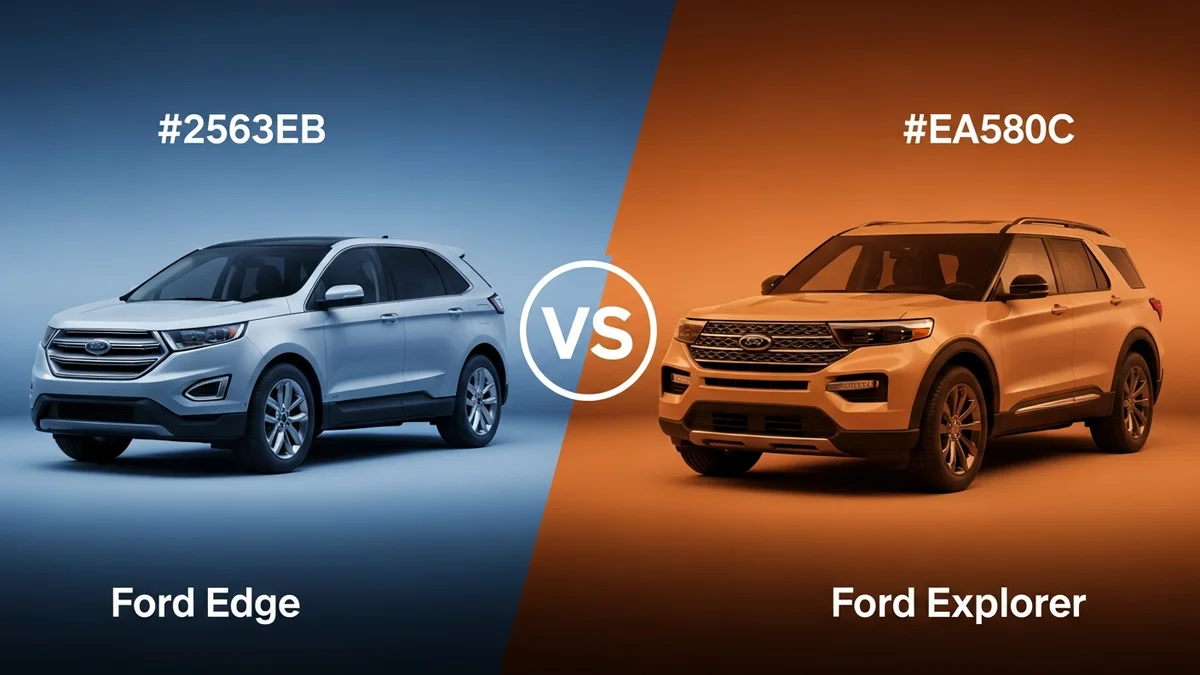
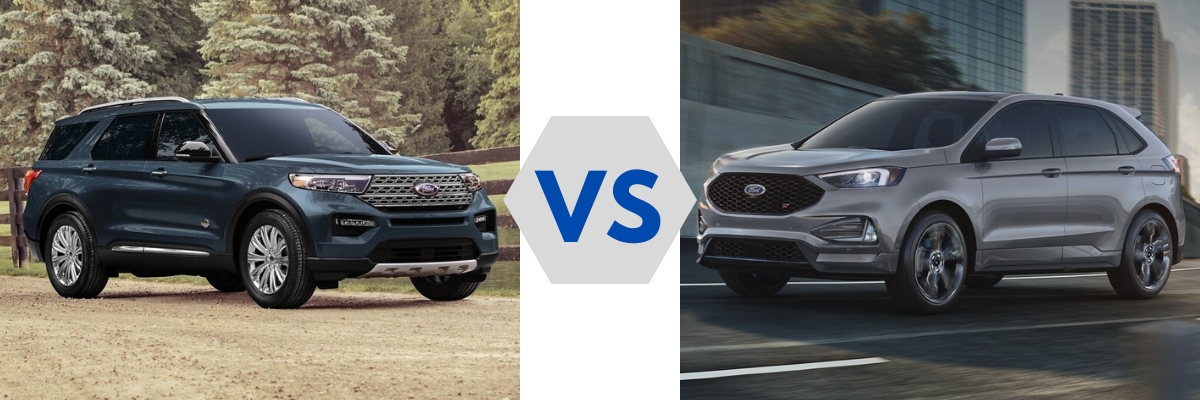
Quick Verdict: The 2026 Ford Explorer generally offers more versatility, space, and capability, making it the stronger choice for larger families and those needing significant towing capacity. While the Ford Edge provides a sportier, more agile driving experience and better fuel economy, its lack of a third row and lower cargo volume are key trade-offs.

Prime for Young Adults — 6 Months Free
Students and 18–24s get six months of Prime free, then half price.
Start 6 Months Free As an Amazon Associate I earn from qualifying purchases.Couples or small families prioritizing agility, fuel efficiency, and a sportier driving feel.
Larger families, adventurers needing 3-row seating, higher towing capacity, and maximum cargo space.
- The Ford Explorer offers 3-row seating for up to 7 passengers, while the Ford Edge is limited to 5 passengers.
- The Ford Explorer offers a higher maximum towing capacity of 5,600 lbs, significantly more than the Ford Edge's 3,500 lbs.
- You'll find more cargo space in the Ford Explorer, with 87.8 cu ft behind the first row, compared to the Ford Edge's 73.4 cu ft.
- The Ford Edge generally provides a slightly lower starting MSRP around $39,800, making it a potentially more accessible option.
- Base engine horsepower starts at 300 hp for the Explorer, while the Edge's base engine offers 250 hp.
Ford Edge vs Ford Explorer: Head-to-Head Specs
Recommended Best Deal Products


Before we dive into the nuanced driving experience and practical applications of these two formidable SUVs, a quick glance at their foundational specifications reveals some critical differences. For instance, the Ford Explorer’s robust 2.3L EcoBoost, often coupled with 300 horsepower, stands in contrast to the Ford Edge’s standard 2.0L EcoBoost, usually producing around 250 hp. Furthermore, the Explorer’s distinct advantage lies in its three-row, seven-passenger configuration, a clear departure from the Edge’s two-row, five-passenger design.
✓ = better value in that row. Sourced from manufacturer specifications.
Performance & Category Ratings
When we break down the driving experience and overall ownership proposition, the numbers tell a fascinating story for both the Ford Edge and the Ford Explorer. In terms of Performance, the Ford Explorer secures an 8.7, outperforming the Ford Edge’s 8.1. This higher score for the Explorer is a direct result of its more potent engine options, such as the available 3.0-liter EcoBoost V6 delivering 400 horsepower, significantly outperforming the Edge ST’s 335 horsepower 2.7-liter V6, providing greater acceleration and towing capability.
Conversely, the Value proposition swings in favor of the Edge, scoring an 8.5 against the Explorer’s 8.2. The Edge typically offers a lower starting MSRP and a strong suite of standard features for its price point, making it an attractive package for budget-conscious buyers without feeling sparse.
In the Reliability department, the Edge narrowly edges out the Explorer, posting a 7.8 compared to the Explorer’s 7.7. Both are respectable, indicating solid long-term dependability, but the Edge’s simpler mechanics in some configurations might give it that fractional advantage.
For Comfort & Ride Quality, the Explorer shines with an 8.4 against the Edge’s 8.0. Its longer wheelbase and often more refined suspension tuning translate to a smoother, more composed ride, particularly on longer journeys or rougher roads, absorbing bumps with greater grace.
Features & Technology sees the Explorer taking the lead again, scoring an 8.6 to the Edge’s 8.3. This is often due to the Explorer’s availability of larger infotainment screens, more advanced driver-assistance systems, and potentially more premium connectivity options across its trim levels.

Audible — Listen Free for 30 Days
One free credit a month and thousands of titles included.
Listen Free for 30 Days As an Amazon Associate I earn from qualifying purchases.However, the Fuel Economy / Efficiency crown belongs to the Ford Edge, which scores a 7.9 against the Explorer’s 7.5. Its typically smaller standard engine and lighter curb weight mean you’ll visit the pump less frequently, a welcome relief in daily commuting.
The most significant divergence is in Space & Practicality, where the Ford Explorer dominates with an impressive 9.2, completely overshadowing the Edge’s 7.0. The Explorer’s standard third-row seating and significantly larger cargo volume are undeniable advantages for families or those needing to transport more gear. The Explorer’s cavernous 87.8 cubic feet of maximum cargo space dwarfs the Edge’s still respectable, but comparatively limited, 73.4 cubic feet.
Finally, in Driving Dynamics, the Ford Edge reclaims some ground with an 8.2, subtly outmaneuvering the Explorer’s 8.0. The Edge’s more compact footprint and often sportier suspension tuning lend it a nimble, more engaging feel behind the wheel, making it a more pleasant companion on twisty roads.
Edge Midsize
Explorer Family SUV
By the Numbers
Recommended Best Deal Products


Beyond subjective impressions and general feelings, the true measure of a vehicle’s capability and suitability lies in its concrete specifications and dimensions. These numbers aren’t just figures on a page; they directly translate to real-world experience, affecting everything from your daily commute to weekend adventures. Let’s dig into the vital statistics that differentiate these two popular Ford SUVs, providing an objective framework for your decision-making process.
Edge Midsize
Explorer Family SUV
Hover any bar for exact values. Each metric scaled independently.

Ford Edge: Strengths and Weaknesses
The Ford Edge positions itself as a compelling mid-size SUV, excelling in areas where agility and efficient performance are prioritized. Its most significant strengths lie in its Driving Dynamics (8.2), offering a noticeably sportier and more engaging experience than many in its class. The responsive steering and firm suspension of models like the Edge ST, with its 335-horsepower 2.7-liter EcoBoost V6, make carving through corners genuinely enjoyable. We found its handling to be predictable and direct, inspiring confidence.
Another major win for the Edge is its Fuel Economy / Efficiency (7.9). With its standard 2.0-liter EcoBoost engine, it consistently delivers better MPG figures than the Explorer, a critical factor for daily commuters. You’ll appreciate the reduced trips to the gas station. Furthermore, the Edge presents strong Value (8.5), often offering a lower entry price point and a generous list of standard features, making it an excellent bang-for-your-buck option. Its more compact size also makes it easier to maneuver and park in urban environments.
However, the Edge isn’t without its limitations. Its most glaring weakness is in Space & Practicality (7.0). The complete absence of a third row severely restricts its utility for larger families or carpooling duties. Cargo space, while adequate for a two-row SUV, is significantly less than what the Explorer provides, especially when you need to haul larger items. The Edge’s interior, while comfortable, can sometimes feel less premium than the Explorer’s higher trims, and its overall design is beginning to show its age compared to newer rivals.
Ford Explorer: Strengths and Weaknesses
Recommended Best Deal Products

The Ford Explorer truly shines For versatility, family hauling, and robust capability, living up to its name as an adventure-ready SUV. Its paramount strength is undoubtedly Space & Practicality (9.2). The standard third-row seating instantly transforms it into a people-mover, comfortably accommodating up to seven passengers. The sheer volume of its cargo area, expanding to a massive 87.8 cubic feet with the second and third rows folded, is a big deal for active families, making it ideal for road trips, sports equipment, or serious shopping hauls.
Furthermore, the Explorer commands a higher Performance (8.7) rating thanks to its more powerful engine options. The available 3.0-liter EcoBoost V6, delivering up to 400 horsepower in ST trim, provides exhilarating acceleration and substantial towing capacity, often exceeding 5,000 pounds. This power also contributes to its superior Comfort & Ride Quality (8.4); the Explorer’s longer wheelbase and sophisticated suspension soak up road imperfections with ease, delivering a smooth and serene cabin experience. Its Features & Technology (8.6) are also top-tier, offering larger infotainment displays, more advanced driver-assistance systems, and a generally more modern and premium interior feel.
Audible Premium Plus — Annual Membership
12 audiobook credits up front, plus the full Audible catalogue.
See Annual Plans As an Amazon Associate I earn from qualifying purchases.Despite its many advantages, the Explorer does have its drawbacks. Its primary weakness is Fuel Economy / Efficiency (7.5). The larger engines and heavier curb weight inevitably lead to more frequent stops at the gas station compared to the Edge. It also generally comes with a higher purchase price, impacting its Value (8.2) score relative to the more affordable Edge. While its larger size is a boon for capacity, it can make the Explorer feel less agile in tight parking lots or dense city traffic, reflected in its slightly lower Driving Dynamics (8.0) score.
- ✅ More agile and easier to maneuver in urban environments.
- ✅ Generally better base model fuel economy for comparable trims.
- ✅ Slightly lower starting MSRP for the entry-level model.
- ✅ Sporty ST trim offers competitive performance for its class.
- ✅ Standard AWD on many trims provides confident all-weather traction.
- ❌ No third-row seating option, limiting passenger capacity to 5.
- ❌ Significantly lower maximum towing capacity at 3,500 lbs.
- ❌ Less overall cargo volume compared to the larger Explorer.
- ❌ Platform feels older compared to Explorer's recent updates.
- ✅ Standard three rows of seating, accommodating up to 7 passengers.
- ✅ Higher maximum towing capacity of 5,600 lbs.
- ✅ Significantly more overall cargo space for luggage and gear.
- ✅ Offers more powerful engine options, including a 400 hp ST model.
- ✅ RWD-based platform provides a robust foundation and balanced handling.
- ❌ Higher starting MSRP for entry-level models.
- ❌ Larger footprint makes it less nimble for city parking and tight spaces.
- ❌ Typically lower non-hybrid fuel economy than the Edge.
- ❌ Higher curb weight impacts perceived agility compared to the Edge.
Which One Should You Choose?
The choice between the Ford Edge and the Ford Explorer ultimately hinges on your specific needs, lifestyle, and priorities. If you’re a commuter or a smaller family, perhaps a couple with one or two younger children, the Ford Edge presents a compelling package. Its superior Fuel Economy / Efficiency (7.9) will save you money at the pump during your daily drives, and its more agile Driving Dynamics (8.2) make it a joy to pilot through city streets and winding roads. You’ll appreciate its easier parking and maneuverability. The Edge’s strong Value (8.5) proposition means you get a well-equipped SUV without breaking the bank, offering a satisfying blend of features and performance for its price point. It’s ideal for those who occasionally need to carry gear but don’t require a third row.
On the other hand, if you’re a growing family, frequently carpool, or need significant towing capability, the Ford Explorer is undeniably the stronger contender. Its outstanding Space & Practicality (9.2), thanks to its standard third row and cavernous cargo area, makes it a true workhorse. You can easily fit up to seven passengers, and that extra cargo volume is indispensable for strollers, luggage, or sporting equipment. The Explorer’s robust Performance (8.7), especially with its more powerful engine options, ensures you have ample power for highway cruising, passing, and confidently towing trailers. Furthermore, its superior Comfort & Ride Quality (8.4) translates to a more relaxed and quiet cabin experience, which is invaluable on long family road trips. While it might cost more upfront and consume more fuel, the added versatility and capability often justify the investment for those who genuinely need it.
Couples or small families prioritizing agility, fuel efficiency, and a sportier driving feel.
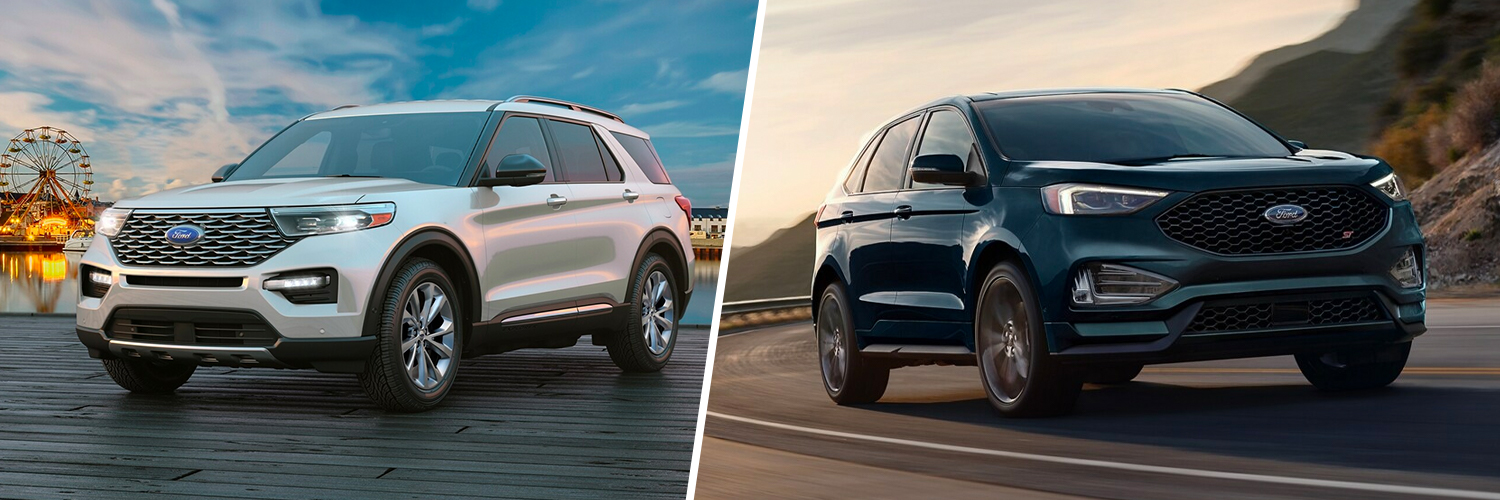
Larger families, adventurers needing 3-row seating, higher towing capacity, and maximum cargo space.
Final Verdict
After a thorough examination of their capabilities, features, and real-world applicability, the 2026 Ford Explorer emerges as the overall winner in this head-to-head comparison. Its commanding lead in Space & Practicality (9.2), robust Performance (8.7), and superior Comfort & Ride Quality (8.4) make it the more versatile and capable choice for the majority of SUV buyers, particularly larger families or those requiring significant towing capacity.
However, the decision isn’t entirely clear-cut, as there’s one critical trade-off to consider. While the Explorer excels in utility and power, the Ford Edge offers a notably sportier, more agile driving experience and superior Fuel Economy / Efficiency (7.9). If you prioritize nimble handling and lower running costs over passenger and cargo capacity, the Edge remains a formidable option. But for sheer family-friendly versatility and capability, the Explorer simply provides more.
Frequently Asked Questions
Is Ford Edge better than Ford Explorer?
Neither is universally 'better'; it depends on needs. The Ford Explorer is superior for larger families needing 3-row seating and higher towing (up to 5,600 lbs), while the Ford Edge excels for smaller families seeking better agility and potentially slightly better fuel economy, with max cargo volume of 73.4 cu ft.
What is the biggest difference between the Ford Edge and Explorer?
The most significant difference is seating capacity and size. The Ford Edge is a 2-row, 5-passenger midsize SUV, whereas the Ford Explorer is a 3-row, 6-7 passenger SUV, offering considerably more passenger and cargo volume (87.8 cu ft behind 1st row vs. Edge's 73.4 cu ft).
Which is more fuel-efficient, Ford Edge or Explorer?
The 2026 Ford Edge generally offers slightly better fuel efficiency for its non-hybrid base models, often achieving 23-25 MPG combined. The Ford Explorer's base non-hybrid can also hit 23 MPG combined, but its larger size and more powerful engine options can result in lower figures, though a hybrid option improves Explorer's efficiency to around 27 MPG.
Which Ford SUV is more expensive?
While the 2026 Ford Edge has a slightly lower starting MSRP (approx. $39,800 vs. $41,500 for Explorer), the Ford Explorer's higher trims and performance variants can push its price significantly higher than even the top-tier Ford Edge ST, often exceeding $60,000 for the Explorer ST.
Which Ford SUV is better for a family?
For a larger family needing 3-row seating or those who frequently transport more than 5 people, the Ford Explorer is definitively better due to its 6-7 passenger capacity and 87.8 cu ft max cargo. For smaller families of 4-5 with less need for maximum space or towing, the Ford Edge is an excellent, more nimble option.