Ford Brittany Blue Paint Code: Compared Side-by-Side by Year and Mixing Specs

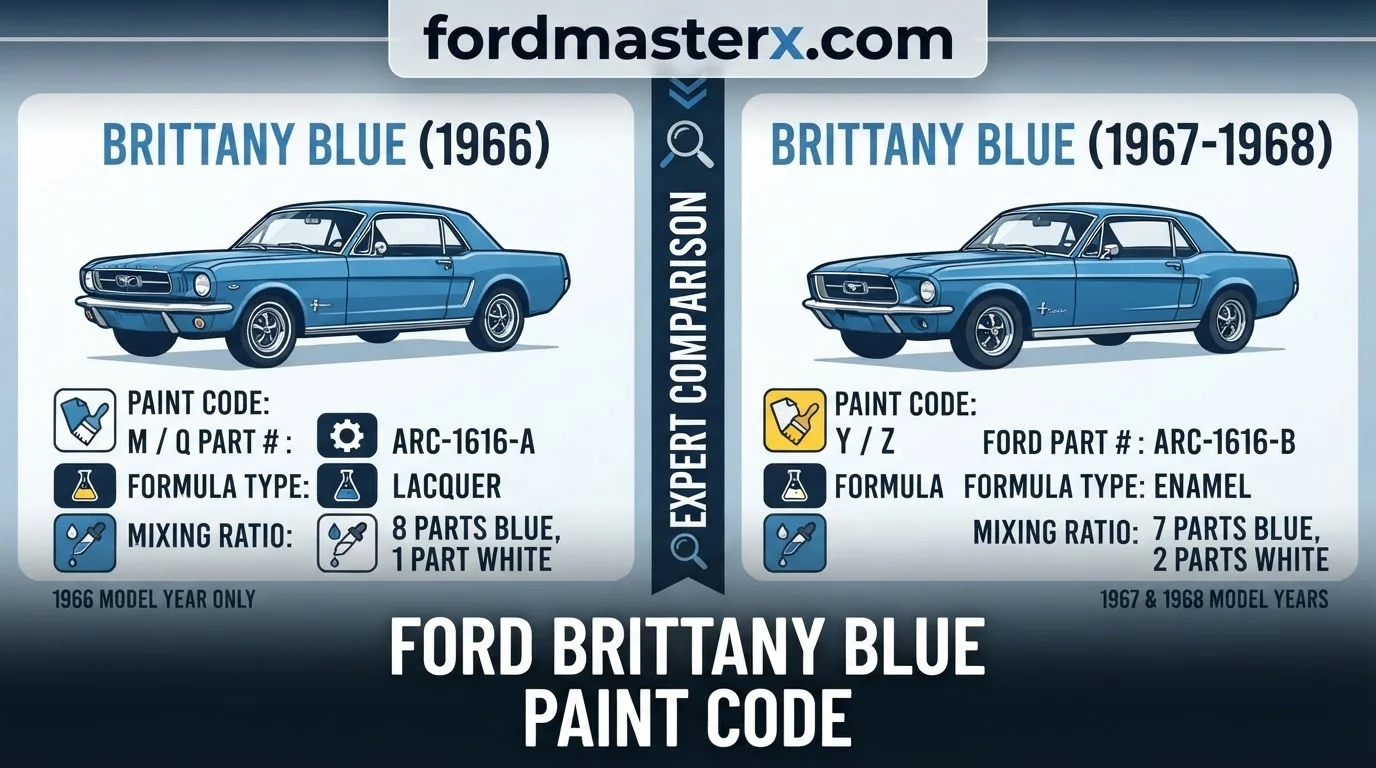
Brittany Blue is one of the most iconic automotive hues in Ford’s history, often recognized by its soft, serene aesthetic that defined the late 1960s. For restorers and collectors searching for the authentic Ford Brittany Blue paint code, the identifier is M1624, also cross-referenced as code Q. Understanding this specific formulation is the first step toward achieving an accurate, factory-correct finish on your classic restoration project.
How to Read This Chart
The identifiers provided represent the official manufacturer designations used for ordering or mixing the Brittany Blue paint color. The “M1624” code is the primary Ford internal reference, while “Q” is the specific alpha-code found on many 1967–1970 vehicle buck tags and data plates.


The PPG #13619 is an industry-standard cross-reference used by professional paint suppliers to ensure the formulation matches the chemical specs of the original era. Always verify these codes against your vehicle’s specific build sheet, as some variations in shade occurred during the multi-decade lifespan of the color’s production cycle.
Specifications and Features of the Ford Brittany Blue Paint Code
Brittany Blue, often known by promotional names like Glacier Blue or Huron Blue, is characterized by its light, medium-blue tone. Its specifications were designed to provide a durable finish that could withstand the environmental conditions of the late 1960s while maintaining a sophisticated, high-gloss appearance.

In terms of modern application, the features of current basecoat-clearcoat systems provide significant advantages over the original single-stage acrylic lacquers. Modern formulations are engineered for high-impact resistance and color retention, making them the preferred choice for enthusiasts restoring classic Mustangs, Galaxies, and Ford trucks.
✨ Key Benefits of OEM-Matched Formulations


Factory Accuracy
Precise color matching ensures that the vehicle retains its historical integrity and value, which is crucial for collectors and show-car builders.
Modern Durability
Using contemporary paint chemistry provides significant disadvantages to the original paint to be overcome, offering better UV protection and scratch resistance.
Comparison: Single-Stage vs. Basecoat Systems


When choosing how to apply the Brittany Blue paint code, restorers often weigh the pros and cons of single-stage versus basecoat-clearcoat systems. A basecoat system generally offers superior depth and shine, making it the winner for high-end restorations where the “wet look” is desired.
📋
How to Apply the Ford Brittany Blue Paint Code
Check your vehicle’s data plate or Marti Report to confirm the original paint code is indeed Q/M1624.
Ensure the substrate is stripped of all contaminants and primed with an appropriate high-build primer for a smooth finish.
Follow your specific product manufacturer’s mix ratio (e.g., 1:1 for basecoat) using the correct reducer for the ambient temperature.
🔎 How to Find Your Paint Identification Label
To identify if your vehicle was factory-finished in Brittany Blue, locate the data plate. On most 1960s-era Ford models, this is found on the inside of the driver’s side door or the inner fender apron. Look for the “COLOR” or “EXT PAINT” field on the data plate. If the code is “Q,” your vehicle was originally painted in Brittany Blue.
Always spray a “let-down” test panel before applying paint to the body. Differences in primer color or gun pressure can significantly alter the appearance of the metallic pigment, leading to shade variances.
What If the Paint Color Doesn’t Match?
If you have ordered the M1624 code but notice a mismatch, consider these steps: First, verify the manufacturer of the paint system you purchased; different brands may interpret the M1624 formula with slight pigment variations. Second, check if your vehicle was previously repainted with a non-standard color. Finally, speak with a professional color matcher who can use a spectrophotometer to scan a sample from an unexposed area of your vehicle, such as the inside of the glove box or the underside of the trunk lid.
Restoring a vehicle to its original factory appearance requires precision, and the Ford Brittany Blue paint code M1624 is the foundation of that project. By utilizing verified OEM codes and modern paint technologies, you can ensure your classic Ford, Mercury, or Lincoln looks as vibrant as it did when it first rolled off the assembly line. Always cross-reference your specific vehicle build data to confirm the exact color compatibility for your model year.


Key Takeaways
-
✓
Primary Brittany Blue reference code is PPG 13197 (Fleet 10323). -
✓
Verify your factory paint code via the trim tag located on the driver-side door or apron. -
✓
Compare Brittany Blue against contemporary shades like Arcadian Blue or Silver Blue to ensure correct selection. -
✓
Modern polyurethane and basecoat/clearcoat systems offer better UV protection than original lacquer formulas. -
✓
Conduct a spray-out card test before applying paint to your vehicle to confirm the match in natural light.
❓ Frequently Asked Questions
1
What is the Ford Brittany Blue paint code?
The most widely recognized paint code for Ford Brittany Blue is PPG/Ditzler 13197. While this code is the standard for restoration, always cross-reference it with your vehicle’s specific data plate, as different production facilities sometimes utilized proprietary variations of the color formula.
2
How does color matching work for vintage Ford paints?
Color matching involves adjusting the pigment ratios to match a physical sample of your vehicle’s existing paint. Because vintage lacquer pigments have faded or oxidized over 60 years, modern digital spectrophotometers are used to analyze your car’s actual finish to recreate the perfect, non-faded version of the color.
3
Why is choosing the right paint chemistry important?
Selecting the right chemistry is critical because vintage factory lacquers are no longer standard. Modern basecoat/clearcoat systems offer significant advantages, including superior durability, chemical resistance, and ease of application, though they require specific preparation to avoid a ‘too-modern’ high-gloss look on classic body panels.
4
What are the benefits of using a professional-grade paint?
The advantages of professional paint include higher solids content, better UV shielding, and improved color consistency. The primary disadvantage of budget paint is a lack of depth and potential for premature clearcoat failure, which can negate the extensive labor involved in a high-end restoration project.
5
How can I get started with restoring my Ford paint?
Start by locating your vehicle’s identification tag to find the original color code. Once identified, consult with a professional automotive paint supplier to source a modern formula matching that code. Perform a test spray on a scrap panel to ensure the hue meets your expectations before painting the vehicle.
6
Is Brittany Blue a factory-correct color for my Mustang?
Verify your specific year and trim tag. It was a standard production color for several late-60s Ford lines, but build sheet validation is always recommended.