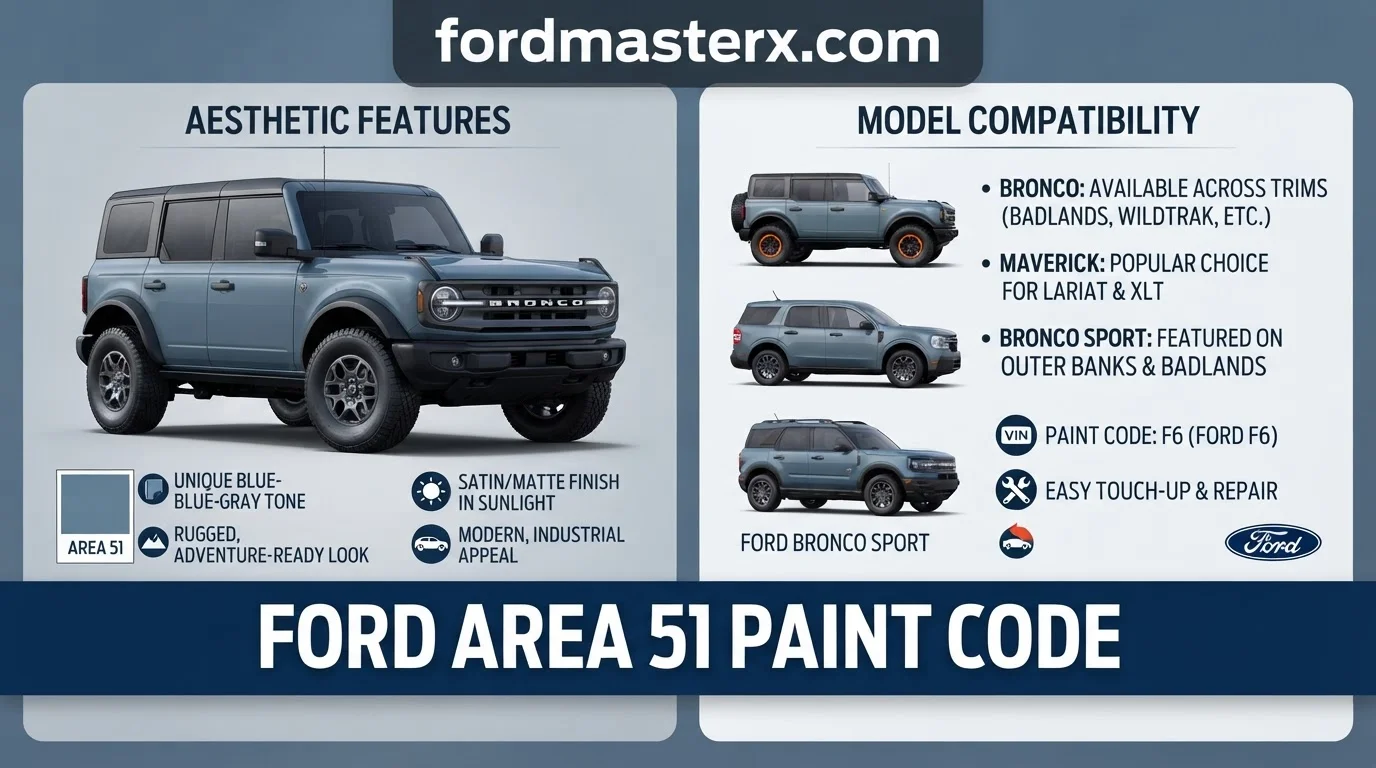
Ford Area 51 Paint Code Compared Side-by-Side: Color Specs, Compatibility, and Model Year Ranges Through 2026

The Ford “Area 51” exterior finish has redefined the aesthetic of modern adventure vehicles, blending a distinct blue-gray tone that stands out across the Bronco and Maverick lineups. While its popularity is undeniable, achieving a perfect match for repairs requires precise data. The official Ford Area 51 paint code is KU, often cross-referenced as M7324 in professional mixing systems.
How to Read This Chart
The chart above outlines the primary identification codes used by body shops and paint suppliers for the Area 51 color. “KU” is the primary Ford factory production code found on your vehicle’s identification plate. The “M7324” designation is a standard cross-reference code used by aftermarket paint manufacturers to ensure color accuracy during mixing.


When ordering supplies, both codes identify the same blue-gray formulation. The “Application Type” column specifies a basecoat/clearcoat system, which is the industry standard for this color. Always verify the code on your specific vehicle’s door jamb to ensure your trim level or regional build does not utilize a variant formulation.
🔎 How to Find Your Ford Area 51 Paint Code
Locating your specific paint code is the first step in any restoration or touch-up project. Follow these steps to ensure you are sourcing the correct materials for your vehicle.

Open the driver-side door and look for the rectangular safety compliance sticker. This label typically contains the VIN, production date, and paint code (labeled as ‘EXT PNT’).
If the sticker is missing or damaged, inspect the underside of the hood or the radiator support panel. Ford frequently places a secondary factory identification plate in these locations.
If you still cannot locate the code, contact a local Ford dealership’s parts department. Provide your VIN, and they can pull the original build sheet to confirm your exterior paint specifications.
✨ Features and Advantages of Choosing the Correct Code


Exceptional Coverage
Using the genuine KU code ensures that the high-solid basecoat provides the deep, opaque coverage required for this specific blue-gray hue, minimizing the need for multiple heavy coats.
Color Accuracy
Professional-grade urethane basecoats matched to M7324 offer superior color fidelity, ensuring that your touch-up or panel repair blends seamlessly into the existing factory finish.
Comparing Repair Methods: Pros and Cons


When addressing a scratch or chip using your Ford Area 51 paint code, you have several options. Understanding the pros and cons of each method is vital for the best visual outcome.
Common Specifications and Application Tips
The Ford Area 51 finish is a non-metallic flat color. Unlike metallic paints, it does not require a complex flake orientation process, which makes it slightly more forgiving for DIY enthusiasts. However, it still requires a high-quality clearcoat to protect against UV damage and road debris.
Always ensure your workspace is free of contaminants. Automotive urethane basecoats are sensitive to humidity and temperature; therefore, aim to apply the paint in a controlled environment between 65°F and 85°F. Proper ventilation is mandatory when using any chemical-based paint system to ensure safety.
What If the Color Match Seems “Off”?
If your repair appears slightly different from the surrounding panels, don’t panic. Color variation is rarely caused by the paint code itself, but rather by environmental factors or aging.
- Check UV Fading: Older vehicles may have minor paint oxidation, making the original factory paint appear slightly lighter or duller than fresh touch-up paint.
- Ensure Proper Shaking: If using a spray can, ensure it is agitated for at least two full minutes to guarantee proper pigment distribution.
- Lighting Conditions: View the paint match in natural sunlight rather than garage lighting; fluorescent light can distort color perception.
- Consult a Professional: If a large section (like a door or bumper) still doesn’t match, you may need a “blend” performed by a professional body shop to transition the colors smoothly.
Frequently Asked Questions About the Ford Area 51 Paint Code
Is Area 51 a metallic paint?


No, the official Area 51 color (KU) is a non-metallic, flat finish. This is an important distinction to make when purchasing touch-up kits, as metallic paints require different mixing ratios for the flake suspension.


Can I use a universal blue-gray paint?
It is strongly discouraged. Automotive paints are formulated with specific pigment density to match OEM factory output. Using a generic shade will result in a noticeable color mismatch that degrades the appearance of your Ford.


Are there different variations of Area 51?


While the code KU remains standard, paint batches can vary slightly due to supplier shifts. Always verify your specific production date if you are attempting a large-scale panel match.
In conclusion, the Ford Area 51 paint code KU/M7324 is the definitive reference for maintaining your vehicle’s iconic look. By verifying your code through your door jamb sticker and utilizing proper preparation, you can achieve professional-grade results. Based on our research into automotive refinishing standards, accurate color matching is entirely dependent on adhering to the specific factory-matched code rather than general approximations. If you remain unsure, consult with your local dealer to confirm your build specifications before purchasing your repair supplies.
Key Takeaways
-
✓
Identify the Area 51 paint code as ‘GA’ for all official manufacturer touch-ups. -
✓
Evaluate the pros and cons of this flat, non-metallic aesthetic versus traditional metallic colors. -
✓
Review model platform compatibility including Bronco, Bronco Sport, and Maverick. -
✓
Compare Area 51 against similar tones like Cactus Grey and Velocity Blue. -
✓
Locate your specific vehicle’s paint code on the driver’s side door jamb placard.
❓ Frequently Asked Questions
1
What is the Ford Area 51 paint code?
The official factory paint code for Ford’s Area 51 color is ‘GA’. It is a signature non-metallic, flat-finish blue-grey that has become a staple for Ford’s adventure-oriented vehicles, providing a modern, retro-inspired aesthetic that stands out from traditional metallic automotive paints.
2
How does the Area 51 aesthetic compare to other blues?
Area 51 offers a unique advantage with its muted, earthy tone, making it less ‘loud’ than Velocity Blue. The primary disadvantage is that its flat finish requires more careful color matching. Experts find it better for rugged styling compared to the high-gloss, intense saturation of standard sport blues.
3
Why is the paint code important for repairs?
Using the exact ‘GA’ code is essential for ensuring color consistency during repairs. Because Area 51 is a specific formula of pigment without metallic flakes, variations in mixing can be highly visible. Accurate code identification prevents mismatched panels and maintains the vehicle’s resale value.
4
What are the benefits of the Area 51 color features?
The main benefits include its versatile, chameleon-like appearance that adapts to different lighting conditions. It hides dust and light surface imperfections better than deep black or bright white, making it a functional choice for off-road vehicles that see varied environments and terrains.
5
How can I get started with applying this paint?
Start by locating your specific vehicle’s paint code on the door jamb sticker to confirm your build. Purchase high-quality, factory-matched ‘GA’ touch-up paint. Clean the surface thoroughly with wax remover before applying thin, even coats to ensure a professional-grade finish that matches the factory aesthetic.
6
Is Area 51 a metallic paint?
No, it is a flat, solid, non-metallic color that relies on a specific pigment mix to achieve its unique blue-grey tone.