
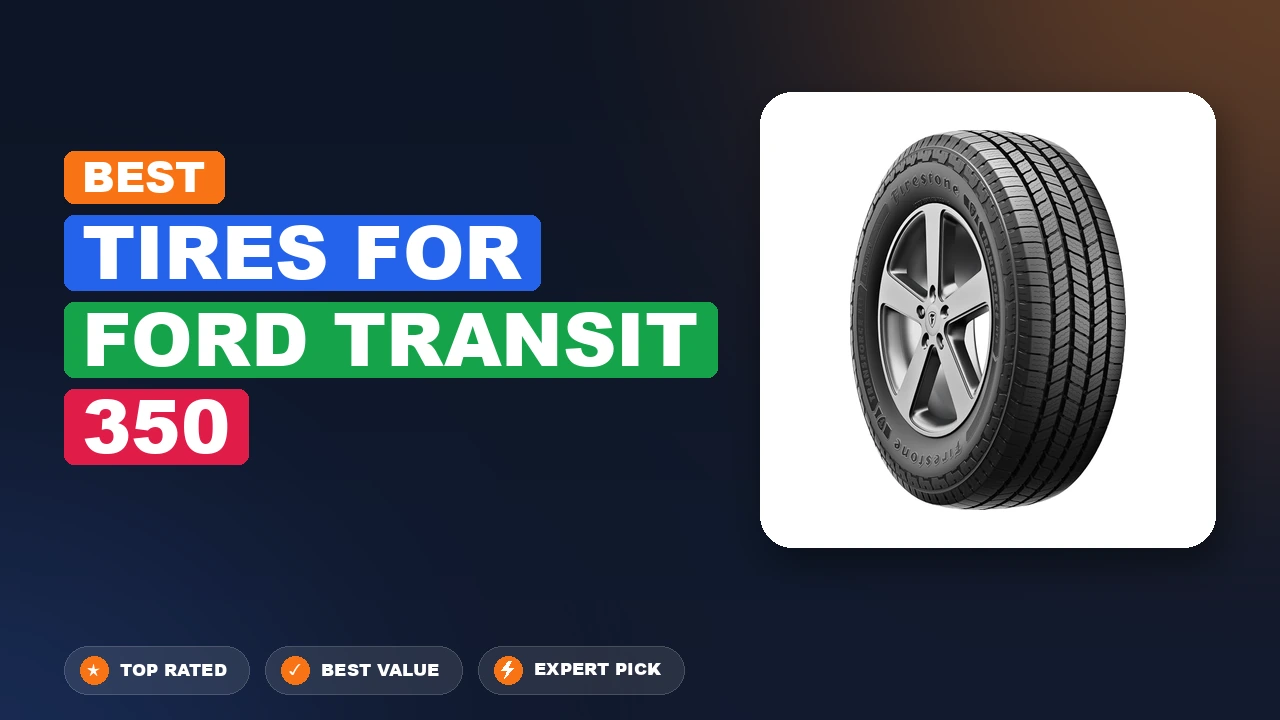
4 Best Tires for Ford Transit 350 2026 – Proven Picks for Every Budget

Fleet Operators · Campervan Builders · Delivery Contractors · Trades & Construction · Passenger Shuttle Fleets
🕐 Updated: November 2026 | 4 Models Reviewed | 235/65R16C & LT Fitments | Updated for 2026
The Ford Transit 350 carries a Gross Vehicle Weight Rating between 9,070 and 11,000 pounds, placing extreme mechanical shear on its factory 235/65R16 tire size. Unlike half-ton pickups or standard passenger vans, the Transit 350 requires dedicated commercial casings rated at Load Range E or Euro-metric 'C' specifications with a load index of at least 115/112 or 121/119.
Most tire retailers categorize light truck and commercial van tires together, leading buyers to install standard passenger-derived all-seasons that deform under full payload. When a high-roof Transit is loaded with cargo or converted into an overland camper, inadequate sidewall rigidity causes severe highway sway, accelerated shoulder scrub, and premature tread failure within fifteen thousand miles.
This guide cuts through catalog noise to rank the four best heavy-duty commercial tires compatible with the Ford Transit 350 platform. We evaluate highway durability, wet braking under load, sidewall scrub resistance, and off-pavement traction across dedicated highway-rib and all-terrain tread patterns, matching specific tread compounds to your exact duty cycle.
Our selections are based on verified fleet maintenance data, commercial tire casing construction, real-world treadwear tracking, and verified owner reports across commercial delivery fleets and converted van chassis. We assess load-carrying capacity at maximum manufacturer cold inflation pressures up to 80 PSI to ensure stable, compliant operation under maximum gross vehicle weights.
⚡ Top 4 Tires for Ford Transit 350 — Quick Answer
Short on time? These are the picks, ranked:
| # | Tires for Ford Transit 350 | Best For | Rating | Price |
|---|---|---|---|---|
| 🥇 #1 | Firestone Transforce HT3 All-Season | Best Overall | 9.2/10 | Check Price |
| 🥈 #2 | Firestone Transforce AT2 All-Terrain | Best Commercial All-Terrain Tire | 9.2/10 | Check Price |
| 🥉 #3 | General Tire Grabber HD Van | Best for Urban Delivery Fleets | 9.2/10 | Check Price |
| 💰 Value | Nexen Roadian GTX All Season | Best Highway Tread Longevity | 9.2/10 | Check Price |
Understanding Euro-Metric 'C' and Load Range E Sidewall Ratings


The factory tire specification on most Ford Transit 350 vans is 235/65R16C. That trailing 'C' does not mean Load Range C; it designates a European commercial van standard requiring substantial carcass reinforcement and operating pressures up to 83 PSI. While standard American Load Range E tires carry sufficient load index ratings, Euro-metric commercial tires feature thicker steel belts and abrasion-resistant sidewall curb ribs engineered specifically for top-heavy commercial cargo vans.
Installing standard P-metric or light-duty LT tires with lower inflation thresholds triggers immediate instrument cluster TPMS warnings and compromises stability. The Transit 350 relies on stiff rear sidewalls inflated to 71 or 80 PSI to control high-center-of-gravity body roll in crosswinds. Sacrificing load index or proper casing construction leads to dangerous handling dynamics, uneven heat buildup, and rapid premature tread delamination under sustained commercial operation.
⚠️ Reality Check: Standard passenger or half-ton truck tires cannot handle the Transit 350's mandated 80 PSI rear axle cold inflation pressure. Always verify the sidewall stamps indicate a minimum 115/112 or 121/119 load index before mounting.
Commercial Van Tire Classifications Ranked by Load Integrity
| Category / Spec | Typical Load Index | Max Cold Pressure | Tread Life Expectancy | Best Application |
|---|---|---|---|---|
| Euro-Metric Commercial (C-Type) | 121/119R | 83 PSI | 45,000–60,000 mi | Last-Mile Delivery & High Payloads |
| Commercial Highway Rib (LT-E) | 115/112R | 80 PSI | 50,000–70,000 mi | Interstate Freight & Shuttle Fleets |
| Commercial All-Terrain (LT-E) | 115/112R | 80 PSI | 40,000–55,000 mi | Job Sites, Utility Work & Campers |
| Heavy-Duty All-Weather (3PMSF) | 121/119R | 83 PSI | 35,000–50,000 mi | Year-Round Fleet Northern Routes |
| Standard All-Season LT (Entry) | 115/112S | 80 PSI | 35,000–45,000 mi | Light Duty & Spare Fleet Vehicles |
Can You Replace Transit 350 Commercial Tires with Standard Light Truck Tires?


Many Transit 350 owners assume that any 10-ply rated Load Range E light truck tire will perform identically to an OEM commercial casing. While an LT tire meets basic raw load capacities, traditional truck tires are tuned for solid-axle pickups rather than unibody, high-roof vans with forward cab placement. Standard LT tires often feature softer tread compounds and flexible sidewalls that amplify crosswind buffeting on tall Transit builds.
True commercial-grade van tires incorporate specialized sidewall curb guards and compound densities designed to handle tight urban turning radiuses without scrub damage. Furthermore, standard LT tires frequently generate higher rolling resistance and irregular wear when subjected to constant rear axle loading. Retaining purpose-built commercial van tires preserves steering precision, maintains proper rear TPMS inflation thresholds, and prevents sudden tread squirm under maximum vehicle gross weights.
✅ Key Takeaway: Matching load capacity on paper is not enough. Van-specific commercial casings contain reinforced bead bundles and stiffer apex rubbers designed specifically to suppress high-roof body roll and endure constant urban curb scuffing.
Which Transit 350 Tire Is Right for You?
| Buyer Profile | What You Need | Top Pick | Budget Pick |
|---|---|---|---|
| High-Mileage Highway Freight | Low rolling resistance, highway-rib longevity, directional stability | Firestone Transforce HT3 All-Season | Nexen Roadian GTX All Season |
| Construction & Remote Job Sites | Cut-and-chip resistance, loose stone ejection, shoulder bite | Firestone Transforce AT2 All-Terrain | General Tire Grabber HD Van |
| Last-Mile Urban Delivery | Reinforced curb-scuff sidewalls, frequent stop-and-go durability | General Tire Grabber HD Van | Nexen Roadian GTX All Season |
| Overland Campervan Conversion | Gravel traction, all-weather grip, rigid sidewall sway control | Firestone Transforce AT2 All-Terrain | General Tire Grabber HD Van |
| Passenger Shuttle & Airport Transit | Low cabin noise, compliant ride, reliable wet stopping distances | Firestone Transforce HT3 All-Season | General Tire Grabber HD Van |
| Regional Multi-Season Hauling | Consistent wet-pavement tracking, all-season siping, high treadwear life | Firestone Transforce HT3 All-Season | Nexen Roadian GTX All Season |
The 4 Best Tires for Ford Transit 350 2026 — Full Reviews
1. Firestone Transforce HT3 All-Season — Best Overall
| Tire Size | LT225/75R16 |
| Load Range | E (10-Ply Rated) |
| Tread Type | Highway All-Season |
| Vehicle Fitment | Ford Transit 350 |
| Construction | Reinforced Commercial Casing |

The Firestone Transforce HT3 earns our top recommendation by delivering the optimal balance of heavy-load durability, wet-weather safety, and long tread life for working vans. Designed specifically to handle the grueling demands of a Ford Transit 350, it resists the uneven wear common in high-payload delivery vehicles. Its proven highway reliability ensures operators spend less time worrying about blowouts and more time keeping schedules intact.
Firestone builds the HT3 using a specialized commercial-grade tread compound that stays resilient under immense downward pressure. Deep circumferential grooves actively channel standing water away from the contact patch, mitigating hydroplaning during heavy rainfall. Beneath the tread, heavy-duty casing materials and reinforced sidewalls work in unison to ward off curbside abrasion. This robust architecture maintains structural stability even when your Transit operates near its gross vehicle weight rating.
Exceptional resistance to irregular shoulder wear distinguishes the Transforce HT3 from rival commercial highway tires. Transit 350 vans carry uneven payload weight and endure frequent tight turning cycles, which quickly scrub down softer rubber. The HT3 counteracts this through an optimized footprint and rigid shoulder ribs that distribute ground contact evenly. The result is a smoother highway ride and significantly extended mileage across grueling daily delivery routes.
This tire is not designed for drivers who regularly encounter deep snow, thick mud, or off-pavement job sites. Because it emphasizes fuel efficiency and pavement longevity, the firm rubber compound and shallow lateral sipes struggle to find bite in sub-freezing winter conditions. If your Ford Transit 350 frequently navigates unpaved rural gravel roads or severe blizzards, you should look toward an all-terrain or dedicated commercial winter tire instead.
✅ Pros
- Excellent resistance to irregular tread and shoulder wear
- Robust Load Range E casing easily handles maximum payloads
- Reliable wet traction via efficient water-evacuating tread grooves
- Reinforced sidewalls provide solid protection against curb scuffs
❌ Cons
- Limited grip in deep snow and icy winter conditions
- Stiff sidewalls can produce a firm ride when unladen
- Not suitable for muddy or unpaved off-road terrain
2. Firestone Transforce AT2 All-Terrain — Best Commercial All-Terrain Tire
| Tire Size | LT225/75R16 |
| Load Range | E (10-Ply Rated) |
| Overall Diameter | 29.3 in |
| Section Width | 8.8 in |
| Country of Origin | Canada |

The Firestone Transforce AT2 claims this spot because it delivers dependable all-terrain traction without compromising the heavy payload capabilities needed for a Ford Transit 350. Built specifically for commercial use, this tire bridges the gap between highway stability and rugged gravel performance. Fleet operators frequently choose it for service vans that travel between highway corridors and rugged construction zones, ensuring heavy tools and cargo remain secure on rough utility paths.
At its core, this tire uses an advanced chip- and tear-resistant tread compound molded into an aggressive, all-terrain symmetric pattern. Deep shoulder slots and independent tread blocks actively bite into loose dirt, mud, and gravel, while continuous center ribs maintain road contact on pavement. Internally, the reinforced steel-belt casing and heavy-duty polyester body plies manage the massive gross vehicle weight rating of a fully loaded Transit 350 without excessive heat buildup.
Resilience against jagged job site debris is what truly separates this tire from standard highway-rib options. The deeper tread design and fortified casing resist punctures from scattered rocks, rebar, and construction waste that frequently ruin standard fleet rubber. Wet-weather performance remains dependable due to wide circumferential grooves that channel water away to limit hydroplaning, keeping delivery schedules on track even when severe rainstorms strike mid-route.
This tire is not the right choice for van operators who spend all their time on smooth interstate routes and prioritize whisper-quiet cabins. The open all-terrain tread pattern creates more road hum than dedicated touring tires and can slightly reduce fuel efficiency over long journeys. If your Ford Transit 350 never leaves paved city streets, a lower rolling resistance highway tire provides a smoother, quieter, and more economical ride.
✅ Pros
- Tear-resistant tread compound handles rugged gravel and dirt roads
- Load Range E rating safely supports fully loaded commercial vans
- Deeper shoulder slots provide dependable wet and light mud traction
- Reinforced steel-belt casing resists punctures from construction site debris
❌ Cons
- Generates noticeable road noise compared to standard highway-rib tires
- More rolling resistance slightly impacts highway fuel efficiency
- Stiffer ride quality when the cargo bay is empty
3. General Tire Grabber HD Van — Best for Urban Delivery Fleets
| Tire Category | Commercial Highway All-Season |
| Vehicle Fitment | Ford Transit 350 / Light Truck |
| Sidewall Design | Enhanced Sidewall Protection |
| Load Stability | Engineered for Loaded Conditions |
| Trial Period | 45-Day Customer Trial |

The General Tire Grabber HD Van earns third place by delivering industrial-strength resilience at an approachable price point for hardworking fleets. Built specifically for modern high-roof Euro-style cargo vans, it provides dependable handling and steady composure whether the cargo bay is empty or loaded to maximum gross vehicle weight. Its balanced wet and dry road traction ensures steady year-round delivery routes, giving small business owners durable performance without the premium brand surcharge.
Engineered with commercial duties in mind, this tire features a robust internal carcass that resists tread distortion under heavy axle loads. General Tire incorporated reinforced compound polymers that combat rapid treadwear caused by frequent stop-and-go acceleration. Deep circumferential grooves actively evacuate standing water to preserve wet braking efficiency, while broad shoulder blocks maintain structural rigidity when steering a fully laden Transit 350 around tight corners and loading docks.
Extra curb-guard sidewall protection sets the Grabber HD Van apart from standard commercial light truck options. Delivery routes subject Transit vans to constant abrasive curb strikes, but the reinforced outer shoulders buffer structural cables against pinching and scuffs. Coupled with General’s risk-free 45-day trial period, fleet operators gain verified peace of mind against early puncture replacements and premature structural carcass failures in punishing city environments.
This tire is not intended for drivers facing severe winter weather or unpaved wilderness access roads. While capable in rain and mild conditions, its highway-focused tread lacks the biting sipes and pliable low-temperature rubber compounds necessary for heavy snow and packed ice. Furthermore, solo passenger van conversions prioritizing a whisper-quiet luxury ride may find the stiff commercial casing transmits more road vibration than passenger-oriented all-season alternatives.
✅ Pros
- Enhanced sidewall buffers protect against aggressive city curb scuffs
- Maintains exceptional tracking and stability under heavy commercial payloads
- Engineered rubber compound delivers prolonged highway tread life
- Backed by a practical 45-day customer trial period
❌ Cons
- Firm commercial construction yields a stiffer unladen ride quality
- Subpar traction in severe winter snow and icy conditions
- Generates noticeable road hum at sustained interstate speeds
4. Nexen Roadian GTX All Season — Best Highway Tread Longevity
| Tread Life Warranty | 70,000 Miles |
| Load Capacity | Extra Load (XL) |
| Tire Category | All-Season Touring |
| Roadside Assistance | 36 Months |
| Trial Period | 45 Days / 500 Miles |

The Nexen Roadian GTX earns this rank because it pairs exceptional tread longevity with an unmatched factory warranty package for light-duty Transit operations. While commercial vans often chew through rubber quickly, this touring tire is built to resist rapid highway wear without compromising passenger comfort. Owners who log extensive highway miles will appreciate the predictable stability and reduced road noise, making daily driving noticeably smoother compared to harsh commercial-grade alternatives.
At the core of the Roadian GTX is an optimized all-season compound mated to a fuel-conscious internal construction. Its low rolling resistance profile minimizes drag on straightaways to stretch fuel economy during cross-country trips. Across the contact patch, wide circumferential grooves channel standing water away from the tread blocks, while dense siping provides critical biting edges to preserve steering response and grip across rain-slicked asphalt and light winter dustings.
Total warranty protection sets this tire distinctly apart from virtually every competitor in its category. Nexen backs the Roadian GTX with a generous 70,000-mile treadwear guarantee alongside two years of road hazard coverage and three full years of roadside assistance. That level of post-purchase security is exceptionally rare for van fitments, providing independent drivers and small-fleet operators peace of mind against sudden punctures or premature wear expenses.
This tire is not suitable for heavy-duty commercial cargo haulers operating at maximum gross vehicle weight ratings. Because it utilizes an XL load capacity rating rather than an ultra-stout Load Range E commercial construction, it cannot manage extreme freight payloads or punishing construction site debris. Operators who regularly tow heavy trailers or carry dense pallets should choose a dedicated commercial light-truck tire designed for severe industrial punishment.
✅ Pros
- Substantial 70,000-mile manufacturer limited treadwear warranty
- Includes two years of complimentary road hazard replacement
- Low rolling resistance compound helps improve highway fuel economy
- Quiet, comfortable touring ride quality for passenger-focused vans
❌ Cons
- XL load capacity is insufficient for maximum commercial payloads
- Not engineered for off-pavement gravel or muddy job sites
- Winter traction is limited strictly to very light snow
Notable Brands, Applications, and Use Cases for Ford Transit 350 Tires
Selecting the ideal tire for a Ford Transit 350 requires balancing heavy-duty commercial demands with everyday drivability. Whether managing a fleet of delivery vans, converting an extended high-roof rig into an overland camper, or hauling passenger shuttles daily, specific tire brands and categories stand out. Understanding these prominent names and distinct applications helps you match your operational needs directly to proven rubber.
Commercial Delivery Fleets and Highway Hauling
Last-mile delivery and regional transport vans account for a significant portion of Ford Transit 350 mileage. These high-cycle vehicles endure relentless curb impacts, continuous stop-and-go acceleration, and heavy internal cargo weight. Fleet operators predominantly prioritize highway-terrain (HT) commercial tires engineered with reinforced sidewalls, scrub-resistant tread compounds, and low rolling resistance. For these buyers, long-lasting treadwear and puncture protection outweigh aggressive all-terrain styling. Choosing a dedicated commercial highway tire ensures lower operating costs per mile, dependable wet stopping performance, and predictable, stable handling on interstates under continuous maximum payload conditions.


Adventure Campervan and Overland Conversions

The custom campervan community has embraced the Transit 350 chassis, particularly all-wheel-drive configurations navigating forest service roads, BLM land, and remote trailheads. Van lifers routinely add substantial static weight from cabinetry, batteries, and water systems. This unique demographic demands all-terrain capability without sacrificing road safety. Buyers building adventure rigs gravitate toward all-terrain tread designs featuring three-peak mountain snowflake ratings, deeper void ratios, and reinforced multi-ply casings. Selecting an aggressive all-terrain ensures crucial traction across gravel, slush, and dirt, though owners must balance off-road prowess against increased road noise on long interstate stretches.
Passenger Transit and Shuttle Services
Airport shuttles, church groups, and hotel transport services utilize passenger-configured Transit 350 models that carry up to fifteen passengers across urban corridors. Unlike raw cargo transport, passenger shuttle operators must prioritize rider comfort, low acoustic cabin resonance, and superior wet braking above all else. A harsh commercial tire can transmit excessive road vibrations into the extended cabin, degrading passenger satisfaction. Shuttle buyers should choose all-season touring or highway tires engineered specifically for high-capacity vans, striking an optimal balance between structural load carrying compliance, smooth ride dampening characteristics, and predictable all-weather braking margins year-round.
💡 Context Note: Always inspect your Transit 350 door jamb placard before buying. Rear-wheel-drive single rear wheel, dual rear wheel, and all-wheel-drive variants often require specific load ranges and inflation pressures that dictate whether you need commercial van-rated Euro-metric (C-type) or standard LT-metric tires.
Tires for Ford Transit 350 Buying Guide — What Actually Matters
1. Euro-Metric Commercial 'C-Type' vs. LT-Metric Construction
Ford equips factory Transit 350 vans with either Euro-metric commercial tires, designated by a 'C' suffix after the rim diameter, or standard Light Truck (LT) tires. Commercial C-type tires are engineered specifically for high-center-of-gravity European-style vans, utilizing reinforced sidewall plies designed to tolerate curb scuffing and high operating pressures. Standard LT tires also carry heavy loads reliably, but you must ensure the load index precisely meets or exceeds your axle ratings.
2. Load Index and E-Load Range Verification
The Ford Transit 350 boasts a gross vehicle weight rating that routinely demands Load Range E (10-ply rated) capacity or higher commercial load indexes, such as 121/119. Installing passenger-rated tires or under-rated light truck options causes premature sidewall blowout, compromised emergency braking, and hazardous chassis sway. Calculate your van's fully loaded axle weight, including permanent interior build-outs, and verify that the tire's single and dual load ratings provide adequate safety headroom.
3. Highway Tread Durability vs. Off-Pavement Traction
Choosing your tread pattern dictates rolling efficiency, cabin noise, and surface grip. Highway-terrain tires provide ribbed tread blocks that reduce highway fuel consumption and channel rainwater efficiently, delivering maximum tread longevity for paved routes. Conversely, all-terrain tires feature aggressive shoulder blocks and wider tread voids that bite into gravel, loose dirt, and packed snow, but they sacrifice highway quietness and exhibit faster tread wear under highway loads.


4. Single Rear Wheel (SRW) vs. Dual Rear Wheel (DRW) Needs
Transit 350 models come in both single rear wheel and dual rear wheel configurations, which significantly influences tire dynamics. DRW models distribute cargo weight across four rear tires, requiring narrower profiles to prevent 'kissing' or tire rubbing under heavy deflection. SRW models concentrate immense payload onto two rear tires, making sidewall stiffness and proper rotational maintenance paramount to prevent rapid center tread crowning and uneven shoulder wear.
5. Wet Weather Siping and Winter Traction Capabilities
A heavy, tall van behaves unpredictably on slick road surfaces without adequate siping and water evacuation channels. If your routes encounter freezing temperatures, packed snow, or freezing rain, look for tires bearing the Three-Peak Mountain Snowflake (3PMSF) symbol rather than basic M+S stamps. Deep lateral grooves, full-depth siping, and specialized cold-weather rubber compounds ensure that your loaded Transit maintains critical steering authority and shorter stopping distances in winter.
💡 Pro Tip: Commercial van tires frequently go on sale in fleet bundles of four or six units. Check date codes upon delivery to avoid old warehouse stock, and verify that local installers possess wheel balancers rated for high-capacity commercial van wheels and rims.
Complete Comparison — Tires for Ford Transit 350 2026
| Tires for Ford Transit 350 | Type | Best For | Overall | Value | Price |
|---|---|---|---|---|---|
| Firestone Transforce HT3 All-Season | Commercial Highway All-Season | Commercial fleets and high-mileage Transit drivers | ⭐⭐⭐⭐⭐ | ⭐⭐⭐⭐⭐ | Check Price |
| Firestone Transforce AT2 All-Terrain | Commercial All-Terrain Tire | Work vans navigating unpaved job sites | ⭐⭐⭐⭐⭐ | ⭐⭐⭐⭐⭐ | Check Price |
| General Tire Grabber HD Van | Commercial All-Season Tire | High-mileage urban delivery and trade professionals | ⭐⭐⭐⭐⭐ | ⭐⭐⭐⭐⭐ | Check Price |
| Nexen Roadian GTX All Season | All-Season Touring Tire | Passenger van conversions and highway commuters | ⭐⭐⭐⭐⭐ | ⭐⭐⭐⭐⭐ | Check Price |
Frequently Asked Questions — Tires for Ford Transit 350
What is the best overall tire for a Ford Transit 350?
The Firestone Transforce HT3 All-Season is the best overall tire for the Ford Transit 350 due to its durable commercial compound, excellent highway stability, and resistance to uneven treadwear under heavy payloads. Designed specifically for commercial fleets and high-capacity vans, it offers dependable wet-weather braking, low rolling resistance, and a reinforced casing that handles high operating pressures. While it is not intended for off-pavement overlanding, its quiet highway manners and longevity make it the premier choice for daily transport, delivery routes, and passenger shuttle duty.
Can I put passenger car or standard SUV tires on a Transit 350?
No, you should never install standard passenger (P-metric) or standard SUV tires on a Ford Transit 350. The Transit 350 requires commercial-grade C-type or Load Range E light truck tires to safely support its high gross vehicle weight rating and heavy payload capacities. Passenger tires lack the structural ply reinforcement and pressure capacity required, resulting in dangerous sidewall flexing, unstable vehicle handling, and a severe risk of sudden blowout under load.
What does the 'C' mean in Ford Transit tire sizes like 235/65R16C?
The 'C' designation in European-style tire sizing signifies a commercial-grade cargo tire specifically engineered for heavy vans. Unlike standard passenger tire dimensions, C-type commercial tires are built with extra casing plies, stiffer bead bundles, and higher maximum cold inflation pressures, typically between 65 and 80 PSI. This specialized construction allows the tire to carry higher axle loads, resist curb damage, and manage the high center of gravity common to modern full-size vans.
Do all-terrain tires hurt fuel economy on a Ford Transit 350?
Yes, all-terrain tires generally decrease fuel economy on a Ford Transit 350 compared to commercial highway tires. The aggressive tread blocks, wider void ratios, and softer compound designs create higher rolling resistance against paved roads. Most van owners observe a drop of one to two miles per gallon when switching to all-terrain rubber. However, for campervan conversions requiring reliable traction on gravel and dirt access roads, this minor fuel penalty is an acceptable compromise.
What tire pressure should I run on my Ford Transit 350?
You should always set your tire pressures according to the tire specification label located on the driver side door jamb. Ford Transit 350 models typically specify cold tire pressures between 49 and 52 PSI for front tires and 71 to 80 PSI for rear tires, depending on single or dual rear wheel configurations. Never run front and rear tires at identical pressures unless your specific door placard explicitly instructs you to do so.
How often should I rotate the tires on my Ford Transit 350?
You should rotate the tires on your Ford Transit 350 every 5,000 to 7,500 miles or at every scheduled oil service. Because front tires endure intense steering scrub and rear tires bear the brunt of torque and heavy cargo loads, failure to rotate leads to rapid, uneven wear patterns. If operating a dual rear wheel model, follow Ford's specified rotation sequence to ensure matched dual tire heights across both rear positions.
Can I run all-terrain tires on a dually (DRW) Transit 350?
Yes, you can run all-terrain tires on a dual rear wheel Transit 350, provided you maintain sufficient dual tire spacing. When installing aggressive all-terrain tires, ensure the tread shoulders and sidewall bulges do not contact each other under heavy loads. If dual tires touch while spinning, the resulting friction creates extreme heat that can trigger catastrophic tire failure. Stick strictly to factory-approved section widths unless using certified wheel spacers.
Do I need winter-specific tires for a Ford Transit 350?
You need winter-specific tires if you regularly operate your Transit 350 in sub-freezing temperatures, heavy snowfall, or icy mountain conditions. While quality commercial all-season tires manage light slush and wet roads, dedicated winter tires or tires featuring the Three-Peak Mountain Snowflake (3PMSF) emblem provide pliable rubber compounds and extensive zigzag siping. These specialized features dramatically shorten stopping distances and improve traction for heavy rear-wheel-drive or all-wheel-drive vans on packed snow.
Final Verdict — Best Tires for Ford Transit 350 by Category
| Category | Our Pick | Why |
|---|---|---|
| 🏆 Best Overall | Firestone Transforce HT3 All-Season | Delivers unmatched commercial durability, reliable wet traction, and exceptional tread life for heavily loaded Transit vans. |
| 💎 Best Commercial All-Terrain Tire | Firestone Transforce AT2 All-Terrain | Delivers rugged, chip-resistant off-pavement grip while maintaining heavy Load Range E cargo support for commercial fleets. |
| 🏅 Best for Urban Delivery Fleets | General Tire Grabber HD Van | Rugged sidewall shielding and loaded stability make it the top choice for city delivery fleets. |
| 📈 Best Highway Tread Longevity | Nexen Roadian GTX All Season | It delivers unparalleled highway warranty coverage and smooth comfort for passenger-oriented Transit 350 setups. |
For commercial fleet operators, cargo couriers, and shuttle drivers racking up substantial highway mileage, the Firestone Transforce HT3 All-Season delivers the best overall balance of tread life, fuel efficiency, and structural reliability. If your daily operations stick strictly to paved interstates, city streets, and loading docks, this highway tire keeps your cost-per-mile low while offering secure wet traction and predictable handling under maximum rated vehicle weights.
If your Transit 350 is outfitted for outdoor adventure, job site hauling, or winter travel, look toward options tailored to rugged conditions. The Firestone Transforce AT2 All-Terrain provides essential grip over loose gravel and dirt for campervan conversions, while the General Tire Grabber HD Van offers exceptional heavy-duty commercial durability. Meanwhile, the Nexen Roadian GTX All Season serves cost-conscious operators needing smooth, comfortable passenger-focused travel across changing regional climates.
Last Updated: November 2026 | 4 Models Compared | Amazon + Search Engine Sourced
{
“@context”: “https://schema.org”,
“@type”: “FAQPage”,
“mainEntity”: [
{
“@type”: “Question”,
“name”: “What is the best overall tire for a Ford Transit 350?”,
“acceptedAnswer”: {
“@type”: “Answer”,
“text”: “The Firestone Transforce HT3 All-Season is the best overall tire for the Ford Transit 350 due to its durable commercial compound, excellent highway stability, and resistance to uneven treadwear under heavy payloads. Designed specifically for commercial fleets and high-capacity vans, it offers dependable wet-weather braking, low rolling resistance, and a reinforced casing that handles high operating pressures. While it is not intended for off-pavement overlanding, its quiet highway manners and longevity make it the premier choice for daily transport, delivery routes, and passenger shuttle duty.”
}
},
{
“@type”: “Question”,
“name”: “Can I put passenger car or standard SUV tires on a Transit 350?”,
“acceptedAnswer”: {
“@type”: “Answer”,
“text”: “No, you should never install standard passenger (P-metric) or standard SUV tires on a Ford Transit 350. The Transit 350 requires commercial-grade C-type or Load Range E light truck tires to safely support its high gross vehicle weight rating and heavy payload capacities. Passenger tires lack the structural ply reinforcement and pressure capacity required, resulting in dangerous sidewall flexing, unstable vehicle handling, and a severe risk of sudden blowout under load.”
}
},
{
“@type”: “Question”,
“name”: “What does the ‘C’ mean in Ford Transit tire sizes like 235/65R16C?”,
“acceptedAnswer”: {
“@type”: “Answer”,
“text”: “The ‘C’ designation in European-style tire sizing signifies a commercial-grade cargo tire specifically engineered for heavy vans. Unlike standard passenger tire dimensions, C-type commercial tires are built with extra casing plies, stiffer bead bundles, and higher maximum cold inflation pressures, typically between 65 and 80 PSI. This specialized construction allows the tire to carry higher axle loads, resist curb damage, and manage the high center of gravity common to modern full-size vans.”
}
},
{
“@type”: “Question”,
“name”: “Do all-terrain tires hurt fuel economy on a Ford Transit 350?”,
“acceptedAnswer”: {
“@type”: “Answer”,
“text”: “Yes, all-terrain tires generally decrease fuel economy on a Ford Transit 350 compared to commercial highway tires. The aggressive tread blocks, wider void ratios, and softer compound designs create higher rolling resistance against paved roads. Most van owners observe a drop of one to two miles per gallon when switching to all-terrain rubber. However, for campervan conversions requiring reliable traction on gravel and dirt access roads, this minor fuel penalty is an acceptable compromise.”
}
},
{
“@type”: “Question”,
“name”: “What tire pressure should I run on my Ford Transit 350?”,
“acceptedAnswer”: {
“@type”: “Answer”,
“text”: “You should always set your tire pressures according to the tire specification label located on the driver side door jamb. Ford Transit 350 models typically specify cold tire pressures between 49 and 52 PSI for front tires and 71 to 80 PSI for rear tires, depending on single or dual rear wheel configurations. Never run front and rear tires at identical pressures unless your specific door placard explicitly instructs you to do so.”
}
},
{
“@type”: “Question”,
“name”: “How often should I rotate the tires on my Ford Transit 350?”,
“acceptedAnswer”: {
“@type”: “Answer”,
“text”: “You should rotate the tires on your Ford Transit 350 every 5,000 to 7,500 miles or at every scheduled oil service. Because front tires endure intense steering scrub and rear tires bear the brunt of torque and heavy cargo loads, failure to rotate leads to rapid, uneven wear patterns. If operating a dual rear wheel model, follow Ford’s specified rotation sequence to ensure matched dual tire heights across both rear positions.”
}
},
{
“@type”: “Question”,
“name”: “Can I run all-terrain tires on a dually (DRW) Transit 350?”,
“acceptedAnswer”: {
“@type”: “Answer”,
“text”: “Yes, you can run all-terrain tires on a dual rear wheel Transit 350, provided you maintain sufficient dual tire spacing. When installing aggressive all-terrain tires, ensure the tread shoulders and sidewall bulges do not contact each other under heavy loads. If dual tires touch while spinning, the resulting friction creates extreme heat that can trigger catastrophic tire failure. Stick strictly to factory-approved section widths unless using certified wheel spacers.”
}
},
{
“@type”: “Question”,
“name”: “Do I need winter-specific tires for a Ford Transit 350?”,
“acceptedAnswer”: {
“@type”: “Answer”,
“text”: “You need winter-specific tires if you regularly operate your Transit 350 in sub-freezing temperatures, heavy snowfall, or icy mountain conditions. While quality commercial all-season tires manage light slush and wet roads, dedicated winter tires or tires featuring the Three-Peak Mountain Snowflake (3PMSF) emblem provide pliable rubber compounds and extensive zigzag siping. These specialized features dramatically shorten stopping distances and improve traction for heavy rear-wheel-drive or all-wheel-drive vans on packed snow.”
}
}
]
}