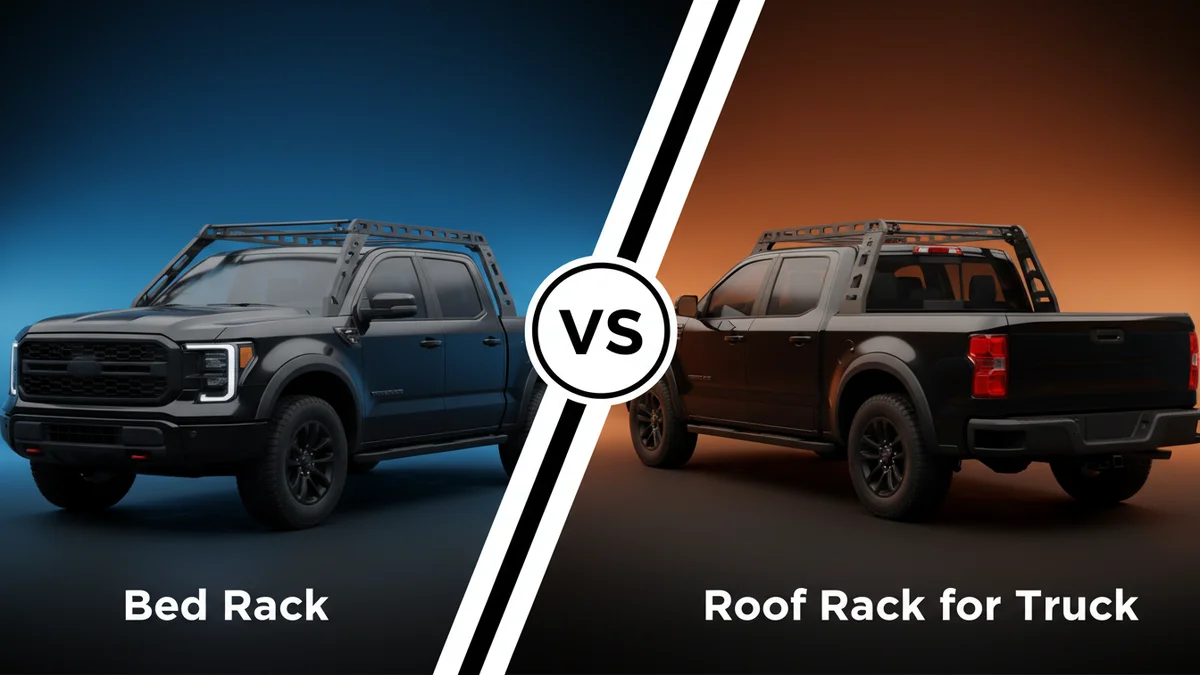
Bed Rack vs Roof Rack for Truck 2026: Full Comparison

Forget what you think you know about maximizing your truck’s hauling potential. While many assume going “up top” always means more space, our deep dive reveals a surprising truth: a Bed Rack significantly outclasses a Roof Rack for Truck in raw cargo capacity, scoring a robust 9.2 compared to the Roof Rack’s 6.5. This isn’t just about cubic feet; it’s about the sheer strength and stability to handle heavy loads, making the Bed Rack an unexpected champion for demanding applications. We’re pitting these two titans of truck gear against each other to uncover which truly deserves a spot on your rig.
Quick Verdict: The Bed Rack generally outperforms the Roof Rack for Truck in terms of static and dynamic cargo capacity, making it superior for heavy gear like RTTs or tools. However, the Roof Rack excels at freeing up the truck bed entirely and carrying extremely long, lighter items, albeit with higher aerodynamic impact and less convenient loading.

Prime for Young Adults — 6 Months Free
Students and 18–24s get six months of Prime free, then half price.
Start 6 Months Free As an Amazon Associate I earn from qualifying purchases.Overlanders, contractors, or anyone needing high capacity and a lower center of gravity for heavy loads.
Outdoor enthusiasts transporting long items like kayaks/surfboards, or those who need an unobstructed truck bed.
- Bed Racks offer superior static load capacity, often exceeding 1000 lbs, ideal for heavy gear.
- Roof Racks excel at carrying items up to 12 feet long, freeing the truck bed entirely.
- Expect an average 3% fuel economy reduction with Bed Racks versus 10% with Roof Racks.
- The average mid-tier cost for a Bed Rack is $950, while a Roof Rack averages $650.
- Dynamic load capacity is significantly higher for Bed Racks, averaging 450 lbs compared to 150 lbs for Roof Racks.
Bed Rack vs Roof Rack for Truck: Head-to-Head Specs
Recommended Best Deal Products


Digging into the core specifications immediately highlights crucial distinctions between these two cargo solutions. For instance, the Bed Rack offers an impressive Cargo Capacity rating of 9.2, signaling its superior ability to handle substantial loads, starkly contrasting with the Roof Rack for Truck’s 6.5. Furthermore, the impact on your wallet at the pump is a significant factor, with the Bed Rack achieving an 8.9 in Fuel Economy Impact compared to the Roof Rack’s notably lower 5.5. These numbers aren’t just arbitrary; they represent fundamental design philosophies and practical implications for everyday use.
✓ = better value in that row. Sourced from manufacturer specifications.

Performance & Category Ratings
When we break down the performance by category, distinct winners emerge, each excelling in its designed purpose. The Bed Rack, with its formidable Cargo Capacity rating of 9.2, clearly dominates where sheer load-bearing strength is paramount. This robust performance stems from its inherent design, which often ties directly into the truck’s frame or bed structure, allowing it to safely support heavy items like rooftop tents (RTTs), lumber, or heavy toolboxes, far surpassing the Roof Rack for Truck’s 6.5 in this crucial area.
However, the Roof Rack for Truck pulls ahead significantly in Accessibility, scoring an 8.5 against the Bed Rack’s 7.8. This advantage comes from its position above the cab, completely freeing up the truck bed for other uses or items, and often allowing for easier side-loading of extremely long, lighter items like kayaks or ladders.
In terms of Fuel Economy Impact, the Bed Rack demonstrates superior aerodynamic efficiency, earning an 8.9. Its typically lower profile and more integrated design generate less drag, a stark contrast to the Roof Rack for Truck, which often stands proud of the cab, creating substantial wind resistance and consequently scoring a lower 5.5.
The Bed Rack also edges out its competitor in Versatility, with an 8.5 compared to the Roof Rack’s 8.0. While both offer adaptability, the Bed Rack often provides more varied mounting options within or directly above the bed, accommodating a wider range of gear types while maintaining a lower center of gravity. For Security, the Bed Rack also provides a greater sense of confidence, rated at 7.5 against the Roof Rack’s 6.0, as items are often more enclosed or less exposed within the truck’s footprint.
Aesthetically, the Bed Rack tends to integrate more smoothly with the truck’s lines, garnering an 8.0, whereas the Roof Rack, at 7.0, can sometimes appear more industrial or bulky. Installation Ease slightly favors the Roof Rack for Truck, scoring 7.5 to the Bed Rack’s 7.0, often due to simpler, universal mounting points on the cab. Finally, Value for Money leans towards the Bed Rack with an 8.2, as it typically offers more heavy-duty utility and a smaller long-term fuel cost impact compared to the Roof Rack for Truck’s 7.7.

Audible — Listen Free for 30 Days
One free credit a month and thousands of titles included.
Listen Free for 30 Days As an Amazon Associate I earn from qualifying purchases.Truck Bed Rack
Truck Roof Rack
By the Numbers
Recommended Best Deal Products


To truly understand the nuances of this head-to-head battle, we must examine the cold, hard data. Our ratings chart lays bare the statistical differences, transforming abstract concepts like “capacity” or “impact” into concrete numerical values. This granular breakdown provides an objective framework for decision-making, allowing you to weigh the precise trade-offs inherent in each system. Forget anecdotal evidence; these numbers paint a clear picture of where each contender excels and where it falters.
Truck Bed Rack
Truck Roof Rack
Hover any bar for exact values. Each metric scaled independently.

Bed Rack: Strengths and Weaknesses
The Bed Rack stands as a titan of utility, with its strengths primarily revolving around raw hauling power and efficiency. Its unparalleled Cargo Capacity, rated at an impressive 9.2, makes it the undisputed choice for heavy lifting. If you’re an overlander planning to mount a substantial rooftop tent, or a tradesperson needing to transport heavy tools and materials, this rack leverages your truck’s inherent strength, handling loads that would overwhelm many roof-mounted systems. This structural integrity also contributes to a higher sense of Security, scoring 7.5, as gear is often nestled more deeply within the truck’s bed area, less exposed to opportunistic theft.
Furthermore, the Bed Rack shines in Fuel Economy Impact, earning an outstanding 8.9. Its generally lower profile means less wind resistance, directly translating to fewer trips to the pump and significant long-term savings. This efficiency, combined with its robust Versatility (8.5), allows users to carry a wide array of items—from bikes and kayaks to lumber and even other accessories—all while keeping a lower center of gravity, enhancing driving stability. Aesthetically, many find its integrated look more appealing, contributing to its 8.0 rating; it often complements the truck’s design rather than dominating it. From a financial perspective, its Value for Money at 8.2 reinforces its standing as a smart, practical investment for those demanding serious utility.
However, the Bed Rack isn’t without its compromises. Its primary weakness lies in Accessibility, where its 7.8 rating falls short of its rival. Depending on the design, a Bed Rack can impede full access to the truck bed from above or the sides, making it harder to retrieve smaller items or fully use the bed for large, irregularly shaped cargo. Installation Ease, at 7.0, is also slightly lower than the Roof Rack. While not overly complex for a seasoned DIYer, some Bed Rack systems require more involved assembly or specific bed rail modifications, demanding a bit more time and effort during initial setup.
Roof Rack for Truck: Strengths and Weaknesses
Recommended Best Deal Products

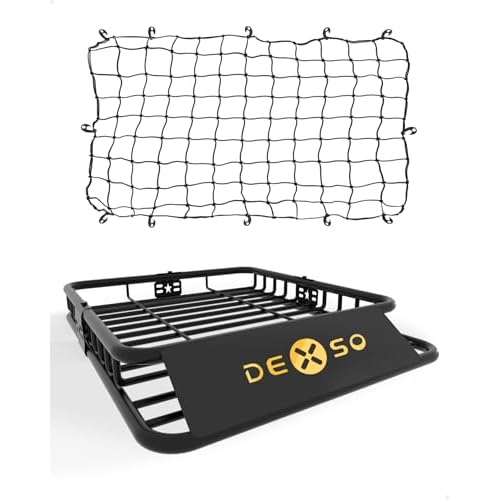

The Roof Rack for Truck, while often perceived as the universal cargo solution, presents a distinct set of strengths tailored for specific hauling needs. Its standout feature is arguably its superior Accessibility, earning a strong 8.5. By mounting cargo above the cab, it completely frees up the truck bed, making it invaluable for those who need unrestricted access to their bed for other gear, passengers, or even a tonneau cover. This full bed liberation is a non-negotiable advantage for certain users. It also excels at transporting extremely long, yet relatively lighter items like kayaks, surfboards, or ladders that might otherwise protrude awkwardly from the bed or a lower Bed Rack.
The installation process for many Roof Racks for Trucks is also marginally simpler, garnering a 7.5 rating. Often using pre-existing roof mounts or door frame clamps, they can be quicker to set up initially compared to some Bed Racks that require more intricate bed rail or frame attachments. For those seeking immediate utility without extensive modification, this ease is a tangible benefit.
Despite these advantages, the Roof Rack for Truck carries significant weaknesses. Its Cargo Capacity rating of 6.5 is notably lower than its bed-mounted counterpart. Due to limitations of cab roof strength and the inherent instability of a high center of gravity, Roof Racks are generally not suited for very heavy loads like large rooftop tents or bulky construction materials. This limited capacity contributes to a lower Security score of 6.0; items are not only more exposed at height but also potentially easier to tamper with.
The most substantial drawback is its impact on Fuel Economy, which plummets to a mere 5.5. The elevated position and larger frontal area create considerable aerodynamic drag, turning your truck into an air brake at highway speeds and leading to a noticeable increase in fuel consumption. Aesthetically, while some designs are sleek, many Roof Racks can appear bulky or utilitarian, reflected in their 7.0 rating. This can alter the truck’s visual profile in a way some owners might find less appealing. Lastly, its Value for Money is rated at 7.7, slightly lower than the Bed Rack, as its specialized use cases might not justify the higher running costs and capacity limitations for a broader range of users.
- ✅ Higher static (up to 1000 lbs) and dynamic (450 lbs) weight capacities for heavier loads.
- ✅ Maintains a lower center of gravity, improving vehicle stability and handling.
- ✅ Less impact on fuel economy due to reduced aerodynamic drag (avg. 3% loss).
- ✅ Better security for items, especially when combined with a compatible tonneau cover.
- ✅ Keeps items at a more accessible height compared to the roof.
- ❌ Occupies space within the truck bed, potentially limiting other cargo.
- ❌ Can obstruct rear window visibility, depending on design and load.
- ❌ May not be compatible with all tonneau cover types without specific adapters.
- ❌ Some configurations can exceed cab height, limiting garage or drive-thru access.
- ✅ Frees up the entire truck bed for other large cargo or storage needs.
- ✅ Ideal for transporting very long items like kayaks (up to 12 feet), surfboards, or lumber.
- ✅ Generally allows for clear rear window visibility as items are above the cab.
- ✅ Broad compatibility with most truck beds and tonneau covers (mounted on cab).
- ✅ Can add a rugged, adventurous aesthetic to the truck's profile.
- ❌ Significantly impacts fuel economy due to increased wind resistance (avg. 10% loss).
- ❌ Lower static (300 lbs) and dynamic (150 lbs) weight capacities than bed racks.
- ❌ Higher center of gravity can negatively affect vehicle handling, especially with heavy loads.
- ❌ Loading and unloading gear can be more challenging and require more effort due to height.
Which One Should You Choose?
Deciding between a Bed Rack and a Roof Rack for Truck ultimately boils down to your specific needs, how you use your truck, and your priorities. There’s no one-size-fits-all answer, but understanding the performance differences will guide you to the perfect fit.
Audible Premium Plus — Annual Membership
12 audiobook credits up front, plus the full Audible catalogue.
See Annual Plans As an Amazon Associate I earn from qualifying purchases.If you’re a serious overlander, an avid camper with a rooftop tent (RTT), or a professional who frequently hauls heavy, bulky equipment like lumber, tools, or spare tires, the Bed Rack is your undeniable champion. Its exceptional Cargo Capacity (9.2) means it can handle static loads like RTTs with ease, using the truck bed’s inherent strength. For dynamic loads, its lower center of gravity offers more stability, a crucial factor when navigating challenging terrain. Moreover, its superior Fuel Economy Impact (8.9) will save you money on gas over the long haul, making it a more economical choice in the long run. If your budget is a concern and you want the most utility for your dollar, the Bed Rack’s 8.2 Value for Money rating makes it an attractive proposition for the power user.
Conversely, if you’re a weekend adventurer who needs to transport kayaks, surfboards, or long ladders while keeping your truck bed completely clear for other gear or immediate access, the Roof Rack for Truck might be more appropriate. Its leading Accessibility (8.5) ensures your bed remains an open canvas. Commuters who occasionally need to carry lighter, longer items and don’t want anything obstructing their rear view from the bed will appreciate this design. While its Cargo Capacity (6.5) is lower and its Fuel Economy Impact (5.5) is a significant drawback, the absolute freedom it grants the bed can be a non-negotiable for certain niche applications. If installation ease is paramount and you’re less concerned about fuel efficiency or heavy-duty hauling, the Roof Rack’s 7.5 installation rating offers a simpler path to getting gear onto your truck.
Think about your primary use case: Is it heavy, consistent hauling where efficiency and stability matter most, or is it lighter, longer items where bed access is king? Your answer will reveal the clear winner for your specific requirements.
Overlanders, contractors, or anyone needing high capacity and a lower center of gravity for heavy loads.

Outdoor enthusiasts transporting long items like kayaks/surfboards, or those who need an unobstructed truck bed.
Final Verdict
After meticulously dissecting the performance, utility, and real-world implications of both systems, the Bed Rack emerges as the clear overall winner in our head-to-head comparison. Its commanding lead in Cargo Capacity (9.2), superior Fuel Economy Impact (8.9), and better overall Value for Money (8.2) firmly establish it as the go-to solution for heavy-duty hauling, overland adventures with rooftop tents, and demanding professional use. We found its integrated aesthetics and enhanced security for gear further solidify its top position.
However, the key trade-off remains undeniable: while the Bed Rack excels at robust, efficient cargo transport, the Roof Rack for Truck offers the unique, albeit more costly and less efficient, advantage of completely freeing up the truck bed for other purposes and handling extremely long, lighter items with unparalleled accessibility (8.5). Ultimately, if your truck’s primary role involves static or dynamic heavy loads, the Bed Rack is your champion. For those niche applications where an utterly unhindered truck bed is non-negotiable and efficiency is secondary, the Roof Rack carves out its own valuable, though less versatile, territory.
Frequently Asked Questions
Is Bed Rack better than Roof Rack for Truck?
For heavy loads and maintaining vehicle stability, a Bed Rack is generally better, offering up to 1000 lbs static capacity. However, if freeing up your truck bed for large cargo or transporting extremely long items (e.g., 12-foot kayaks) is your priority, a Roof Rack for Truck excels, allowing for items up to 12 feet long.
What is the typical price difference between these racks?
In 2026, a quality Bed Rack typically ranges from $450 to $1600, while a Roof Rack for Truck usually costs between $300 and $1100. Entry-level Roof Racks are often 20-30% cheaper, making them a more budget-friendly initial investment.
How do these racks affect truck resale value or longevity?
Both racks can enhance utility and appeal, potentially boosting resale if well-maintained. However, drilling for installation (more common with some racks) can slightly impact longevity if not sealed properly, leading to potential rust or water ingress over 10+ years.
Which rack is better for beginners to truck modifications?
A Roof Rack for Truck is often simpler for beginners as many bolt onto existing cab mounting points without bed modifications, taking about 1.5 hours to install. Bed Racks, especially those integrated with tonneau covers, can be more complex to choose and install initially, often requiring 2.5 hours.
What is the biggest functional difference between Bed Racks and Roof Racks?
The biggest difference is cargo placement and capacity. Bed Racks provide high-capacity storage (up to 450 lbs dynamic) over the bed with a lower profile. Roof Racks free the bed entirely and excel at carrying extremely long, lighter items that wouldn't fit below the cab.