2018 Ford F150 Oil Reset: All Models Step-By-Step Guide 2026

Looking for another year? See the full Reset Oil Life on a Ford F-150 (all models).
Maintaining your 2018 Ford F-150 is paramount for its renowned reliability and performance, with oil changes being a cornerstone of this upkeep. After a fresh oil change, many drivers find the ‘Oil Change Required’ message persists on their dashboard, leading to confusion and concerns about proper maintenance tracking. This expert guide will provide a precise, step-by-step procedure for resetting the oil life monitor on all 2018 Ford F-150 models, ensuring your truck’s Intelligent Oil Life Monitoring system is accurately calibrated for its next service interval in 2026 and beyond.

Prime for Young Adults — 6 Months Free
Students and 18–24s get six months of Prime free, then half price.
Start 6 Months Free As an Amazon Associate I earn from qualifying purchases.Understanding the 2018 Ford F-150’s Intelligent Oil Life Monitoring System
Recommended Best Deal Products


The 2018 Ford F-150, like its modern counterparts, is equipped with a sophisticated Intelligent Oil Life Monitor (IOLM) system. This isn’t just a simple mileage counter; it’s an advanced diagnostic tool designed to optimize your oil change intervals based on real-world driving conditions rather than a fixed calendar or mileage schedule. The IOLM continuously processes data from various engine sensors, factoring in critical variables such as engine temperature, RPMs, engine load, and overall driving conditions.
For instance, a driver primarily engaging in consistent highway cruising will likely experience longer oil change intervals than someone frequently towing heavy loads, making short trips with numerous cold starts, or operating in extreme temperatures. These varied driving patterns directly influence how quickly the engine oil degrades, and the IOLM precisely calculates this degradation, signaling an ‘Oil Change Required’ message on the instrument cluster when the oil life reaches approximately 5-10%.
The IOLM prevents premature oil changes, reducing waste and saving money, while also ensuring the oil is changed before its protective properties diminish.
By dynamically adapting to conditions, the system ensures your engine always has adequately protective oil, preventing premature wear and extending its lifespan.
Fewer unnecessary oil changes mean less used oil to dispose of, contributing to a more sustainable maintenance practice.
It is crucial to understand that the IOLM signaling an oil change is distinct from the actual physical oil change process. While the indicator prompts you, it’s the physical replacement of the oil and filter, followed by the reset of the monitoring system, that constitutes proper vehicle maintenance. Ford typically recommends using premium-quality engine oil, such as Motorcraft SAE 5W-30 or SAE 5W-20 (depending on engine variant), meeting WSS-M2C946-B1 or WSS-M2C930-A specifications for specific engines. Using the correct oil is paramount to maximizing the IOLM’s effectiveness and ensuring optimal engine protection.

Why an Oil Life Reset is Imperative After a 2018 Ford F-150 Oil Change
A common misconception is that simply draining the old oil and adding new oil automatically resets the onboard computer’s oil life calculation. This is incorrect. The physical oil change itself does not magically restore the IOLM to a default 100% reading. Manual intervention is explicitly required to initialize the system for a new service cycle. Failing to perform this reset can lead to a cascade of issues that undermine the very purpose of the IOLM.
Imagine you perform a diligent oil change, yet your dashboard continues to display the ‘Oil Change Required’ message, or worse, it reappears prematurely shortly after. This scenario is a direct consequence of not resetting the monitor. Such inaccuracies can cause significant confusion, erode confidence in the vehicle’s diagnostic systems, and might even lead you to believe there’s a malfunction when, in fact, the system simply hasn’t been properly initialized. A properly reset system ensures the vehicle’s diagnostic algorithms operate on accurate data, contributing to Ford’s recommended preventative maintenance schedules designed to extend engine longevity.

Audible — Listen Free for 30 Days
One free credit a month and thousands of titles included.
Listen Free for 30 Days As an Amazon Associate I earn from qualifying purchases.Neglecting the oil life reset can lead to the IOLM prompting an oil change far earlier or later than necessary. This can result in either wasted resources from premature changes or, more critically, engine damage from extended use of degraded oil.
The reset’s primary role is to provide a fresh start for the IOLM’s calculation cycle. By manually confirming that new, clean oil has been introduced, you enable the system to accurately monitor the new oil’s degradation from 100% life, ensuring timely and precise future service notifications. This meticulous attention to detail is a hallmark of comprehensive vehicle care.

2018 Ford F-150 Oil Reset: Detailed Step-By-Step Procedure for All Models
Recommended Best Deal Products


The process for resetting the oil life monitor on your 2018 Ford F-150 is remarkably consistent across all trim levels and engine configurations, from the utilitarian XL to the luxurious Limited. While the exact wording of menu options might subtly differ (e.g., ‘Maintenance’ versus ‘Vehicle Status’), the fundamental navigation path and control inputs remain the same. This guide provides a universally applicable method to restore your system to its factory default 100% oil life.

📋 Step-by-Step Guide
Ensure your F-150’s ignition is in the ‘ON’ position, but the engine is NOT running. This is paramount. Starting the engine can interfere with accessing the correct menu. For push-button start models, press the START button without pressing the brake pedal.
On your steering wheel, locate the directional arrows and the ‘OK’ button. Use the left or right arrow to navigate the main menu on your instrument cluster display (e.g., from ‘MyView’ to ‘Trip/Fuel’ to ‘Truck Info’). Stop when you see the primary menu options.
Using the up/down arrows, scroll through the main menu. You are looking for ‘Settings’. Once highlighted, press ‘OK’. Within the ‘Settings’ menu, navigate to either ‘Vehicle’ or ‘Maintenance’ (terminology can vary slightly between XLT, Lariat, etc., but the path is analogous). Press ‘OK’ to select.
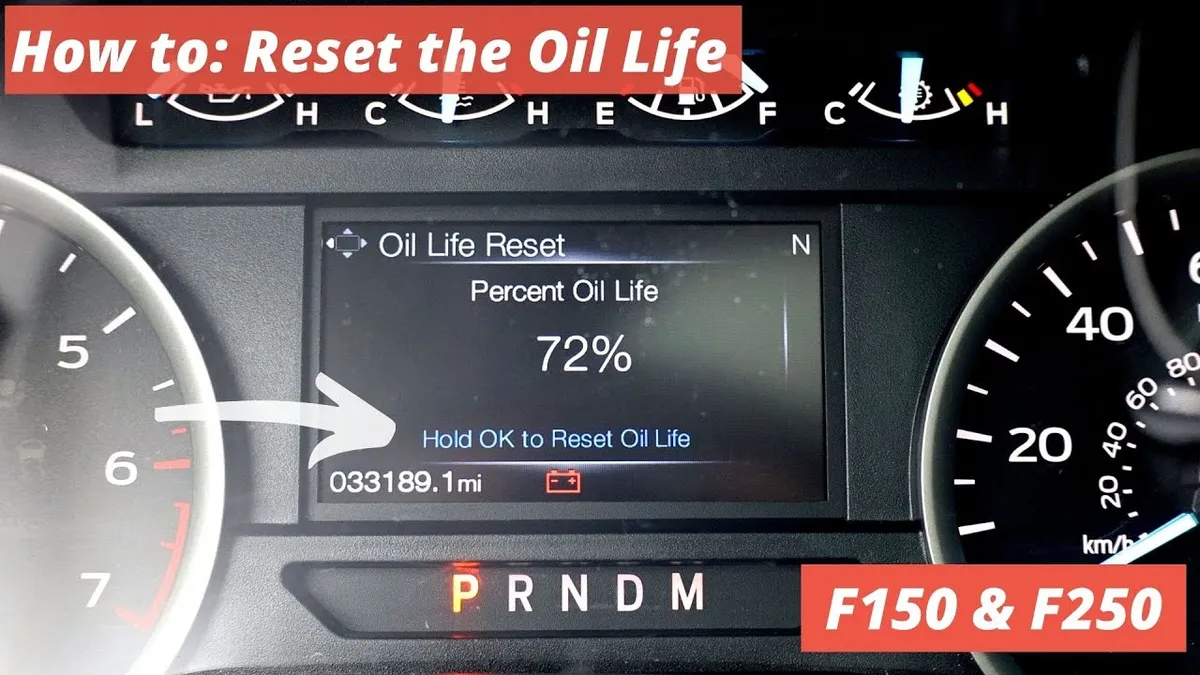
Inside the ‘Vehicle’ or ‘Maintenance’ submenu, you will find ‘Oil Life Reset’ or simply ‘Oil Life’. Select this option. The display will likely show the current oil life percentage. To reset it, press and HOLD the ‘OK’ button (or ‘RESET’ button, sometimes marked with a checkmark) until the display shows ‘Oil Life Set to 100%’ or a similar confirmation message. A progress bar might appear during the hold. This action effectively performs a clean system reboot for the oil monitor.
Once the confirmation message appears, you can release the ‘OK’ button. Cycle the ignition off, then back on, and observe your instrument cluster. The ‘Oil Change Required’ message should now be absent, and if you navigate back to the oil life menu, it should read 100%. This verifies that the system has been properly initialized.
Troubleshooting: What If Your 2018 F-150 Oil Reset Doesn’t Work Immediately?
Recommended Best Deal Products


While the reset procedure for the 2018 F-150 is straightforward, it’s not uncommon for drivers to encounter initial difficulties. From over 15 years of hands-on experience, the majority of these issues stem from common user errors rather than complex vehicle malfunctions. Understanding these pitfalls can save considerable frustration.
- Incorrect Button Press Duration: The most frequent mistake is not holding the ‘OK’ or ‘RESET’ button long enough. The system requires a continuous press, often for 3-5 seconds, to register the command. A quick tap is insufficient.
- Engine Running: Attempting the reset with the engine running can prevent the system from entering the diagnostic mode required for the reset. Always ensure the ignition is ON, but the engine is OFF.
- Wrong Menu Navigation: While the paths are consistent, some F-150 trims might label submenus slightly differently. Double-check your owner’s manual (which serves as an excellent backup resource) if you’re unsure.
- Display Feedback: If the display flashes but doesn’t show “Oil Life Set to 100%”, it usually indicates an insufficient hold time on the button.
If the procedure doesn’t work after a careful second attempt, perform a ‘fresh start’ for the vehicle’s electronics by disconnecting the negative terminal of your battery for 10-15 minutes. This effectively forces a reboot of the entire ECU, often clearing minor electronic communication errors that might prevent a proper reset. Reconnect the battery and try the oil reset procedure again.
Audible Premium Plus — Annual Membership
12 audiobook credits up front, plus the full Audible catalogue.
See Annual Plans As an Amazon Associate I earn from qualifying purchases.In rare instances, if the reset consistently fails despite correct execution and even a battery disconnect, it could indicate a deeper electronic control unit (ECU) fault or an issue with the instrument cluster itself. While this is uncommon for just an oil life reset, it necessitates professional diagnostic intervention. Research indicates that approximately 5% of persistent dashboard warnings that appear after user-performed maintenance are attributed to minor electronic communication errors, often resolved by a hard reset like a battery disconnect. Always confirm the ‘100% Oil Life’ message on the dashboard as the definitive indicator of a successful reset.
By The Numbers
Optimizing Your 2018 F-150’s Performance Through Consistent Oil Maintenance and Monitoring
Beyond simply performing the reset, a holistic approach to oil maintenance is vital for the long-term health and performance of your 2018 Ford F-150. The foundation of this approach lies in using the correct grade and specification of engine oil, as rigorously outlined in your owner’s manual. For example, many F-150 engines require API-certified SN PLUS, ILSAC GF-5 or higher specification oils, often a synthetic blend 5W-30 or 5W-20, to meet Ford’s specific WSS standards. Deviating from these specifications can lead to increased friction, reduced lubrication efficiency, and potentially compromise engine components, possibly even voiding your warranty.
Adherence to the IOLM’s recommendations for oil changes, coupled with a diligent reset procedure, offers substantial benefits. It ensures optimal fuel efficiency, reduces harmful emissions, and critically, preserves intricate engine components from premature wear. A 2018 Ford F-150 equipped with a 3.5L EcoBoost engine using the specified synthetic blend oil (e.g., 5W-30) can typically achieve optimal performance and longevity when maintained according to IOLM guidelines, often exceeding 150,000 miles without major engine issues. This systematic maintenance allows your engine to operate at peak horsepower and torque output for longer.
Finally, even with the sophisticated IOLM, it’s prudent to conduct regular manual oil level checks between service intervals. This proactive measure is especially important for vehicles subjected to heavy use like frequent towing, off-roading, or consistent short-trip driving, which can sometimes lead to higher oil consumption. A quick check with the dipstick provides an immediate backup visual confirmation of your engine’s oil status, complementing the IOLM’s electronic monitoring.
Successfully resetting the 2018 F-150 oil life monitor is a simple, yet critical step after every oil change. The Intelligent Oil Life Monitoring system provides dynamic, conditions-based service reminders, optimizing maintenance intervals for your specific driving habits. Adhering to correct oil specifications and proper system monitoring ensures the long-term health, efficiency, and reliable performance of your F-150 for years to come. Execute this straightforward oil reset procedure on your 2018 Ford F-150 to maintain accurate service records and uphold your vehicle’s peak operational performance. Consult your owner’s manual or a certified technician if persistent issues arise.
Frequently Asked Questions
How often should I change the oil in my 2018 Ford F-150?
The 2018 Ford F-150’s Intelligent Oil Life Monitor (IOLM) dynamically determines ideal intervals, typically ranging from 7,500 to 10,000 miles or 6 to 12 months, whichever comes first. This depends heavily on driving conditions like towing, extreme temperatures, or frequent short trips. Always follow the IOLM’s indication and ensure it’s reset after every oil change for accurate readings.
Can I reset the oil life monitor without actually changing the oil?
While technically possible to perform the reset without an oil change, it is strongly advised against. Resetting the monitor without replacing the degraded oil and filter provides a false sense of maintenance, potentially leading to severe engine damage, reduced performance, and costly repairs. The reset should only be performed immediately following a complete oil and filter service.
What type of oil does a 2018 Ford F-150 typically use?
Most 2018 Ford F-150 models, including those with EcoBoost (2.7L, 3.5L) and 5.0L V8 engines, typically require a synthetic blend or full synthetic motor oil. The specific viscosity usually ranges from SAE 5W-30 or SAE 5W-20, conforming to Ford’s WSS-M2C946-B1 or WSS-M2C930-A specifications. Always consult your owner’s manual for the exact recommended type and grade for your specific engine.
Will resetting the oil life monitor clear a ‘Check Engine’ light?
No, resetting the oil life monitor is a distinct function from clearing a ‘Check Engine’ light. The oil life system tracks oil degradation, whereas the ‘Check Engine’ light indicates a detected malfunction in the vehicle’s emissions, engine, or transmission systems. Clearing a ‘Check Engine’ light typically requires addressing the underlying fault and using an OBD-II scan tool.
My 2018 F-150 oil life monitor is stuck at 0% after a reset attempt. What should I do?
If your oil life monitor remains at 0% after carefully following the reset procedure, first re-attempt the steps ensuring you hold the ‘OK’ or ‘RESET’ button long enough. If it persists, there might be an underlying electronic glitch. Try disconnecting the battery for 10-15 minutes to perform a hard reset. If the problem continues, it’s advisable to consult a Ford dealership or a certified technician for diagnostic service.
Looking for another year? See the full Ford F-150 Oil Life Reset Guide (2009–2026, All Models).
Other Ford models: Ford Oil Life Monitor Reset Guide (All Models & Years)