Ford F-150 P1131 Code: Causes, Fix, Guide 2026

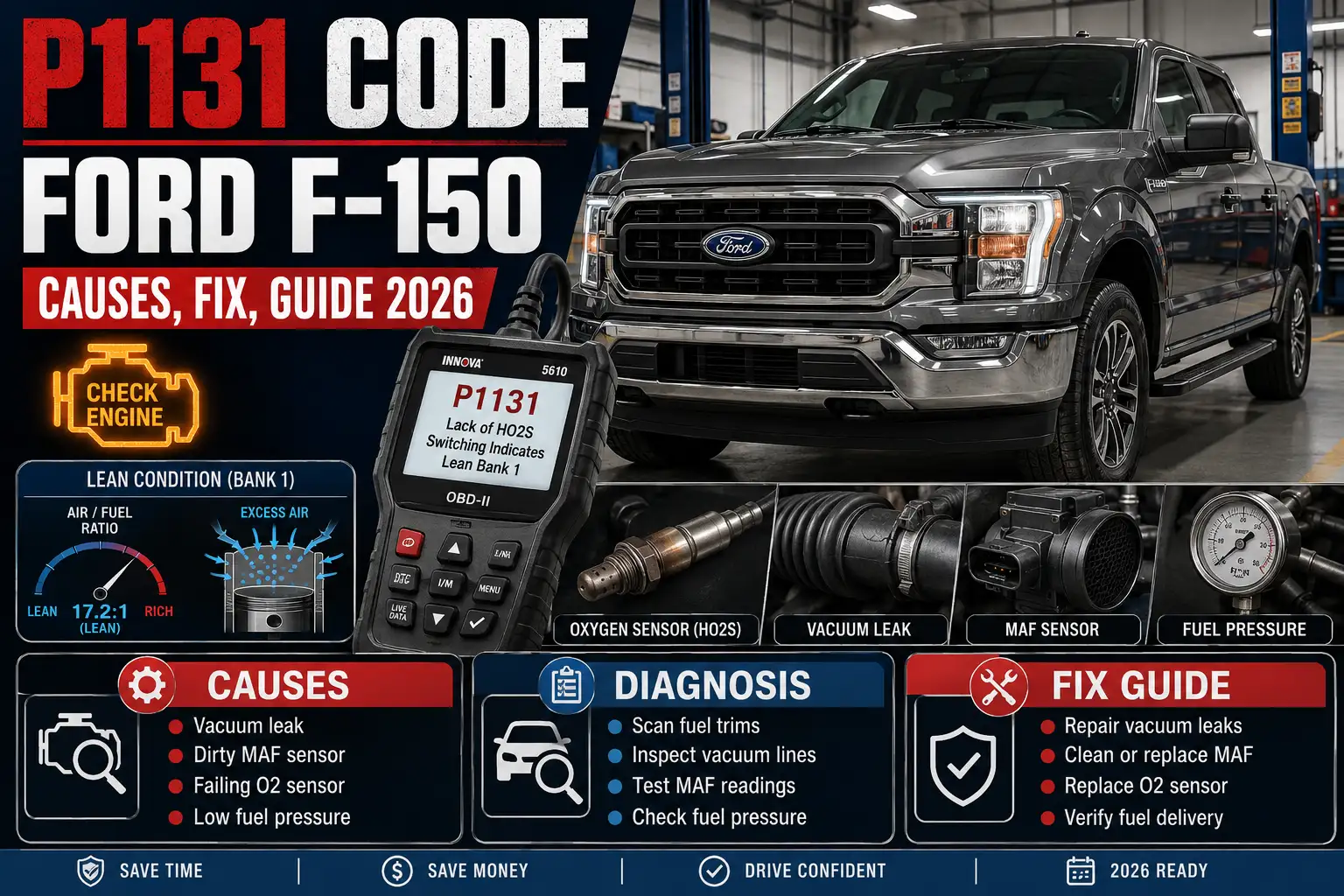
P1131 on a Ford F-150 means the PCM has detected a lack of upstream heated oxygen sensor switching on Bank 1, with the sensor reporting a lean condition. In plain terms, the passenger-side upstream O2 sensor isn’t flipping between rich and lean readings the way it should,
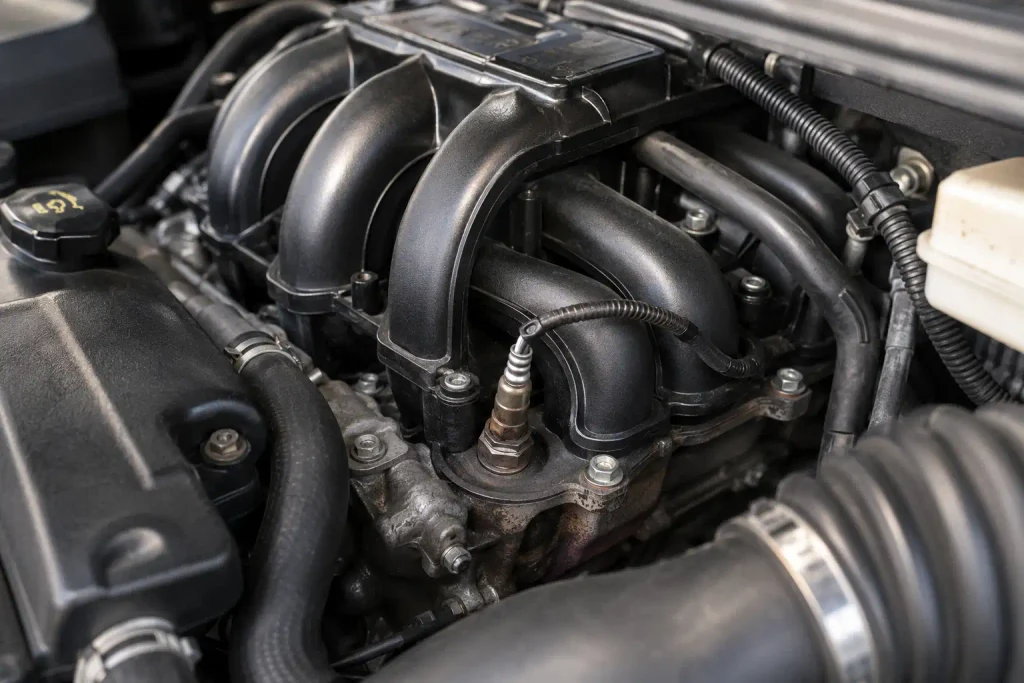
and the computer is seeing too much oxygen in the exhaust. This code shows up across nearly every F-150 generation, but what actually causes it, and what actually fixes it, depends heavily on which engine is under the hood.
P1131 diagnosis and fix by F-150 engine
Lack of upstream heated oxygen sensor switch, Bank 1 lean
4.2L V6 (2001-2003 F-150, 2004 Heritage)
Leaking intake isolator bolts and port gaskets, per TSB 05-22-6
Cold-start intermittent CEL that clears once the engine warms
Replace port gaskets and isolator bolts
Gasket1L3Z-9H486-AA Bolts x83F2Z-9S479-AA4.6L Triton (1997-98 models)
A/C condensate dripping onto the O2 sensor, causing thermal cycling
Symptoms worsen after A/C use; check for moisture near the sensor
Install a drain tube to redirect condensate away from the sensor
4.6L / 5.4L Triton (1999 and up)
Cracked PCV elbow hose, vacuum leak, or MAF contamination
Smoke test and live fuel trim data on both banks
Replace PCV hose, seal the vacuum leak, or clean/replace the MAF sensor
5-step diagnostic sequence
Scan for additional codes (P1151, P1132, P0171)
Check freeze frame and live O2 sensor voltage
Inspect for vacuum leaks with a smoke test
Run the engine-specific check above
Clear the code and road test to confirm
What the P1131 Code Means on a Ford F150


The PCM sets P1131 when the upstream HO2S sensor on Bank 1 (the passenger side on virtually every F-150 V6 and V8 layout) stays stuck reading lean instead of switching rapidly between rich and lean the way a healthy sensor does. That switching behavior is how the PCM fine-tunes the air-fuel mixture in real time.
- Lean mixture: too much air, not enough fuel
- Rich mixture: too much fuel, not enough air
- The PCM relies on constant O2 sensor feedback to keep the ratio near 14.7:1
Bank 1 refers to the engine bank containing cylinder #1, which on Ford V6 and V8 truck engines is the passenger side. If you need to physically confirm the sensor location on your engine, the Ford F-150 Bank 1 Sensor 1 location guide walks through the exact positioning by generation.
This code definition is Ford-specific. The same P1131 number means something entirely different on a Nissan (swirl control valve) or a Chevrolet (a different HO2S circuit variance), so generic multi-brand code lookups won’t get you far here. Knowing what triggers the code is only half the picture. The real question is why it’s happening on your truck.
5 Common Causes of P1131 on Ford F150 Trucks

Five issues account for most P1131 codes reported across F-150 forums and repair threads:
- Faulty or contaminated upstream O2 sensor (Bank 1, Sensor 1). The sensor itself degrades over time and stops switching properly, especially past 100,000 miles.
- Vacuum leak in the intake system. Unmetered air entering after the MAF sensor throws off the PCM’s fuel calculation, making the engine run leaner than the computer expects.
- Dirty or failing MAF sensor. A contaminated Mass Air Flow sensor misreports incoming air volume, which cascades into a lean-reading O2 signal. If you suspect this, start with the F-150 MAF sensor location to pull and inspect it.
- Fuel delivery issues. Low fuel pressure, a clogged fuel filter, or a weakening fuel pump all starve the engine of fuel relative to air.
- Wiring or connector corrosion at the O2 sensor harness, which can mimic a lean signal even when the sensor itself is healthy.
One cause in particular is so common on a specific F-150 engine that Ford issued a bulletin for it.
P1131 Causes on 4.2L V6 F150 Engines
If your F-150 has the 4.2L V6, start here before replacing anything. On these trucks, P1131 (frequently paired with P1151, the same fault on Bank 2) is most commonly caused by leaking isolator bolts and port gaskets at the upper-to-lower intake manifold mounting area, exactly the failure Ford documented in TSB 05-22-6.
Applicable years: 2001-2003 F-150, 2004 F-150 Heritage, and 2001-2003 E-150/E-250 equipped with the 4.2L V6.
The symptom pattern is distinctive and well documented by owners: the check engine light appears a few minutes after a cold start, then clears on its own once the engine warms up, only to return on the next cold start. That’s consistent with a gasket that reseals slightly as the intake plastic expands with heat.
This is not primarily a sensor problem on these trucks. Multiple owners report replacing the upstream O2 sensor first, only to have the code return, because the actual leak point is at the intake mounting surface, not the sensor. The fix Ford engineered for this exact problem is documented and inexpensive.
P1131 Causes on 4.6L and 5.4L Triton F150 Engines
Triton V8 trucks (4.6L and 5.4L) throw P1131 for different reasons than the 4.2L V6, and the TSB above does not apply to them.
On early Triton-equipped trucks (1997-98 F-150, F-250 LD, Expedition, and 1998 Navigator), Ford documented a separate cause: A/C system condensate dripping onto the heated oxygen sensor, causing rapid thermal cycling of the sensor and triggering P0133, P0171, and/or P1131 along with driveability symptoms like hesitation, surge, or a rough idle. The fix was a fabricated drain tube to redirect condensate away from the sensor.
On later Triton trucks (1999 and up), the more common causes are the same as the general list above, with two frequent standouts reported by owners: a cracked PCV elbow hose at the rear of the intake manifold, and vacuum leaks discovered through smoke testing after fuel trims were confirmed abnormal.
One well-documented owner case involved P1131 and P1132 appearing together on a 5.4L with 89,000 miles, alongside P0171, which points toward a shared cause (MAF or a central vacuum leak) rather than two independent sensor failures.
In another case, a 285,000-mile Triton had both upstream O2 sensors replaced and the code still returned, which points toward wiring or vacuum leaks rather than the sensors themselves. Whichever engine you have, the diagnostic sequence below narrows it down fast.
Ford TSB 05-22-6 Fix for P1131 and P1151
Ford’s fix for the 4.2L V6 failure pattern is documented in TSB 05-22-6, which supersedes the earlier TSB 05-17-3. The bulletin’s service procedure is specific: if P1131 and/or P1151 are the only codes stored, remove the upper intake manifold and replace only the port gaskets and isolator bolt assemblies.
Ford also notes that while the upper intake is off, the EGR orifices in the lower intake should be checked for soot blockage.
| Part | Ford Part Number | Note |
|---|---|---|
| Port Gasket | 1L3Z-9H486-AA | Replace both, do not reuse |
| Isolator Bolt Assembly | 3F2Z-9S479-AA | 8 bolts required; revised bolts use green rubber, not the superseded black rubber |
Pricing from third-party OEM Ford parts retailers (parts.ford.com does not support automated lookup, so pricing below comes from dealer-network resellers): individual isolator bolts run roughly $5-$8 each through outlets like Ford Parts Giant and Lakeland Ford Online Parts, and a complete 8-bolt kit with gasket runs approximately $60-$65 through OEM parts sellers on eBay. Total parts cost for the full TSB fix typically lands in the $65-$85 range before labor.
If you’re not comfortable pulling the upper intake yourself, the 4.2L V6 intake manifold removal guide walks through the exact procedure this TSB calls for. Before ordering parts, confirm the diagnosis with these steps.
How to Diagnose P1131 in 5 Steps
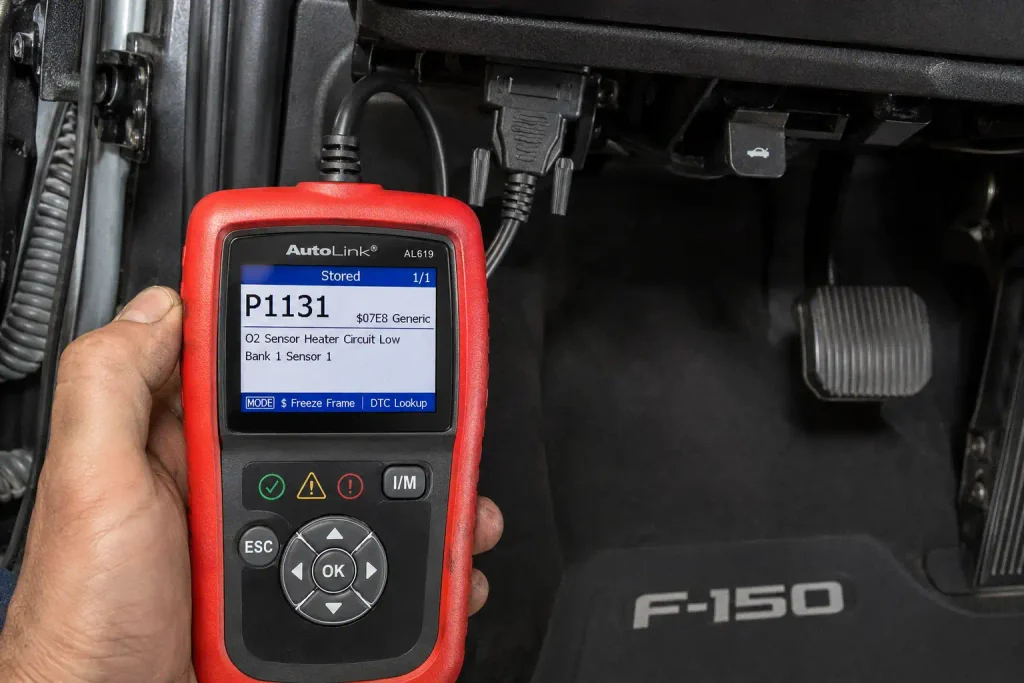
Work through these five steps in order. Don’t skip straight to parts replacement.
- Scan for additional codes. P1151, P1132, and P0171 commonly appear alongside P1131 and change what you should check first. Multiple codes across both banks point toward a shared cause like the MAF or a large vacuum leak, not a single bad sensor.
- Check freeze frame data and live O2 sensor voltage. A sensor that’s stuck near a fixed voltage (not switching at all) points toward a wiring or connector issue rather than a true lean condition.
- Inspect for vacuum leaks. A smoke test is the most reliable method; spraying carb cleaner or starter fluid around vacuum connections while watching for an RPM change works as a rougher field test.
- Do the engine-specific check. 4.2L V6 owners should inspect the isolator bolts and port gaskets at the upper-to-lower intake mounting area. Triton V8 owners should inspect the MAF sensor and the O2 sensor wiring harness for corrosion.
- Clear the code and road test. Confirm the fix under real driving conditions, including a cold start, since several of these causes are cold-start intermittent.
Once you’ve confirmed the cause, here’s what repair typically costs.
P1131 Repair Cost for Ford F150 Owners
Repair cost depends entirely on which cause applies to your truck.
If the diagnosis points to the O2 sensor itself, aftermarket sensors run roughly $30-$50 each from parts stores, while OEM-equivalent (Motorcraft or Bosch) sensors through suppliers like RockAuto typically run $50-$120 each. Most F-150s need one sensor replaced per affected bank, not the full set of four.
If you’re a 4.2L V6 owner working through the TSB fix, expect roughly $65-$85 in parts (gaskets and isolator bolts) plus labor for an upper intake removal, which is a multi-hour job. An independent shop will typically price this as 2-3 hours of labor on top of parts.
Ignoring the code long-term risks unmetered fuel trims that can eventually damage the catalytic converter and will consistently hurt fuel economy in the meantime. Here’s the quick version if you just want your answer.
P1131 Quick Diagnosis Guide by F150 Engine
| Engine | Most Likely Cause | Confirm With | Fix |
|---|---|---|---|
| 4.2L V6 (2001-2003 F-150, 2004 Heritage) | Leaking intake isolator bolts/port gaskets (TSB 05-22-6) | Cold-start intermittent CEL pattern | Replace port gaskets (1L3Z-9H486-AA) and isolator bolts (3F2Z-9S479-AA) |
| 4.6L Triton (1997-98) | A/C condensate dripping on O2 sensor | Symptoms worsen after A/C use | Install drain tube per Ford’s early Triton bulletin |
| 4.6L/5.4L Triton (1999+) | Cracked PCV elbow, vacuum leak, or MAF contamination | Smoke test, live fuel trim data | Replace PCV hose, seal vacuum leak, or clean/replace MAF |
Fix P1131 Based on Your F150 Engine, Not Guesswork
The right fix for P1131 depends almost entirely on which engine sits under your F-150’s hood. On 4.2L V6 trucks, check TSB 05-22-6 and the intake isolator bolts before you touch the O2 sensor. On 4.6L and 5.4L Triton trucks, the O2 sensor, vacuum leaks, and the PCV elbow deserve attention first.
In both cases, replacing the O2 sensor without confirming the actual cause is the most common wasted repair reported by F-150 owners. Run the five-step diagnostic sequence above before you buy any parts, and you’ll spend your money once instead of twice.
Frequently Asked Questions
Can I drive with a P1131 code on my F150?
Yes, in most cases it’s safe to drive short-term, since P1131 reflects a fuel mixture issue rather than an immediate mechanical failure. Reduced fuel economy and rough idle are common while driving with the code, and prolonged lean running can eventually damage the catalytic converter, so it’s worth diagnosing soon.
Will a P1131 code clear itself?
Sometimes, especially with the 4.2L V6 intermittent cold-start pattern, where the code can clear once the engine warms up and not return for days or weeks. A self-clearing code still indicates an underlying issue and will typically return, so it shouldn’t be treated as resolved.
Does P1131 always mean a bad O2 sensor?
No, and this is the most common misdiagnosis. Many F-150 owners report replacing the sensor with no change, because the actual cause was a vacuum leak, intake gasket, or wiring issue instead.
What codes commonly appear alongside P1131 on an F150?
P1151 (the same fault on Bank 2), P1132, and P0171/P0174 (system too lean, both banks) are the most frequently reported companion codes. Multiple simultaneous codes usually point toward a shared cause like the MAF sensor or a large vacuum leak rather than one failed sensor.
How much does it cost to fix P1131 on a 4.2L F150?
The TSB fix (port gaskets and isolator bolts) typically runs $65-$85 in parts plus 2-3 hours of shop labor for the intake removal. If the cause turns out to be the O2 sensor instead, expect $30-$120 in parts depending on OEM versus aftermarket, plus a much shorter labor time.