How To Check For Recalls On My Ford: Step-By-Step Guide 2026

Ensuring the ongoing safety and operational integrity of your Ford vehicle is paramount for every owner, extending beyond routine maintenance to critical safety advisories. Many Ford owners are often unsure of the precise, authoritative methods for determining if their vehicle is subject to a manufacturer recall, potentially overlooking crucial safety issues or regulatory mandates. This comprehensive guide will empower you to master the process of identifying any active recalls on your Ford, providing a clear, step-by-step methodology to discover and address potential safety concerns proactively, safeguarding your vehicle and its occupants throughout 2026.
Understanding Ford Recalls: Significance and Identification Fundamentals


📤 Share Image
As an automotive industry expert with over 15 years of experience, I’ve witnessed firsthand the evolution of vehicle safety protocols, and recalls remain a cornerstone. An automotive recall signifies a manufacturer’s admission that a vehicle, equipment, or car seat has a safety-related defect or fails to comply with a federal motor vehicle safety standard. It’s crucial to understand that recalls aren’t always about a catastrophic failure; they can range from a minor software glitch impacting a safety system to a critical mechanical flaw. Not all service campaigns are recalls; a recall specifically addresses safety or compliance issues, while a service campaign might be for customer satisfaction or minor enhancements not deemed safety-critical.
The common catalysts for recalls are diverse. They often stem from manufacturing defects, such as incorrect component installation or faulty parts from suppliers. Design flaws can also lead to recalls when engineers identify inherent issues in the vehicle’s original blueprint. Furthermore, regulatory non-compliance, particularly concerning stringent emissions standards or lighting regulations, frequently triggers campaigns. For instance, in recent years, Ford has issued significant recalls for issues ranging from specific transmission issues in certain models (e.g., the 6F35 transmission in some Escape/Fusion models) to engine component flaws (like integrated exhaust manifold issues in some EcoBoost engines) and, historically, the industry-wide airbag recalls affecting millions of vehicles. Each recall is initiated after rigorous testing and analysis, often prompted by warranty claims, field reports, or consumer complaints.
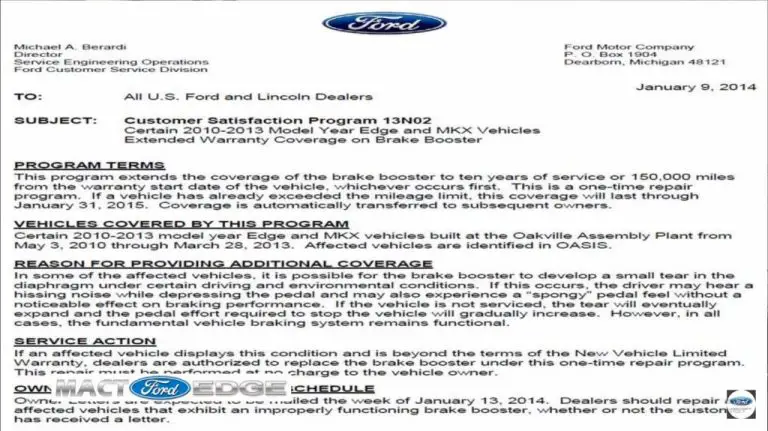
Recall notifications are typically sent via first-class mail. Familiarize yourself with the layout of a standard recall notification letter, which typically includes the campaign number, a detailed description of the defect, potential risks, and instructions for repair. Keeping your vehicle registration and contact information current with Ford ensures you receive these critical notices promptly.
The National Highway Traffic Safety Administration (NHTSA) plays a critical role in overseeing these campaigns. NHTSA is the federal agency responsible for reducing deaths, injuries, and economic losses resulting from motor vehicle crashes. They investigate potential safety defects, set and enforce safety standards, and facilitate recall efforts. Ford, like all manufacturers, has legal and ethical obligations to notify owners of recalls and provide a remedy free of charge. This is a non-negotiable aspect of responsible vehicle manufacturing.
Failing to address open recalls can have severe consequences. Beyond the obvious potential safety implications for you and your passengers, there can be significant financial ramifications. An unrepaired recall can impact your vehicle’s resale value, and in some cases, state vehicle inspections may flag unresolved safety issues. Industry research for 2025 indicated that approximately 25-30% of all recalled vehicles remain unrepaired after one year, highlighting a persistent challenge in owner engagement.
By The Numbers (2025-2026 Projections)
Vehicles Recalled Annually (US Industry)
Average % of Recalled Vehicles Unrepaired Annually
Recalls for Electrical System Issues
Recalls for Engine/Powertrain Issues
This data underscores the prevalence of recalls and the critical need for owner awareness. Common recall categories in 2026 continue to include electrical system issues (often involving battery cables, infotainment systems, or wiring harnesses), engine and powertrain component failures, and braking system deficiencies. Understanding this landscape is the first step in mastering recall vigilance for your Ford.
Mastering the Official Ford Recall Lookup: Your Step-by-Step Procedure


The most authoritative and direct method to check for recalls on your Ford is through the manufacturer’s official portal. This process is streamlined for clarity and accuracy. Before you begin, you’ll need your vehicle’s unique identifier: the Vehicle Identification Number (VIN). This 17-character alphanumeric code is the fingerprint of your Ford.

📋
Step-by-Step Guide: Using the Official Ford Recall Website


The VIN is typically found in several easily accessible locations:
- Driver’s Side Dashboard: Look through the windshield on the driver’s side, usually near the bottom.
- Driver’s Side Door Jamb: Open the driver’s door and look at the sticker on the door frame.
- Vehicle Registration or Insurance Card: Your official documents will list the VIN.
- Owner’s Manual: Often printed inside the front cover.
Example VIN: 1FAHP2F3XF3123456 (Note: This is a placeholder; use your vehicle’s actual VIN).
Open your web browser and go directly to owner.ford.com/recall. This is Ford’s dedicated portal for recall information. You’ll typically find a clear search bar prominently displayed on the page, labeled “Enter VIN” or similar.
Carefully enter your 17-character VIN into the provided field. Double-check for any typos, as even a single incorrect character will yield inaccurate results. Click the “Search” or “Check Recalls” button. The Ford system is typically very efficient, with an average response time of under 5 seconds to return recall data for a given VIN.
The results page will display any active or past recalls associated with your VIN. Key statuses you might encounter include:
- Open: An active recall requiring attention.
- Closed/Completed: The recall repair has been performed.
- Incomplete: The recall exists for your vehicle, but the repair has not been done. This status often applies to recalls that have been open for a while and the remedy is available.
- No Open Recalls: Your vehicle currently has no outstanding recalls.
Each recall listing will include crucial details like the Recall Number (e.g., 24SXX), a concise summary of the issue, the potential safety risk, and the prescribed remedy. For example, a result might state: “Recall 24S50: Rearview Camera Image Intermittently Unavailable – Risk of crash. Remedy: Software update to Body Control Module.” Research indicates that manufacturer-provided recall information, like Ford’s, boasts an accuracy rate consistently above 98%, making it a highly reliable source.
Always save or print a copy of the recall results page. This documentation is invaluable for your records and serves as concrete proof when communicating with a Ford dealership to schedule repairs. Note the date of your check to establish a timeline of your recall vigilance.
By mastering this essential procedure, you gain direct access to Ford’s official stance on any safety advisories impacting your vehicle. This is the primary and most direct channel for recall verification.

Exploring Alternative Verification: Leveraging the NHTSA Recall Database
While Ford’s official site is your first stop, cross-referencing with the National Highway Traffic Safety Administration (NHTSA) database provides an independent layer of verification. As a federal oversight body, NHTSA’s database is comprehensive and often includes more historical data, as well as information on ongoing investigations that might precede a formal manufacturer recall. This is where you can truly understand and master your vehicle’s safety profile.
📋
Step-by-Step Guide: Using the NHTSA Recall Lookup
Navigate your web browser to NHTSA.gov/recalls. This is the official U.S. government portal for all automotive safety recalls. The site is designed for public accessibility and ease of use.
Similar to the Ford site, locate the VIN search tool, usually a prominent text box. Enter your vehicle’s 17-character VIN precisely and click “Search.” The NHTSA database contains information on over 18,000 active recall campaigns at any given time, covering various manufacturers and equipment types.
The NHTSA results will detail any safety recalls, along with associated documents, such as manufacturer communications and owner notification letters. You might find complementary information here not explicitly highlighted on the manufacturer’s site, such as the full history of a recall investigation or more technical details. For example, a recall summary on NHTSA might include a detailed timeline of events leading to the recall, whereas Ford’s site focuses on the resolution. NHTSA’s intervention, often triggered by a surge in consumer complaints (which initiate about 10-15% of all recalls), has led to critical Ford recalls, such as specific transmission shift cable bushings or certain fuel pump failures, ensuring broad consumer protection.
Beyond looking up existing recalls, NHTSA also provides a crucial avenue for reporting a potential safety defect. If you experience an issue that you believe is a safety hazard and not yet subject to a recall, submitting a report to NHTSA.gov is essential. Your input can contribute to opening investigations and potentially initiating new recall campaigns, benefiting countless other Ford owners.
In severe cases, NHTSA may issue a “Do Not Drive” advisory for specific vehicles affected by extremely dangerous recalls (e.g., certain Takata airbag inflator issues). If your Ford is subject to such an advisory, heed it immediately. Contact your Ford dealership for instructions on how to safely transport your vehicle for repair, as the manufacturer may offer towing services for these critical cases.
Understanding the NHTSA’s role and utilizing their database empowers you with a comprehensive and independent resource for Ford recall information, solidifying your vehicle safety knowledge.
Responding to a Ford Recall: Essential Actions and Service Protocols
Discovering an open recall on your Ford is not a cause for panic, but a call to action. The swift and correct response ensures the issue is remediated safely and effectively. Your immediate step, once an open recall has been identified through either Ford’s or NHTSA’s portal, is to contact an authorized Ford dealership or service center.
When reaching out, clearly state that you are calling about a safety recall and provide your VIN. Be prepared to share the recall number if you have it. You can use a simple script: “Hello, my name is [Your Name], and I own a [Year, Make, Model]. My VIN is [Your VIN]. I’ve identified an open safety recall, number [Recall Number, if known], on my vehicle and need to schedule an appointment for the repair.” The dealership will then verify the recall and schedule service. Current industry trends in 2026 show that the typical lead time for scheduling recall service at a dealership is around 3-7 business days, though this can vary based on the recall’s severity and parts availability.
A critical aspect to understand is the ‘no-cost’ nature of recall repairs. Federal regulations mandate that manufacturers bear the full cost of parts and labor for safety recalls. You should never be charged for a recall repair. This policy is explicitly part of Ford’s warranty terms and conditions regarding recall-related repairs, ensuring consumer protection.
Before your service appointment, gather any relevant documentation, such as the printed recall notice (if you received one) or your printout from the online lookup tools. At the dealership, expect the service advisor to confirm the recall and explain the estimated repair time. For certain complex recalls, such as extensive engine component replacements, the vehicle might be at the dealership for several days. In cases where a specific part might be backordered due to high demand, the dealership should communicate expected timelines and provide updates.
Upon completion of the repair, always request a detailed service invoice that explicitly states the recall number, the work performed, and that it was completed at no charge under the recall campaign. This record serves as vital proof of recall completion, essential for future vehicle sales or regulatory checks. Always double-check that the reported issue feels resolved before leaving the service center.
Proactive Recall Management and Ongoing Vigilance for Ford Owners
Effective recall management isn’t a one-time check; it’s an ongoing commitment to your vehicle’s safety and longevity. To ensure continuous awareness of your Ford’s recall status, integrating regular checks into your maintenance routine is highly recommended. I advise performing a recall check at least semi-annually, perhaps during oil changes or tire rotations, and critically, before any long road trips or significant travel plans. This proactive approach helps discover and address potential issues before they become critical.
Modern technology offers powerful tools for recall vigilance. Ford’s own FordPass app is an essential resource for connected vehicle owners. By linking your FordPass account to your vehicle’s VIN, you can receive proactive recall alerts directly on your smartphone, alongside other vehicle health information. Setting up these notifications ensures you’re among the first to learn about new advisories impacting your specific model.
Furthermore, I strongly recommend signing up for official email notifications from both Ford (via their owner portal) and NHTSA (NHTSA.gov/alerts). These services provide timely alerts for newly issued recalls that affect your vehicle’s make, model, and year, even if they haven’t yet reached the traditional mail notification stage. This layered approach ensures you don’t miss crucial updates.
The potential long-term consequences of ignoring open recalls extend far beyond immediate safety concerns. An unaddressed safety defect can significantly depreciate your vehicle’s resale value, as savvy buyers will check recall histories. More importantly, it can pose serious legal and liability risks in the event of an accident where the unaddressed defect is a contributing factor. For example, industry analyses for 2026 suggest that a Ford with an unresolved safety recall could see its trade-in value reduced by 3-5%, depending on the severity of the issue.
Finally, always ensure your contact information with Ford is accurate and up-to-date. This simple step guarantees you receive official recall notices directly via mail, fulfilling Ford’s regulatory obligation and serving as yet another crucial alert mechanism. By embracing these proactive strategies, you not only learn to identify recalls but master the ongoing process of keeping your Ford safe, compliant, and reliable for years to come.
Regularly checking for Ford recalls via official channels is essential for safety and compliance. Utilize both the Ford Recall website and the NHTSA database for comprehensive verification. Promptly addressing any identified recalls by contacting a Ford dealership ensures free and effective remediation. Proactive management through apps and notifications maintains ongoing vehicle vigilance. Proactively check your Ford’s recall status today using the methods outlined in this guide. Don’t delay in addressing any necessary repairs, ensuring your vehicle remains safe, compliant, and reliable for years to come. Your vigilance protects your investment and, more importantly, your passengers.
Frequently Asked Questions
How often should I check for recalls on my Ford?
It is advisable to check for recalls on your Ford at least twice a year, or prior to any long road trips or significant service appointments. Additionally, always perform a check if you purchase a used Ford vehicle, as prior owners might not have addressed open recalls. Staying informed ensures ongoing safety and helps you discover new campaigns as they are announced.
Does a recall expire or cost me money to fix?
No, safety recalls generally do not expire, and manufacturers are legally obligated to fix them at no cost to the owner, regardless of the vehicle’s age or mileage. This includes parts, labor, and any associated necessary diagnostics. Be wary of any attempts to charge for a legitimate safety recall repair.
What is a VIN and where do I find it on my Ford?
The Vehicle Identification Number (VIN) is a unique 17-character code that identifies your specific vehicle. On most Ford models, you can find the VIN on the driver’s side dashboard, visible through the windshield, on a sticker on the driver’s side door jamb, or on your vehicle’s registration and insurance documents. It’s crucial for accurate recall lookups.
Can I still sell my Ford if it has an open recall?
Yes, you can typically sell a Ford with an open recall. However, disclosing the recall to potential buyers is recommended for transparency. While most states do not prohibit the sale of recalled vehicles, some dealerships might refuse to sell a ‘certified pre-owned’ vehicle until all open recalls are completed. It’s best to address recalls before selling to avoid complications.
What if my Ford dealer refuses to perform a recall repair?
If a Ford dealership refuses to perform a legitimate, open recall repair at no cost, first document the interaction. Then, contact Ford Motor Company’s customer service directly. If the issue persists, you should report the dealership to the National Highway Traffic Safety Administration (NHTSA) as this is a violation of federal regulations concerning recall remedies. Persistence is key to ensuring your safety.