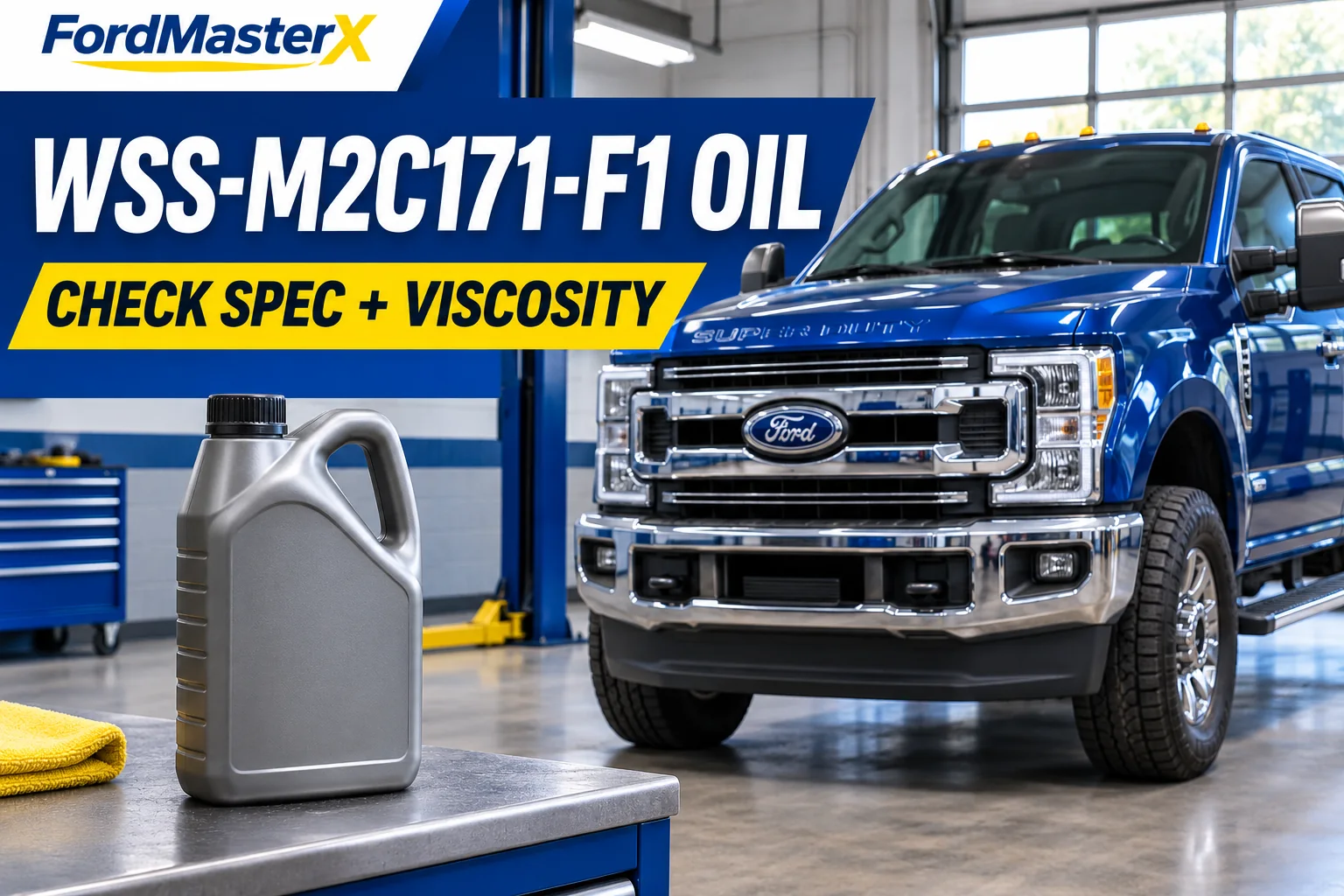
WSS-M2C171-F1 Oil and How to Check a Ford Diesel Bottle

WSS-M2C171-F1 is a Ford diesel engine-oil specification. It is not a viscosity grade, a brand name, or an oil-change interval. If your Ford manual requires it, choose an oil that meets that complete specification and the viscosity recommendation for the exact engine, operating conditions, and application.
The practical check has two parts: establish what the truck requires, then verify what the specific bottle claims. A familiar brand, a diesel label, or an API category alone does not complete that comparison. Keep the model year and engine with the specification so a recommendation for one Ford does not become an unchecked rule for every diesel.


Start With the Ford Manual for Your Engine
Ford’s 2024 Super Duty owner’s manual directs owners of the covered 6.7L diesel to use the recommended viscosity and WSS-M2C171-F1 when choosing an alternative to Motorcraft. Read the entire section on viscosity and operating conditions (printed pp. 526–528).
Do not start with a retailer’s broad vehicle filter and work backward. First record the model year, diesel engine, market, and the manual’s exact oil requirements. Then use the retailer to find a matching product. This separates the manufacturer’s requirement from the seller’s inventory and makes a mistaken fitment recommendation easier to spot.
A manual covering a truck family can contain several engines and fluid tables. Confirm that you are reading engine oil for the diesel application rather than gasoline oil, transmission fluid, or another lubricant. Similar-looking tables are not interchangeable, and a search snippet can omit the heading that establishes which engine a row describes.
If your truck’s documentation differs from an online example, retain both references and ask Ford for applicability confirmation. Do not automatically treat the newest-looking webpage as a blanket replacement for every earlier instruction. The correct answer must apply to the truck, engine, and service question being considered.
Keep Viscosity and Specification Separate


A viscosity designation such as 15W-40 describes an oil-grade classification. WSS-M2C171-F1 describes Ford performance requirements. Both can appear on the same product, but one is not shorthand for the other. A bottle with the correct grade still needs the required specification claim.
Likewise, finding WSS-M2C171-F1 on a product does not mean its viscosity suits every temperature or duty condition for every Ford diesel. Use the application guidance to select among eligible grades. This article supplies a verification method rather than a universal recommendation for one viscosity across all years and engines.
The Motorcraft SAE 15W-40 Super Duty Diesel Motor Oil page identifies that product as meeting WSS-M2C171-F1. That is a documented product example, not a conclusion that 15W-40 is the right grade for every reader’s truck.
Record the two checks in separate worksheet fields. Write the required viscosity guidance in one field and the complete Ford specification in another. When comparing a bottle, confirm both independently. This simple separation prevents the most common shortcut: selecting the right-looking viscosity while overlooking the manufacturer requirement.


Four checks before your next decision
- Application
Identify year, engine and applicable Ford section.
- Grade
Follow the required viscosity guidance.
- Specification
Verify the complete WSS-M2C171-F1 claim.
- Exact product
Match bottle, formulation and current documentation.
Use the source and application limits explained in this article. This checklist supplies no universal technical setting.
Read the Exact Product Rather Than the Brand Family



Oil brands sell multiple formulations and grades. The front of a bottle may emphasize a familiar product-family name, while the detailed specification statement appears on the back or in the manufacturer’s product data sheet. Match the exact product and viscosity before using a specification claim from another page.
Photograph the front label, back label, product identifier, and any readable batch information. Keep the receipt. If the product data sheet is needed, save the version you consulted and note the date. That evidence helps distinguish the purchased formulation from a similarly named product sold in another market or package.


Search for the full code, including F1, rather than accepting a shortened phrase such as “Ford compatible.” A general statement that an oil is suitable for diesel engines does not establish the exact Ford requirement. If the specification is missing or ambiguous, obtain written clarification from the lubricant manufacturer before using it.
Do not promote a seller’s claim into a manufacturer approval. Preserve the wording and source. “Meets,” “recommended for,” and a formal approval listing can describe different kinds of evidence. When the documentation does not establish which applies, say so and ask the manufacturer to clarify the precise product’s status.
Use Ford’s Product List With Its Limits Intact
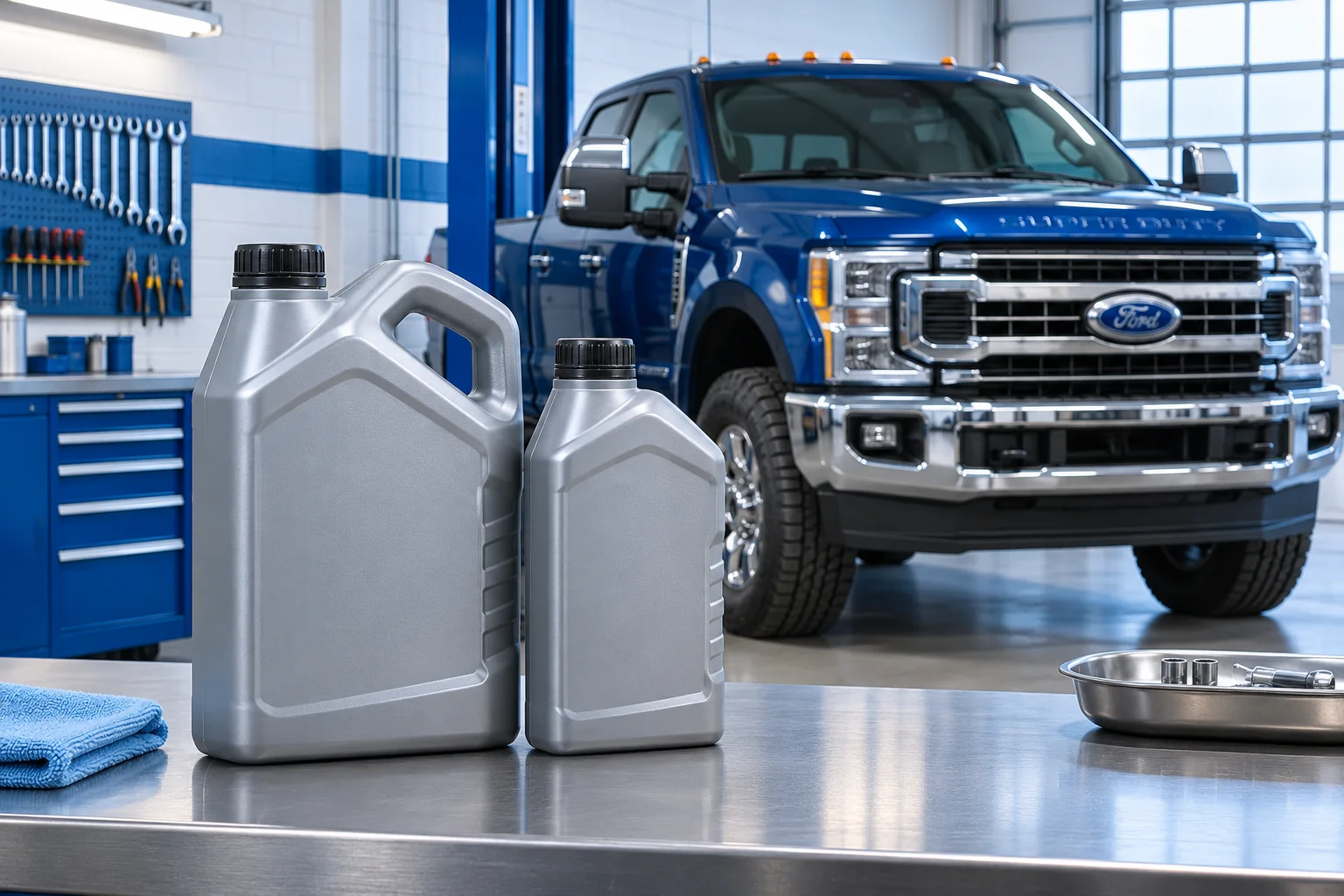
Ford publishes a list of diesel oils meeting WSS-M2C171-F1. It organizes products by viscosity and names the suppliers. That makes it useful for checking a specific product rather than relying on a brand’s general reputation.
Match all the available fields: product name, grade, and supplier. A brand appearing in one viscosity group does not automatically establish that every oil carrying the brand name meets the specification. If the bottle’s wording differs from the list, compare the manufacturer’s current product documentation before treating them as identical.
The list is evidence from the version retrieved, not a guarantee that every bottle on a shelf has the same formulation. Product names, packaging, and market availability can change. Save the source version and check current documentation for the actual product you intend to buy.
Absence from a retrieved list also needs careful interpretation. It does not by itself prove that an oil fails the specification. A product may require further confirmation, or the available list may not reflect a later documented change. The appropriate next step is manufacturer or Ford clarification, not an invented approval or rejection.
Put the CK-4 and FA-4 Statement in Context
Ford’s CK-4/FA-4 position statement explains how WSS-M2C171-F1 combines API CK-4 with Ford-specific requirements. A bottle marked CK-4 still needs application-specific evidence for this Ford specification.
The document should not be reduced to a modern blanket claim that every bottle displaying CK-4 is unacceptable. The useful selection question is whether the exact product meets the Ford specification and the application requirements. Category lettering and manufacturer-specific evidence need to be read together.
Ford’s statement distinguishes FA-4 recommendations for specific smaller diesels from its recommendation against FA-4 in larger diesels such as the 6.7L. Follow the manual for your engine. An API category alone does not demonstrate that an oil fits the application.
This is why a one-line internet argument about CK-4 versus CJ-4 is a poor shopping method. It often strips away the product formulation, the date, and the Ford specification. Keep those details visible so a discussion about oil categories does not replace the truck-specific selection process.
Check Five Items Before Buying
Begin with the manual requirement and work down the product evidence in order. The aim is not to collect the longest list of marketing claims. It is to establish a short, reproducible match between the truck and the bottle.
| Check | Evidence to keep | Reason |
|---|---|---|
| Truck application | Model year, engine, market, manual section | Establishes which requirement applies |
| Viscosity | Applicable Ford grade and conditions | Prevents treating one grade as universal |
| Ford specification | Complete WSS-M2C171-F1 statement | Confirms the requested manufacturer requirement |
| Exact formulation | Product name, grade, data sheet and label | Avoids borrowing another product’s claim |
| Purchase record | Supplier and receipt | Documents what was actually bought |
If one of these items is unresolved, pause the purchase and obtain clarification. That does not require declaring the product unsafe or the brand unsuitable. It means the evidence needed to recommend that particular bottle for that particular truck is incomplete.
Price comparisons should follow the application check. A cheaper product that cannot be verified is not a demonstrated equivalent. Conversely, a higher price or a synthetic label is not proof of the required specification. Compare eligible products on the actual documented criteria rather than using price as a substitute for technical evidence.
Do Not Infer Capacity or Service Interval From the Code
WSS-M2C171-F1 does not tell you the oil capacity of your Ford. Capacity depends on the engine and the service procedure, including the applicable filter-change instruction. Use the correct manual and refill procedure rather than assuming that all Power Stroke engines take the same quantity.
The specification also does not establish a universal drain interval. Follow Ford’s applicable maintenance guidance and the truck’s required service conditions. A lubricant product’s extended-drain marketing does not automatically change the vehicle manufacturer’s maintenance requirements or the conditions attached to them.
Ford tells owners of the covered 2024 Super Duty 6.7L diesel to avoid supplemental engine-oil additives. Follow the guidance in your vehicle’s own manual. The oil’s documented formulation claim applies to the product as supplied.
If a shop performed the service, ask for the oil brand, exact product, viscosity, and quantity on the invoice. A line reading only “diesel oil” is not enough to establish specification compliance later. Clarify the record while the shop can still identify the product used.
Handle an Uncertain or Incorrect Fill Carefully
If you discover that an oil fill cannot be verified, collect the service invoice, bottle details, quantity, and any symptoms. Contact the servicing shop and Ford or a qualified diesel technician for advice tied to the actual situation. Do not assume from the missing code alone that engine damage has already occurred.
The opposite assumption is also unsupported: normal operation immediately after service does not prove that an undocumented product is suitable. Resolve the formulation and application evidence rather than treating the absence of a warning light as a laboratory test of the oil.
If the engine shows an oil-pressure warning, abnormal noise, or another serious operating symptom, follow the truck’s warning instructions and obtain professional help. A specification-shopping article cannot diagnose those symptoms remotely or establish that continued driving is appropriate.
Keep any corrective action documented. Record what product was removed, what replaced it, and why the recommendation was made. This creates a useful service history without inventing an explanation for wear, failure, or performance that has not been established by inspection or testing.
For fleet or shared-truck service, store the requirement with the truck identifier rather than keeping one generic instruction beside every oil drum. Label the service record with the actual product used and the person or shop that supplied the information. If a bulk container has no readable identification, ask for the delivery documentation and matching product data sheet. A verbal statement that the shop uses a premium diesel oil is not the same as a traceable specification match. This recordkeeping also helps when a supplier changes products without changing the shorthand description on its invoices.
Ask a Supplier a Question It Can Verify
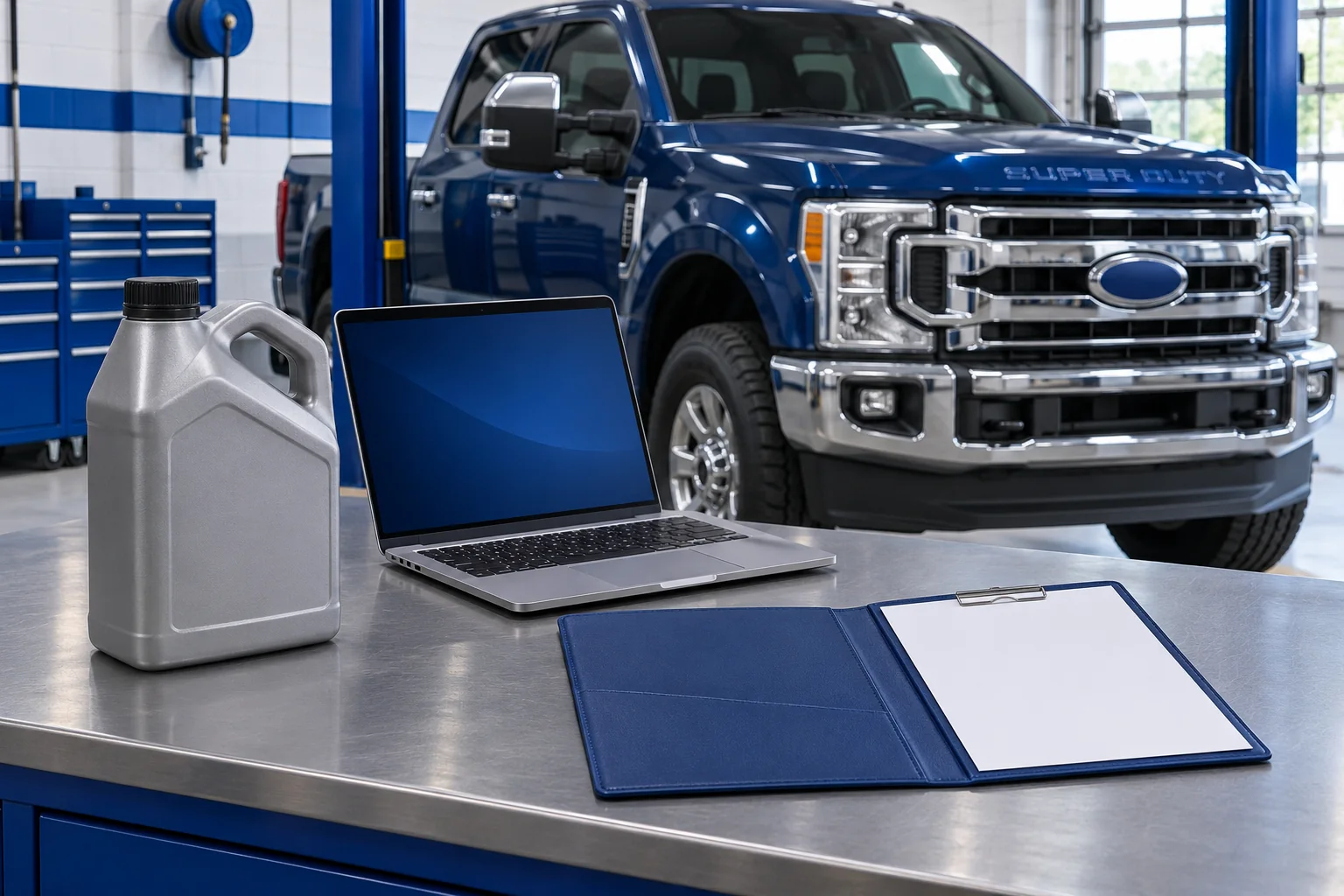
A useful supplier inquiry includes the exact oil name, viscosity, container identifier, and the Ford requirement taken from the applicable manual. Ask whether that precise formulation carries the specified claim in your market and request the supporting current data sheet. Do not ask the supplier to approve an unnamed oil based on a photograph showing only the brand logo.
If the answer refers to a different grade or a similarly named product, point out the difference and request clarification. A product family may contain several formulations, and an answer about one member does not automatically cover the others. Keep the written answer with the label photograph so the evidence remains tied to the bottle purchased.
For bulk oil, ask the shop to connect its tank or drum identification with the supplier’s delivery record. This is especially helpful when invoices use shorthand descriptions that do not identify formulation. You are trying to establish what was supplied, not requesting a speculative claim about performance or engine wear.
Once the evidence matches, record the result concisely. Include the application, selected grade, specification claim, and documentation date. That provides a reusable purchasing reference while preserving the need to recheck if the manufacturer changes the product or the truck’s service requirements change.
Keep quantity separate using the existing Ford diesel oil-capacity chart. The Ford engine-oil recommendation chart provides wider viscosity and specification context; verify the truck’s own manual before service.
Questions About WSS-M2C171-F1 Oil
Is WSS-M2C171-F1 a Viscosity?
No. It is a Ford oil-performance specification. The applicable viscosity must be selected separately from the correct engine and operating-condition guidance.
Does Every CK-4 Diesel Oil Meet It?


Do not infer that from the category alone. Check the exact product’s Ford specification statement and supporting documentation.
Can I Choose Any Product on Ford’s List?
First match the grade and application requirements. A listing supports the named formulation, but it does not make every viscosity suitable for your truck.
Does Full Synthetic Automatically Mean It Qualifies?


No. Base-oil marketing does not replace a complete Ford specification check. Verify the actual product, grade, label, and data sheet.
Can the Specification Tell Me How Many Quarts to Buy?
No. Obtain capacity and the correct service procedure from the documentation for your engine. Keep quantity, viscosity, and performance specification as separate checks.
Make the Bottle Match the Truck
Selecting WSS-M2C171-F1 oil begins with the Ford requirement for your exact application. Confirm the viscosity guidance, find the complete specification on the precise formulation, and preserve the supporting label or data sheet. Use Ford’s product list as evidence with its version and naming limits intact, and keep historical API statements in their original context. Do not derive capacity, service interval, or substitution permission from the code alone. When the evidence is incomplete, ask the manufacturer or Ford to resolve the specific question before purchase or service. A short documented match is more useful than a brand recommendation that leaves the actual specification unconfirmed.