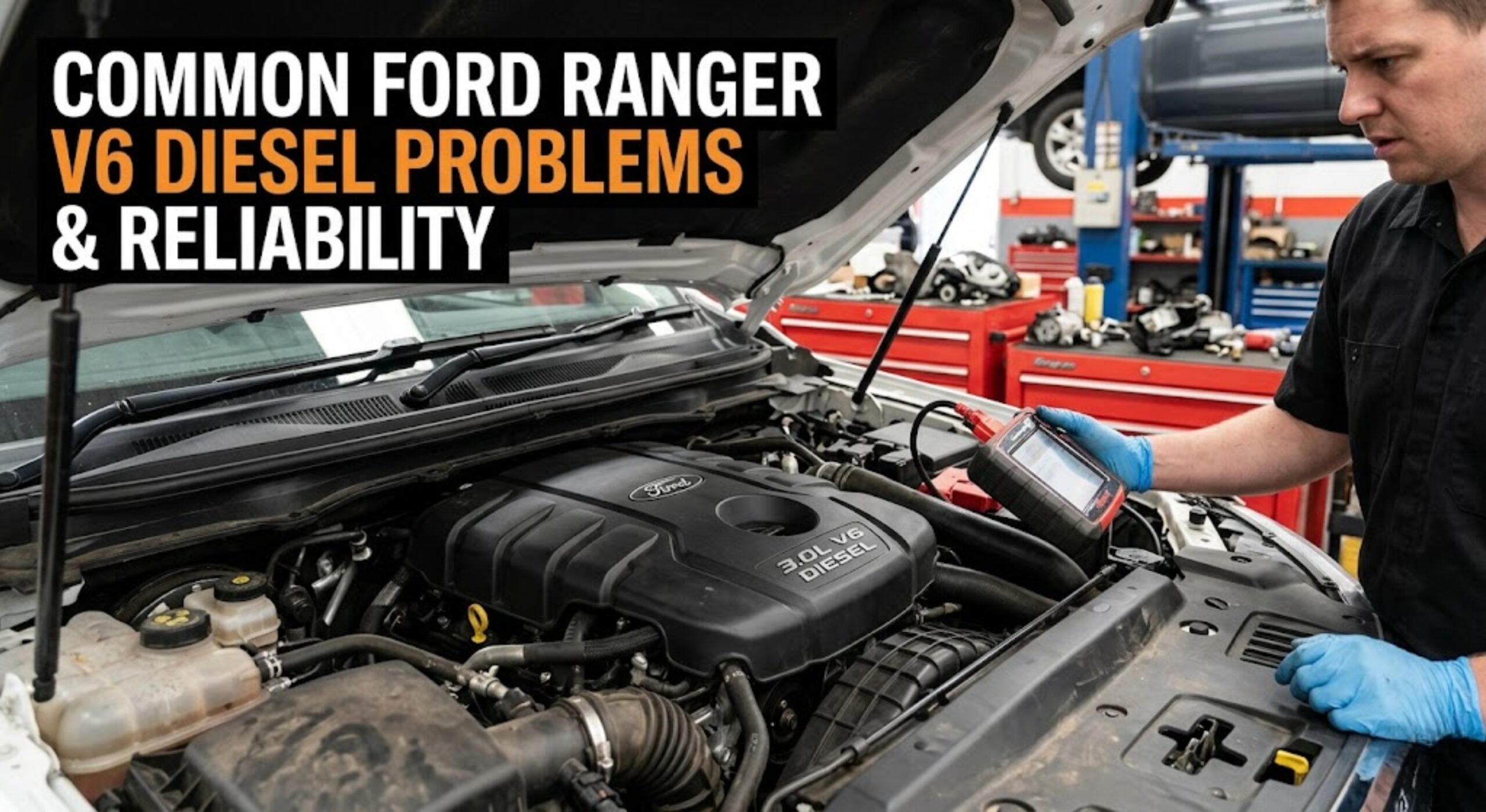
Ford Ranger V6 Diesel Problems That Change by Year and Symptom

The Ford Ranger V6 diesel problems you need to worry about depend entirely on which year you have and what symptom you are seeing. The same engine — the 3.2-litre five-cylinder TDCi — behaves very differently at 60,000 kilometres versus 180,000 kilometres, and pre-2019 builds have a different risk profile than post-facelift models.
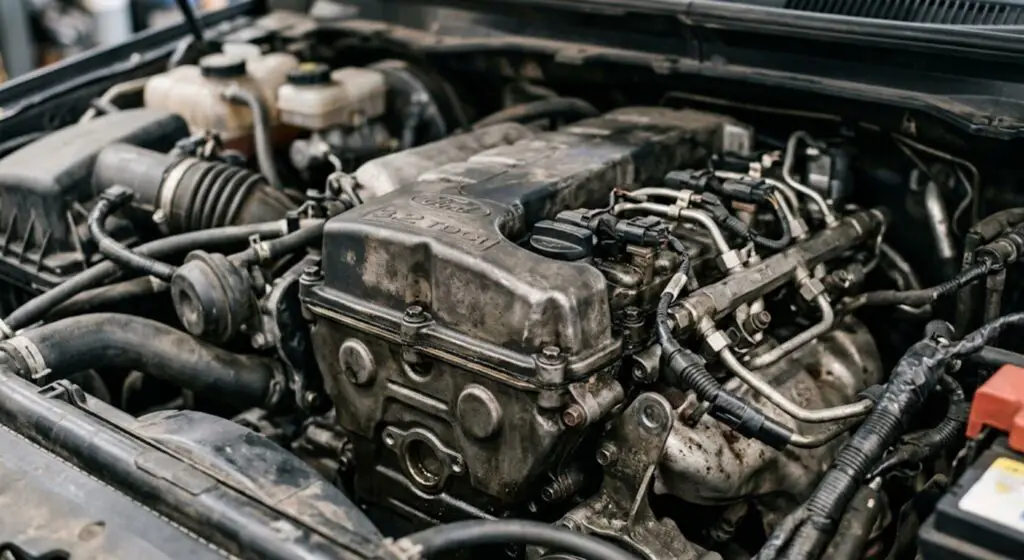
This guide maps every major fault to the conditions that trigger it. Use your symptom and your build year together, and you will land on the right diagnosis — not a generic list.
Prime Day Pick
Limited-time Prime Day price. Check current discount on Amazon.
Why the Ford Ranger V6 Diesel Has No Single Problem Answer
The Ranger V6 diesel is not a universally flawed engine. It is an engine with specific weaknesses that show up at specific mileages and in specific model years.
Ford sold the 3.2 TDCi Ranger across Australia, South Africa, Thailand, Europe, and other global markets from 2011 onward. The 2015 facelift and the 2019 mid-cycle refresh both introduced production changes that shifted the fault profile meaningfully. Owners of a 2013 build are dealing with a different risk set than owners of a 2020 build — even though both call it the same engine.
Prime Day Pick
Limited-time Prime Day price. Check current discount on Amazon.
Blanket advice — “avoid it” or “it’s bulletproof” — is wrong for this engine. The correct answer is always conditional.
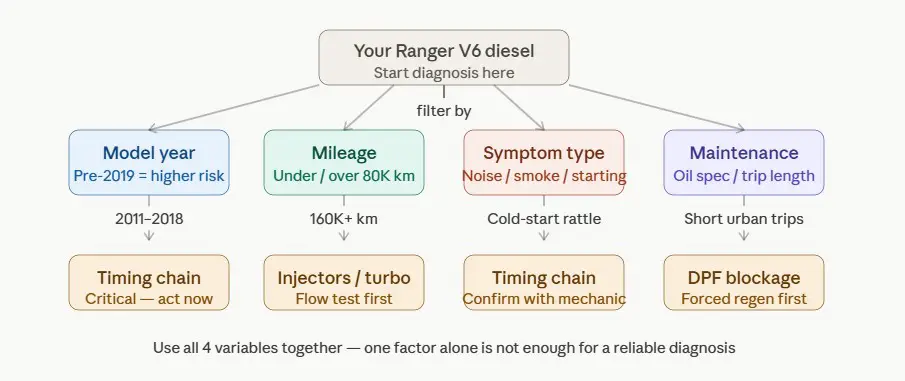
4 Variables That Determine Which Fault You Actually Have
Four things determine which fault you are most likely dealing with. Know these before reading further.
Prime Day Pick
Limited-time Prime Day price. Check current discount on Amazon.
- Model year — Pre-2019 Rangers (especially 2011–2016) carry higher timing chain and EGR risk. Post-2019 builds improved coolant routing and EGR calibration, reducing but not eliminating these faults.
- Current mileage — Under 80,000 km: timing chain and EGR are the primary concerns. Between 80,000–160,000 km: injector wear and DPF health become the dominant risks. Over 160,000 km: compound faults become more likely — rarely just one thing failing alone.
- Symptom type — A rattle on cold start points in a completely different direction than black smoke under load or hard starting in cold weather. Symptom is the fastest way to narrow the path.
- Maintenance history — An engine with consistent oil changes at 10,000 km intervals and regular long motorway runs has significantly lower EGR carbon buildup and DPF blockage risk than one used only for short urban trips. Checking the Ford engine oil recommendation chart and confirming the correct spec was used at each service matters more than most owners realise.
If your main symptom is a rattle or tick on cold start, go straight to the next section. If your symptom is smoke or power loss, skip to Sections 5 or 6.
Timing Chain and EGR Faults on Ranger V6 Diesel Engines
The two most reported Ford Ranger V6 diesel problems are timing chain stretch and EGR valve carbon buildup. Here is how to tell which one you have.
Prime Day Pick
Limited-time Prime Day price. Check current discount on Amazon.
Timing Chain Stretch
Timing chain stretch is the highest-severity fault on pre-2019 Ranger V6 diesels and the one most likely to cause catastrophic engine damage if ignored.
The primary symptom is a metallic rattle or ticking noise on cold start that typically fades or disappears within 30–60 seconds as oil pressure builds. This is not a harmless warm-up quirk — it is the chain skipping under reduced tension before oil reaches the tensioner.
Prime Day Pick
Limited-time Prime Day price. Check current discount on Amazon.
If the rattle appears on cold start AND your build year is between 2011 and 2018 AND mileage is above 100,000 km, timing chain stretch is the leading diagnosis. If the noise has been present for more than a few weeks, have it inspected immediately — a worn chain that skips timing can cause piston-to-valve contact and total engine failure.
Timing chain replacement on the Ranger 3.2 TDCi typically runs between $1,800–$3,200 AUD / $1,200–$2,200 USD depending on labour rates and whether tensioners and guides are replaced at the same time (they should be — replacing the chain alone without guides is false economy).
This is a mechanic-immediately situation. Do not drive it and wait.
EGR Valve Carbon Buildup
EGR carbon buildup is a medium-severity fault that is far more manageable if caught early. The EGR (exhaust gas recirculation) valve recirculates exhaust gases back into the intake — and over time, carbon deposits from diesel combustion coat the valve and intake passages, reducing flow.
Typical onset is after 80,000–120,000 km, and it accelerates sharply in vehicles used primarily for short urban trips with infrequent motorway driving.
Symptoms include rough idle (especially when cold), intermittent loss of power at low RPM, and occasional black smoke from the exhaust. If the symptoms temporarily improve after a sustained highway run at 2,500–3,000 RPM for 20–30 minutes, EGR carbon buildup is the likely cause — the heat is partially clearing the deposits.
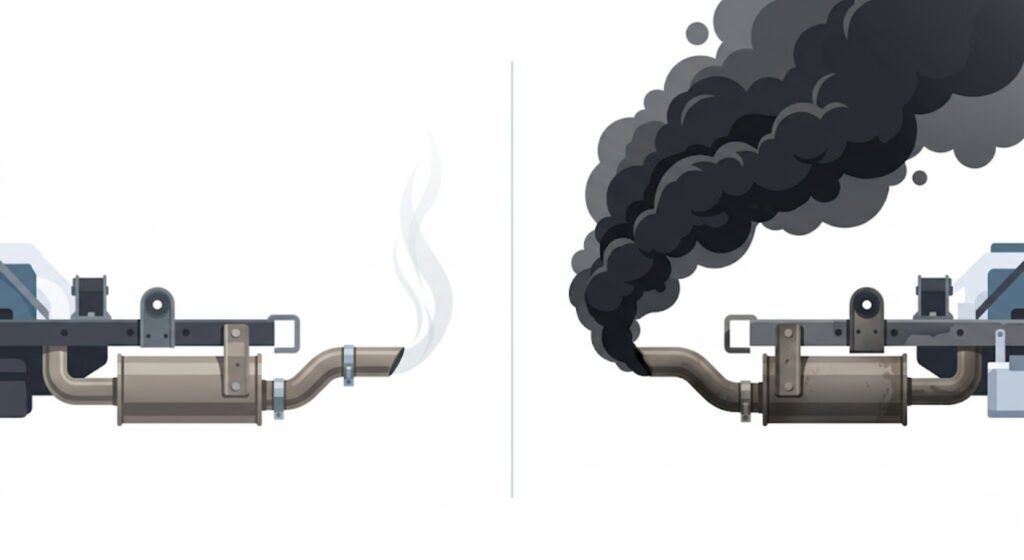
If the check engine light is on alongside these symptoms, scan for codes P0401 (EGR flow insufficient) or P0402 (EGR flow excessive) before spending money. You can read more about reading Ford check engine light codes before deciding whether to clean or replace.
EGR clean: $150–$350 AUD / $100–$250 USD. EGR replacement: $600–$1,100 AUD / $400–$800 USD. A clean is always the first step unless the valve is physically stuck or cracked.
From here, if your symptom is smoke coming from the exhaust — especially under load — the fault path changes.
What Turbo Failure Looks Like on the Ranger V6 Diesel
Turbo faults on the Ranger V6 diesel are often misdiagnosed because a split boost pipe produces identical symptoms to a failing turbo — and a boost pipe costs $30 to replace versus $1,500+ for a turbocharger.
Symptom checklist:
- Blue/grey smoke on startup that clears after 2–3 minutes of running
- Black smoke under hard acceleration but not at idle
- A whistling or whining noise that increases with engine RPM
- Noticeable lag before power builds above 2,000 RPM
- Reduced fuel economy with no change in driving habits
If you have blue smoke on startup that clears quickly AND loss of power above 2,500 RPM, suspect turbo seal failure — oil is being drawn past the seals and burned off on startup before the turbo builds full oil pressure.
If you have black smoke under heavy load with no smoke at idle, check the boost pipe connections first. A split or disconnected intercooler pipe between the turbo and intake manifold mimics turbo failure exactly. Squeeze every rubber pipe section on both sides of the intercooler before condemning the turbo.
Turbo failure on the Ranger V6 diesel most commonly appears after 150,000–200,000 km, particularly in vehicles that were regularly switched off immediately after hard use without a cooldown period. Consistent oil changes with the correct low-SAPS diesel spec oil are the single biggest factor in turbo longevity.
Ford Ranger V6 diesel fault finder — match your symptom to the most likely cause, affected years, severity, estimated cost, and first action
| Symptom | Most likely fault | Highest risk years | Severity | Est. fix cost (AUD) | First action |
|---|---|---|---|---|---|
|
Rattle on cold start, clears when warm
Metallic tick, gone within 60s
|
Timing chain stretch | 2011–2018 | Critical | $1,800–$3,200 | Mechanic immediately — do not delay |
|
Rough idle + black smoke at low RPM
Clears after hard motorway run
|
EGR carbon buildup | 2011–2020 | Medium | $150–$1,100 | Scan for P0401 / P0402 first |
|
Blue smoke on startup + power lag above 2,500 RPM
Smoke clears after 2–3 min
|
Turbo seal failure | 2012–2019 | Medium–High | $700–$2,200 | Check boost pipes before condemning turbo |
|
Black smoke under load only — no idle smoke
Clears at cruise, returns under acceleration
|
Split boost pipe | All years | Low | $30–$150 | Inspect all intercooler pipes first |
|
Rough idle at all temps + poor economy + white smoke
Does not clear when warm
|
Injector wear | 2011–2018 (high km) | High | $2,500–$4,500 | Injector flow test before any repair |
|
DPF warning light + limp mode + short-trip use
Fan runs after shutdown, fuel smell
|
DPF blockage | All years (urban use) | Medium | $150–$3,500 | Forced regen first — not DPF replacement |
|
Hard cold start only — clears in 1–2 min
No smoke or power loss once running
|
Glow plug failure | All years | Low | $250–$450 | Glow plug test — cheapest fix on this list |
Turbo rebuild: $700–$1,200 AUD / $500–$900 USD. Turbo replacement (remanufactured unit): $1,400–$2,200 AUD / $1,000–$1,600 USD. A specialist should confirm the diagnosis with a boost pressure test before any turbo work begins.
If your symptoms are more about fuel delivery — hard starting, rough running, or smoke at all RPM ranges rather than just under load — the problem is likely in the injection or exhaust after-treatment system.
Injector and Fuel System Faults by Mileage and Year
Fuel system faults on the Ranger V6 diesel break into three categories — injectors, DPF, and glow plugs — and each has a distinct symptom pattern.
Injector Wear
Injector wear becomes a meaningful risk on high-mileage Ranger V6 diesels, typically surfacing after 160,000–200,000 km on engines that have not had injector cleaning as part of maintenance.
Symptoms include rough idle that is present at all temperatures (unlike EGR buildup, which improves when warm), misfires under light load, poor fuel economy, and white or blue smoke that does not clear with warm-up.
If rough idle is present at all temperatures AND mileage exceeds 160,000 km, have the injectors flow-tested before authorising any other repair. Injector testing costs $150–$300 AUD at a diesel specialist and will confirm whether cleaning or replacement is needed. Replacing all five injectors on the 3.2 TDCi runs $2,500–$4,500 AUD / $1,800–$3,200 USD including labour — this is only justified with confirmed flow test data, not a guess.
DPF Blockage
DPF blockage is the most common fault on Ranger V6 diesels used for short urban trips. The diesel particulate filter requires sustained highway driving at operating temperature to complete a passive regeneration cycle — vehicles that rarely travel more than 20 minutes at a time never allow this to happen.
Symptoms are a DPF warning light on the dashboard, a reduction in power (limp mode), and the engine running more regen cycles than normal — which you can recognise by the fan running harder after engine shutdown or a slight fuel smell from the exhaust. This is different from a mechanical fault — it is a usage pattern problem that creates a mechanical problem.
For a full explanation of what this process involves, the DPF regen on a diesel guide covers the regeneration cycle in detail. If a warning light is already on, Ford exhaust filter overloaded covers the forced regen process step by step.
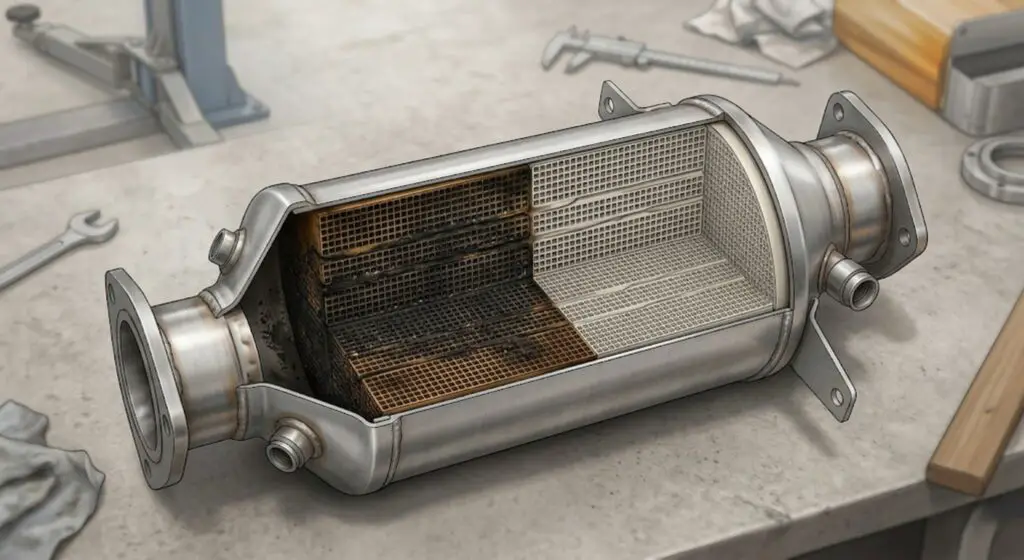
Forced regen at a workshop: $150–$300 AUD. Professional DPF clean: $400–$800 AUD. DPF replacement: $1,800–$3,500 AUD / $1,300–$2,500 USD — this is a last resort.
Glow Plug Failure
Glow plug failure has a very specific, easy-to-identify symptom: hard starting only when the engine is completely cold, which resolves within 1–2 minutes once the engine reaches operating temperature.
If hard starting only occurs cold AND clears immediately once warm AND there is no smoke or power loss once running, glow plugs are the most likely cause — not injectors. This is the lowest-severity and lowest-cost fault on this engine. Replacing all five glow plugs on the 3.2 TDCi runs $250–$450 AUD / $180–$320 USD including labour.
Now that you know the four main fault paths, use the table below to match your symptom directly to the most likely cause.
Ford Ranger V6 Diesel Problem Finder by Symptom and Year
Match your symptom in the left column, then confirm against your build year.
| Symptom | Most Likely Fault | Highest Risk Years | Severity | Est. Fix Cost (AUD) | First Action |
|---|---|---|---|---|---|
| Rattle on cold start, clears when warm | Timing chain stretch | 2011–2018 | Critical | $1,800–$3,200 | Mechanic immediately |
| Rough idle, black smoke, low-RPM power loss | EGR carbon buildup | 2011–2020 | Medium | $150–$1,100 | Scan for P0401/P0402 first |
| Blue smoke on startup, power lag above 2,500 RPM | Turbo seal failure | 2012–2019 | Medium-High | $700–$2,200 | Check boost pipes first |
| Black smoke under load only, no idle smoke | Split boost pipe | All years | Low | $30–$150 | Inspect pipes before anything else |
| Rough idle at all temps, poor economy, white smoke | Injector wear | 2011–2018 (high mileage) | High | $2,500–$4,500 | Injector flow test first |
| DPF warning light, limp mode, short-trip use | DPF blockage | All years (urban use) | Medium | $150–$3,500 | Forced regen first |
| Hard cold start only, clears in 1–2 min | Glow plug failure | All years | Low | $250–$450 | Glow plug test / replace |
When to Stop Diagnosing and See a Diesel Specialist
Some Ranger V6 diesel problems are diagnosable with basic tools and this guide. Others are not — and attempting them without specialist equipment makes them worse.
Ranger V6 diesel fault escalation guide — when to act immediately, when to monitor, and when to manage yourself
Escalate to a qualified diesel specialist immediately if:
- Timing chain rattle is confirmed — do not delay even one week. Chain failure is sudden and total.
- Multiple symptoms are present simultaneously — rough idle plus smoke plus power loss usually means compound failure, not a single fault. One symptom diagnosing leads to another.
- Fault codes point to fuel rail pressure or injector balance rates — these require professional scan tools, not generic OBD-II readers.
- The estimated repair cost exceeds 40–50% of the vehicle’s current market value — at that point you are making a buy-vs-fix decision, not a repair decision. An independent pre-purchase inspection on a used Ranger, or a second quote from an independent diesel workshop rather than a main dealer, can save thousands.
- The Ranger is still under the factory warranty period — check Ford’s factory warranty coverage before authorising any repair, as some faults may be covered without cost.
For fault codes and electrical faults that appear alongside mechanical symptoms, the Ford Ranger fuse box diagram is useful for ruling out electrical causes before committing to engine work.
FAQ
What are the most common Ford Ranger V6 diesel problems?
The most frequently reported faults are timing chain stretch (highest severity, pre-2019 builds), EGR valve carbon buildup (most common across all years), and DPF blockage in vehicles used for short urban trips. Turbo and injector faults are less common but more expensive to fix when they occur.
Which Ford Ranger V6 diesel years should I avoid?
The highest-risk years are 2011–2016, where timing chain issues are most concentrated and EGR design was least refined. The 2019+ facelift models have a notably better reliability record on both counts. The pattern is similar to what you see in Ford Expedition years to avoid — early production runs carry more risk than revised builds.
How much does it cost to fix a Ford Ranger timing chain?
Timing chain replacement on the Ranger 3.2 TDCi typically costs $1,800–$3,200 AUD including parts and labour. If tensioners and chain guides are worn (they usually are by the time the chain needs replacing), expect the higher end of that range. Do not delay — a failed chain results in total engine replacement at $8,000–$15,000+.
Is the Ford Ranger 3.2 TDCi a reliable engine?
With proper maintenance and highway use, yes — many 3.2 TDCi Rangers reach 300,000+ km without major engine work. The engine’s reputation suffers primarily from two factors: owners who ignore the cold-start rattle until it is too late, and urban-use vehicles that never complete a full DPF regen cycle. Address those two things proactively and the engine is competitive with its class.
What does blue smoke from a Ford Ranger diesel mean?
Blue or grey smoke on startup that clears after 2–3 minutes most commonly indicates turbo seal wear — oil is being drawn past the seals and burned off during initial startup. If the smoke persists beyond warm-up or appears under acceleration, the turbo should be inspected. Blue smoke that appears only at startup and clears quickly is a warning sign, not yet a failure — but it will progress.
Conclusion
The Ford Ranger V6 diesel problems worth worrying about are year-specific and symptom-specific — not a blanket condemnation of the engine. The two faults that demand immediate action are timing chain stretch (critical severity, 2011–2018 builds) and turbo seal failure (medium-high severity, progressive damage if ignored). EGR buildup and DPF blockage are manageable with early detection and correct usage.
Use the symptom table above, match your build year, and take that starting diagnosis to an independent diesel specialist — not a guess, not a forum post. A targeted diagnosis saves time and money every time.
For transmission-related symptoms appearing alongside engine faults, the automatic transmission slipping guide covers the overlap between drivetrain faults that can present simultaneously on high-mileage Rangers.