
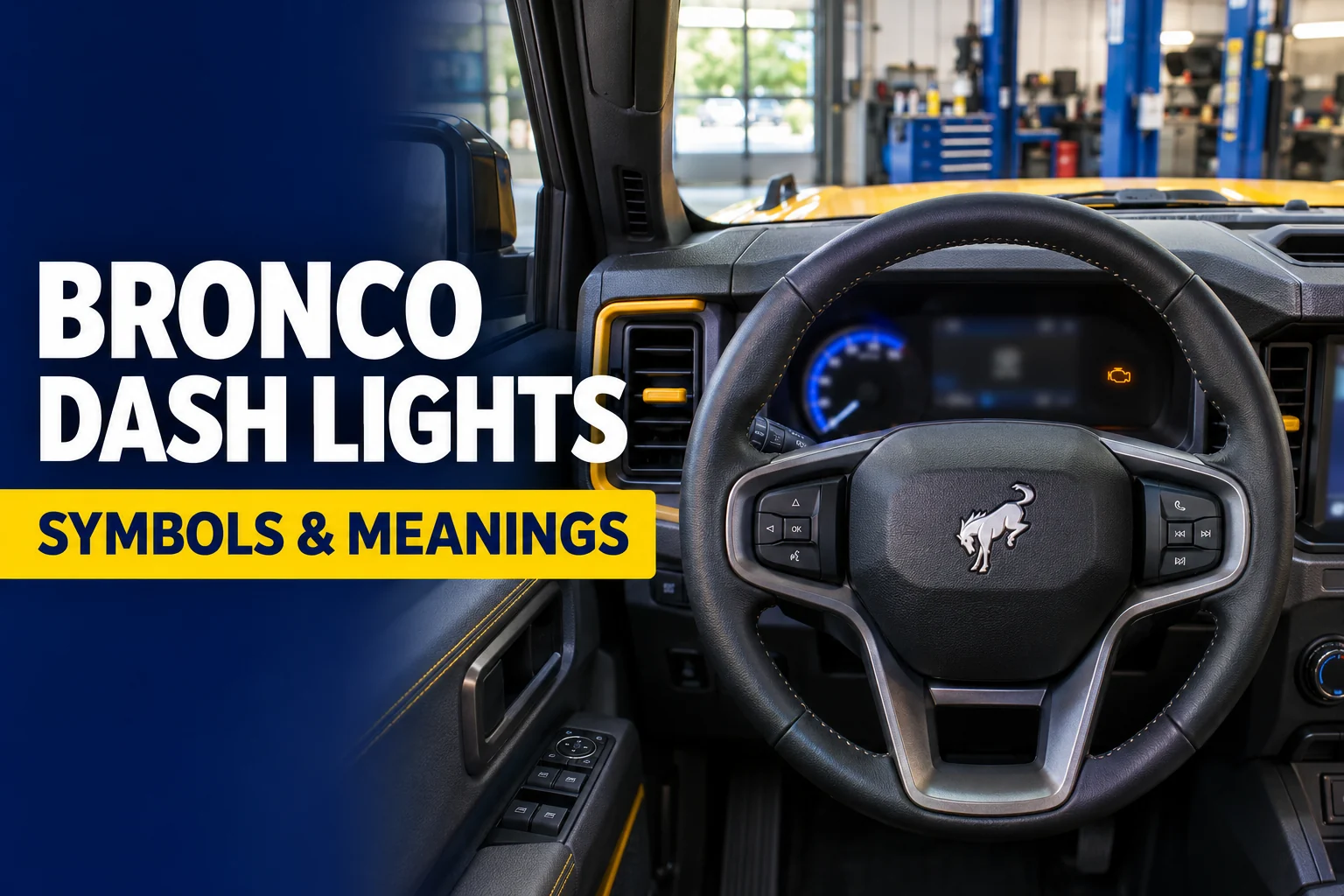
Ford Bronco Dashboard Symbols: Warning Lights and What to Do

An oil-can light with the engine running, a coolant temperature warning, or a red brake warning with the parking brake released deserves immediate attention. Safely get out of traffic and follow the instructions for that warning in your Bronco’s manual. An amber ABS lamp, an amber check-engine lamp, and an illuminated drive-mode indicator call for different responses.
This guide covers common dashboard lights on the U.S. full-size Ford Bronco, using the 2026 Bronco owner’s manual as the primary reference. The 2025 Bronco manual and 2024 Bronco manual help identify earlier clusters. The Bronco Sport has its own manual. Exact icons, colors, and messages can vary by model year, market, equipment, and display.


Ford Bronco warning lights at a glance
- Oil pressure
- Stop safely and switch off
- Coolant or brake warning
- Pull over safely and check the manual
- Flashing engine light
- Avoid heavy acceleration or deceleration; arrange a prompt check
- Steady tire-pressure lamp
- Check the tires and the door-label pressures
- Flashing skidding-car symbol
- Traction or stability control may be intervening
Full-size U.S. Bronco. Refer to the exact-year owner's manual and the active instrument message.
Match the icon to the situation in which it appeared. The engine running, the vehicle moving, a selected drive mode, and the flash pattern all help distinguish a fault from a status indication. Pay particular attention to a second lamp or a message such as “Check Brake System.”
| What you see | Common meaning | What to do |
|---|---|---|
| Oil can while engine runs | Engine oil pressure warning | Pull over safely, switch off the engine, and follow the manual |
| Coolant warning or gauge in red | Possible engine overheating | Pull over safely. Use the manual’s coolant instructions |
| Red brake lamp with parking brake released | Possible low fluid or brake fault | Get out of traffic safely and have the brakes checked |
| Amber ABS | Anti-lock braking malfunction | Have the system checked. Treat a concurrent brake warning as urgent |
| Battery outline while driving | Charging-system error | Switch off unnecessary electrical loads and arrange an immediate check |
| Engine outline, steady | Emissions-system malfunction detected | Have the vehicle checked. Note any other lamps or symptoms |
| Engine outline, flashing | Possible engine misfire | Avoid heavy acceleration or deceleration and have it checked promptly |
| Tire outline and exclamation point | Low pressure or TPMS problem | Check pressures and note whether the lamp flashes before staying on |
| Car with skid marks, brief flash | Stability or traction intervention | Adjust speed and inputs for the available grip |
| High-beam, turn, or selected mode indication | A system or mode is active | Verify it matches the control or mode you selected |
Red warnings that need immediate attention


Oil can: engine oil pressure
It is normal for the oil-pressure lamp to illuminate when the ignition is switched on as described in the manual. If it illuminates with the engine running, Ford tells you to stop the vehicle and switch off the engine. Once safely parked, follow the manual for checking the oil level. A sufficient level with an active warning still indicates a system malfunction that needs attention.
An oil pressure warning and an oil-life reminder identify different issues. The warning tells you what the system is detecting while the engine is operating. The service reminder is a maintenance message. If you recently changed oil and the pressure warning comes on, follow the pressure warning procedure even if the oil-life display looks normal. Tell the repair shop whether the lamp appeared at startup, at idle, or on the road.
Thermometer or red temperature gauge: engine coolant


A coolant warning can mean that the engine is overheating. Pull over safely as soon as you can. For the specific “High engine temperature Stop safely” message, the 2026 manual says to switch off the engine and let it cool. For other coolant-temperature conditions, use the procedure in your year-specific manual and heed the active instrument message. Let the system cool before checking the coolant level or touching the reservoir cap. A hot cooling system can release hot liquid or steam.
On a grade or while towing, the manual describes conditions under which the engine may temporarily run hotter. A red-zone reading or warning is the point to follow Ford’s pull-over instructions. If the truck limits power or the warning returns, describe the conditions and warning text when requesting help. Record the information once parked instead of attempting to photograph the gauge while driving.
Red BRAKE or brake symbol: parking brake or brake fault
The brake indicator can briefly illuminate at ignition-on or while the parking brake is engaged. If it illuminates while the Bronco is moving, Ford says to check that the parking brake is disengaged. When it is disengaged and the light stays on, the manual points to low brake fluid or a system fault. Get off the road safely and have it checked as soon as possible. Ford warns that braking distance can increase, and a low-brake-fluid message calls for an immediate check. If braking feels abnormal, arrange assistance before continuing.
A red brake lamp together with an amber ABS lamp deserves particular care. The ABS lamp identifies the anti-lock system, while the red brake lamp can indicate a wider braking problem. If there is a pedal change, a low-fluid message, or any uncertainty about the ability to stop, keep the vehicle parked once you are safe and seek assistance.


Battery outline: charging system


A battery-shaped lamp while driving indicates a charging-system error. Ford instructs owners to switch off unnecessary electrical equipment and have the vehicle checked immediately. Keep essential equipment operating for the situation. If the truck shows an electrical system fault alongside limited steering or brake assist, follow the instrument message and prioritize getting safely stopped.


The lamp identifies the charging system as the area to check. It does not identify the exact component that failed. Tell the shop whether the warning came with dimming lights, a slow restart, or any steering or brake-assist message. These details help a technician assess the problem before parts are replaced.
Amber warnings and flashing lights


Check-engine light: steady versus flashing
A steady malfunction indicator lamp means the Bronco’s onboard diagnostics detected an emissions-system malfunction. Have the vehicle checked and note anything that happened when it appeared. The fault could have been detected under conditions that have already changed, so the timing, symptoms, and any instrument message can help a technician.
A flashing check-engine lamp is more urgent. Ford says a misfire may be occurring and that high exhaust temperatures can damage the catalytic converter or other components. Avoid heavy acceleration and deceleration and have it checked as soon as possible. If the truck is shaking, losing power, or showing another urgent warning, get out of traffic safely and arrange assistance.


The powertrain warning is a separate lamp. Ford describes it as indicating a powertrain or four-wheel-drive fault when illuminated with the engine running. If both the powertrain and malfunction indicator lamps come on with the engine running, follow Ford’s combined-lamp procedure and stop as soon as it is safe. Note which lamps were present together rather than reporting only “check engine.”
Amber ABS: braking without anti-lock assistance


The ABS indicator can illuminate briefly when the ignition is switched on. If it lights while driving, the 2026 manual identifies an anti-lock braking malfunction and says ordinary braking continues without the anti-lock function. Arrange a check and pay close attention to any additional brake warning or changes in how the pedal feels. The situation changes if the red brake warning is also on.
If the warning appeared after a wheel or brake job, tell the technician what was changed. A dashboard lamp by itself does not identify a failed sensor or the corner of the vehicle affected. For readers tracing the related parts, the Bronco ABS sensor location guide shows where the wheel-speed hardware is found.
Tire-pressure symbol: low tire or a monitoring fault
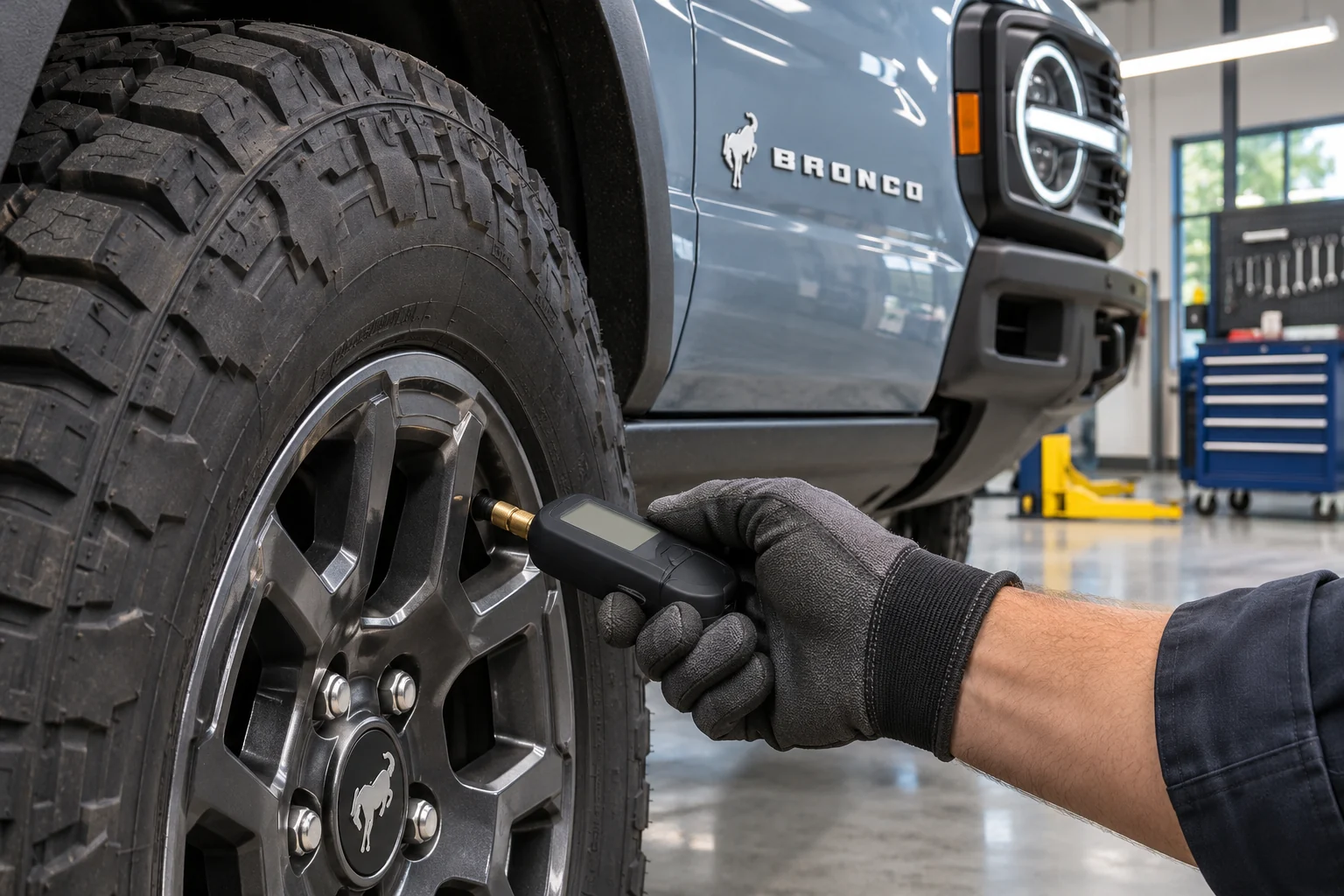
The tire-pressure lamp looks like a cross-section of a tire with an exclamation point. When it stays on, check the pressures with a gauge when the vehicle is safely parked. Use the cold pressure on the door-opening tire label or the instructions applicable to your tires and vehicle. Inspect the tires for damage and have a tire that repeatedly loses pressure checked.
A lamp that flashes and then stays lit can indicate a tire-pressure monitoring system malfunction. A steady light can also appear with a temporary spare or a monitoring fault. If pressures match the cold specification and no temporary spare is fitted, Ford says to have the system checked as soon as possible. Record whether the light flashed first and whether any tire or wheel work took place. Check the physical tire pressures even when the message concerns the monitoring system. A fault can limit what the display is able to report.
Skidding-car icon: stability or traction control
A short flash can occur when stability or traction control is actively helping manage grip. It can appear during a brief loss of traction on a wet road, loose gravel, or uneven ground. Ease your inputs and adjust speed for the conditions. A persistent light, an “OFF” indication, or a fault message needs to be interpreted with the manual and whatever mode you selected.
A selected terrain mode can change how the Bronco’s systems respond. If a light appeared when you switched modes, identify the mode and whether the cluster reported a fault or displayed a normal status indicator. The Bronco G.O.A.T. Modes chart explains what the different selections are intended to do.
Normal status lights that can resemble warnings
Some icons confirm a driver action. The high-beam icon indicates the headlamps are using high beam. Turn arrows correspond to a directional signal or the hazard lights. A four-wheel-drive or drive-mode display can confirm a selected setting. The label beside the icon matters when an indicator flashes during a transition or when a separate message says the system could not engage.
A startup lamp check can light multiple symbols briefly. Pay attention to what stays on after the engine starts and what returns once you are moving. Photograph the cluster after safely parking if the display still shows the message. A photograph of the whole cluster makes it easier to see whether the selected gear, drive mode, or second warning was present at the same time.
A seat belt reminder or door-ajar indication can also illuminate red. Those usually point to a specific condition you can check directly when parked. The symbol, message, and circumstances tell you more than color alone. If you see a red symbol you cannot identify and the Bronco behaves differently, pull over safely and use the manual before deciding how to proceed.
How to identify a symbol on your exact Bronco
Start by confirming the model and model year. In the matching Ford manual, open the Symbols Glossary or Instrument Cluster section. If the glossary points to a system chapter, follow that entry to the instructions for the lamp or message. The symbol may also be listed under the system involved, such as Brakes, Fuel and Refueling, or Starting and Stopping the Engine.
Record four details once parked:
- The icon and its color, plus the exact wording of any message.
- Whether it appeared at startup, at idle, during a maneuver, or while driving.
- Whether it was steady, briefly flashing, or alternating with another warning.
- Any recent work or symptoms, such as a tire replacement, unusual noise, or reduced power.
Those details can separate visually similar cases. For example, a brief flashing skidding-car icon on gravel can describe system intervention. A flashing check-engine icon while the truck vibrates points to a very different problem. Likewise, the red brake lamp with the parking brake applied has a different meaning from the same lamp when the brake is released and the truck is moving.
Ford’s dashboard-light overview gives general examples of warning categories. Use the U.S. Bronco manual linked above for the specific procedure, because some icons and messages vary across markets. If you seek service, report the warning text before clearing anything or disconnecting the battery. A technician can use the recorded context and any diagnostic codes to investigate the affected system.
Common Ford Bronco dashboard questions
Why did several warning lights come on together?
Several lights can appear briefly during the normal ignition-on check. Multiple lights while driving need to be read together with the instrument message. A red brake warning plus ABS or a check-engine lamp plus a powertrain warning changes the response compared with an individual amber light. Use the manual’s combined-warning guidance where provided and stop safely when an urgent lamp or abnormal vehicle behavior calls for it.
Can I reset the warning without diagnosing it?
A reset does not establish that a system is working correctly. Confirm the light, message, and symptoms first, and follow the relevant checks in your manual. If a lamp clears on its own but returns under the same conditions, give the service shop that pattern. If you have already captured diagnostic codes, report the codes and the circumstances to the technician.
Is the Bronco Sport symbol chart the same?
Some standard symbols may look familiar, but the Bronco Sport has its own manual, equipment, and display messages. Choose the exact model before relying on a location, light sequence, or response. This article uses the full-size Bronco’s published instructions.
Where should I start if I only remember the icon?
Check the glossary for the image, then find the matching system section. If there are two candidates, compare the lamp’s color, flash behavior, and any wording you recall. If you still cannot match it, tell a Ford service adviser which cluster you have and whether it appeared when you switched on the ignition or while driving. For a warning involving braking, oil pressure, or overheating, prioritize reaching a safe stopping place.