
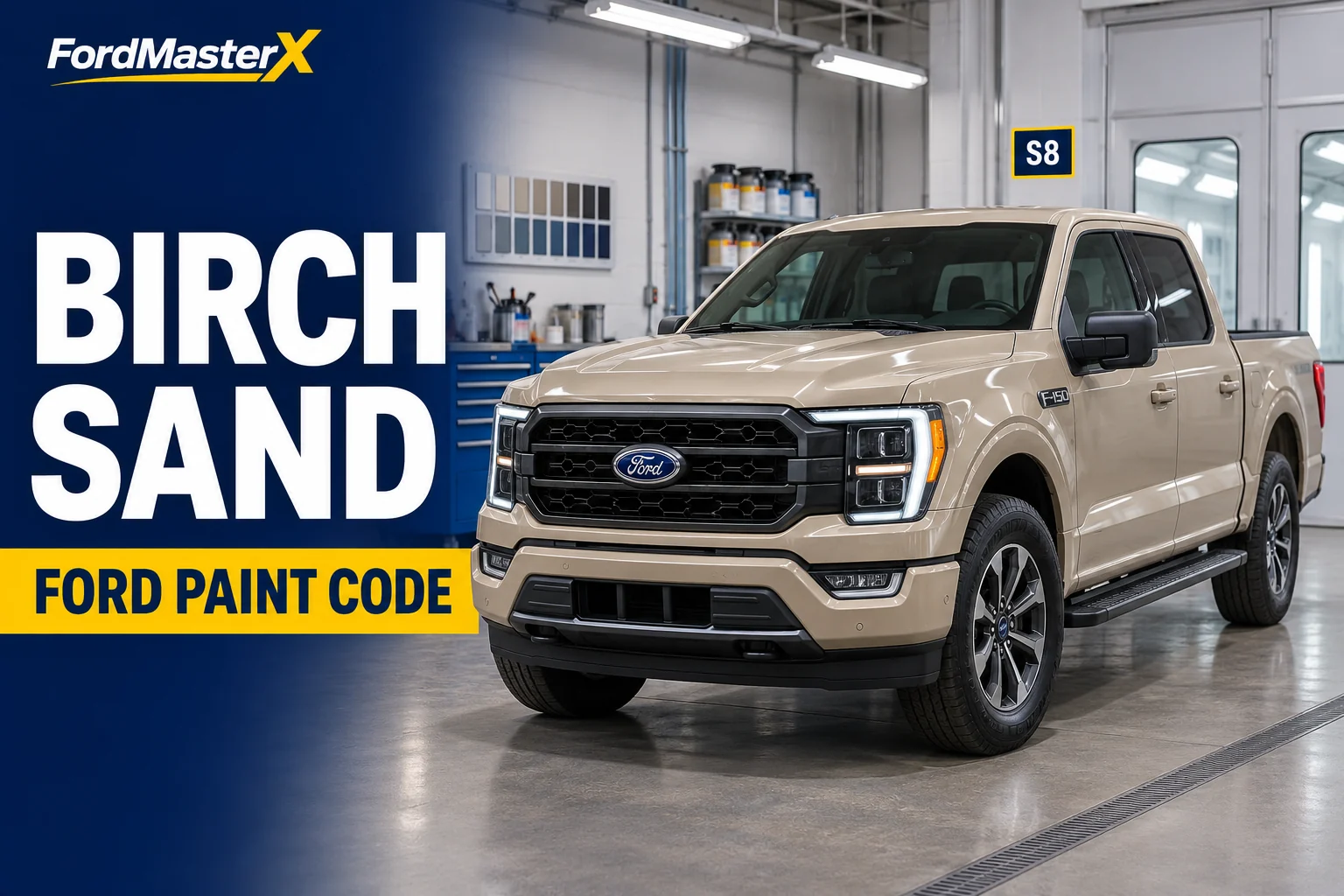
Ford Birch Sand Paint Code S8 and Where to Find It

Ford Birch Sand is exterior paint code S8 on the 2027 Ford F-150. Open the driver’s door and find EXT PNT on the vehicle certification label in the door jamb. If that field shows S8, you have the factory exterior code to give a Ford dealer, paint supplier, or body shop. PaintScratch also catalogs the color as S8/M7534. S8 is the code to look for on the truck.
Ford shows Birch Sand as an extra-cost color in its 2027 F-150 color viewer, and Ford Authority identifies the S8 code. This guide covers the U.S. model and focuses on two practical decisions: confirming the paint on a truck you already have and identifying a new truck with Birch Sand before you order it.


Ford Birch Sand identifiers at a glance
- Ford exterior paint code
- S8
- Verified U.S. application
- 2027 Ford F-150
- Driver's door label field
- EXT PNT
- PaintScratch catalog listing
- S8/M7534
Confirm S8 on the vehicle certification label before ordering touch-up paint.
The factory paint label, a vehicle listing, and a touch-up catalog can describe the same color using different fields. Use the table to choose the identifier that answers your question. If the vehicle label is legible, start there and check the supplier listing afterward.
| What you see | What it tells you | Where to use it |
|---|---|---|
| S8 | Ford exterior paint code for Birch Sand in the verified F-150 application | Driver’s door label, dealer lookup, paint order |
| Birch Sand | Ford’s exterior color name | Build configurator, window sticker, listings |
| S8/M7534 | PaintScratch’s catalog listing for this color | Matching that supplier’s touch-up listing |
| 2027 F-150 | Verified model and model year | Narrowing a supplier lookup and checking availability |
A screenshot of a tan F-150 can help you decide whether you like the color. A photograph of the EXT PNT field can help identify the paint. If you have both, use the door label when supplying a color code. Paint retailer imagery and online configurators are useful visual references, but their appearance changes with the display, lighting, and rendering.
Where to find S8 on the truck


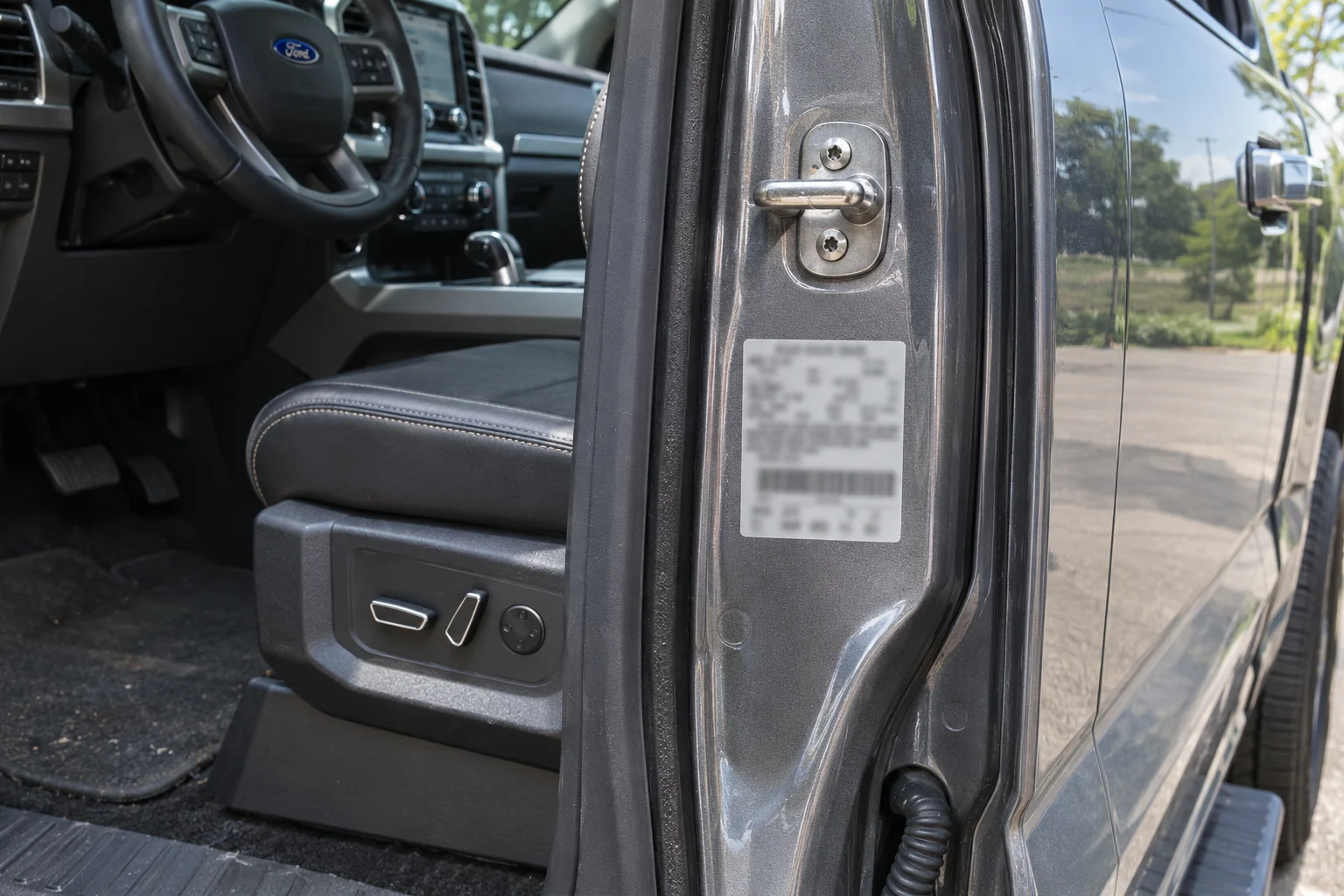
Park the truck and open the front door on the driver’s side. Look around the driver’s door opening for the vehicle certification label. Use the field name EXT PNT to orient yourself, then read the characters beside or below it. The nearby date, axle, transmission, and interior fields describe other aspects of the truck. A picture of the full label can help you find the right field again, but a crop that includes the field and code is enough for most paint questions.
The Ford paint-label location reference shows how the color code is marked. Our F-150 paint-code location guide covers the door opening and other ways to recover the code if you cannot read the label.
- Find the certification label in the driver’s door opening.
- Look for EXT PNT and note the characters printed for that field.
- Compare the code with S8 and write down the model year and model at the same time.
- If the label is damaged or appears to have been replaced, ask a Ford dealer to check the original build using the VIN.
- Tell the paint supplier which panel you are repairing and whether it appears to have been refinished.
A worn S can look like a 5 in a low-resolution image. Take a fresh picture in indirect daylight and compare the character with other printed characters on the label. Avoid trying to recover an unreadable code from a blurred picture or from the color visible on the body panel. A confirmed vehicle build is better evidence when a character cannot be read.
The door-jamb label records the truck’s original configuration. If the repair is on a hood, fender, or bedside that was repainted, the label provides the starting point for a shop’s lookup. The neighboring paint is the surface the repair has to match. These can be two different questions on a used truck, especially when the repair history is incomplete.
Which F-150 has Birch Sand?


The verified U.S. application is the 2027 model-year F-150. Ford lists Birch Sand in its color presentation and identifies it as an extra-cost choice. The exact configuration you select can affect the options the configurator displays. Check the chosen trim and package in Ford’s current build flow or ask the dealer for a build summary before using a color list to make a purchase decision.


A truck can carry a 2027 model-year designation while appearing in a listing in calendar year 2026. If you are searching inventory around a model-year change, use the model year printed on the vehicle documents. The date the listing was posted and the month shown on the certification label are poor substitutes for the model-year field.


A useful dealer request is: “Please confirm the exterior color and factory paint code for this VIN. I’m looking for a 2027 F-150 in Birch Sand, code S8.” If the truck has yet to be built, ask for the exterior color in the written order summary. If the truck is already on the lot, compare the description with the window sticker or certification label for that specific unit.
Which trims offer it?
Use Ford’s live configurator for the specific configuration you want to order. Start with the trim and body configuration, then select any appearance packages before checking the exterior-color menu. If you change a package or choose a different inventory truck, check the color again. This avoids relying on a list that may describe a different build combination or order-guide revision.
A photo gallery can show the color on an example truck while a particular package removes it from the order screen. An inventory page can also show a stock photo that differs from the truck on the lot. A build sheet or window sticker tied to the actual vehicle gives you a better answer than a gallery image when the purchase depends on the color.


Does S8 identify every tan Ford paint?


S8 identifies the Birch Sand application documented here. Ford has marketed other sand, gray, and beige colors on other vehicles. Similar color names are a reason to check EXT PNT, especially when searching across Bronco, Ranger, and F-Series listings. The Ford paint-code chart is useful for looking up another code if the certification label shows something other than S8.
If you are buying a used painted component, verify both the original paint code and the part fitment. A donor panel can share a color while coming from a different model year, body style, or configuration. Ask the seller for a donor-label photo and a part number where available. If you can inspect the donor in person, compare the finish beside the receiving truck in daylight before paying a premium for a supposedly ready-to-install match.
How to order the correct touch-up paint
Ask for Ford S8 Birch Sand for a 2027 F-150 and cross-check the code on the product page before placing an order. PaintScratch’s Birch Sand listing is one example of a lookup that pairs the short code with M7534 and identifies the model and year. If a different supplier uses a different part number, ask it to map that number to S8 and your vehicle before ordering.
Match the product to the repair
A small isolated chip on original paint and a scrape that spans a large visible section are different jobs. A touch-up product can be suitable for a small spot if the supplier’s instructions cover the substrate and finish. A broad scratch, a dent with broken paint, or a repair across a body line is a better candidate for a body-shop estimate. If you can see bare metal or corrosion, ask what preparation and protection the repair needs before focusing on color.
Paint on steel, plastic, and previously repaired surfaces can require different preparation. A prepainted replacement part adds a separate compatibility question. Specify the part, its material if known, and the size of the damage when asking the supplier. Use the product directions for surface preparation, compatibility, drying, and any clearcoat requirements. The factory color code alone does not specify how a third-party paint kit should be applied.
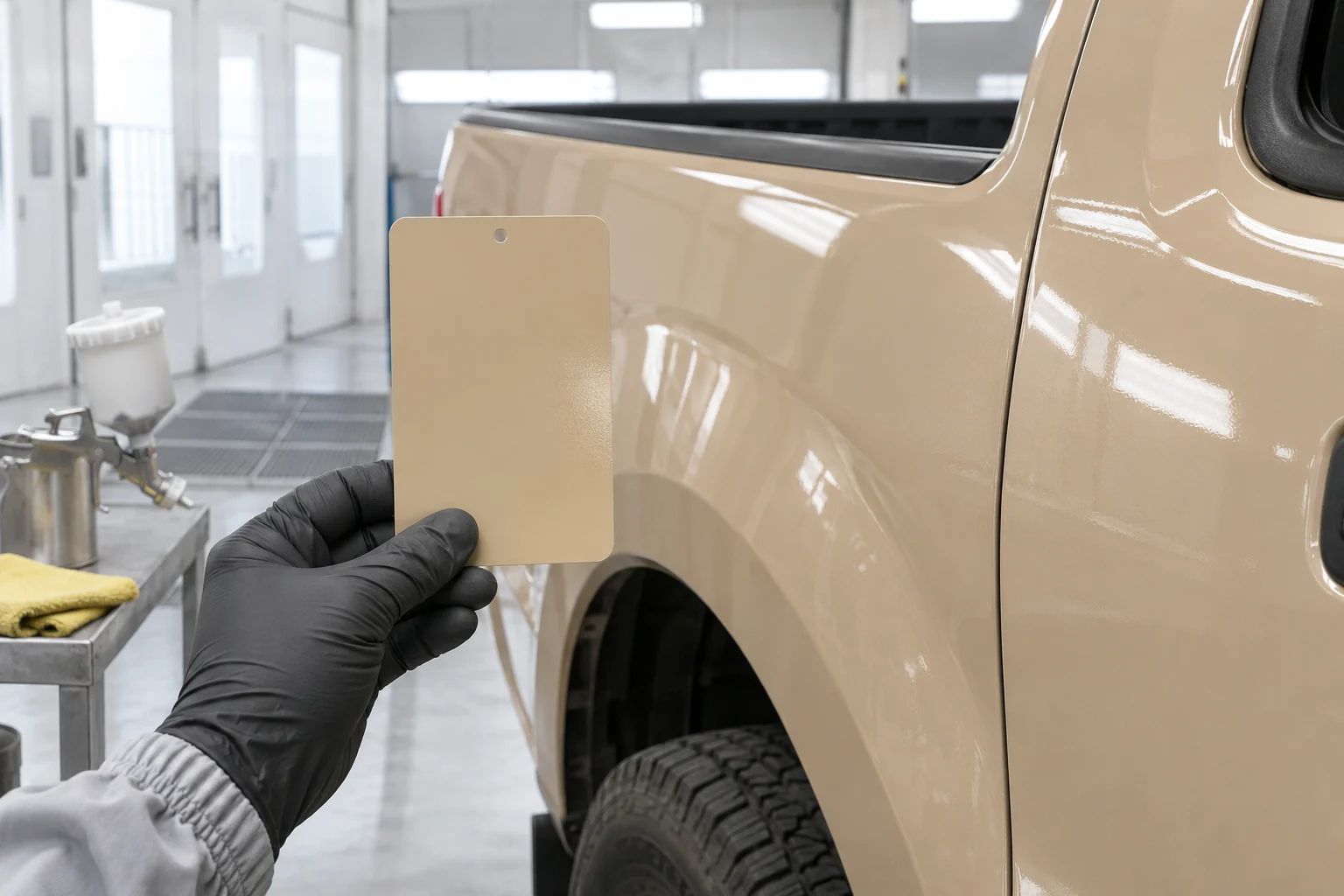
Test the color before touching the panel


For a repair where appearance matters, put the product on a compatible test card or ask the shop to make a spray-out sample. Let the sample reach the state specified by the paint system before judging the result. Hold it next to a clean adjacent section of the truck and look at it in daylight from several angles. Checking a loose swatch away from the vehicle gives you less information about the final match.
If the sample looks close in the garage but stands out outdoors, pause and ask the supplier or shop about the formula or repair approach. The factory code describes the intended color, while the adjacent panel may reflect weathering, prior repairs, or a different application process. A successful lookup gets you the right starting formula and a comparison against the actual truck tests how that formula will look at the repair.
What to do if the label and the truck disagree
An S8 door-jamb label on a truck with a panel that looks noticeably different can be consistent with a prior refinish, a replaced component, lighting conditions, or an overlay such as a wrap. Check an undamaged area nearby before assuming the label is wrong. If the truck was bought used, ask about prior body work and look for invoices or a repair history that identifies the affected panel.
A listing photo can create the opposite problem. A listing may call a truck Birch Sand, but the window sticker or door label shows another factory color. Ask the seller for a fresh photo of the actual truck and its exterior-color record. If the body was repainted or wrapped, decide whether you want to match its current appearance or return it to its original factory color. Tell the shop which result you expect.
When a certification label is missing, have the dealer check the original build using the VIN. Share the VIN privately with the dealer or supplier. If the original build identifies S8 and you suspect a panel was refinished, have a shop inspect and match the physical panel before buying a large quantity. For a replacement body part that will be painted from scratch, compare the formula against the adjacent painted panels before final assembly where practical.
Two examples of confirming the color
A buyer comparing two dealer listings sees Birch Sand in both descriptions. One listing includes the window sticker for the truck. The other uses a stock photo and provides no exterior-color record. The first gives the buyer a document to check against the VIN. For the second, the buyer can ask for the sticker or a build summary before driving to the dealership. If the plan is to order a truck, ask the dealer to show the selected color with the intended package on the same build.
An owner repairing a chip sees S8 on the door label, but the nearby fender was previously refinished. The owner can give a paint shop the factory code and point out the repaired fender. The code helps the shop identify the original formula. Comparing a sample to the fender gives the shop information about the finish the new repair will actually sit next to.
Quick answers about Ford Birch Sand
Is M7534 the number I should look for on the driver’s door?


Look for S8 in the EXT PNT field. M7534 is the reference paired with S8 in PaintScratch’s listing. When contacting a supplier, providing both identifiers alongside the model year is useful, but the door label is where you confirm the factory code.
Can I use a photo to verify Birch Sand on a used F-150?
Use the photo to evaluate the look of the color and request a label or window-sticker photo to confirm its identity. The same truck can look different in shade, direct sun, and a dealer showroom. If the paint is central to the purchase, inspect the truck in daylight and confirm the factory code before arranging a repair or buying a painted accessory.
Can a dealer look up the paint if the label is unreadable?
Ask the dealer to confirm the factory exterior color from the vehicle’s VIN and build record. This answers how the vehicle was configured. If you are repairing a previously painted panel, also have the physical panel inspected, because the original build data cannot describe later body work.
Does a confirmed S8 code guarantee a used replacement panel will match?
Check the condition and appearance of the donor panel in addition to its label. Two parts listed under the same code can look different if one has been refinished or exposed to different conditions. Verify fitment separately and agree on a return option if you cannot compare the panel before purchase.
Before you buy paint or place an order
For an existing 2027 F-150, record S8, the model year, and the panel you plan to repair. Confirm the supplier’s listing and compare a sample with your truck if appearance matters. For a new order, confirm Birch Sand on the build summary for the exact trim and package combination. Those checks answer the two different questions behind a paint-code search: what Ford put on the truck and what you need to match today.