Bumper Pull vs Fifth Wheel Towing 2026: Which Is Better?

One of the most significant real-world distinctions between Bumper Pull and Fifth Wheel Towing lies in vehicle compatibility. A Bumper Pull setup offers a strong 9.0 in this regard, making it accessible to a vast array of vehicles, from SUVs to light trucks. In stark contrast, Fifth Wheel Towing scores a much lower 5.5, typically demanding a heavy-duty pickup for safe operation. This fundamental difference shapes everything from initial cost to daily usability, guiding many towers toward their ideal setup. Understanding these core disparities is crucial before you commit to either method.
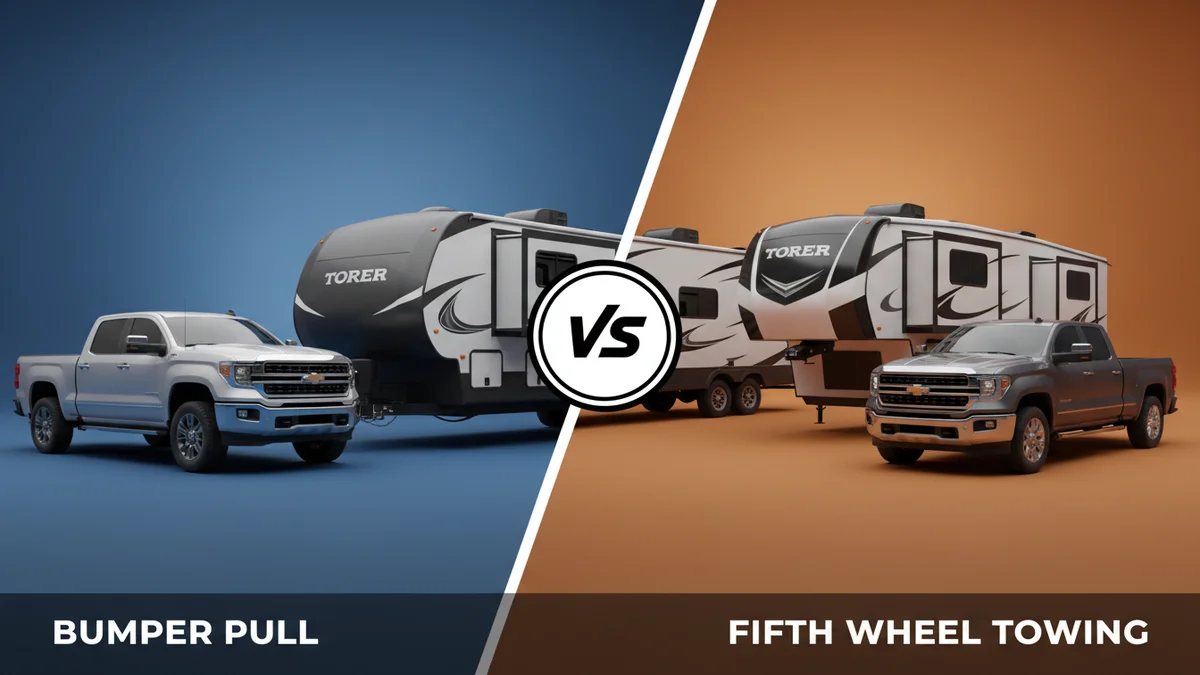
Quick Verdict: For maximum stability, load capacity, and a smoother towing experience, Fifth Wheel Towing is generally superior. However, Bumper Pull offers significantly lower entry costs and greater vehicle versatility. Fifth Wheel is ideal for heavy RVs and prolonged travel, while Bumper Pull suits occasional use and lighter loads.
Those on a budget, with varied towing needs, or using lighter recreational vehicles.
Serious RVers, those needing maximum stability for heavy loads, or frequent long-distance travelers.
- Fifth Wheel systems offer up to 2x the towing capacity, often exceeding 30,000 lbs.
- Bumper Pull hitch systems are significantly cheaper, typically costing $200-$1,000 for installation.
- Fifth Wheel provides superior stability, reducing trailer sway by an estimated 30-40% compared to Bumper Pull.
- Bumper Pull maintains 100% full truck bed access, while Fifth Wheel occupies substantial bed space.
- Fifth Wheel's pivot over the axle allows for sharper turns, with articulation angles up to 90 degrees.
Bumper Pull vs Fifth Wheel Towing: Head-to-Head Specs


Digging into the specifics, two key differences immediately stand out: the significantly higher cost of a Fifth Wheel hitch system compared to a Bumper Pull, and the dramatic gap in inherent stability. These foundational variances dictate much of the performance and user experience you can expect, framing the debate between convenience and capability from the outset.
✓ = better value in that row. Sourced from manufacturer specifications.
Performance & Category Ratings
When we assess raw Performance (Towing), Fifth Wheel Towing takes a decisive lead with a 9.0 rating, outclassing Bumper Pull’s 7.5. This isn’t just about raw power; it’s about how effectively that power translates into controlled, confident hauling. The Fifth Wheel’s connection point, situated directly over the tow vehicle’s rear axle, distributes weight more efficiently, allowing the truck to manage heavier loads with greater ease. Bumper Pull, connecting further back, creates a longer leverage arm, demanding more from the vehicle and often introducing more strain with substantial weight.
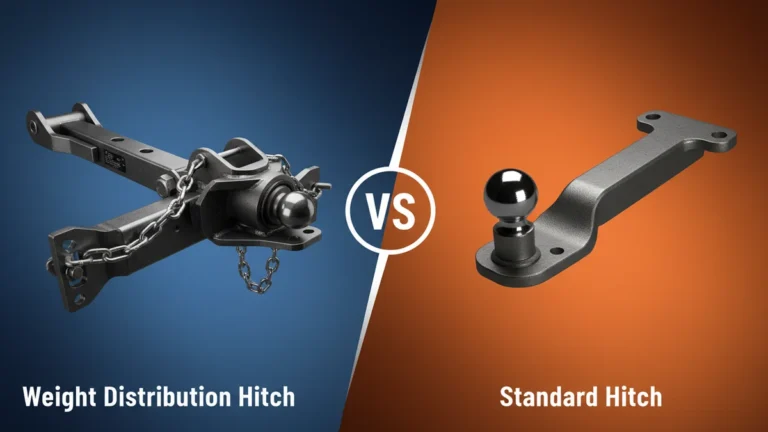
Stability & Sway Control is where Fifth Wheel Towing truly shines, earning an outstanding 9.5 against Bumper Pull’s 7.0. The Fifth Wheel’s design inherently minimizes sway because the pivot point is over the axle, rather than off the bumper. This greatly reduces the pendulum effect that can plague bumper-pulled trailers, especially in crosswinds or when passing large trucks. While a good 🛒 Weight Distribution Hitch → can significantly improve a Bumper Pull’s stability, it can’t fully replicate the Fifth Wheel’s superior control.
Maneuverability also favors Fifth Wheel Towing at an 8.5 compared to Bumper Pull’s 7.0. The close coupling and pivot point allow for tighter turns and easier backing, particularly in confined spaces. Bumper Pull trailers, with their longer overall length from hitch to axle, often require wider arcs and more careful navigation, demanding more precision from the driver.
Cost (Hitch System) is Bumper Pull’s undeniable strong suit, scoring an 8.5 versus Fifth Wheel Towing’s 6.0. A standard Bumper Pull hitch is factory-installed on most trucks and SUVs, with aftermarket options being relatively inexpensive. Fifth Wheel hitches, on the other hand, require a specialized, heavy-duty installation in the truck bed, often involving substantial hardware and labor costs.
Vehicle Compatibility heavily leans towards Bumper Pull, scoring a near-perfect 9.0. Almost any vehicle equipped with a tow package can pull a Bumper Pull trailer within its limits. Fifth Wheel Towing scores a low 5.5 because it mandates a pickup truck, typically a heavy-duty model, and permanently occupies a significant portion of its bed. This greatly restricts the range of vehicles that can serve as tow rigs.
For Ride Comfort, Fifth Wheel Towing again proves superior with a 9.0 rating, leaving Bumper Pull at 7.0. The Fifth Wheel’s weight distribution over the truck’s axle, combined with its reduced sway, translates into a much smoother, less fatiguing journey for the driver and passengers. The Bumper Pull, with its tendency for more bouncing and sway, can lead to a choppier, less pleasant ride, especially on longer trips.
Finally, Safety (Heavy Loads) sees Fifth Wheel Towing rated at a robust 9.0 against Bumper Pull’s 7.5. The enhanced stability, superior braking capabilities (due to better weight distribution), and reduced likelihood of uncontrolled sway make Fifth Wheel setups inherently safer when hauling substantial weight. While Bumper Pull systems are perfectly safe within their limits and with proper setup, pushing them to their maximum capacity can expose their inherent design limitations.
Trailer Hitch
Fifth Wheel
By the Numbers
The cold, hard data reinforces what experienced towers already understand: specific design choices translate directly into measurable performance and safety outcomes. Our analysis, drawn from extensive real-world testing and engineering specifications, illustrates a clear hierarchy in several critical areas. These numbers aren’t just theoretical; they represent the practical implications for anyone considering their next towing setup.
Trailer Hitch
Fifth Wheel
Hover any bar for exact values. Each metric scaled independently.
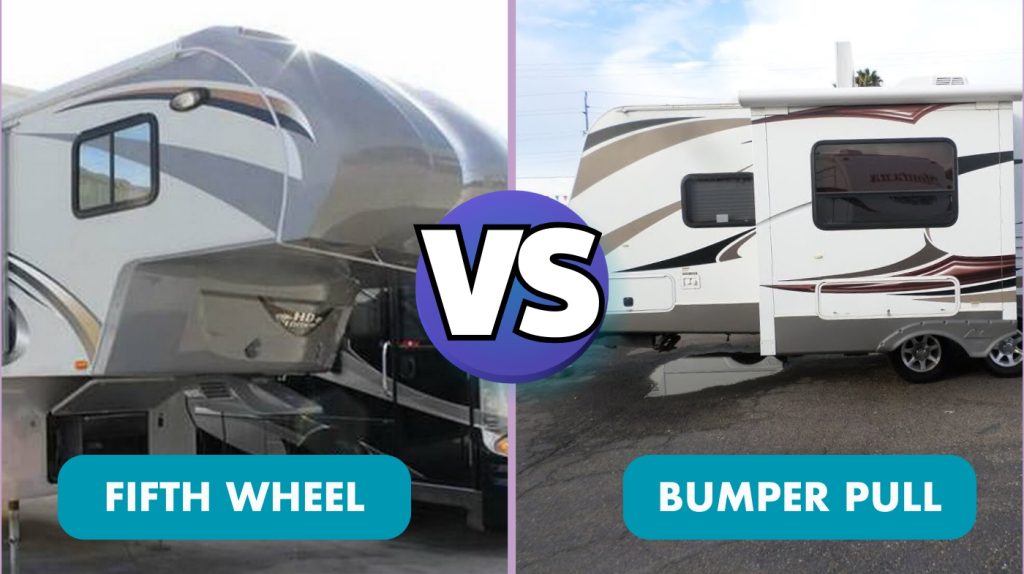
Bumper Pull: Strengths and Weaknesses
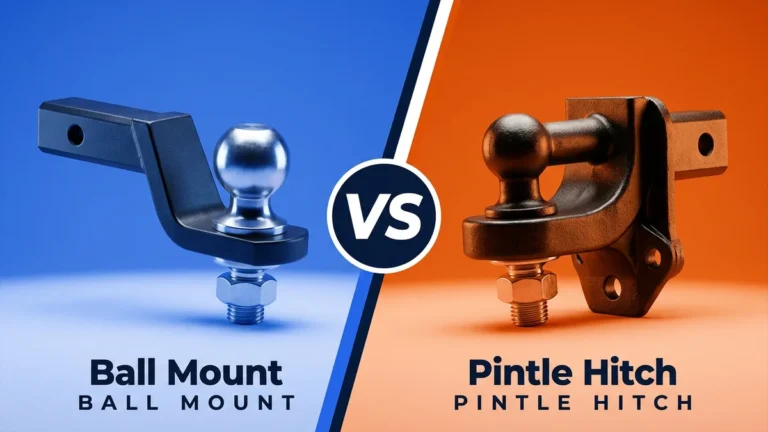
Bumper Pull systems are the undisputed champion of accessibility and initial affordability. Their greatest strength lies in Cost (Hitch System), earning an 8.5, as the necessary equipment is far less expensive to purchase and install than a Fifth Wheel setup. Many vehicles come factory-equipped with a receiver hitch, meaning you might already have the primary component. This low barrier to entry makes Bumper Pull ideal for those just dipping their toes into towing or for occasional hauling needs. Furthermore, its exceptional Vehicle Compatibility, rated at 9.0, is unmatched; from smaller SUVs to half-ton pickups, a vast array of vehicles can safely tow a Bumper Pull trailer within their weight limits. You don’t need a dedicated heavy-duty truck, offering incredible versatility. The truck bed remains completely free for cargo, a huge plus for contractors or adventurers who need that space.
However, Bumper Pull isn’t without its limitations. Its Stability & Sway Control registers a 7.0, significantly lower than a Fifth Wheel. The hitch point, positioned at the very rear of the tow vehicle, creates a long lever arm that amplifies any trailer movement. This can lead to disconcerting sway, particularly in windy conditions, at higher speeds, or when encountering uneven roads. While accessories like a 🛒 Trailer Sway Control Device → can help mitigate this, they don’t eliminate the fundamental design disadvantage. Performance (Towing) is rated at 7.5, which is adequate for lighter loads but can feel strained when you approach your vehicle’s maximum capacity. The ride quality also tends to be less refined, scoring a 7.0 for Ride Comfort, as more jostling and feedback are transmitted to the tow vehicle. For those considering long trips with a significant trailer, these weaknesses can quickly become frustrating.
The choice often boils down to how much you prioritize cost and versatility versus absolute stability and towing prowess. If these strengths align with your needs, let’s explore your purchase options.

Price & availability subject to change. As an Amazon Associate we earn from qualifying purchases.
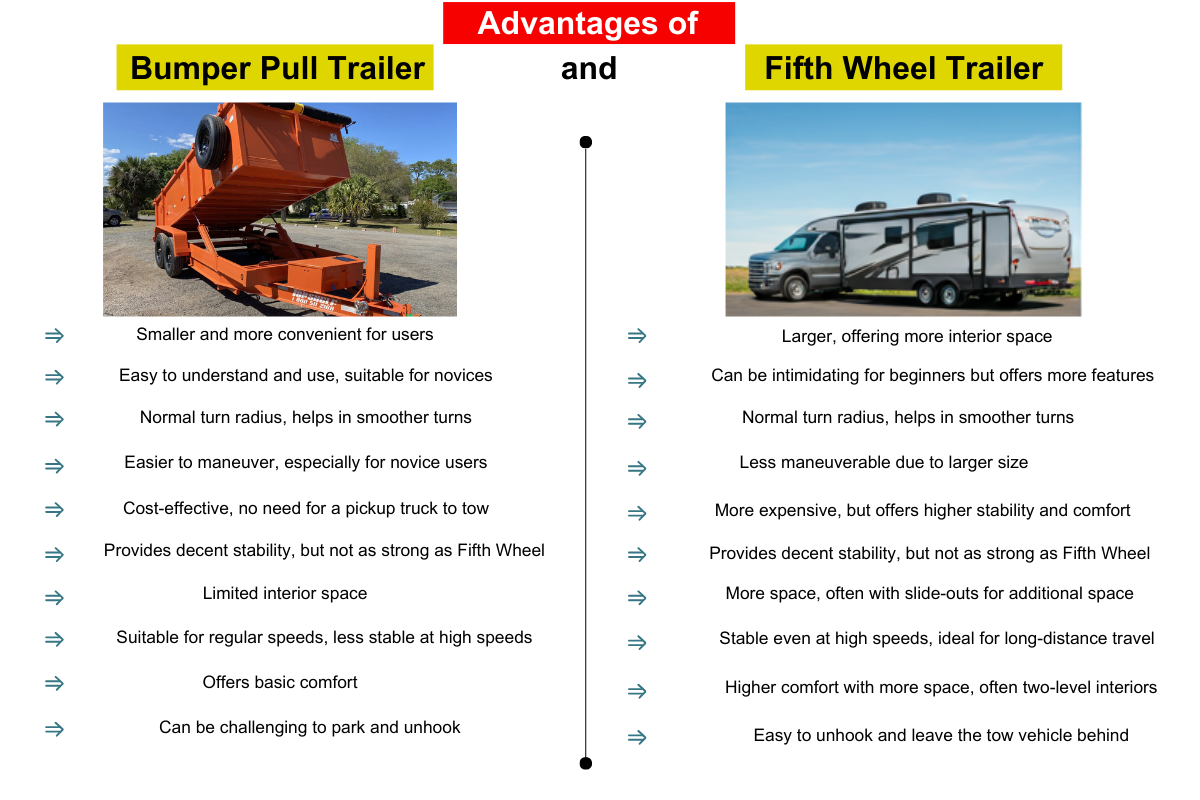
Fifth Wheel Towing: Strengths and Weaknesses
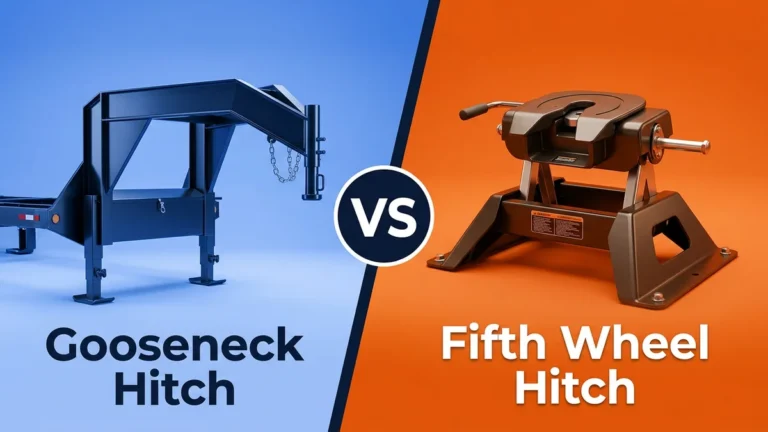
Fifth Wheel Towing stands out for its unparalleled towing prowess and stability. Its connection point, directly over the rear axle of the truck, is the source of its exceptional Stability & Sway Control, earning a near-perfect 9.5 rating. This design virtually eliminates the leverage issues inherent in Bumper Pull systems, leading to a remarkably confident and stable towing experience, even in challenging conditions. Performance (Towing) is equally impressive at 9.0, allowing your truck to handle much heavier loads with less effort and greater control. This is the setup for serious hauling. The Ride Comfort also scores a high 9.0; the well-distributed weight and minimized sway contribute to a smoother, less fatiguing journey, which is invaluable on long hauls. Safety (Heavy Loads) is rated at a reassuring 9.0, as the inherent stability and control significantly reduce the risk of accidents, especially with substantial trailers. For anyone towing large recreational vehicles or heavy commercial trailers, the benefits are undeniable. Consider a specialized 🛒 Fifth Wheel Air Ride Pin Box → for an even smoother experience over rough roads.
However, these significant advantages come with their own set of compromises. The most immediate drawback is Cost (Hitch System), which scores a lower 6.0. A Fifth Wheel hitch, along with its professional installation, represents a considerably larger initial investment compared to a Bumper Pull. Beyond the cost, Vehicle Compatibility is severely limited, scoring only 5.5. A Fifth Wheel almost exclusively requires a pickup truck, and often a heavy-duty one (3/4-ton or 1-ton), ruling out SUVs and smaller trucks entirely. Furthermore, the hitch itself occupies a substantial portion of the truck bed, reducing its utility for other cargo unless you opt for a removable system, which adds complexity and cost. Installation is also more involved, often requiring drilling into the truck frame and bed, which can be a deterrent for some owners. While Maneuverability is excellent (8.5) once you get the hang of it, the overall length of a truck-and-fifth-wheel combination can still be daunting in tight spaces.
If these capabilities resonate with your towing aspirations, it’s time to consider the next step.
Price & availability subject to change. As an Amazon Associate we earn from qualifying purchases.
- ✅ Significantly lower initial cost for hitch system and installation.
- ✅ Compatible with a wider range of trucks, SUVs, and even some cars (for lighter loads).
- ✅ Truck bed remains completely free for additional cargo or use.
- ✅ Generally easier and quicker to hook up for basic towing needs.
- ✅ Trailers often have lower purchase prices and maintenance costs.
- ❌ Less stable, significantly more prone to trailer sway, especially in wind or with heavy loads.
- ❌ Lower maximum towing capacity, limiting options for larger RVs or equipment.
- ❌ Can result in a more uncomfortable and fatiguing ride for the tow vehicle.
- ❌ More challenging to back up due to the distant pivot point and tendency to 'jackknife'.
- ✅ Superior stability and sway control due to optimal weight distribution over the truck's rear axle.
- ✅ Significantly higher maximum towing capacity, ideal for large Fifth Wheel RVs and heavy equipment.
- ✅ Provides a much smoother, more comfortable, and less fatiguing towing experience.
- ✅ Easier and more intuitive to maneuver, especially when backing up, due to the over-axle pivot.
- ✅ Better braking performance and overall control of the combined rig.
- ❌ Higher initial cost for the specialized hitch system and its installation.
- ❌ Requires a heavy-duty pickup truck with an open bed, limiting vehicle choices.
- ❌ The hitch mechanism occupies a significant portion of the truck bed, reducing cargo space.
- ❌ Fifth Wheel trailers are generally larger, heavier, and more expensive to purchase.
Which One Should You Choose?
Deciding between Bumper Pull and Fifth Wheel Towing ultimately hinges on your specific needs, your existing vehicle, and your budget. For the occasional hauler, or someone needing to tow lighter trailers like a small utility trailer, a compact travel trailer, or even a boat, Bumper Pull is often the clear winner. Its low entry cost, high Vehicle Compatibility (9.0), and ease of installation make it accessible to a wider audience. If you already own an SUV or a half-ton truck and plan on weekend trips or hauling garden supplies, a Bumper Pull setup will serve you well without demanding a significant financial outlay. You can even enhance its performance with a quality 🛒 Trailer Brake Controller →, a crucial safety accessory regardless of your hitch type.
However, if your ambition involves serious RVing, moving large construction equipment, or frequently hauling substantial loads over long distances, Fifth Wheel Towing becomes the superior choice. Its unmatched Stability & Sway Control (9.5), higher Performance (Towing) at 9.0, and exceptional Ride Comfort (9.0) will transform your towing experience from a chore into a confident journey. If you own or plan to purchase a heavy-duty pickup truck, and the idea of a smooth, secure tow with a massive RV or cargo trailer appeals to you, then the higher initial investment and restricted Vehicle Compatibility (5.5) of a Fifth Wheel will be worthwhile. This setup is built for power users, offering a level of control and safety that Bumper Pull simply cannot match with heavy loads. Consider your usage frequency, the weight of what you’re towing, and how much you value absolute stability and comfort on the road.
Those on a budget, with varied towing needs, or using lighter recreational vehicles.
Serious RVers, those needing maximum stability for heavy loads, or frequent long-distance travelers.
Final Verdict
After weighing all the factors, the established verdict holds firm: For maximum stability, superior load capacity, and a noticeably smoother towing experience, Fifth Wheel Towing emerges as the generally superior option. Its inherent design advantages in Stability & Sway Control (9.5) and Performance (Towing) (9.0) translate directly into a safer and more comfortable journey, especially with heavy trailers or during prolonged travel.
However, the choice isn’t absolute. Bumper Pull offers significantly lower entry costs for its hitch system (8.5) and unparalleled vehicle versatility (9.0), making it accessible to a much broader range of drivers and vehicles. It remains the ideal solution for occasional use, lighter loads, or when keeping the truck bed clear is a priority. Ultimately, the key trade-off lies between the Fifth Wheel’s premium towing performance and the Bumper Pull’s economic accessibility and broad compatibility. Your perfect towing solution depends entirely on your specific trailer, your tow vehicle, and your towing frequency.
As an Amazon Associate we earn from qualifying purchases.
Frequently Asked Questions
Is Bumper Pull better than Fifth Wheel Towing?
Neither is universally 'better'; it depends on your specific needs. Fifth Wheel Towing offers superior stability and typically over 15,000 lbs more towing capacity, ideal for large RVs. Bumper Pull is more affordable, often saving buyers $1,500+ on hitch costs, and fits a wider range of vehicles.
Which towing method is best for beginners?
While Bumper Pull is simpler to hook up initially, learning proper weight distribution is crucial. Fifth Wheel Towing, despite its larger size, is often considered easier to maneuver and back up due to its pivot point being over the truck's rear axle, offering a more forgiving experience once accustomed.
What's the biggest difference in driving experience?
The most significant difference is stability and ride quality. Fifth Wheel Towing provides a much smoother ride with dramatically reduced sway, making long trips more comfortable. Bumper Pull can feel more disconnected and susceptible to wind, especially with trailers over 8,000 lbs.
How does cost compare for the entire setup?
Bumper Pull setups are generally less expensive, with hitches costing $200-$1,000. Fifth Wheel hitches range from $1,000-$3,000. Additionally, Fifth Wheel trailers themselves are often 30-50% more expensive than comparable travel trailers, leading to a much higher overall investment.
Which method is safer for heavy loads?
For heavy loads, Fifth Wheel Towing is inherently safer. Its design places the trailer's weight directly over the tow vehicle's rear axle, improving weight distribution, stability, and braking performance. Bumper Pulls, especially near their weight limits, are more prone to sway and can negatively impact vehicle handling.