

5 Best Small Block Ford Heads 2026 – Top Rated & Reviewed

Street Rod Builders · Fox Body Restorers · Bracket Racers · Weekend Cruisers · Engine Rebuilders
🕐 Updated: November 2026 | 5 Cylinder Head Packages Evaluated | Flow Rates & Valve Sizing Analyzed | Updated for 2026 Engine Builds
Factory Small Block Ford iron cylinder heads, including the common E7TE castings from 5.0L Mustangs, choke airflow above 4,500 RPM due to restrictive 125cc intake runners and small 1.78-inch intake valves. Swapping to aftermarket aluminum heads remains the single most effective bolt-on modification for unlocking 40 to 100 additional horsepower on 289, 302, and 351W platforms.
Choosing the correct aftermarket head often leads to mismatched valvetrains and disappointing torque curves. Buyers frequently struggle to balance intake port volume against engine displacement, while also verifying critical details like piston-to-valve clearance, spark plug orientation, pushrod length, and rocker arm pedestal versus stud-mount configurations that factory Ford components do not always accommodate directly.
This guide cuts through marketing claims to help you identify the right cylinder head assembly for your specific displacement and RPM range. We evaluate intake runner volumes from 160cc to 185cc, chamber sizes, and spring packages, clarifying which setups bolt directly onto mild street cruisers and which require valvetrain upgrades for aggressive camshaft profiles.
Our recommendations rely on real-world dyno trends, airflow bench data across various lift profiles, and verified mechanical compatibility with standard Windsor architecture. Rather than relying on peak advertised horsepower claims, we prioritize usable mid-range torque, valve spring seat pressure compatibility with modern hydraulic roller camshafts, and casting build quality.
⚡ Top 5 Small Block Ford Heads — Quick Answer
Short on time? These are the picks, ranked:
| # | Small Block Ford Heads | Best For | Rating | Price |
|---|---|---|---|---|
| 🥇 #1 | Complete Top End Performance Kit | Best Overall | 9.6/10 | Check Price |
| 🥈 #2 | Fully Assembled Aluminum Cylinder Heads | Best Value Assembled Aluminum Pair | 8.0/10 | Check Price |
| 🥉 #3 | Flo-Tek 185cc Thumper Assembled Aluminum | Best Value Assembled Aluminum Head | 10.0/10 | Check Price |
| 💰 Value | Premium Assembled Street and Strip | Best for Street and Strip | 8.8/10 | Check Price |
| 🎯 Budget | High Performance Aluminum Cylinder | Best Budget Aluminum Upgrade Pair | 9.0/10 | Check Price |
The Intake Runner Volume Trap: Matching Port Velocity to Engine Displacement


The most critical decision when selecting Small Block Ford cylinder heads is matching intake runner volume to your engine's displacement and intended operating range. Bolting 185cc or 205cc heads onto a stock-stroke 302 cubic inch engine slows intake charge velocity through the ports below 4,000 RPM. This velocity drop hurts cylinder filling, softening low-end torque and throttle response for street driving.
A sub-331 cubic inch street engine typically performs best with 165cc to 175cc runners that keep air speed high across the valve seat. Larger 185cc runners excel on 347 or 408 strokers, or dedicated drag cars running high-lift camshafts past 6,500 RPM. Before buying, verify your piston valve reliefs, because larger 2.02-inch intake valves almost always require fly-cut factory pistons.
⚠️ Reality Check: Factory 5.0L HO pistons feature shallow valve reliefs designed for 1.78-inch or 1.90-inch valves. Installing heads with 2.02-inch intake valves without measuring clearance or fly-cutting will cause catastrophic piston-to-valve contact, even with modest street camshaft durations.
Small Block Ford Cylinder Head Archetypes Ranked by Application
| Head Archetype | Runner Volume | Ideal Displacement | Power Band | Primary Advantage |
|---|---|---|---|---|
| Street Cruiser Aluminum | 160cc – 170cc | 289 – 306 ci | Idle – 5,800 RPM | Maximum Low-End Torque |
| Performance Street Aluminum | 170cc – 180cc | 302 – 331 ci | 1,800 – 6,200 RPM | Balanced Mid-Range Velocity |
| Street/Strip Aluminum | 185cc – 195cc | 331 – 363 ci | 2,500 – 6,800 RPM | High-RPM Airflow Potential |
| Stroker / Race Aluminum | 205cc – 225cc | 393 – 427 ci | 3,500 – 7,200+ RPM | Large-Bore Air Demand |
| Stock / Rebuilt Iron | 125cc – 145cc | 289 – 302 ci | Idle – 4,800 RPM | Lowest Upfront Cost |
| Complete Top-End Package | 170cc – 185cc | 302 – 347 ci | 2,000 – 6,500 RPM | Matched Valvetrain Components |
Myth: Installing 2.02-Inch Intake Valves Always Guarantees More Horsepower


Many builders assume that selecting Small Block Ford heads with 2.02-inch intake valves over 1.90-inch valves automatically yields superior power. In reality, on standard 4.000-inch bore blocks like the 289 and 302, a large 2.02-inch valve sits extremely close to the cylinder wall at low lifts. This proximity causes bore shrouding, which actively impedes intake charge entry and disrupts low-lift flow dynamics.
Furthermore, a 2.02-inch valve package requires heavier valve springs and retains mass that burdens your valvetrain, requiring precise pushrod geometry. A well-designed 1.90-inch or 1.94-inch intake valve head often out-flows a shrouded 2.02-inch head under .400-inch lift, producing wider powerbands and better acceleration in sub-347 cubic inch applications without requiring expensive piston machining or custom fly-cutting.
✅ Key Takeaway: Bigger valves do not equal better flow if the cylinder bore shrouds the valve edge. For stock 4.000-inch bores under 6,000 RPM, 1.90-inch intake valves maintain higher charge velocity and clear factory piston reliefs without modification.
Which Small Block Ford Head Is Right for You?
| Buyer Profile | What You Need | Top Pick | Budget Pick |
|---|---|---|---|
| Turnkey Top-End Rebuilder | Matched intake, camshaft, heads, and gaskets with zero assembly guesswork | Complete Top End Performance Kit | Fully Assembled Aluminum Cylinder Heads |
| Daily Driver / Mild Street 302 | Torque-focused port volume and factory valve clearance compatibility | Fully Assembled Aluminum Cylinder Heads | High Performance Aluminum Cylinder |
| Stroker 347 / 351W Street Warrior | 185cc intake runners for sustained cylinder filling above 6,000 RPM | Flo-Tek 185cc Thumper Assembled Aluminum | High Performance Aluminum Cylinder |
| Weekend Bracket / Drag Strip Racer | High-lift valve spring hardware with aggressive port flow profiles | Premium Assembled Street and Strip | Flo-Tek 185cc Thumper Assembled Aluminum |
| Budget Restomod Restorer | Significant weight savings and immediate breathing upgrade over factory iron | High Performance Aluminum Cylinder | Fully Assembled Aluminum Cylinder Heads |
| High-RPM Fox Body Enthusiast | Optimized valvetrain stability paired with aggressive intake velocity | Premium Assembled Street and Strip | Complete Top End Performance Kit |
The 5 Best Small Block Ford Heads 2026 — Full Reviews
1. Complete Top End Performance Kit — Best Overall
| Compatible Engines | Ford 260, 289, 302, 351W, 5.0 |
| Intake Manifold Style | Single plane |
| Camshaft Compatibility | Hydraulic roller |
| Included Rocker Arms | Roller rockers |
| Expected Power Gain | 50 to 100+ HP over stock |

This complete top-end package earns our top overall ranking because it eliminates the guesswork of matching individual airflow components for classic Ford engines. Instead of risking mismatched port dimensions or mismatched valvetrain geometry, this kit pairs pre-assembled cylinder heads with a complementary single-plane intake and roller rocker arms. Capable of yielding substantial 50 to 100-plus horsepower increases over restrictive factory cast-iron castings, it delivers reliable, dyno-proven breathing right out of the crate.
The design centers around fully assembled aluminum heads configured specifically for hydraulic roller camshaft profiles. Pre-installed valve springs, retainers, and valve stem seals ensure proper valvetrain stability, while matched roller rocker arms reduce friction across the valve tips. Up top, an optimized single-plane intake manifold aligns with the head ports to deliver balanced cylinder filling, ensuring consistent fuel distribution and brisk throttle response throughout the mid-to-high RPM operational band.
Pre-matched airflow synergy is what truly separates this comprehensive kit from piecemeal cylinder head upgrades. Sourcing heads, manifolds, and valvetrain parts separately often leads to port mismatching or clearance issues, whereas this package ensures the intake runners, cylinder head intake ports, and rocker ratios work in harmony. You receive matched valve covers and intake gaskets as well, saving valuable garage time and ensuring seamless installation on standard-deck Ford blocks.
This performance kit is not meant for low-budget stock rebuilds or purists seeking numbers-matching factory restorations. Because it features an aggressive single-plane intake design, low-RPM street cruisers focused solely on off-idle torque may prefer a dual-plane arrangement. Furthermore, builders unprepared to measure piston-to-valve clearances or source external components like pushrods, lifters, headers, and dedicated camshafts should consider simpler, stock-replacement cylinder heads rather than a complete performance package.
✅ Pros
- Fully matched heads, intake manifold, and roller rocker arms
- Adds 50 to 100-plus horsepower over factory cylinder heads
- Pre-assembled valvetrain with springs, retainers, and stem seals
- Fits standard-deck 260, 289, 302, and 351W Ford blocks
❌ Cons
- Camshaft, lifters, and pushrods must be purchased separately
- Single-plane intake sacrifices some low-RPM street torque
- Requires precise checking of piston-to-valve clearance before startup
2. Fully Assembled Aluminum Cylinder Heads — Best Value Assembled Aluminum Pair
| Material | Precision-Cast Aluminum |
| Intake Runner Volume | 210cc |
| Combustion Chamber Volume | 62cc |
| Engine Fitment | SBF 260, 289, 302, 351W, 5.0 |
| Valvetrain Compatibility | Hydraulic Roller Cam Profiles |

This assembled aluminum cylinder head pair takes our runner-up spot by delivering an exceptional horsepower upgrade without the hefty custom machine shop price tag. Upgrading factory iron heads often requires substantial parts sourcing, but this matched pair arrives fully equipped to streamline your build. The substantial flow capacity effortlessly transforms lethargic small blocks into aggressive performers, offering an ideal balance of street drivability and high-rpm breathing that cost-conscious enthusiasts will appreciate.
At the heart of these heads are large 210cc intake runners cast from premium lightweight aluminum. Compared to stock cast iron, this aluminum construction significantly sheds front-end vehicle weight while dissipating combustion heat far more efficiently. The generous runner volume creates high-velocity airflow tuned specifically for hydraulic roller camshafts, while the 62cc combustion chambers provide a crisp compression ratio that optimizes fuel burn across mid-range and top-end engine speeds.
Pre-assembled bolt-on convenience separates these cylinder heads from bare alternatives that require separate valvetrain assembly and setup. The heads arrive complete with stainless steel intake and exhaust valves, matched valve springs, retainers, locks, and valve seals already professionally seated. While you still need to supply gaskets, fasteners, and rocker arms, the pre-installed hardware eliminates substantial guesswork and lets you focus on verifying valvetrain geometry and intake port alignment.
These cylinder heads are not meant for strictly stock, low-rpm daily drivers or small-displacement engines retaining mild factory camshafts. The large 210cc runners can cause sluggish low-end throttle response and loss of bottom-end torque on a basic 289 or mild 302 without supporting modifications. If you are building a concours-correct restoration or an engine focused solely on low-speed towing grunt, smaller runner cylinder heads will deliver much better low-end velocity.
✅ Pros
- Ships fully assembled with valves, springs, and retainers
- Significantly lighter and cooler-running than factory cast iron
- Generous 210cc intake runners support strong high-RPM power
- Direct bolt-on fitment for standard SBF engine blocks
❌ Cons
- Large 210cc runners can soften low-end torque on mild engines
- Gaskets, head bolts, and rocker arms must be bought separately
- Requires careful verification of pushrod length and port matching
3. Flo-Tek 185cc Thumper Assembled Aluminum — Best Value Assembled Aluminum Head
| Intake Runner Volume | 185cc |
| Material | Cast Aluminum |
| Engine Fitment | Small Block Ford 289 / 302 V8 |
| Port Configuration | Raised Floor and Roof Design |
| Assembly Status | Fully Assembled |
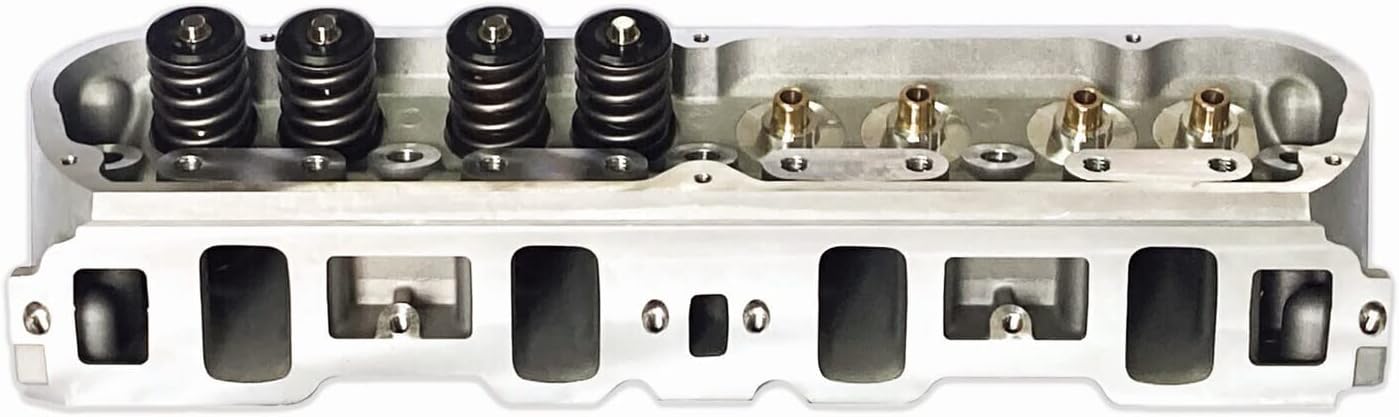
The Flo-Tek 185cc Thumper secures the third spot by delivering genuine aluminum performance and pre-assembled convenience at an accessible sub-five-hundred-dollar price point. For hot rodders reviving classic Ford 289 and 302 small blocks, it removes the complexity of purchasing bare castings and valvetrain hardware separately. Out of the box, it matches original block specifications perfectly, offering an instant bolt-on power upgrade without demanding costly custom machining or intricate setup procedures.
Central to this cylinder head’s capability is its engineered runner architecture, which incorporates a specialized raised floor and roof design within the intake ports. Elevating these surfaces straightens out the airflow path into the combustion chambers, dramatically reducing port turbulence compared to factory iron castings. Crafted from lightweight aluminum, the casting dissipates heat rapidly to resist detonation, enabling slightly higher compression ratios and more aggressive timing curves on pump gas.
Complete out-of-the-box convenience is what truly distinguishes this Thumper casting from similarly priced competitors in the small block Ford market. Many budget alternatives arrive as bare metal shells requiring valve lapping, guide sizing, and spring assembly before installation. Flo-Tek provides an exact-fit replacement that bolts straight onto standard blocks, utilizing factory accessory holes and standard bolt patterns so garage mechanics can complete their top-end upgrade in an afternoon.
This cylinder head is not suitable for competitive racers or radical big-inch stroker builds targeting massive top-end horsepower figures. Enthusiasts running heavy boost, nitrous oxide, or revving past standard street limits will quickly exceed the capacity of its entry-level valvetrain hardware. It is also overkill for strict factory-original restoration projects where authentic cast-iron appearance, stock date codes, and unaltered low-rpm fuel economy are the top priorities.
✅ Pros
- Pre-assembled casting saves significant valvetrain setup time and assembly costs
- Raised floor and roof intake design optimizes overall port airflow
- Lightweight aluminum construction enhances heat dissipation over cast iron
- Direct bolt-on fitment for standard Ford 289 and 302 blocks
❌ Cons
- Sub-200cc runners limit potential on high-displacement stroker combinations
- Priced as a single head rather than a complete pair
- Included valvetrain components are tailored strictly for street-level camshafts
4. High Performance Aluminum Cylinder — Best Budget Aluminum Upgrade Pair
| Material | Lightweight Cast Aluminum |
| Engine Compatibility | Ford 289, 302, 351W Windsor |
| Package Contents | Pair (Left and Right) |
| Valve Style | Standard Windsor Inline |
| Rocker Mount Type | Screw-in Studs |

This upgrade pair earns the fourth spot by delivering substantial weight savings and enhanced airflow without the steep cost of boutique racing castings. While elite brands command a high premium, this set gives street enthusiasts an accessible path to modernize aging factory iron heads. Replacing heavy stock cast-iron units instantly sheds front-end weight, improving handling dynamics alongside engine responsiveness. It strikes a practical middle ground between factory replacement and high-tier competition hardware.
Engineered around modern aluminum metallurgy, these heads feature redesigned intake and exhaust runners that maximize airflow efficiency compared to restricted vintage Ford ports. The aluminum construction dissipates heat far more rapidly than traditional cast iron, permitting higher compression ratios without causing detonation. Pre-installed hardened valve seats ensure durability when using modern unleaded pump fuels. Together with standard Windsor geometry, the design preserves broad compatibility across popular intake manifolds, headers, and valvetrain accessories.
Twin-cylinder head packaging simplifies the ordering process by providing a matched pair ready for installation on your small block Ford. Unlike individual castings that complicate sourcing or raise shipping expenses, this complete dual-head setup ensures consistent combustion chamber volumes and port shapes across both engine banks. The unified assembly eliminates guesswork during fitment, letting hot rodders upgrade their 289, 302, or 351W powerplants simultaneously while keeping critical valvetrain dimensions and runner specifications identical across all eight cylinders.
These cylinder heads are not intended for ultra-high-RPM drag racing or maximum-effort forced induction builds where custom porting and exotic valvetrain alloys are mandatory. Racers demanding proprietary CNC-machined combustion chambers or specific NASCAR-style flow numbers will find standard street-performance runners limiting. Additionally, restoration purists seeking strict factory originality will prefer original Ford date-coded iron castings to maintain proper historical authenticity in concourse-level engine bays.
✅ Pros
- Sold as a matched pair for complete engine assembly
- Significant weight reduction over heavy factory cast iron
- Fits popular 289, 302, and 351W Windsor blocks
- Superior heat dissipation allows for higher compression
❌ Cons
- Lacks proprietary CNC porting for extreme race applications
- May require custom pushrod length checking before final assembly
- Not suitable for strict numbers-matching factory restorations
5. Premium Assembled Street and Strip — Best for Street and Strip
| Engine Compatibility | Small Block Ford 289, 302, 351W |
| Material | A356 Cast Aluminum |
| Assembly State | Fully Assembled |
| Valvetrain Style | Stud Mount Roller Rocker Ready |
| Combustion Chamber | Fast-Burn Design |
These street and strip cylinder heads earn their ranking by delivering versatile flow characteristics suited for aggressive street cars and bracket racers alike. Unlike mild replacement castings, they feature enlarged intake runners and high-capacity valve springs pre-installed from the box. This configuration eliminates the guesswork of matching valvetrain components for performance hydraulic roller camshafts. The result is a straightforward path to unlocking notable horsepower on both 302 and 351W displacements.
Engineered from lightweight cast aluminum, these units replace heavy factory cast iron to slash front-end weight while optimizing heat dissipation. The intake and exhaust ports are shaped to enhance air velocity at mid-to-high engine speeds without sacrificing off-idle throttle response. Bronze valve guides and hardened steel seats come standard, ensuring durability under higher cylinder pressures. Pre-assembled valves, retainers, and dampener springs allow enthusiasts to bolt them directly onto an engine short block.
Turnkey valvetrain compatibility sets these assemblies apart from bare castings that require costly machine shop labor and specialized assembly tools. Every pair arrives with springs engineered to control aggressive valve lift profiles typical of aftermarket street-and-strip camshaft grinds. The combustion chamber design promotes efficient flame travel, reducing detonation risks on pump gasoline. By combining robust airflow capability with ready-to-run convenience, they save substantial time during an engine overhaul.
These heads are not the right choice for purists restoring numbers-matching factory classics or drivers seeking simple stock-output replacements. Their larger intake ports and performance-oriented valvetrain tension will overwhelm mild factory flat-tappet camshafts and stock intake manifolds. Furthermore, dedicated professional drag cars generating extreme power adder boost will require custom CNC-ported race heads with specialized shaft-mount rockers rather than these conventional stud-mount dual-purpose street castings.
✅ Pros
- Pre-assembled components save valuable installation and machining time
- Lightweight aluminum construction substantially reduces front-end weight
- Pre-set springs support aggressive performance hydraulic roller camshafts
- Direct fitment across Ford 289, 302, and 351W blocks
❌ Cons
- Requires matched intake manifold to realize full flow potential
- Port volumes are too large for stock restoration engines
- Custom pushrod length measurement is typically required
Notable Platforms, Heritage Castings, and Build Archetypes
Navigating aftermarket small block Ford heads requires understanding the legendary platform lineages and common build goals. Whether you are reviving a classic 289 Mustang, optimizing a factory 5.0L Fox-body, or constructing a 347 cubic-inch stroker, cylinder heads remain the single greatest determinant of power delivery. Recognizing how legacy designs and modern airflow dynamics interact helps builders choose the proper performance tier.


GT40 and Factory Iron Legacy
Original iron GT40 and GT40P heads established the benchmark for entry-level small block Ford upgrades for decades. While OEM iron castings provided notable gains over standard E7TE heads, modern aluminum alternatives make cast-iron upgrades largely obsolete. Today's aftermarket aluminum heads offer superior flow velocity, weigh nearly fifty pounds less across the pair, and dissipate heat far more effectively. For modern street builds, investing in dedicated aftermarket aluminum castings provides significantly more tuning headroom, better detonation resistance, and simpler valvetrain setup than hunting down fatigued vintage junkyard iron.
331 and 347 Stroker Combinations


Displacement increases radically shift cylinder head demands on the Ford Windsor architecture. Standard 302 cubic-inch engines generally excel with 165cc to 175cc intake runners that preserve bottom-end torque and snappy throttle response. However, aggressive 331 and 347 cubic-inch stroker combinations require larger ports, typically starting around 185cc, to breathe freely past 5,500 RPM. Selecting an undersized head on a stroker severely chokes top-end horsepower, while an oversized runner on a mild 289 creates sluggish low-speed manners. Matching runner size directly to displacement and operating RPM is essential.
Street-Strip Crossover Performance
Bridging daily drivability and weekend drag strip competitiveness dictates a fine balance between airflow volume and mixture velocity. Small block Ford enthusiasts frequently seek a head that can idle smoothly in weekend traffic while generating over 400 horsepower at wide-open throttle. Modern CNC-profiled chambers, fast-burn combustion shapes, and optimized valve angles have eliminated old compromises. When selecting a street-strip head, prioritizing port velocity over peak flow bench numbers guarantees strong mid-range torque without sacrificing the top-end charge needed when clearing the quarter-mile traps.
💡 Context Note: Always verify pushrod length with an adjustable checking tool during installation. Even subtle variations in deck height, head gasket compressed thickness, and rocker geometry alter valve contact patterns, making stock pushrods unreliable for aftermarket aluminum heads.
Small Block Ford Heads Buying Guide — What Actually Matters
1. Intake Runner Volume and Air Velocity


Runner volume dictates where an engine produces its peak torque and horsepower band across the rev range. For mild 289, 302, and factory 5.0L street cruisers, intake runners between 165cc and 175cc preserve crucial intake charge velocity. This velocity ensures immediate throttle response and low-end pulling power. If you are feeding a 347 stroker or high-RPM setup, moving up to a 185cc or larger runner prevents breathing restrictions above 5,000 RPM.
2. Combustion Chamber Size and Static Compression
Combustion chamber volume directly sets your engine's static compression ratio based on piston dish or dome dimensions. Small block Ford aluminum heads typically feature chambers between 58cc and 64cc. Choosing a smaller 58cc chamber raises compression on flat-top pistons for crisp, responsive naturally aspirated power on pump gas. Conversely, 64cc chambers help lower compression slightly, providing a safer threshold against detonation for mild supercharged, turbocharged, or nitrous-assisted engine configurations.


3. Valve Spring Specs and Camshaft Match
Pre-assembled heads must match the lift and ramp rates of your intended camshaft. Standard assembled springs are commonly rated for hydraulic flat-tappet or mild hydraulic roller profiles up to approximately .550-inch valve lift. If your build utilizes an aggressive hydraulic roller cam exceeding .580-inch lift, stock assembled springs risk coil bind and float. Always cross-check installed spring height, seat pressure, and open pressure against your camshaft manufacturer's technical specifications before bolting them down.
4. Pedestal Mount vs. Stud Mount Rockers
Small block Ford engines utilize either factory-style pedestal mount rockers or high-performance stud mount designs. Pedestal setups bolt directly into machined channels on the head and rely on shims for preload adjustment, which works adequately for mild street cams. High-lift or high-RPM builds benefit substantially from 7/16-inch screw-in studs paired with guideplates. Stud systems provide unmatched valvetrain rigidity, complete lash adjustability, and withstand the extreme harmonics common in aggressive performance applications.
5. Head Bolt Hole Diameters and Block Compatibility
Ford manufactured Windsor blocks with two distinct head bolt diameters: 7/16-inch for 289 and 302 blocks, and 1/2-inch for 351W blocks. Most aftermarket performance heads are pre-drilled with 1/2-inch bolt holes to accommodate both engine families. When bolting these heads to a standard 302 or 289 block, you must install stepped head bolt bushings or purchase specialty bolts with stepped washers. Neglecting proper centering bushings causes improper clamping and rapid head gasket failure.
💡 Pro Tip: Never guess your head bolt clamping torque without clean, chased threads and proper lubricant. Utilizing hardened washers with moly assembly lube prevents friction binding on aluminum surfaces, ensuring accurate torque readings and preventing premature cylinder head gasket failure.
Complete Comparison — Small Block Ford Heads 2026
| Small Block Ford Heads | Type | Best For | Overall | Value | Price |
|---|---|---|---|---|---|
| Complete Top End Performance Kit | Complete Top-End Kit | Builders seeking matched bolt-on horsepower gains | ⭐⭐⭐⭐⭐ | ⭐⭐⭐⭐⭐ | Check Price |
| Fully Assembled Aluminum Cylinder Heads | Assembled Aluminum Cylinder Heads | Street-strip builders wanting complete bolt-on power | ⭐⭐⭐⭐ | ⭐⭐⭐⭐ | Check Price |
| Flo-Tek 185cc Thumper Assembled Aluminum | Assembled Aluminum Cylinder Head | Budget street performance 289 and 302 builds | ⭐⭐⭐⭐⭐ | ⭐⭐⭐⭐⭐ | Check Price |
| High Performance Aluminum Cylinder | Aftermarket Aluminum Cylinder Heads | Budget-minded builders wanting lightweight aluminum power | ⭐⭐⭐⭐ | ⭐⭐⭐⭐ | Check Price |
| Premium Assembled Street and Strip | Assembled Aluminum Heads | Dual-purpose street and weekend drag racers | ⭐⭐⭐⭐ | ⭐⭐⭐⭐ | Check Price |
Frequently Asked Questions — Small Block Ford Heads
Which small block Ford cylinder head setup is the best overall choice for a complete rebuild?
The Complete Top End Performance Kit represents the best overall solution because it eliminates valvetrain guesswork by packaging matched components together. By bundling heads with a harmonized intake manifold, camshaft, and valvetrain hardware, it ensures optimal airflow synergy out of the box. This completely removes the risk of mismatched intake runner profiles or improper valve-to-piston clearances that frequently plague piecemeal engine builds.
Can I reuse my factory pushrods with aftermarket aluminum heads?
No, you should never automatically reuse factory pushrods with aftermarket aluminum cylinder heads. Aluminum heads typically feature thicker deck surfaces than factory cast-iron heads, and aftermarket valves often feature non-stock stem lengths. Furthermore, variations in head gasket thickness and rocker arm geometry alter required length. You should always use an adjustable pushrod length checker to measure for proper rocker tip alignment across the valve stem.
What intake runner volume is best for a street-driven 302?
An intake runner volume between 165cc and 175cc is ideal for a street-driven 302 cubic-inch Ford engine. Runners within this range maintain high intake charge velocity at low-to-moderate engine speeds. This high velocity promotes rapid cylinder filling, producing strong low-end torque and sharp throttle response under normal driving conditions. Stepping up to larger runners on a stock displacement cruiser often makes the car feel sluggish below 3,500 RPM.
Do I need hardened pushrods with guideplates?
Yes, you must run hardened pushrods whenever your cylinder heads use steel guideplates. Standard pushrods feature soft carbon steel walls that will wear rapidly against guideplates, sending destructive metal shavings through your engine oil. Hardened pushrods resist abrasive friction while maintaining strict lateral valvetrain alignment at high RPM. If your heads utilize self-aligning rocker arms without guideplates, standard pushrods may suffice, though hardened units remain recommended.
What is the difference between 58cc and 64cc combustion chambers?
The difference between 58cc and 64cc combustion chambers is the total volume above the piston, which directly alters static compression. A 58cc chamber creates a tighter clearance volume, raising compression ratio on flat-top pistons by roughly half a point to a full point. This improves thermal efficiency and throttle response for naturally aspirated builds. A 64cc chamber lowers compression slightly, making it preferable for mild boost or heavy vehicles.
How do 351W head bolt sizes affect 302 installations?
Installing heads drilled for 351W engines onto a 302 block requires using reducer bushings or stepped bolts. Factory 351W blocks use 1/2-inch head bolts, while 289 and 302 blocks use smaller 7/16-inch bolts. Aftermarket heads are commonly drilled with 1/2-inch holes to fit both applications. Inserting stepped steel bushings centers the 7/16-inch fasteners accurately, preventing head shifting, irregular clamping distribution, and premature head gasket blowout under load.
Are aluminum heads really that much better than factory cast-iron heads?
Yes, aluminum heads offer substantial advantages over factory cast-iron Ford castings in both weight and thermal efficiency. An aluminum pair saves approximately 45 to 50 pounds off the front axle, significantly aiding vehicle handling and weight transfer. Additionally, aluminum dissipates combustion heat much faster than iron, which reduces engine knock and allows you to run higher static compression safely on pump gas for more power.
Do I need special head gaskets for aluminum cylinder heads?
Yes, you should use quality performance head gaskets designed for aluminum heads on cast-iron blocks. Aluminum expands and contracts at a faster rate than cast iron during heating cycles, which creates sheer friction across the gasket surface. Premium composite or multi-layer steel gaskets feature specialized coatings and stainless fire rings that accommodate this thermal movement without leaking coolant or losing cylinder seal under extreme pressure.
Final Verdict — Best Small Block Ford Heads by Category
| Category | Our Pick | Why |
|---|---|---|
| 🏆 Best Overall | Complete Top End Performance Kit | It delivers matched cylinder heads, intake, and rockers that remove guesswork for proven Ford horsepower. |
| 💎 Best Value Assembled Aluminum Pair | Fully Assembled Aluminum Cylinder Heads | Delivers pre-assembled aluminum performance and massive flow gains for hydraulic roller builds at an accessible price. |
| 🏅 Best Value Assembled Aluminum Head | Flo-Tek 185cc Thumper Assembled Aluminum | It provides affordable, assembled aluminum performance with upgraded port architecture for street-oriented Ford small blocks. |
| 📈 Best Budget Aluminum Upgrade Pair | High Performance Aluminum Cylinder | Delivers a complete, lightweight aluminum Windsor upgrade pair at a very accessible price point. |
| 💰 Best for Street and Strip | Premium Assembled Street and Strip | Delivers dependable high-flow breathing and ready-to-bolt convenience for enthusiast street-strip Small Block Ford engines. |
Choosing the ideal cylinder heads for your small block Ford comes down to displacement, valvetrain profile, and realistic performance targets. If you are overhauling a complete engine, an all-inclusive matched top-end kit provides guaranteed synergy and saves hours of part-matching frustration. Street enthusiasts running standard 302s will see immediate responsiveness from fully assembled heads with modest runner volumes, delivering strong torque right in the daily cruising range.
For builders assembling larger 331 or 347 cubic-inch strokers, high-velocity 185cc options like the Thumper or premium street-and-strip assemblies ensure uninhibited top-end breathing. Always double-check your valvetrain geometry, bolt hole sizing, and pushrod lengths during assembly to safeguard your investment. Pairing properly sized runner volumes with a cam-matched spring package will transform your Ford Windsor into a responsive, reliable high-performance machine.
Last Updated: November 2026 | 5 Models Compared | Amazon + Search Engine Sourced
{
“@context”: “https://schema.org”,
“@type”: “FAQPage”,
“mainEntity”: [
{
“@type”: “Question”,
“name”: “Which small block Ford cylinder head setup is the best overall choice for a complete rebuild?”,
“acceptedAnswer”: {
“@type”: “Answer”,
“text”: “The Complete Top End Performance Kit represents the best overall solution because it eliminates valvetrain guesswork by packaging matched components together. By bundling heads with a harmonized intake manifold, camshaft, and valvetrain hardware, it ensures optimal airflow synergy out of the box. This completely removes the risk of mismatched intake runner profiles or improper valve-to-piston clearances that frequently plague piecemeal engine builds.”
}
},
{
“@type”: “Question”,
“name”: “Can I reuse my factory pushrods with aftermarket aluminum heads?”,
“acceptedAnswer”: {
“@type”: “Answer”,
“text”: “No, you should never automatically reuse factory pushrods with aftermarket aluminum cylinder heads. Aluminum heads typically feature thicker deck surfaces than factory cast-iron heads, and aftermarket valves often feature non-stock stem lengths. Furthermore, variations in head gasket thickness and rocker arm geometry alter required length. You should always use an adjustable pushrod length checker to measure for proper rocker tip alignment across the valve stem.”
}
},
{
“@type”: “Question”,
“name”: “What intake runner volume is best for a street-driven 302?”,
“acceptedAnswer”: {
“@type”: “Answer”,
“text”: “An intake runner volume between 165cc and 175cc is ideal for a street-driven 302 cubic-inch Ford engine. Runners within this range maintain high intake charge velocity at low-to-moderate engine speeds. This high velocity promotes rapid cylinder filling, producing strong low-end torque and sharp throttle response under normal driving conditions. Stepping up to larger runners on a stock displacement cruiser often makes the car feel sluggish below 3,500 RPM.”
}
},
{
“@type”: “Question”,
“name”: “Do I need hardened pushrods with guideplates?”,
“acceptedAnswer”: {
“@type”: “Answer”,
“text”: “Yes, you must run hardened pushrods whenever your cylinder heads use steel guideplates. Standard pushrods feature soft carbon steel walls that will wear rapidly against guideplates, sending destructive metal shavings through your engine oil. Hardened pushrods resist abrasive friction while maintaining strict lateral valvetrain alignment at high RPM. If your heads utilize self-aligning rocker arms without guideplates, standard pushrods may suffice, though hardened units remain recommended.”
}
},
{
“@type”: “Question”,
“name”: “What is the difference between 58cc and 64cc combustion chambers?”,
“acceptedAnswer”: {
“@type”: “Answer”,
“text”: “The difference between 58cc and 64cc combustion chambers is the total volume above the piston, which directly alters static compression. A 58cc chamber creates a tighter clearance volume, raising compression ratio on flat-top pistons by roughly half a point to a full point. This improves thermal efficiency and throttle response for naturally aspirated builds. A 64cc chamber lowers compression slightly, making it preferable for mild boost or heavy vehicles.”
}
},
{
“@type”: “Question”,
“name”: “How do 351W head bolt sizes affect 302 installations?”,
“acceptedAnswer”: {
“@type”: “Answer”,
“text”: “Installing heads drilled for 351W engines onto a 302 block requires using reducer bushings or stepped bolts. Factory 351W blocks use 1/2-inch head bolts, while 289 and 302 blocks use smaller 7/16-inch bolts. Aftermarket heads are commonly drilled with 1/2-inch holes to fit both applications. Inserting stepped steel bushings centers the 7/16-inch fasteners accurately, preventing head shifting, irregular clamping distribution, and premature head gasket blowout under load.”
}
},
{
“@type”: “Question”,
“name”: “Are aluminum heads really that much better than factory cast-iron heads?”,
“acceptedAnswer”: {
“@type”: “Answer”,
“text”: “Yes, aluminum heads offer substantial advantages over factory cast-iron Ford castings in both weight and thermal efficiency. An aluminum pair saves approximately 45 to 50 pounds off the front axle, significantly aiding vehicle handling and weight transfer. Additionally, aluminum dissipates combustion heat much faster than iron, which reduces engine knock and allows you to run higher static compression safely on pump gas for more power.”
}
},
{
“@type”: “Question”,
“name”: “Do I need special head gaskets for aluminum cylinder heads?”,
“acceptedAnswer”: {
“@type”: “Answer”,
“text”: “Yes, you should use quality performance head gaskets designed for aluminum heads on cast-iron blocks. Aluminum expands and contracts at a faster rate than cast iron during heating cycles, which creates sheer friction across the gasket surface. Premium composite or multi-layer steel gaskets feature specialized coatings and stainless fire rings that accommodate this thermal movement without leaking coolant or losing cylinder seal under extreme pressure.”
}
}
]
}