Bank 2 Sensor 2 Location Guide With Visual Engine Diagrams 2026

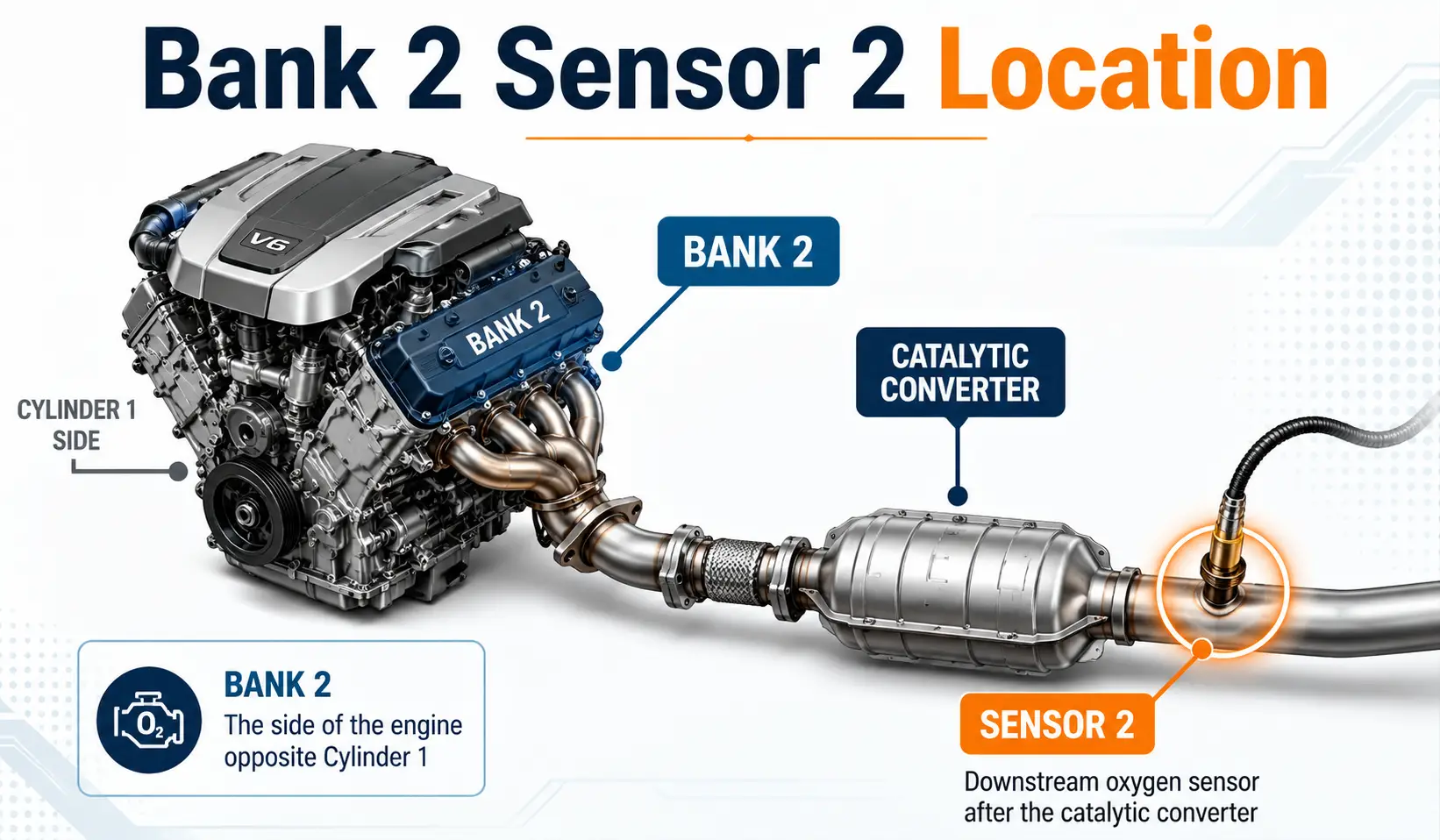
Finding the bank 2 sensor 2 location using text descriptions alone often leads to expensive mistakes. You might read that it sits opposite cylinder one and still unscrew the wrong part.
We created this visual guide to eliminate the guesswork. When dealing with an engine code like P0430, replacing the correct downstream oxygen sensor is the only way to clear the light.
We will use annotated diagrams to map your specific engine layout. Then, we will trace the exhaust system down to the exact catalytic converter connection. You will see exactly what to look for underneath your vehicle.
How To Find Bank 2 On Your Specific Engine Block

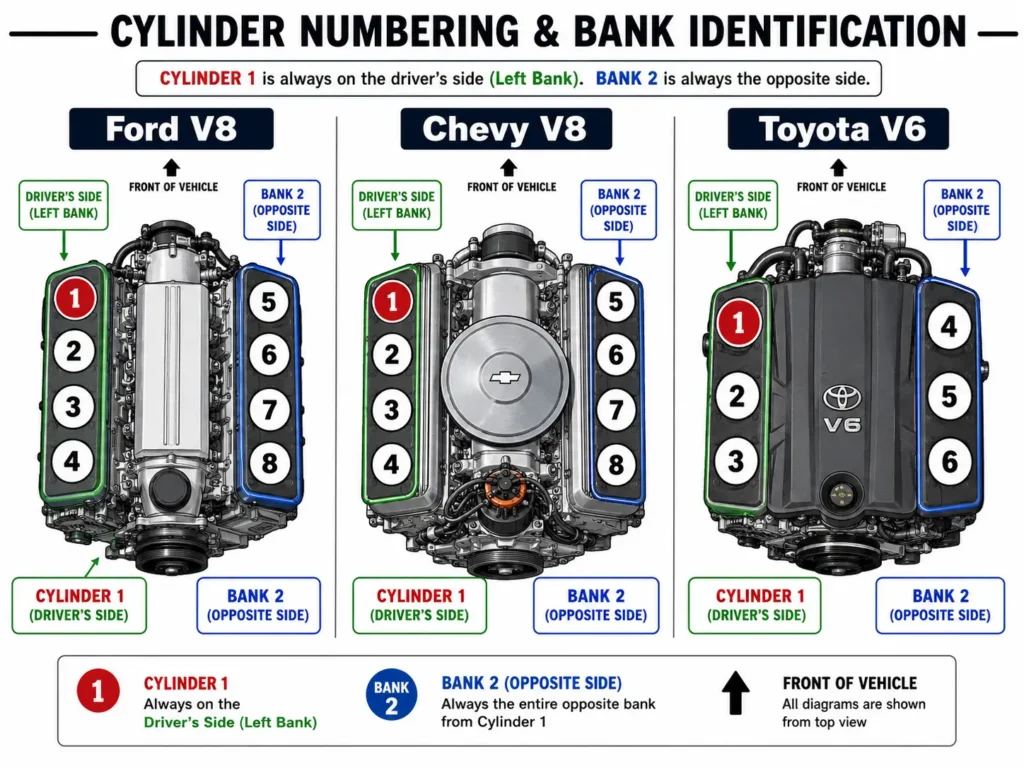
As shown in the engine layout diagrams above, you must locate cylinder one first. Bank 2 is always the entire side of the engine that does not contain cylinder one.
Manufacturers place cylinder one in different spots. Notice the highlighted areas in the diagram comparing three common configurations.
- Ford V8 engines: Cylinder one sits on the passenger side front. Bank 2 is the entire driver side.
- Chevy V8 engines: Cylinder one sits on the driver side front. Bank 2 is the entire passenger side.
- Toyota V6 engines: Cylinder one sits on the passenger side rear closest to the firewall. Bank 2 is the driver side front.
Once you identify the correct side of the engine, you need to follow the exhaust downward.
Where Does Sensor 2 Sit On The Exhaust Pipe
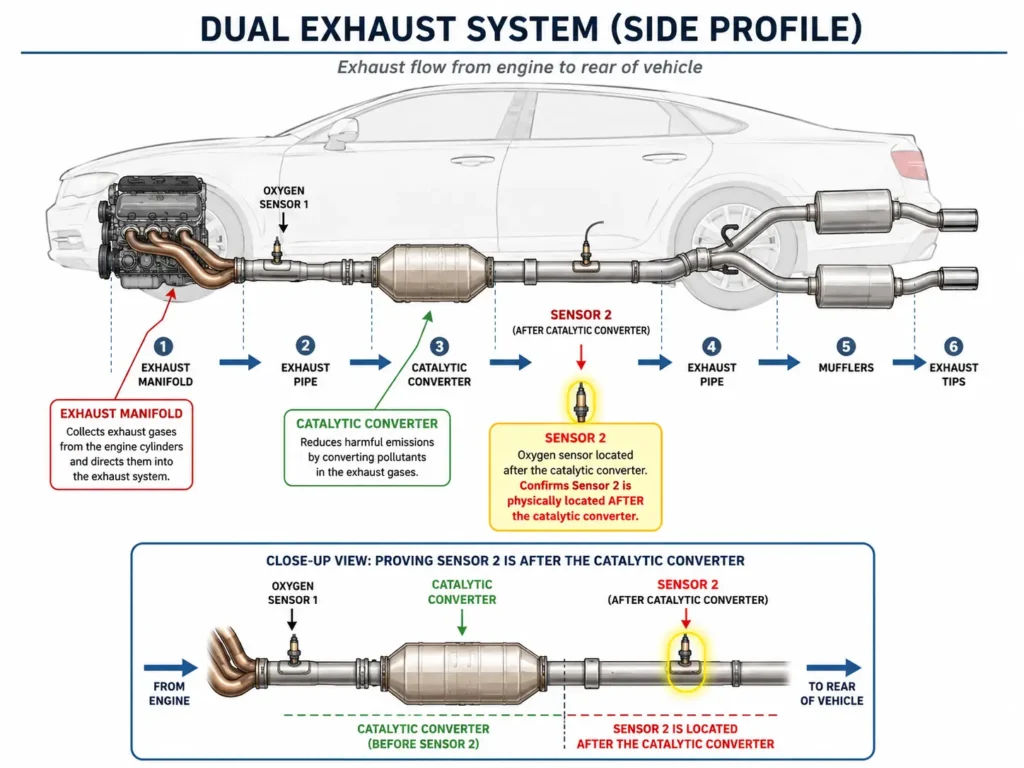
Looking at the side-profile diagram below, you can see how the exhaust pipes route under the vehicle. The “Sensor 2” designation simply means the downstream oxygen sensor.
Notice the annotation marking the large bulge of the catalytic converter. Sensor 2 sits completely past this component. Its job is to measure the exhaust gases after the converter scrubs them.
If you grab a sensor located before the converter, you are touching Sensor 1. To ensure you are looking at the right part, let us trace the entire path.
Tracing Exhaust Flow From Manifold To Tailpipe
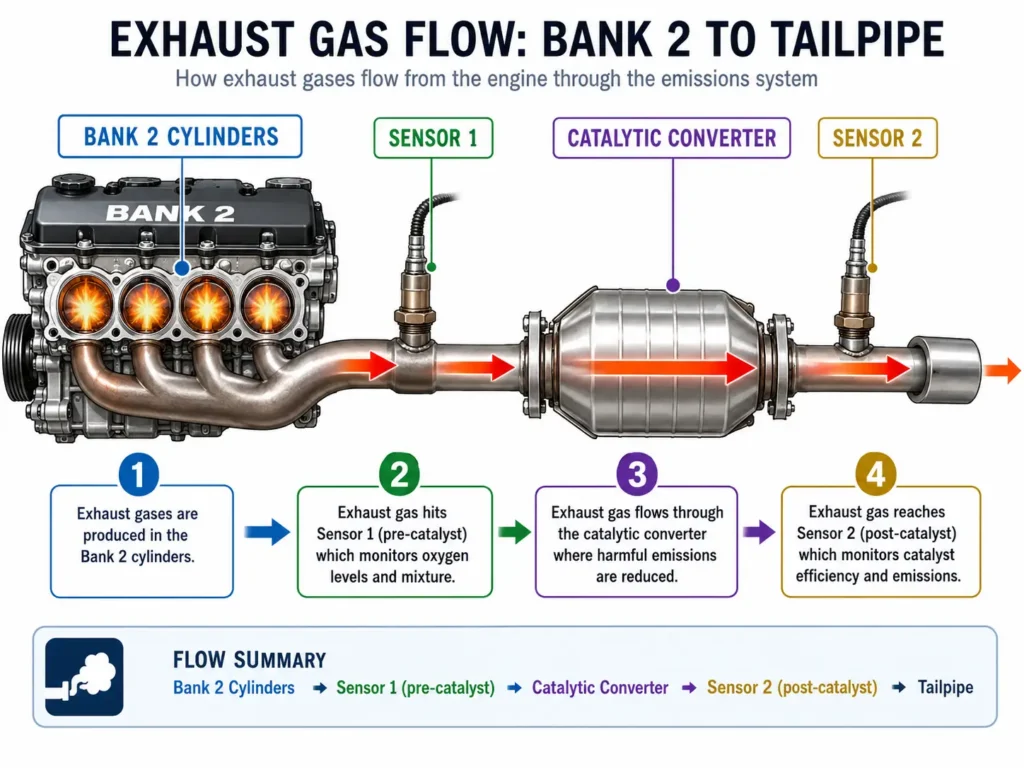
Follow the numbered path in our exhaust flow chart above. Understanding this physical sequence ensures you never replace the wrong oxygen sensor.
- Exhaust Manifold: Gas exits the Bank 2 side of your engine block here.
- Sensor 1 (Upstream): The gas immediately hits the first oxygen sensor.
- Catalytic Converter: The exhaust flows into the catalytic converter for emissions reduction.
- Sensor 2 (Downstream): The cleaned gas passes the second oxygen sensor before heading to the muffler.
This flow makes it easy to spot the physical differences between the sensors themselves.
Upstream Versus Downstream Oxygen Sensor Differences
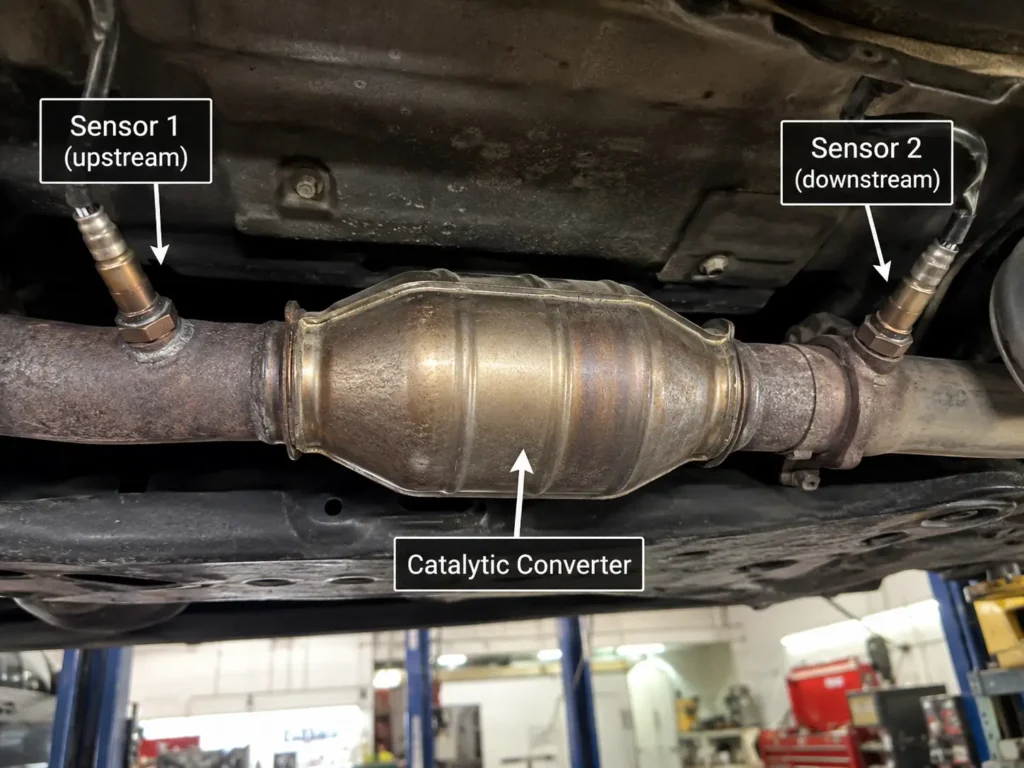
Notice the highlighted areas comparing the two oxygen sensors in the image above. They look nearly identical in shape, but their placement dictates their job.
The upstream sensor measures unburned fuel right out of the engine. The downstream sensor monitors the health of the catalytic converter itself.
You will usually find the upstream sensor tucked tightly against the engine block or upper firewall. The downstream sensor sits much lower, often directly under the floorboards.
Getting under the vehicle gives you a much closer look at this connection.
Close Up Look At The Catalytic Converter Connection
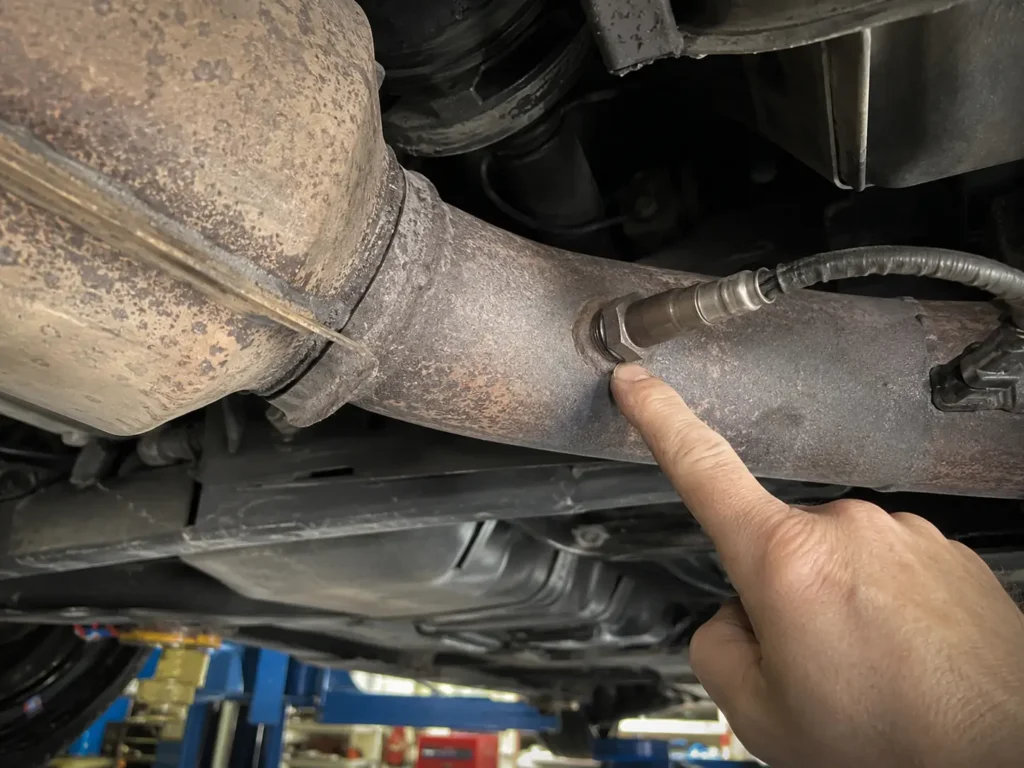
Pay attention to the close-up photo showing the sensor threaded into the pipe. This is what you will actually see while lying on your back under the car.
1. Manifold
Exhaust exits Bank 2 engine cylinders.
2. Sensor 1
Upstream oxygen sensor reads unburned fuel.
3. Catalytic Converter
Scrubbing and emissions reduction occurs.
4. Sensor 2
Downstream sensor monitors converter health.
The sensor screws directly into a bung welded onto the exhaust piping. You can see the wire harness trailing off and connecting to the main vehicle wiring harness clipped to the chassis.
These sensors face extreme heat and road salt. You will likely need penetrating fluid and a dedicated oxygen sensor removal socket to break it loose safely.
Even with these visuals, a few common queries pop up during replacement.
Five Common Questions About Downstream Sensors
Will a bad Bank 2 Sensor 2 cause poor gas mileage?
No. The downstream sensor monitors catalytic converter health. It does not adjust your engine air-fuel ratio, so your fuel economy remains completely unaffected.
What does code P0430 mean?
This specific code means Catalyst System Efficiency Below Threshold on Bank 2. It triggers when Sensor 2 detects that the catalytic converter is not filtering emissions properly.
Do I need a special tool to remove it?
Yes. A slotted oxygen sensor socket allows you to slide the tool over the wire harness. A standard deep socket will crush the wires and potentially strip the sensor hex.
Can I clean it instead of replacing it?
No. Oxygen sensors degrade internally over time. Spraying them with carb cleaner or wire brushing the tip will not restore their internal measuring capabilities.
Is it safe to drive with this sensor unplugged?
You can drive the vehicle safely, but your check engine light will remain illuminated. You will automatically fail any state emissions inspection until you plug in a working sensor.
Conclusion
Finding the bank 2 sensor 2 location is straightforward when you rely on visual diagrams rather than confusing text descriptions. You must match your engine block layout to find the correct side, then trace the exhaust pipe past the catalytic converter.
Once you identify the correct sensor, spray the threads with penetrating fluid and let it soak overnight.
Make sure you purchase a dedicated slotted socket before attempting the removal. This simple step prevents stripped threads and broken wires, saving you hours of frustration under the car.