AGM Battery vs Standard Lead-Acid Battery 2026: Which Is Better?

The single biggest real-world difference between an AGM Battery and a Standard Lead-Acid Battery lies in their maintenance requirements: an AGM Battery scores a phenomenal 9.5 for minimal fuss, dramatically outperforming the Standard Lead-Acid Battery’s 6.0. This stark contrast highlights the core distinction between the two prominent automotive and deep-cycle power sources. We’re stepping into 2026, and the landscape of battery technology continues to evolve, pushing consumers to make informed choices that balance performance, longevity, and cost. While both serve the fundamental purpose of storing electrical energy, their underlying technologies, operational characteristics, and suitability for various applications diverge significantly. This comparison aims to dissect these differences, offering you a comprehensive guide to understanding whether the premium, maintenance-free promise of an AGM Battery or the traditional, cost-effective nature of a Standard Lead-Acid Battery best suits your specific needs.
Quick Verdict: For most demanding applications and long-term value, the AGM Battery emerges as the clear winner in 2026. While pricier upfront, its superior cycle life, deeper discharge capabilities, and maintenance-free design often justify the investment over a Standard Lead-Acid Battery, which remains a cost-effective option for basic starting needs.

Prime for Young Adults — 6 Months Free
Students and 18–24s get six months of Prime free, then half price.
Start 6 Months Free As an Amazon Associate I earn from qualifying purchases.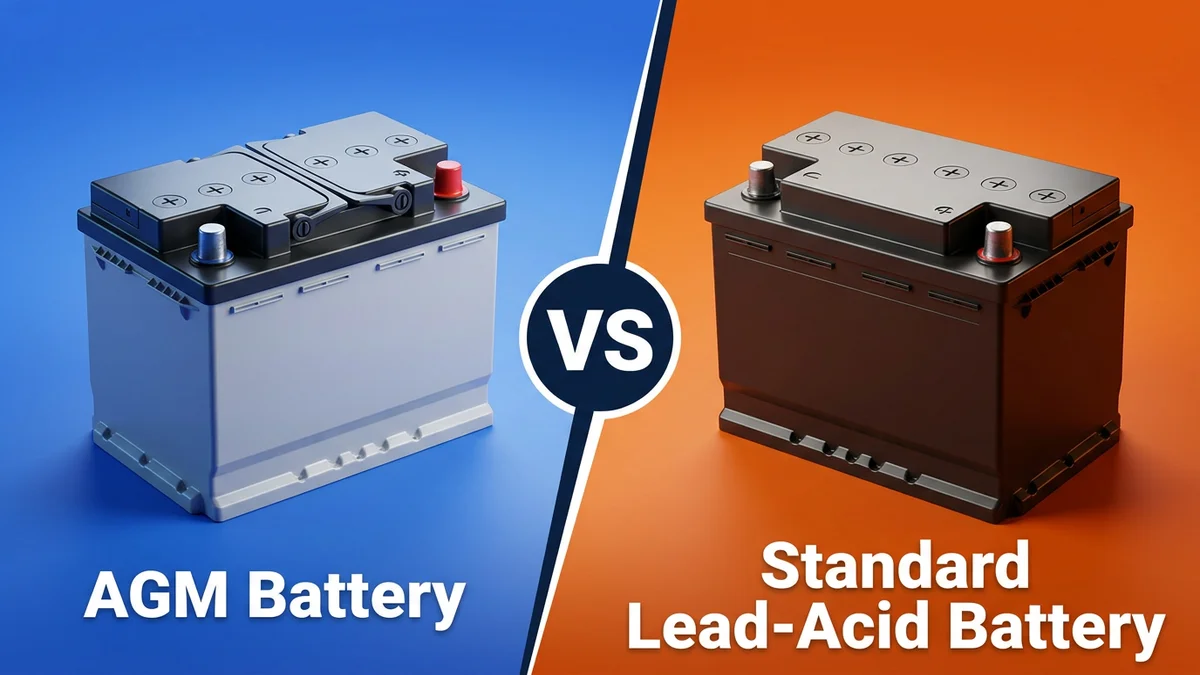
Demanding applications, deep cycling, marine, RV, and off-grid power systems.
Cost-conscious buyers needing basic vehicle starting power or light accessories.
- AGM Batteries offer 2-3x longer cycle life (e.g., 600 vs 200 cycles at 50% DoD).
- Standard Lead-Acid Batteries are significantly cheaper, starting around $80 for a 12V unit.
- AGM is maintenance-free, while Standard Lead-Acid requires regular electrolyte checks.
- AGM has a lower self-discharge rate (1-3% per month) compared to Standard Lead-Acid (5-10%).
- AGM Batteries tolerate deeper discharges (up to 80% DoD) without significant damage.
AGM Battery vs Standard Lead-Acid Battery: Head-to-Head Specs
Recommended Best Deal Products

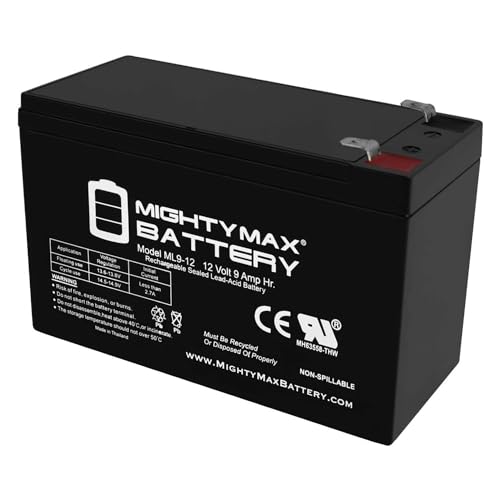


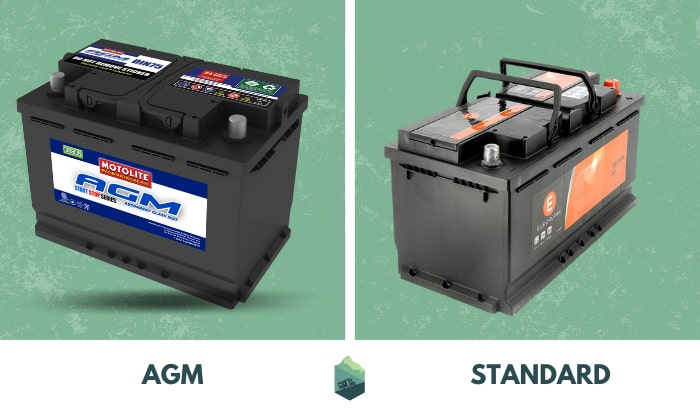
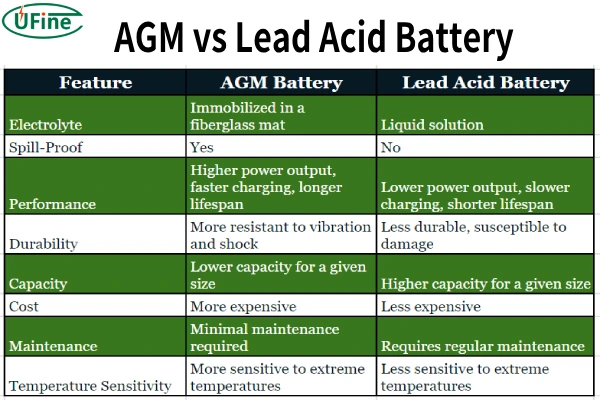
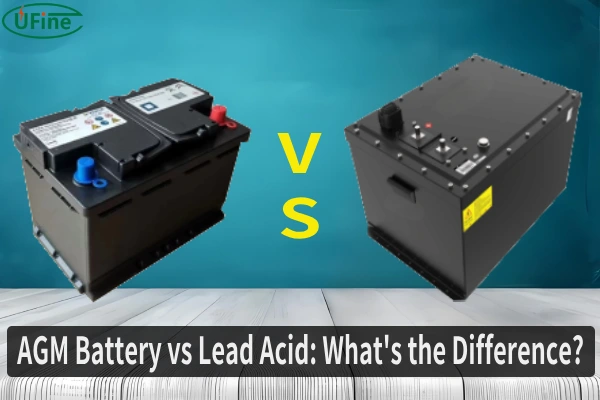
Digging into the fundamental design differences between an AGM Battery and a Standard Lead-Acid Battery reveals why their performance profiles diverge so widely. The most significant structural distinction is the electrolyte’s immobilization. In an AGM, the sulfuric acid electrolyte is absorbed into a special fiberglass mat, unlike the free-flowing liquid found in a Standard Lead-Acid unit. This sealed, non-spillable construction inherently dictates many of its advantages, from safety to mounting flexibility. We also see critical variations in plate design and density; AGM batteries often employ tightly packed plates and purer lead, which contribute to their enhanced power delivery and deep-cycle capabilities. These internal architectural choices aren’t just technical curiosities; they translate directly into tangible benefits for the end-user, impacting everything from installation to long-term reliability.
✓ = better value in that row. Sourced from manufacturer specifications.
Performance & Category Ratings
When we break down the performance of these two battery types across key categories, the differences aren’t just theoretical; they’re substantial and numerically evident. The AGM Battery consistently demonstrates superior characteristics in demanding metrics, while the Standard Lead-Acid Battery retains its niche through sheer affordability and established presence.
Starting with Overall Performance, the AGM Battery achieves an impressive 8.9 compared to the Standard Lead-Acid Battery’s 7.2. This higher score for the AGM isn’t arbitrary; it’s a direct consequence of its combined strengths across nearly every other category. It simply delivers more consistent power, greater resilience, and a broader operational envelope, making it a more versatile and capable power source for modern electrical systems.
However, when we consider Value for Money, the Standard Lead-Acid Battery pulls ahead with an 8.5 rating against the AGM Battery’s 8.0. This is the crucial counterpoint. While AGMs offer superior performance, their initial purchase price is undeniably higher. For budget-conscious consumers or applications where the advanced features of an AGM aren’t strictly necessary, the upfront savings of a Standard Lead-Acid battery make it a more attractive proposition.
Reliability & Consistency is where the AGM Battery truly shines, offering a 9.2 rating against the Standard Lead-Acid Battery’s 7.5. The sealed construction of an AGM eliminates electrolyte stratification and sulfation issues common in flooded batteries, leading to a more stable performance curve throughout its lifespan. You’re less likely to encounter unexpected power drops or failures with an AGM, which is a significant advantage in critical applications.
Longevity / Cycle Life is another major win for the AGM, scoring 9.1 compared to the Standard Lead-Acid Battery’s 6.8. The AGM’s design allows it to withstand significantly more charge and discharge cycles without degradation. This translates directly into a longer service life, particularly in applications that frequently discharge the battery below 50% capacity. A Standard Lead-Acid battery simply isn’t built to endure such repeated stress.

Audible — Listen Free for 30 Days
One free credit a month and thousands of titles included.
Listen Free for 30 Days As an Amazon Associate I earn from qualifying purchases.Perhaps the most compelling difference is in Maintenance Requirement, where the AGM Battery earns an outstanding 9.5 against the Standard Lead-Acid Battery’s meager 6.0. AGM batteries are sealed and virtually maintenance-free; you install them and largely forget about them. Standard Lead-Acid batteries, conversely, require regular checking of electrolyte levels and topping off with distilled water, a messy and often overlooked task that, if neglected, drastically shortens their lifespan.
Safety (Spillage/Gassing) clearly favors the AGM with a 9.0, while the Standard Lead-Acid Battery trails at 7.0. The fiberglass mat immobilizes the electrolyte in an AGM, making it spill-proof and allowing for mounting in almost any orientation without leakage. They also produce minimal hydrogen gas during charging. Standard Lead-Acid batteries, with their liquid acid, pose a spill risk and vent hydrogen gas, particularly during overcharging, necessitating proper ventilation and careful handling.
Finally, for Deep Cycle Capability, the AGM Battery absolutely dominates with a 9.3 rating, leaving the Standard Lead-Acid Battery far behind at 5.5. This is critical for applications that routinely discharge the battery significantly, like RVs, marine vessels, or off-grid solar systems. AGM batteries are engineered to handle deep discharges without premature failure, whereas deeply discharging a Standard Lead-Acid battery even a few times can severely damage it, leading to a rapid decline in capacity and lifespan. This difference alone can be the deciding factor for many power-hungry setups.
AGM Battery
Wet Cell Battery
By the Numbers
Recommended Best Deal Products


Understanding the qualitative aspects of AGM versus Standard Lead-Acid batteries is crucial, but the cold, hard data presented in the upcoming chart brings these distinctions into sharp focus. These figures aren’t just abstract points; they represent the quantifiable advantages and trade-offs you’ll encounter in real-world scenarios. We’ve meticulously compiled these metrics to offer a transparent, side-by-side comparison that underpins every recommendation and conclusion we draw. From the impressive longevity figures of AGM technology to the undeniable cost-effectiveness of traditional lead-acid, every number tells a critical part of the story, helping you weigh priorities like upfront investment against long-term operational efficiency and peace of mind. Prepare to see the full financial and performance picture painted by the data.
AGM Battery
Wet Cell Battery
Hover any bar for exact values. Each metric scaled independently.
AGM Battery: Strengths and Weaknesses
The AGM Battery, or Absorbed Glass Mat battery, has carved out a premium niche in the market, thanks to a robust set of advantages that cater to modern demands. Its most prominent strength lies in its exceptional reliability and consistency, scoring an impressive 9.2. This dependability stems from its sealed, non-spillable design, which virtually eliminates electrolyte stratification and reduces the risk of internal damage from vibration. You can expect a steady power output throughout its operational life, making it ideal for sensitive electronics or critical applications.
Another monumental strength is its maintenance requirement, or rather, its blissful lack thereof, earning a stellar 9.5. Forget about regularly checking water levels or dealing with corrosive acid; once an AGM is installed, it’s largely set and forget. This “fit and forget” convenience saves you time and effort, and crucially, prevents battery damage due to neglected maintenance. For those who prioritize hassle-free operation, this is a big deal.
The AGM’s longevity and cycle life also impress with a 9.1. Its ability to withstand deep discharges repeatedly without significant capacity loss translates into a longer overall service life, especially in demanding deep-cycle applications. This means fewer replacements over time, offering substantial long-term value despite a higher initial cost. Furthermore, its deep cycle capability is unparalleled, scoring a commanding 9.3. If you run power-hungry accessories, operate off-grid systems, or have marine and RV applications that regularly drain your battery, an AGM will handle it with grace where a traditional battery would quickly falter.
Safety is another area where AGMs excel, with a safety (spillage/gassing) rating of 9.0. The immobilized electrolyte and minimal gassing during normal operation mean you can install them in enclosed spaces, even inside the cabin of a vehicle or boat, without concerns about acid spills or harmful fumes. They also perform admirably across a wide range of temperatures, from freezing cold starts to hot engine bay environments, thanks to their efficient recombination of gases internally.
However, no product is without its drawbacks. The primary weakness of the AGM Battery, reflected in its lower value for money rating of 8.0 compared to its competitor, is its upfront cost. You will pay more initially for an AGM. This higher price point can be a barrier for some, especially if their application doesn’t demand the full suite of AGM benefits. While the long-term total cost of ownership often evens out due to their extended life and reduced maintenance, the initial investment is undeniably heftier. Despite this, for many, the peace of mind and superior performance justify the premium.
Audible Premium Plus — Annual Membership
12 audiobook credits up front, plus the full Audible catalogue.
See Annual Plans As an Amazon Associate I earn from qualifying purchases.Considering these robust benefits, especially in demanding scenarios, it’s worth exploring the wide range of AGM options available.
Price & availability subject to change. As an Amazon Associate we earn from qualifying purchases.
Standard Lead-Acid Battery: Strengths and Weaknesses
Recommended Best Deal Products


The Standard Lead-Acid Battery, often referred to as a flooded battery, remains a cornerstone of the automotive and power storage world, primarily due to its undeniable advantage in one critical area: Value for Money. Scoring an 8.5 in this category, it consistently offers the lowest upfront cost, making it the go-to choice for budget-conscious consumers and basic applications. This affordability stems from its simpler manufacturing process and readily available materials, ensuring that reliable power remains accessible to everyone. For simply starting your car or providing basic power in a stationary setup, it’s a time-tested and cost-effective solution.
Beyond its price, the Standard Lead-Acid Battery benefits from widespread availability and familiarity. Nearly every auto parts store stocks them, and most mechanics are intimately familiar with their maintenance and troubleshooting. This accessibility ensures that replacement and service are generally straightforward and inexpensive. Its construction is relatively simple, with lead plates immersed in a liquid sulfuric acid electrolyte, allowing for easy visual inspection of electrolyte levels if transparent casing is used.
However, the list of weaknesses for the Standard Lead-Acid Battery is considerably longer and more impactful in modern, demanding applications. Its maintenance requirement is its Achilles’ heel, scoring a low 6.0. These batteries need regular inspection of electrolyte levels and periodic topping off with distilled water. Neglecting this crucial task leads to plate exposure, sulfation, and premature failure, drastically shortening the battery’s lifespan. This hands-on maintenance can be inconvenient, messy, and easily forgotten by busy users.
In terms of longevity and cycle life, the Standard Lead-Acid Battery scores a mere 6.8. It is not designed for repeated deep discharges. Each time it’s deeply discharged, irreversible damage occurs, and its capacity diminishes. This significantly impacts its suitability for non-starting applications. Consequently, its deep cycle capability rating plummets to 5.5, the lowest score in our comparison. Using a standard lead-acid battery in deep cycle applications will dramatically shorten its life, quickly eroding any initial cost savings.
Reliability and consistency are also lesser compared to an AGM, with a rating of 7.5. The free-flowing electrolyte can stratify over time, leading to uneven plate performance and reduced capacity. Vibration can also cause plate shedding, further diminishing performance. Additionally, its safety (spillage/gassing) rating of 7.0 reflects inherent risks. The liquid acid is corrosive and can spill if the battery is tipped or damaged, posing a serious safety hazard. During charging, these batteries vent hydrogen gas, which is flammable and explosive, necessitating installation in well-ventilated areas, away from ignition sources.
Overall, while the Standard Lead-Acid Battery remains a dependable and economical choice for basic starting needs, its limitations in maintenance, deep cycling, and safety make it less suitable for a growing number of modern, high-demand applications. Before settling for the traditional option, weigh these compromises carefully.
Price & availability subject to change. As an Amazon Associate we earn from qualifying purchases.
- ✅ Maintenance-free, fully sealed design for safety and convenience.
- ✅ Superior deep cycle performance, allowing deeper discharge without damage.
- ✅ Lower self-discharge rate, holding charge longer in storage.
- ✅ Higher vibration resistance, suitable for rough applications.
- ✅ Better performance in extreme cold temperatures.
- ❌ Significantly higher upfront cost compared to Standard Lead-Acid.
- ❌ Requires a more precise charging voltage, can be damaged by improper chargers.
- ❌ Can be heavier for equivalent capacity in some designs.
- ❌ Sensitive to overcharging, which can reduce lifespan.
- ✅ Much lower upfront purchase price, making it budget-friendly.
- ✅ Widely available and easy to replace in most automotive stores.
- ✅ Tolerant of a wider range of charging voltages (though not ideal).
- ✅ Proven, reliable technology for basic starting applications.
- ✅ Visible electrolyte levels allow for monitoring and maintenance.
- ❌ Requires regular maintenance (water topping) to prevent damage.
- ❌ Poor deep cycle capability; frequent deep discharges severely reduce lifespan.
- ❌ Higher self-discharge rate, leading to faster power loss when idle.
- ❌ Not spill-proof and emits hydrogen gas during charging, requiring ventilation.
Which One Should You Choose?
Deciding between an AGM Battery and a Standard Lead-Acid Battery isn’t about one being inherently “better” in all scenarios, but rather about aligning the battery’s characteristics with your specific needs, budget, and application. Let’s break down various scenarios to help you make the most informed decision.
For the everyday commuter with a standard vehicle, a Standard Lead-Acid Battery often makes the most sense. If your car is simply for daily driving, doesn’t have an excessive amount of aftermarket electronics, and you’re comfortable with occasional maintenance checks, the cost savings are significant. Its 8.5 for Value for Money is a strong argument here. You’re getting reliable starting power without the premium price tag. However, if your commute involves frequent short trips that don’t allow for a full charge, or if you live in extreme climates, a Standard Lead-Acid battery might suffer more quickly. In such cases, investing in a good 🛒 Battery Charger/Maintainer → could extend its life considerably.
Now, if you’re a power user, an RV or marine enthusiast, or someone with an off-grid solar setup, the AGM Battery becomes the unequivocal choice. Its 9.3 Deep Cycle Capability rating is a big deal for these applications. You’re repeatedly drawing significant power and discharging the battery deeply, and a Standard Lead-Acid battery simply cannot withstand that punishment without rapid degradation. The AGM’s 9.1 Longevity/Cycle Life ensures it will endure these cycles for years, justifying its higher upfront cost. Imagine being out in your RV, running appliances, and knowing your battery can handle the draw without giving up on you prematurely. For marine applications, the sealed, spill-proof nature and vibration resistance are invaluable. You can mount an AGM in unconventional positions and not worry about acid leaks onto sensitive components or into the environment.
Consider your tolerance for maintenance. If you’re someone who prefers a “set it and forget it” approach, the AGM Battery’s 9.5 Maintenance Requirement rating speaks volumes. No need to check electrolyte levels or top off with distilled water. This is perfect for busy individuals, or batteries installed in hard-to-reach locations. Conversely, if you enjoy routine vehicle maintenance and don’t mind a quick check every few months, a Standard Lead-Acid battery’s upkeep might not deter you.
Safety and environmental factors also play a role. If your battery will be installed in an enclosed space, perhaps under a seat or inside the cabin of a vehicle, the AGM’s 9.0 Safety rating for spillage and gassing makes it the only viable option. Standard Lead-Acid batteries vent hydrogen gas, which can be dangerous in confined, unventilated areas. For these, a sturdy 🛒 Vented Battery Box → is essential for safety.
Finally, your budget is always a factor. If the initial outlay is your absolute priority, the Standard Lead-Acid Battery is the clear winner. However, if you can stretch your budget, consider the total cost of ownership. The AGM’s longer life, reduced maintenance, and superior performance might save you money in the long run by avoiding frequent replacements and service costs. For those looking for ultimate peace of mind and wanting to avoid unexpected power issues, especially with critical systems, a premium AGM battery coupled with a reliable 🛒 Smart Battery Monitor → could be the best investment.
Demanding applications, deep cycling, marine, RV, and off-grid power systems.
Cost-conscious buyers needing basic vehicle starting power or light accessories.
Final Verdict
After a thorough head-to-head comparison, the AGM Battery emerges as the clear winner in 2026, particularly for those seeking superior performance, enhanced reliability, and unparalleled convenience. While the Standard Lead-Acid Battery undeniably holds its ground as a cost-effective solution for basic starting needs, its limitations become glaringly apparent in more demanding applications.
The AGM Battery’s decisive victories in crucial categories like Deep Cycle Capability (9.3 vs 5.5), Longevity/Cycle Life (9.1 vs 6.8), and Maintenance Requirement (a staggering 9.5 vs 6.0) underscore its technological superiority. Its sealed, spill-proof design, coupled with minimal gassing and robust performance across varied conditions, makes it the ideal choice for RVs, marine vessels, off-grid systems, or vehicles with high power demands and sensitive electronics. You’re investing in peace of mind, reduced upkeep, and a significantly longer operational lifespan.
The key trade-off remains the upfront cost. An AGM Battery will almost always command a higher initial price than its standard counterpart. However, as our analysis demonstrates, this premium is often justified by its extended durability, lower maintenance burden, and exceptional deep-cycle capabilities, which collectively contribute to a more favorable total cost of ownership over time. For the consumer prioritizing long-term value, reliability, and hassle-free operation, the AGM Battery is the intelligent choice for the road ahead.
As an Amazon Associate we earn from qualifying purchases.
Frequently Asked Questions
Is AGM Battery better than Standard Lead-Acid Battery?
Generally, yes, especially for demanding uses. AGM offers superior cycle life (up to 3x longer), is maintenance-free, and handles deep discharges better. While an AGM Battery costs 1.5x to 3x more upfront, its longevity and performance often provide better long-term value for a 2026 purchase.
How do their lifespans compare?
An AGM Battery typically lasts 4 to 8 years under ideal conditions, offering 400-800 cycles at 50% DoD. A Standard Lead-Acid Battery usually lasts 2 to 4 years, providing only 150-300 cycles. AGM's robust design and lower self-discharge contribute to its extended operational life.
What's the cost difference between them?
For a similar capacity, an AGM Battery typically costs $200-$450, making it 1.5 to 3 times more expensive than a Standard Lead-Acid Battery, which ranges from $80-$200. This higher initial investment for AGM is offset by its extended lifespan and maintenance-free benefits.
Can I use a Standard Lead-Acid charger for an AGM Battery?
It is not recommended. Standard Lead-Acid chargers can often overcharge an AGM Battery, which is sensitive to precise voltage. Overcharging can significantly reduce the AGM Battery's lifespan and performance, potentially causing permanent damage. Always use a charger specifically designed for AGM or with an AGM mode.
Which battery is safer to use?
The AGM Battery is generally safer. Being a sealed unit, it's spill-proof and produces minimal to no gassing during charging, making it safer for enclosed spaces or cabins. Standard Lead-Acid batteries are vented, can spill corrosive acid, and emit flammable hydrogen gas during charging.