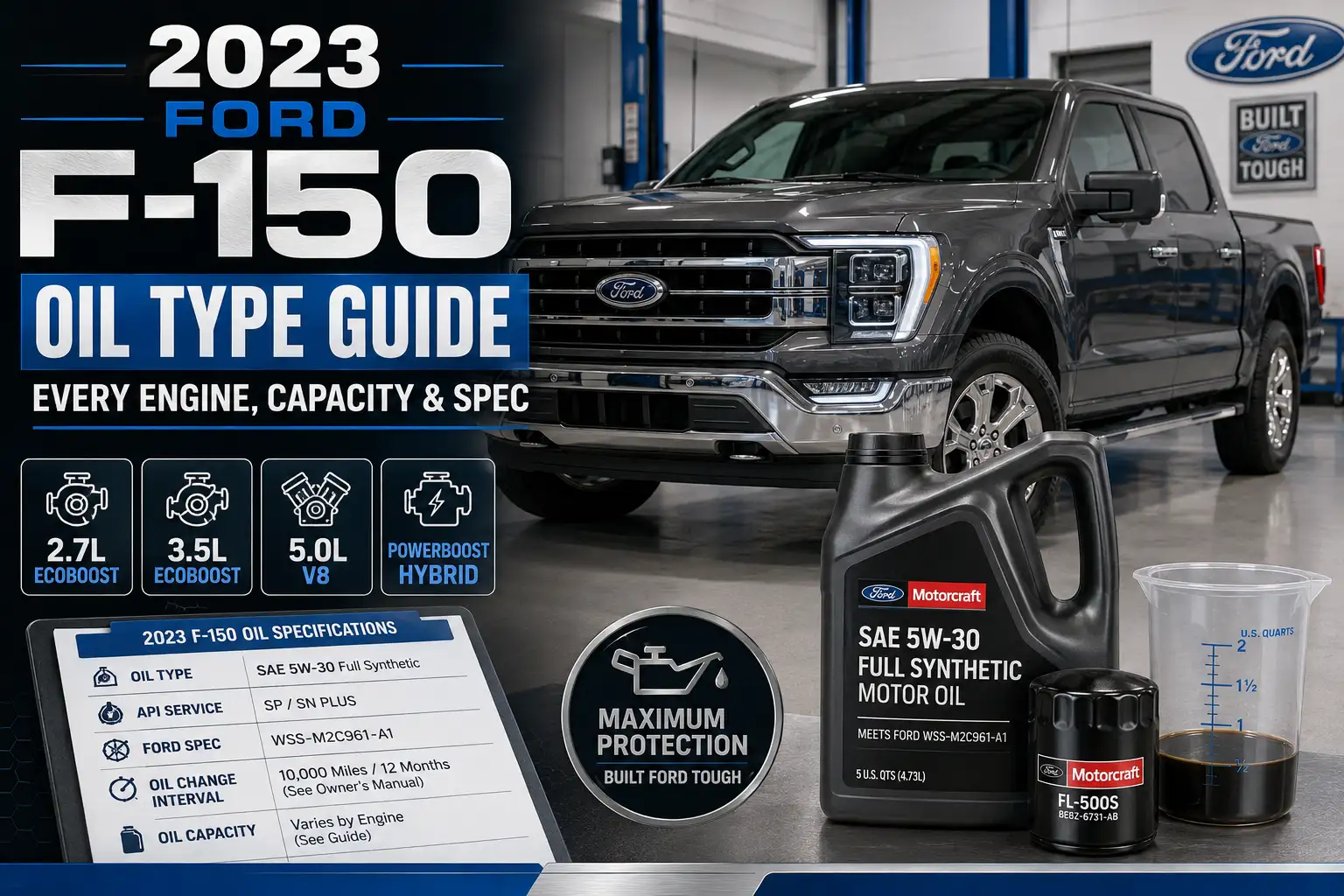
2023 Ford F-150 Oil Type Guide: Every Engine, Capacity & Spec

If you own a 2023 F-150, your trim level does not tell you what oil your truck needs. The 2023 lineup ships with six distinct engine options, and Ford spreads them across trims in ways that overlap. A 2023 Lariat can carry the 3.5L EcoBoost, the 3.5L PowerBoost hybrid, or the 5.0L V8, depending on how it was ordered.
That means “what oil does a 2023 F-150 Lariat take” does not have one answer. “What oil does my 3.5L EcoBoost take” does.

Prime for Young Adults — 6 Months Free
Students and 18–24s get six months of Prime free, then half price.
Start 6 Months Free As an Amazon Associate I earn from qualifying purchases.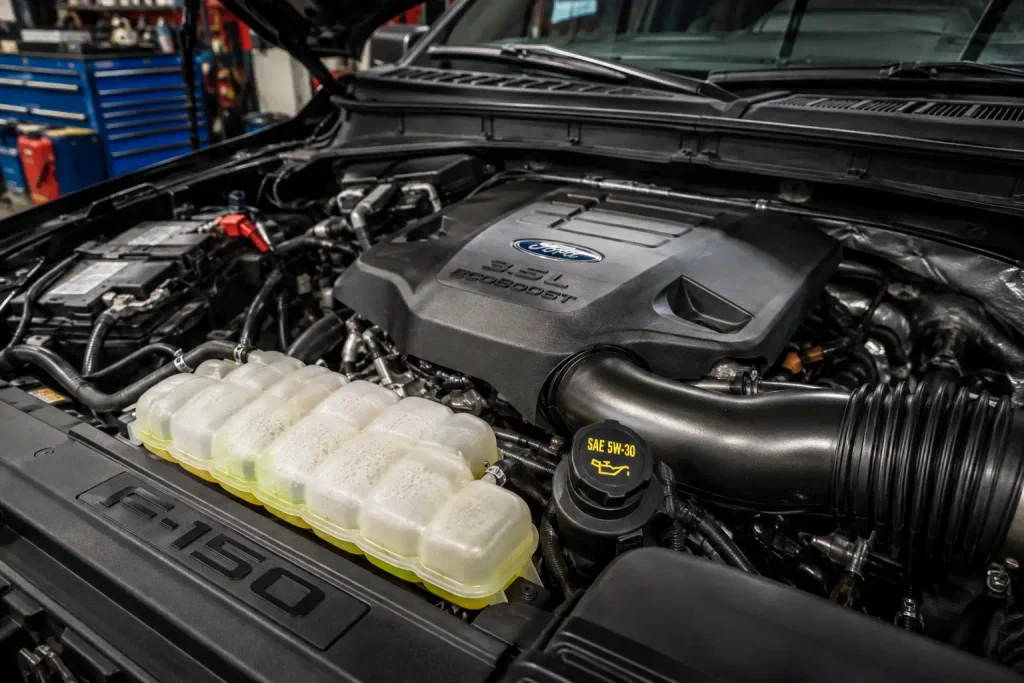
Below is the full breakdown by engine, not by trim, so you can find your truck’s exact requirement in one pass. For a broader look at how Ford’s oil specifications work across its full lineup, see our Ford engine oil recommendation chart.
2023 Ford F-150 Oil Guide by Engine
Viscosity, capacity, Ford spec, and OEM filter for all six engine options
3.3L Ti-VCT V6 (base)
2.7L EcoBoost V6
5.0L Coyote V8
3.5L EcoBoost V6
3.5L PowerBoost Hybrid V6
5.2L Supercharged V8 (Raptor R)

Audible — Listen Free for 30 Days
One free credit a month and thousands of titles included.
Listen Free for 30 Days As an Amazon Associate I earn from qualifying purchases.Which Engine Do You Have?
Recommended Best Deal Products


Before using the chart, confirm your engine. The fastest way is the driver’s door jamb sticker, which lists the engine on the vehicle certification label, or your owner’s manual, which lists it by VIN. We cover the exact method further down this guide if you are not sure.
2023 F-150 Oil Type and Capacity Chart (All 6 Engines)
| Engine | Trim Availability | Oil Viscosity | Ford Spec | Capacity (w/ filter) | OEM Filter |
|---|---|---|---|---|---|
| 3.3L Ti-VCT V6 (base) | XL, XLT | 5W-20 full synthetic blend | WSS-M2C945-B1 | 6.5 qt | 3.3L filter part number |
| 2.7L EcoBoost V6 | XL through Limited | 5W-30 full synthetic | WSS-M2C946-B1 | 7.0 qt | Motorcraft FL-500-S |
| 5.0L Coyote V8 | XL through Platinum, King Ranch | 5W-20 full synthetic | WSS-M2C945-B1 | 7.7 qt | Motorcraft FL-500-S |
| 3.5L EcoBoost V6 | Lariat, King Ranch, Platinum, Raptor | 5W-30 full synthetic | WSS-M2C946-B1 | 7.7 qt | Motorcraft FL-500-S |
| 3.5L PowerBoost Full Hybrid V6 | XLT through Platinum, King Ranch | 5W-30 full synthetic | WSS-M2C946-B1 | 7.7 qt | Motorcraft FL-500-S |
| 5.2L Supercharged V8 “Predator” (Raptor R only) | Raptor R | 5W-50 full synthetic | Approx. 10 to 12 qt (kit- | Motorcraft FL-500-S |
Always confirm against your own dipstick cap or door jamb sticker before an oil change. Ford occasionally revises specs mid-production run, and the printed label on your specific truck overrides any published chart, including this one.
3.3L V6: The Base Engine’s Oil Requirement
Recommended Best Deal Products


The 3.3L Ti-VCT V6 is the entry engine on 2023 F-150 XL and XLT trims. It takes 5W-20 full synthetic blend oil meeting Ford’s WSS-M2C945-B1 spec, at a 6.5-quart fill with filter. This is the lowest-volume engine in the lineup by sales share,
and it is also the one with the least aftermarket documentation, so stick to Motorcraft-branded oil or a filter and oil combination explicitly rated for WSS-M2C945-B1 if you go aftermarket.
Change interval follows Ford’s Intelligent Oil-Life Monitor rather than a fixed mileage number. Under normal driving that typically lands between 7,500 and 10,000 miles, shorter under severe-duty conditions like towing, extended idling, or frequent short trips.
2.7L EcoBoost: Oil Type, Capacity, and Turbo-Specific Considerations
The 2.7L EcoBoost takes 5W-30 full synthetic oil at Ford’s WSS-M2C946-B1 spec, with a 7.0-quart capacity including the filter. This number is worth calling out specifically because Motorcraft’s own OEM oil change kit for this engine ships with only 6 quarts, and multiple verified buyers have reported the kit falls short of the dipstick’s full mark. Plan to buy an extra quart if you are running the factory kit.
Turbocharged engines are less forgiving of the wrong oil spec than naturally aspirated ones. The 2.7L’s turbos run hotter and see more thermal cycling, which is exactly what WSS-M2C946-B1’s higher-temperature oxidation resistance is built for. For a full breakdown of why this matters and what alternatives are safe, see our 2.7L EcoBoost oil requirements guide.
5.0L Coyote V8: Oil Type, Capacity, and Filter Spec
Recommended Best Deal Products

The 5.0L Coyote V8 takes 5W-20 full synthetic oil at Ford’s WSS-M2C945-B1 spec, with a 7.7-quart capacity including the filter. This is Ford’s naturally aspirated flagship gas engine, and the spec has stayed consistent across recent model years since the Coyote’s oil demands are less severe than a turbocharged engine’s.
The OEM filter is the Motorcraft FL-500-S, shared across several of Ford’s V6 and V8 gas engines. For a deeper look at how this figure compares across F-150 model years, see our 5.0L Coyote oil capacity breakdown.
Audible Premium Plus — Annual Membership
12 audiobook credits up front, plus the full Audible catalogue.
See Annual Plans As an Amazon Associate I earn from qualifying purchases.3.5L EcoBoost: Oil Type, Capacity, and Cam Phaser Oil Sensitivity
The 3.5L EcoBoost takes 5W-30 full synthetic oil at Ford’s WSS-M2C946-B1 spec, with a 7.7-quart capacity including the filter, using the same Motorcraft FL-500-S filter as the 5.0L and 2.7L.
This engine has a well-documented history of cam phaser and VCT (variable camshaft timing) solenoid issues on earlier model years, and oil condition plays a direct role in phaser longevity. Running the correct viscosity and staying current on change intervals is one of the few maintenance factors an owner fully controls here. For product-specific guidance, see best oil for the 3.5L EcoBoost.
3.5L PowerBoost Hybrid: Oil Type and What’s Different
The 3.5L PowerBoost full hybrid shares its core engine block with the standard 3.5L EcoBoost, and Ford specifies the same 5W-30 full synthetic oil at WSS-M2C946-B1. The published capacity figure we could source matches the standard 3.5L EcoBoost at 7.7 quarts,
but this is inferred from the shared engine architecture rather than a separately confirmed hybrid-specific figure, so treat it as a strong estimate and confirm against your own dipstick or door jamb sticker.
One consideration unique to PowerBoost owners: the engine cycles on and off far more often than a conventional gas engine due to the hybrid system’s auto start-stop behavior and electric-only operation. This does not change the oil type or capacity,
but it does mean the Intelligent Oil-Life Monitor accounts for a different duty cycle than it does on a non-hybrid truck, so do not assume your change interval will match a friend’s non-hybrid F-150 even if you drive similar mileage.
5.2L Supercharged V8 (Raptor R): Oil Type and Capacity
The Raptor R is the only 2023 F-150 trim available with the supercharged 5.2L “Predator” V8, borrowed from the Shelby GT500 and detuned slightly to 700 horsepower and 640 lb-ft of torque. This engine requires 5W-50 full synthetic oil, specifically Motorcraft XO-5W50-QGT, which is the same oil Ford specifies for the GT500, GT350, and Focus RS.
OEM Motorcraft oil change kits for the 2023 to 2025 Raptor R ship with 12 quarts of oil bundled with an FL-500-S filter, but that packaged quantity is not a confirmed statement of the exact crankcase capacity. Supercharged engines with dry-sump-adjacent oiling systems sometimes ship oil in round-number kit quantities that exceed the precise fill. Add oil gradually and check the dipstick rather than dumping the full kit in at once.
Given the sustained heat load of a supercharged engine, especially under desert running or track use, some Raptor R owners choose to shorten their change interval below what the oil-life monitor suggests. This is a judgment call based on how the truck is actually driven, not a Ford requirement.
OEM Motorcraft vs. Aftermarket: What Actually Matters
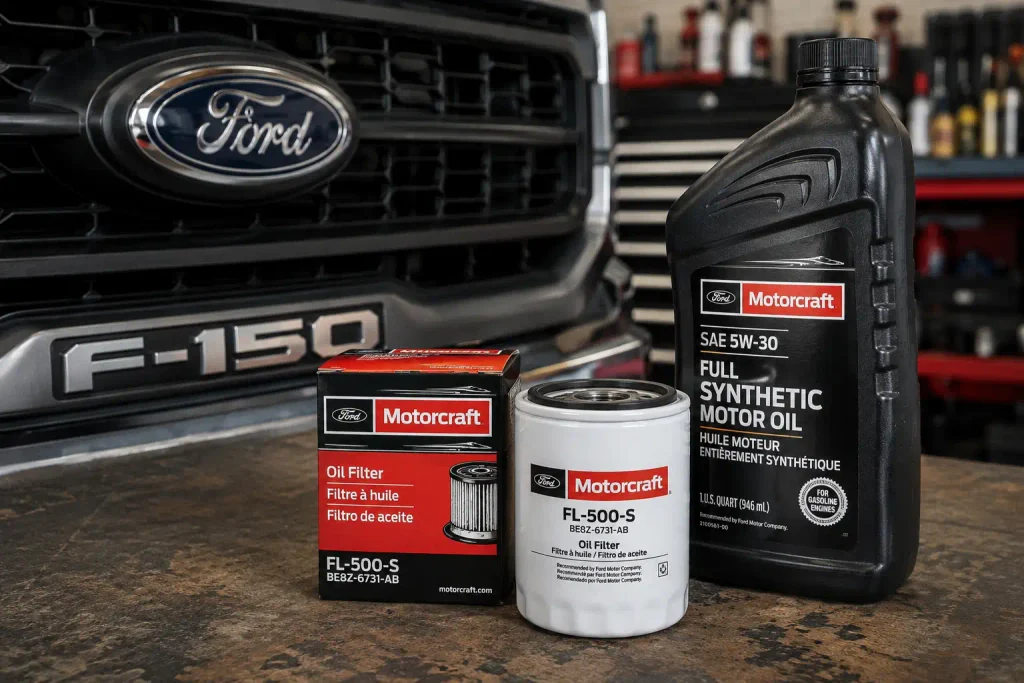
WSS-M2C946-B1 and WSS-M2C945-B1 are Ford’s own performance specifications for full synthetic engine oil, not just a viscosity number. They dictate specific requirements around oxidation resistance, low-speed pre-ignition (LSPI) protection for turbocharged engines, and deposit control that a generic 5W-30 or 5W-20 bottle may not meet.
Several major aftermarket brands, including Mobil 1 and Pennzoil Platinum, sell products explicitly labeled as meeting Ford’s WSS specs. Using one of those is functionally equivalent to Motorcraft oil.
On the warranty question specifically: using a correctly-spec’d aftermarket oil does not void your Ford warranty. Under the federal Magnuson-Moss Warranty Act, a manufacturer cannot deny warranty coverage simply because you used a non-OEM part or fluid.
Ford would have to demonstrate that the aftermarket oil itself caused a specific failure before denying a related claim, and using generic oil that does not meet the WSS spec is what actually creates that risk, not the fact that it is aftermarket.
How to Check Your Exact Oil Requirement
If you are not certain which engine your 2023 F-150 has, use one of these methods before buying oil:
- Door jamb sticker. Open the driver’s door and look at the certification label on the door jamb itself. It lists the engine along with GVWR and tire specs.
- Owner’s manual and VIN. The 8th digit of your VIN identifies the engine. As one confirmed example, 2021 through 2023 F-150s with the 3.5L EcoBoost carry an “8” in that position. Ford has reused VIN digit codes across different model years for different engines, so do not rely on a single digit-to-engine chart found online. Cross-check your specific VIN against your window sticker or Ford’s build sheet.
- Dipstick cap or oil fill cap. Ford prints the exact viscosity directly on the oil fill cap under the hood on most trims. This is the fastest confirmation if you already have the hood open.
Frequently Asked Questions
How much oil does a 2023 F-150 5.0 take?
The 5.0L Coyote V8 takes 7.7 quarts of 5W-20 full synthetic oil, including the filter.
Can I use 5W-30 instead of 5W-20 in my 2023 F-150?
Only if your specific engine is factory-specified for 5W-30, like the 2.7L or 3.5L EcoBoost. Do not substitute viscosities across engines. The 5.0L and 3.3L are specified for 5W-20, and using 5W-30 instead is not something Ford has published support for on those engines.
How often should I change the oil in a 2023 F-150?
Ford uses the Intelligent Oil-Life Monitor rather than a fixed mileage interval. It typically triggers between 7,500 and 10,000 miles under normal driving, sooner under severe-duty conditions like towing, extended idling, or frequent short trips.
Does the 2023 F-150 PowerBoost hybrid need special oil?
No. It uses the same 5W-30 full synthetic oil at WSS-M2C946-B1 as the standard 3.5L EcoBoost, since it shares the same engine block. The hybrid system does not change the oil requirement.