
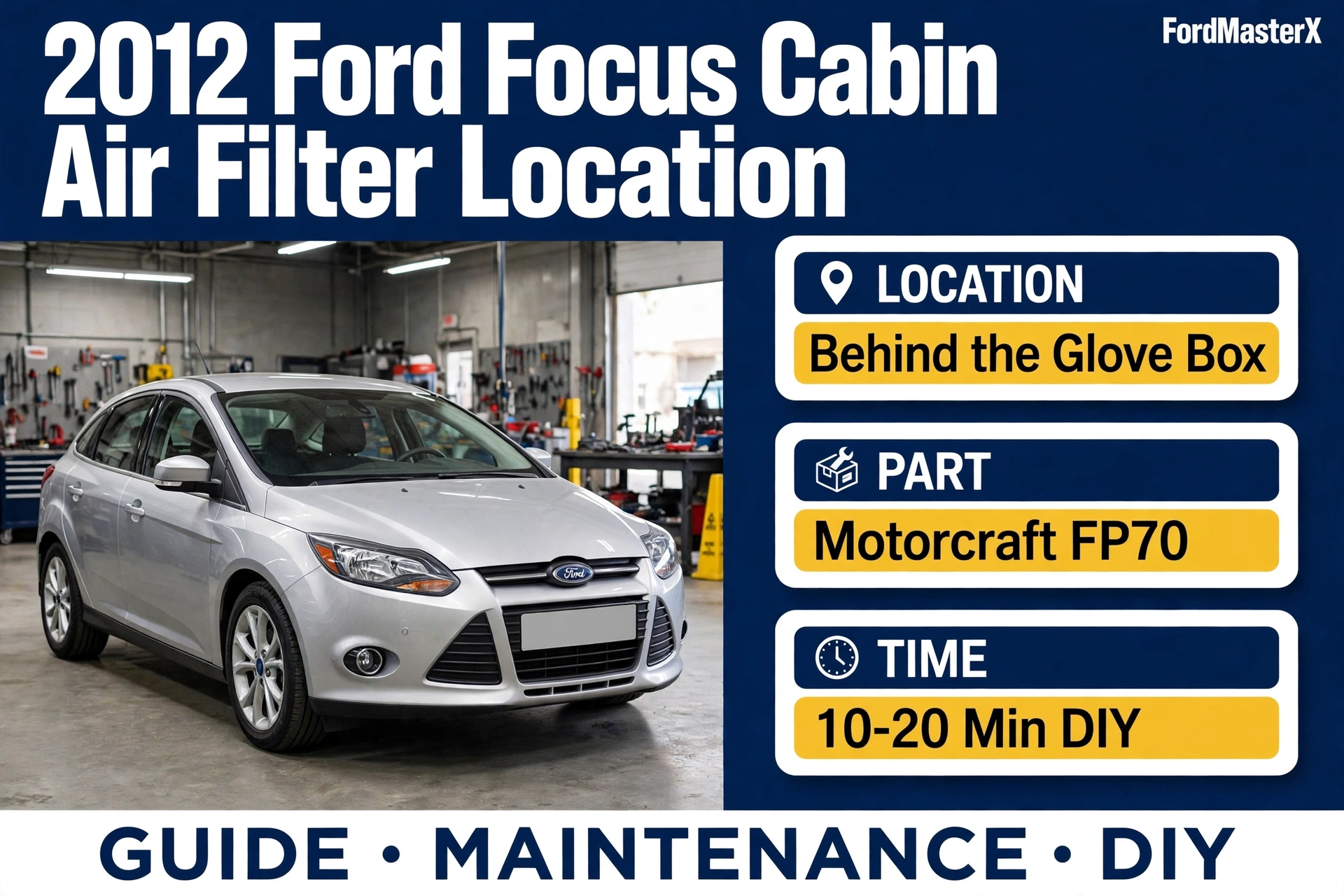
2012 Ford Focus Cabin Air Filter Location 2026 Complete DIY Guide

The 2012 Ford Focus cabin air filter location is the passenger footwell, behind the glove box on the right side of the dashboard. Ford’s own owner’s guide places it there in plain words, and the swap takes 10 to 20 minutes with one Torx bit. You do not need to remove the accelerator pedal, and you do not need to open the hood.
This guide shows the exact spot, the correct Motorcraft FP70 part number, the tools, and the full step-by-step swap. It also covers the signs of a clogged filter, the change interval, the cost, and the mistakes that turn a simple job into a frustrating one.


Where the 2012 Ford Focus Cabin Air Filter Sits


The filter lives inside the cabin, not under the hood. It sits in a housing at the upper left of the passenger footwell, tucked behind the glove box and beside the center console. Air from outside passes through it before it reaches the heater and air conditioning system.
Ford’s 2012 Focus owner’s guide states the location directly. It says the cabin air filter is located in the passenger foot well area. The guide adds that a filter must be installed at all times to keep foreign objects out of the system.
Access comes from the passenger seat, not from the engine bay. You lower the glove box, pull down the felt panel under the dashboard, and the filter housing cover sits right there. The cover is held by a single T20 Torx screw plus small tabs, and the filter slides straight out once the cover is off.
The space is tight, and that is why this job has a reputation. You will work mostly by feel once your hands are under the dashboard, and the new filter needs a slight squeeze to slide into the housing.
That squeeze is normal. The filter is flexible by design, and it straightens out once it is seated.
Do not confuse this filter with the engine air filter. The engine air filter sits in a box under the hood and protects the 2.0L GDI engine, while the cabin filter protects the people inside the car.
5 Signs Your 2012 Focus Cabin Filter Needs Changing
A clogged cabin filter announces itself through the vents. Airflow drops first, and the other symptoms follow as the filter loads up with dust, pollen, and road debris. Watch for these five signs, and change the filter when any one of them shows up.
Weak Airflow From the Vents
Weak airflow is the clearest sign. The fan sounds the same, but less air reaches the cabin because the clogged media blocks the flow. Turn the fan to its highest setting and hold your hand in front of a vent.
If the air feels faint at full speed, the filter is the first part to check. It costs nothing to look, and a new filter often restores full airflow at once.
Musty Smell When the Fan Starts


A musty or stale smell on startup points to a damp, dirty filter. Moisture and trapped debris can give mold and bacteria a place to grow inside the media. The smell usually fades after a minute, but it returns every time the fan starts.
A new filter removes the source of the smell. If the odor stays after the swap, the evaporator or the drain may need attention instead.
Fogged Windows That Clear Slowly
Slow defogging is a quiet symptom. A clogged filter restricts the dry air the system needs to clear the windshield, so the glass stays fogged longer on damp mornings. Drivers often blame the heater or the air conditioning first.


Check the filter before you pay for a system diagnosis. Restricted airflow is one of the cheapest causes of slow defogging on a 2012 Focus.
More Dust on the Dashboard
A filter that has torn or bypassed lets dust straight into the cabin. You will notice a fine film on the dashboard and vents soon after cleaning. A healthy filter traps that dust before it reaches the cabin.
Inspect the old filter when you pull it out. Gaps at the edges or a torn pleat explain dust that a fresh filter will stop.
Allergy Symptoms While Driving
Sneezing, itchy eyes, and a stuffy nose that start only while driving can trace back to the cabin filter. A loaded filter still traps some pollen, but it also holds it close to the airflow and releases it in bursts.
Allergy-prone drivers should change the filter more often than the standard interval. A fresh particulate or carbon filter makes a real difference on high-pollen days.
Which Cabin Filter Fits a 2012 Ford Focus
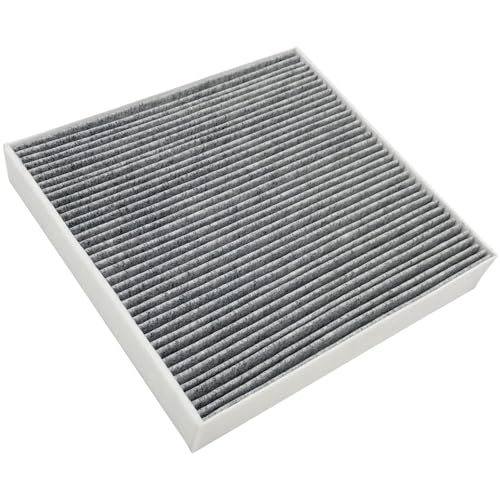
One OEM filter fits the 2012 Focus cabin housing. The 2012 Focus owner’s guide lists the Motorcraft part number as FP70, and that number is the safest way to buy. Match the part number exactly, and the fit is guaranteed.
The Ford engineering number for the same filter is CV6Z-19N619-A. Some listings use the Ford number, some use the Motorcraft FP70 number, and both refer to the identical filter.
Confirm by VIN and trim before you buy. Some HVAC variants list a different Ford number, and a competing number, CV6Z-19G244-A or CV6Z-19G244-B, circulates for the 2014 Focus.
Aftermarket equivalents exist from major brands. Buy one that lists FP70 or CV6Z-19N619-A as a direct cross-reference, and compare it with the old filter before you install it.
| Filter Option | Part Number | Type | Notes |
|---|---|---|---|
| Motorcraft (OEM) | FP70 | Particulate | Factory spec, listed in the 2012 owner’s guide |
| Ford engineering number | CV6Z-19N619-A | Particulate | Same filter as FP70, different numbering |
Two filter types are sold for this housing. A standard particulate filter traps dust, pollen, and mold spores. An activated carbon filter adds a charcoal layer that cuts exhaust fumes and odors, and it costs a few dollars more.
Choose the carbon version if you drive in heavy traffic or near industrial areas. Choose the standard version if you drive mostly on open roads and want the lowest price. Both types fit the same housing and install the same way.
Filter dimensions in aftermarket listings disagree. Some list about 9.8 by 8.7 inches, and others list a longer figure.
Do not trust a single dimension from a listing. Match the new filter against the old one side by side, and check that the edges seal with no gaps.
A filter that fits loose lets unfiltered air bypass the media, and the whole job loses its point. A filter that is too large will not seat, and forcing it can tear the pleats. The part number matters more than any dimension printed on a product page.
Tools and Parts for the Cabin Filter Swap
This is a one-tool job. Gather everything before you start, and keep the parts within reach of the passenger seat. You will not want to climb out halfway through with the glove box hanging down.
- New cabin filter: Motorcraft FP70 or an equivalent that lists FP70 as a direct cross-reference, matched by part number
- T20 Torx screwdriver or bit: the single screw on the filter housing cover
- Flashlight or headlamp: the housing sits in shadow under the dashboard
- Gloves: the old filter holds dust, pollen, and debris
- Small tray or bag: holds the screw and the old filter so nothing drops into the footwell
- Vacuum or damp cloth: cleans the housing slot before the new filter goes in
No panel tools are needed. The felt panel under the dashboard pulls down by hand, and its clips release with a firm tug. The glove box lowers by pinching its sides, and no screws hold it in place.
Work with the car parked, the engine off, and the key out of the ignition. The fan must be off so the filter does not fight airflow while you slide it out. Park on flat ground with the passenger door open for light and elbow room.
Replace the 2012 Focus Cabin Filter in 8 Steps
Follow these steps in order. The whole swap takes 10 to 20 minutes the first time, and closer to 10 minutes once you know where everything sits. Take a photo of the old filter before you remove it, so you have a record of the airflow arrow direction.
Park and Open the Glove Box
Park on flat ground, switch the engine off, and open the passenger door wide. Open the glove box and empty it, since it will hang down during the job. A clear glove box gives your hands room to work.
Lower the Glove Box
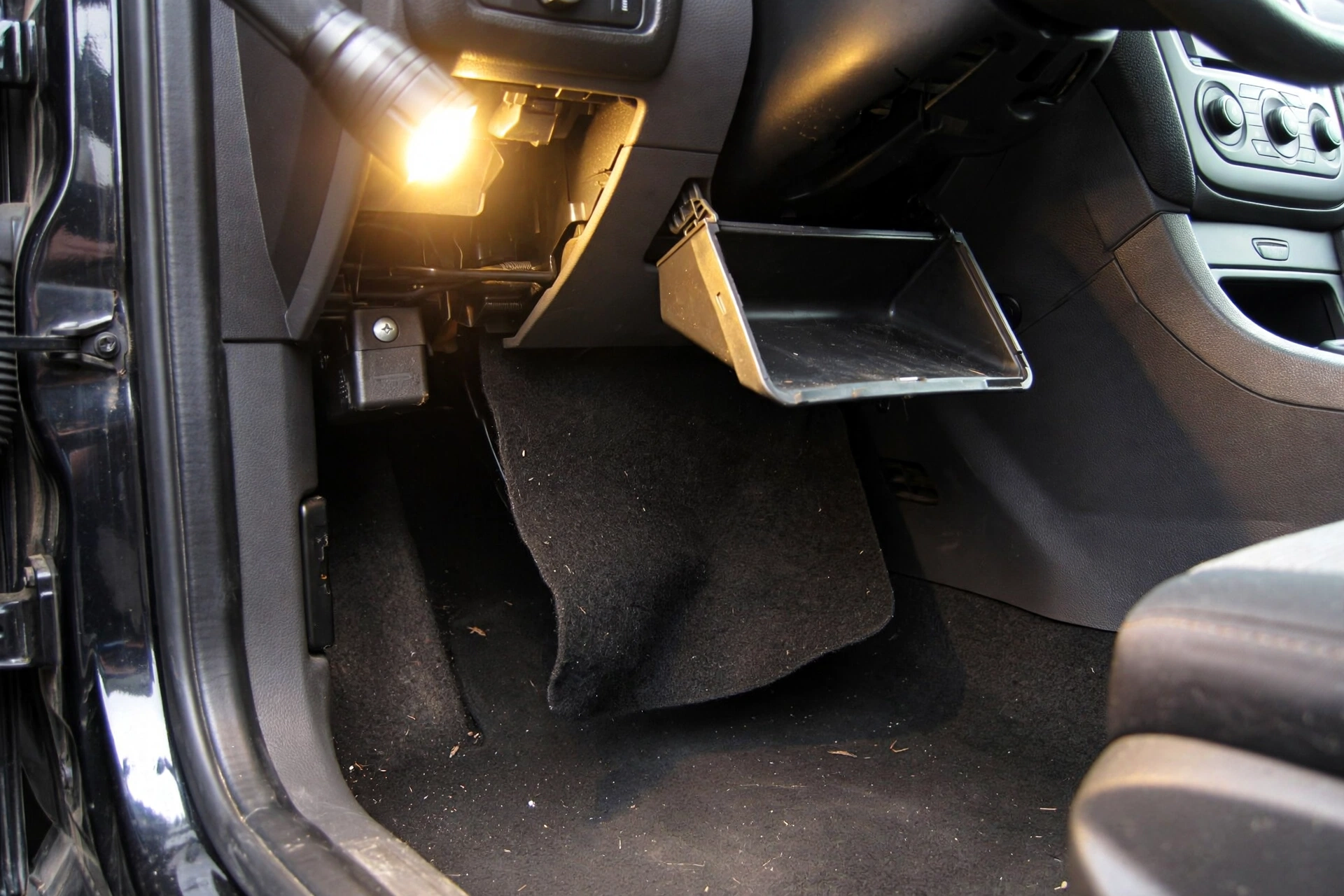
Disconnect the damper arm on the right side of the glove box, then pinch both sides of the box inward. This releases the locking tabs. Let the box hang down on its hinges to open the view into the footwell.
Remove the Footwell Panel
Look under the dashboard on the passenger side for the black felt panel. Pull it down by hand to release its two clips, and set it aside. The filter housing now sits visible at the upper left of the footwell, beside the center console.
Remove the Filter Cover Screw
Find the small plastic cover on the side of the housing. Remove its single T20 Torx screw with your screwdriver, and drop the screw into your tray. Pinch the cover tabs and pull the cover off, then set it where it will not fall.
Slide Out the Old Filter
Grip the edge of the old filter and slide it straight out of the housing. Note the direction of the airflow arrow printed on its frame before it clears the slot. The arrow points toward the rear of the car, and the new filter must point the same way.
Expect dust. Hold the filter level as it comes out so debris does not fall into the housing. Drop it straight into your bag, and wipe the empty slot with a damp cloth or vacuum it before you continue.
Check the Airflow Arrow
Hold the new filter next to the old one and compare the size and the pleat direction. Find the airflow arrow on the new filter frame and confirm it will point toward the rear of the car when installed. Installing the filter backward can cut its efficiency, so check twice before you slide it in.
Fit the New Filter
Compress the new filter slightly and guide it into the housing slot. It will feel tight, and that is normal for this car. Push it fully home until the frame sits flush and the edges seal all the way around.
Do not force a filter that will not seat. Pull it back out, check the orientation, and try again with a gentler angle. A torn pleat lets dust through, so patience here pays off.
Refit the Cover and Panels
Refit the housing cover, pinch its tabs closed, and reinstall the T20 screw. Push the felt panel back up until its clips snap, then lift the glove box, reconnect the damper arm, and close it. Start the car, run the fan, and check that airflow feels strong and the vents smell clean.
Cabin Filter Swap in 8 Steps
Passenger footwell, behind the glove box. 10 to 20 minutes. One T20 Torx bit.
Park and Open the Glove Box
Engine off, passenger door open, glove box emptied.
Lower the Glove Box
Disconnect the damper arm, pinch the sides, let it hang down.
Remove the Footwell Panel
Pull the felt panel down by hand to release its two clips.
Remove the Cover Screw
One T20 Torx screw holds the filter housing cover.
Slide Out the Old Filter
Note the airflow arrow direction before it clears the slot.
Check the Airflow Arrow
The arrow must point toward the rear of the car.
Fit the New Filter
Motorcraft FP70. Squeeze slightly, push fully home, edges sealed.
Refit Cover and Panels
Cover, screw, felt panel, glove box. Test the fan.
The infographic above sums up the whole job. Print it or keep it open on your phone while you work, and follow the steps in order. Each step takes a minute or less once you know the layout.
Cabin Filter vs Engine Air Filter on the 2012 Focus
New owners mix these two filters up, and the mix-up costs money. The cabin filter and the engine air filter sit in different places, serve different jobs, and use different part numbers. Only the cabin filter affects the air you breathe.
| Feature | Cabin Air Filter | Engine Air Filter |
|---|---|---|
| Location | Passenger footwell, behind the glove box | Engine bay, inside the air filter box |
| Protects | People in the cabin | 2.0L GDI engine |
| Motorcraft part | FP70 | FA-1908 |
| Change interval | Every 12 months or 15,000 miles | Every 15,000 to 30,000 miles |
| Typical part cost | 15 to 35 dollars | 20 to 45 dollars |
| DIY difficulty | Easy, 10 to 20 minutes | Easy, under 10 minutes |
The engine air filter stops dirt from reaching the combustion chambers, and a clogged one can cut power and fuel economy. The cabin filter stops dust, pollen, and exhaust particles from reaching your lungs, and a clogged one cuts airflow and air quality. Both matter, and neither substitutes for the other.
Buy them by part number, not by looks. The Motorcraft FA-1908 engine filter and the FP70 cabin filter look similar in photos, but they fit different housings. Check the box before you leave the store, and compare each new filter with the old one it replaces.
Change both on their own schedules. The cabin filter often needs attention sooner than the engine filter on this car. Do not assume a fresh engine filter means the cabin filter is fine, and check it every year.
How Often to Change the 2012 Focus Cabin Filter
Ford’s guidance gives two numbers that owners often see quoted side by side. Ford’s parts guidance says to replace cabin air filters every 12 months or 15,000 miles. The 2012 Focus owner’s guide lists cabin filter replacement in its maintenance table, first at the 20,000-mile mark and again at later marks.
Use the shorter interval as your rule. Change the filter every 12 months or 15,000 miles, whichever comes first, and treat the 20,000-mile schedule mark as the outer limit.
A filter changed early costs a few dollars. A filter left too long costs airflow and air quality, and it can make the blower work harder.
Driving conditions move the interval. Dusty roads, construction zones, wildfire smoke, and heavy city traffic load the filter faster than open highway driving.
Ford dealer guidance for the 2012 Focus puts both air filters at every 10,000 miles in extreme conditions. In normal driving, the same guidance gives 15,000 to 30,000 miles.
| Driving Condition | Change Interval | Why |
|---|---|---|
| Normal highway and suburban | Every 15,000 miles or 12 months | Standard Ford parts guidance |
| Dusty or unpaved roads | Every 10,000 miles | Heavy particulate load clogs media fast |
| Low annual mileage | Every 12 months | Moisture and age degrade media even when parked |
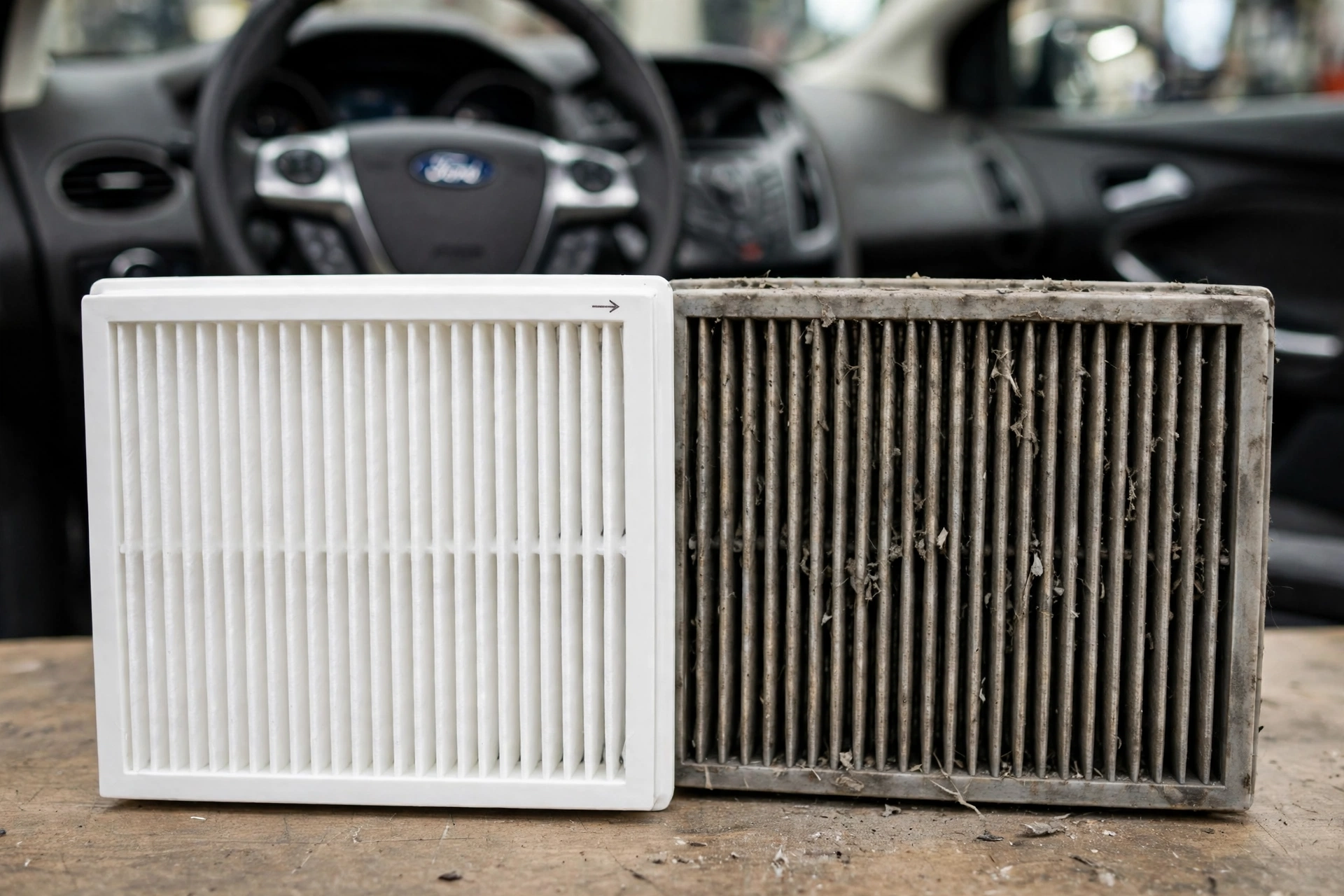
Inspect the filter at every oil change. Pull it out, hold it up to the light, and look through the pleats. If light barely passes, or the media looks gray and matted, change it now instead of waiting for the mileage mark.
Season matters too. Change the filter in spring before pollen season, or in fall before you seal the car up for winter heat. A fresh filter at the start of the heavy-use season gives the best airflow when you need it most.
What a 2012 Focus Cabin Filter Change Costs in 2026
The cabin filter itself costs 15 to 35 dollars at most parts stores, and the Motorcraft FP70 sits near the middle of that range. Carbon versions cost a few dollars more than standard particulate versions. No other parts are needed, and no special tools are needed beyond a T20 bit most owners already own.
Dealer and shop pricing adds labor to the part. A cabin filter swap is typically a sub-30-minute job, and shops typically add 40 to 70 dollars of labor on top of the part. Total shop cost typically lands between 60 and 110 dollars, depending on the part and the local labor rate.
| Option | Part Cost | Labor Cost | Total | Time |
|---|---|---|---|---|
| DIY with standard filter | 15 to 25 dollars | 0 dollars | 15 to 25 dollars | 10 to 20 minutes |
| DIY with carbon filter | 25 to 35 dollars | 0 dollars | 25 to 35 dollars | 10 to 20 minutes |
| Independent shop | 20 to 35 dollars | 40 to 60 dollars | 60 to 95 dollars | Under 30 minutes |
| Ford dealer | 25 to 40 dollars | 50 to 70 dollars | 75 to 110 dollars | Under 30 minutes |
Doing it yourself typically saves the labor charge, 40 to 70 dollars each time, and the job repeats every year. Over five years of ownership, that saving runs to 200 dollars or more.
Buy the filter online or at a parts store, and check the part number on the box before you pay. A wrong filter wastes a trip, and a filter bought by model year alone can still be wrong if the listing covers several generations. FP70 or CV6Z-19N619-A is the number that settles it.
4 Mistakes That Make This Job Harder Than It Is
Most complaints about this job trace back to four avoidable mistakes. None of them damage the car, but each one adds frustration and time. Avoid them, and the swap stays a 10-minute task.
Installing the Filter Backward
The most common mistake is installing the new filter with the airflow arrow pointing the wrong way. The arrow must point toward the rear of the car, into the HVAC duct. A backward filter still fits, so nothing warns you until airflow drops.
Photograph the old filter before you remove it. Match the arrow direction on the new filter to the photo, and check once more after the filter is seated.
Forcing the Filter Into the Slot
The housing opening is smaller than the filter face, so the filter must flex to enter. Some owners push hard and tear the pleats or crush the frame. A torn filter lets dust bypass the media and defeats the whole job.
Compress the filter gently and feed it in at a slight angle. If it will not seat, pull it out and try a different angle instead of pushing harder. The filter is built to flex, but not to take a hard shove.
Skipping the Housing Cleanout
Leaves, dust, and debris collect in the empty housing slot while the old filter is out. Sliding a new filter into a dirty slot pushes that debris straight into the media. Wipe or vacuum the slot first, and the new filter starts clean.
Check the housing cover seal too. A cracked cover or a missing screw lets unfiltered air slip past the filter, and the cabin will dust up again within weeks.
Buying by Model Year Alone
Parts listings cover several Focus generations, and the 2012 model year sits at a generation change. A filter bought by year alone can still be the wrong one.
Buy by part number: FP70 or CV6Z-19N619-A. Compare the new filter with the old one before installation, and return it if the size or the frame shape differs.
2012 Focus Cabin Filter Location Compared With Other Fords
Most modern Fords hide the cabin filter in the same place. The passenger footwell behind the glove box is the standard Ford layout, and the 2012 Focus follows it. Knowing that pattern helps when you move between Fords in the same household.
The 2012 F-150 is the notable exception that confuses owners. That truck has no cabin air filter in some configurations, and the 2012 F-150 cabin air filter location guide explains the hidden truth behind that truck’s setup.
The 2014 F-150 follows a different arrangement again. The 2014 F-150 cabin air filter guide covers that truck’s housing and access. It shows how much the layout varies even between close model years, so always check the guide for your exact year and model.
The 2012 Focus shares its housing with the 2013 through 2018 Focus and the 2013 through 2019 Escape, since all three use the FP70 filter. One part number covers the whole family, and the same swap steps apply across those years.
Do not confuse this location guide with a product roundup. This article covers where the filter sits and how to change it on the 2012 Focus. The buying decision is only one section of that job.
Your Next Step After Finding the 2012 Focus Cabin Filter
The 2012 Ford Focus cabin air filter sits in the passenger footwell, behind the glove box. The swap is one of the easiest maintenance jobs on this car, and it takes one T20 screw, one filter, and 10 to 20 minutes. The Motorcraft FP70 is the correct part, the airflow arrow points toward the rear, and the interval is every 12 months or 15,000 miles.
Change the filter now if the airflow feels weak, the vents smell musty, or the windows fog slowly. A fresh filter can restore airflow and clear the smell. Pair it with the 2012 Ford Focus coolant temperature sensor location guide, another common sensor job on the same car.
2012 Ford Focus Cabin Filter Questions Answered
Where Is the Cabin Filter
It sits in the passenger footwell, behind the glove box on the right side of the dashboard. Ford’s owner’s guide places it in the passenger foot well area. Lower the glove box and pull down the felt panel to reach the housing cover.
Which Part Number Fits
The Motorcraft part number is FP70, and the Ford engineering number is CV6Z-19N619-A. Both numbers refer to the same filter. Aftermarket equivalents exist, so confirm the part number on the box and match the new filter against the old one.
How Long Does the Swap Take
The swap takes 10 to 20 minutes for a first-timer and about 10 minutes once you know the layout. One T20 Torx screw holds the housing cover, and no other tools are needed. The tight space under the dashboard accounts for most of the time.
Must I Remove the Pedal
No. The 2012 Focus cabin filter is reached from the passenger side through the glove box and footwell, and the guide places the filter there. Pedal removal applies to other models, not to this car, so do not remove parts the manual never asks you to touch.
Can I Drive Without a Filter
You can drive, but you should not. Ford’s owner’s guide says a cabin air filter must be installed at all times to keep foreign objects out of the system. Driving without one lets dust and debris into the blower and the evaporator, and that debris is expensive to clean out later.
Which Way Does the Arrow Point
Check the airflow arrow printed on the filter frame. It must point toward the rear of the car when the filter is installed. Photograph the old filter before you remove it, and match the new arrow to the old one.