2003 Ford Explorer Fuse Box Diagram: Complete Fuse and Relay Guide

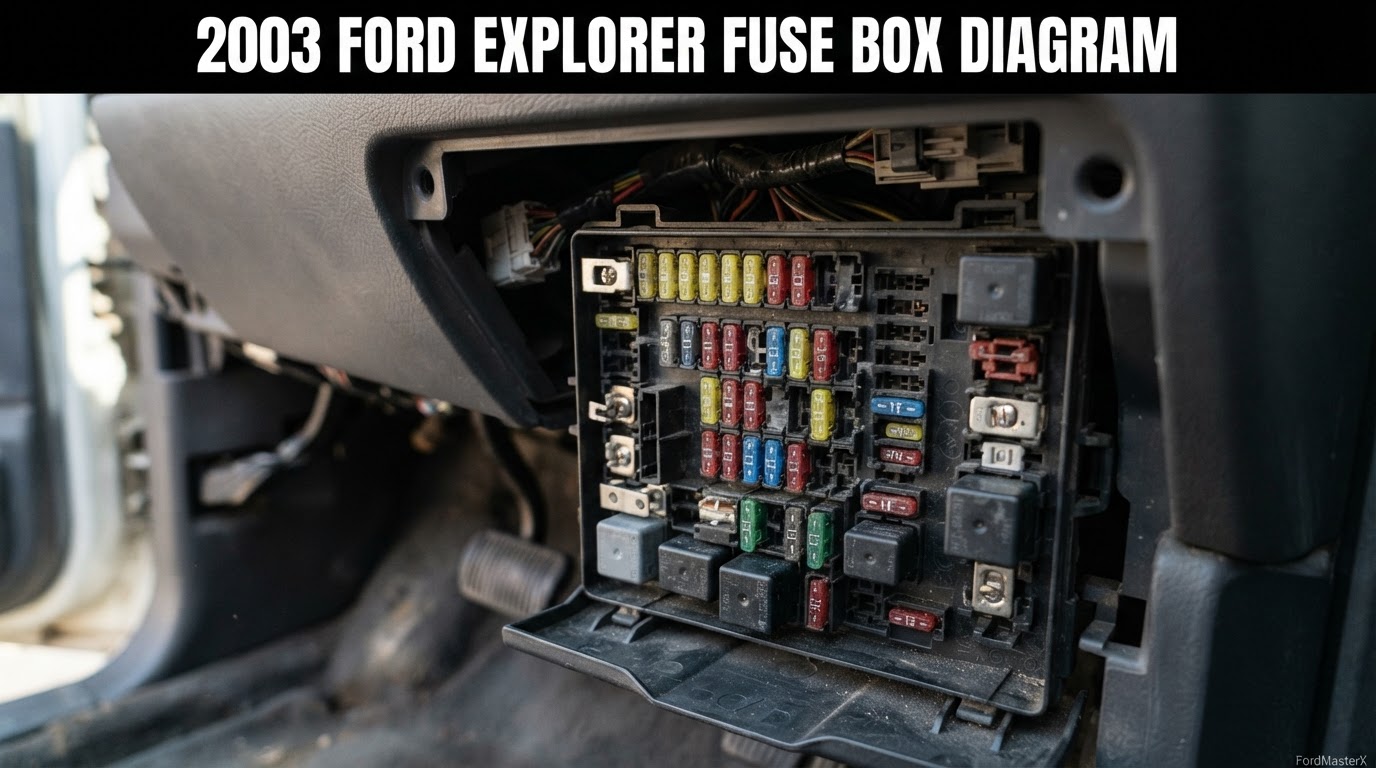
Your 2003 Ford Explorer has two fuse boxes. The passenger compartment panel sits below the instrument panel on the driver’s side. The engine compartment power distribution box sits on the left side of the engine bay.
The cigar lighter is fuse 24 in the cabin panel, rated 15A.

Prime for Young Adults — 6 Months Free
Students and 18–24s get six months of Prime free, then half price.
Start 6 Months Free As an Amazon Associate I earn from qualifying purchases.Three sources that read the actual 2003 Owner’s Manual agree on a change most combined “2002-2005” charts miss. The heated seat fuse had already moved by 2003, a full year before the horn fuses did.
Skip to the correction section if that mix-up is why you are here.
Where are the fuse boxes on a 2003 Ford Explorer?
Recommended Best Deal Products


There are four boxes total, but two of them matter for almost every repair.
Passenger compartment fuse panel. Below the instrument panel on the driver’s side, pull the cover outward to reach the fuses. Positions 1 through 30 live here, along with a relay panel on the reverse side of the cover.
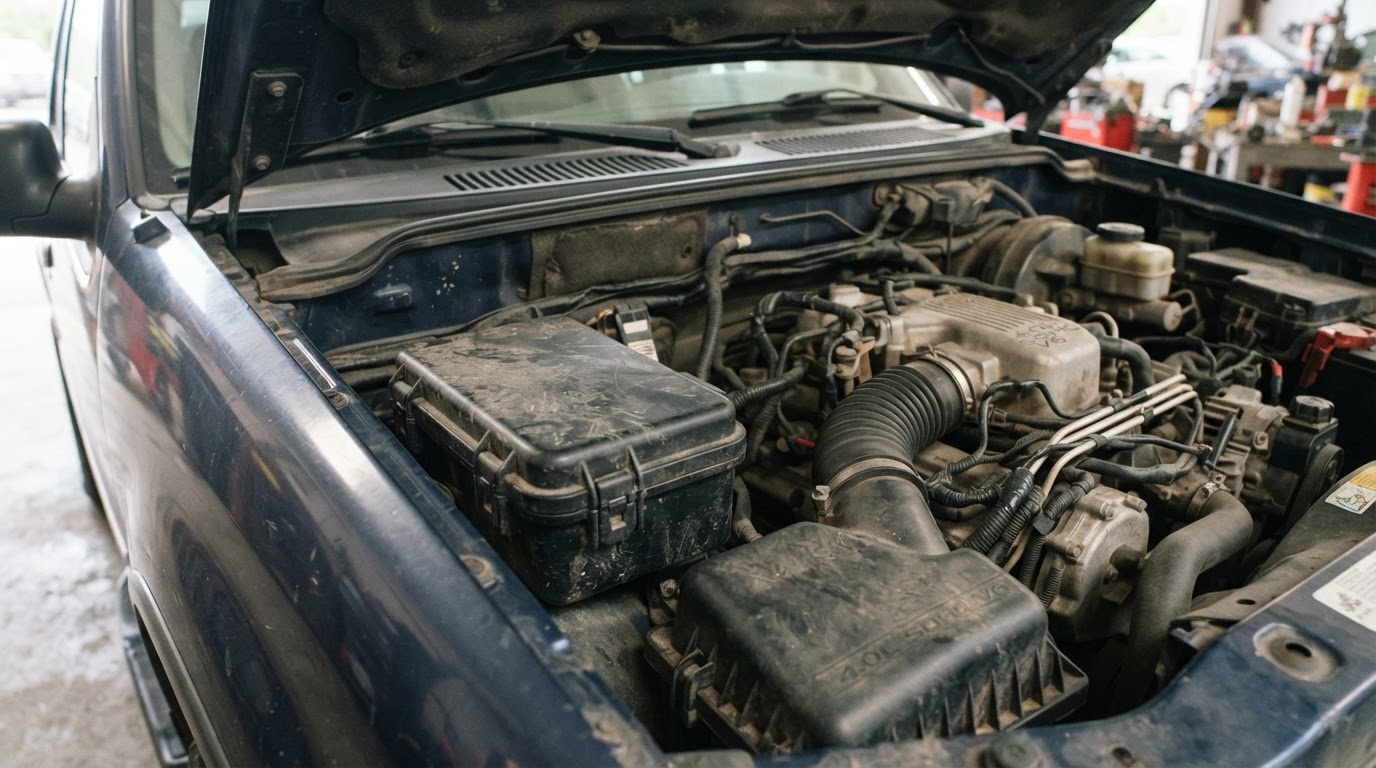
Power distribution box. In the engine compartment, on the left side near the firewall. This is the larger box with the high-current fuses, numbered 1 through 46 plus a circuit breaker at position 62.
Auxiliary relay box. On the front right fender well, underneath the speed control module. Mostly open positions on a US-market 2003 truck.
Rear relay box. On the rear passenger side quarter trim panel, behind the interior trim. Only relevant if you are chasing a trailer tow circuit.
Worth knowing: a 2003 Explorer does not share its fuse numbering with the 1996-2001 Explorer or with the 2006-and-newer Explorer. This is a 3rd generation truck (U152), built 2002 through 2005, with its own panel and its own numbering. That numbering still shifts twice more inside this one generation.
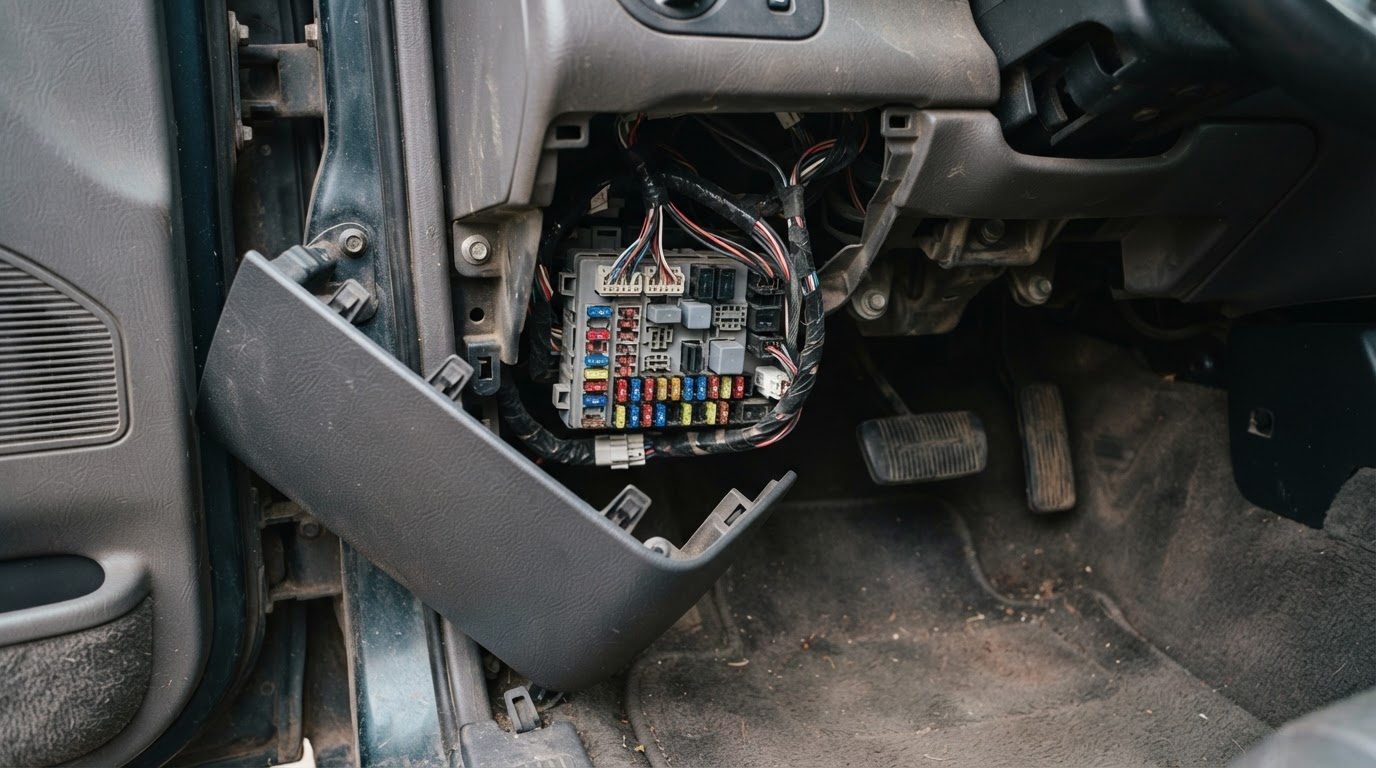
Passenger compartment fuse chart: fuses 1 to 30
I cross-checked this chart against the 2003 Explorer Owner’s Manual text, as reproduced by two independent sources. A third site, which prints explicit per-year ranges, agrees. All three agree on every value below for model year 2003 specifically.
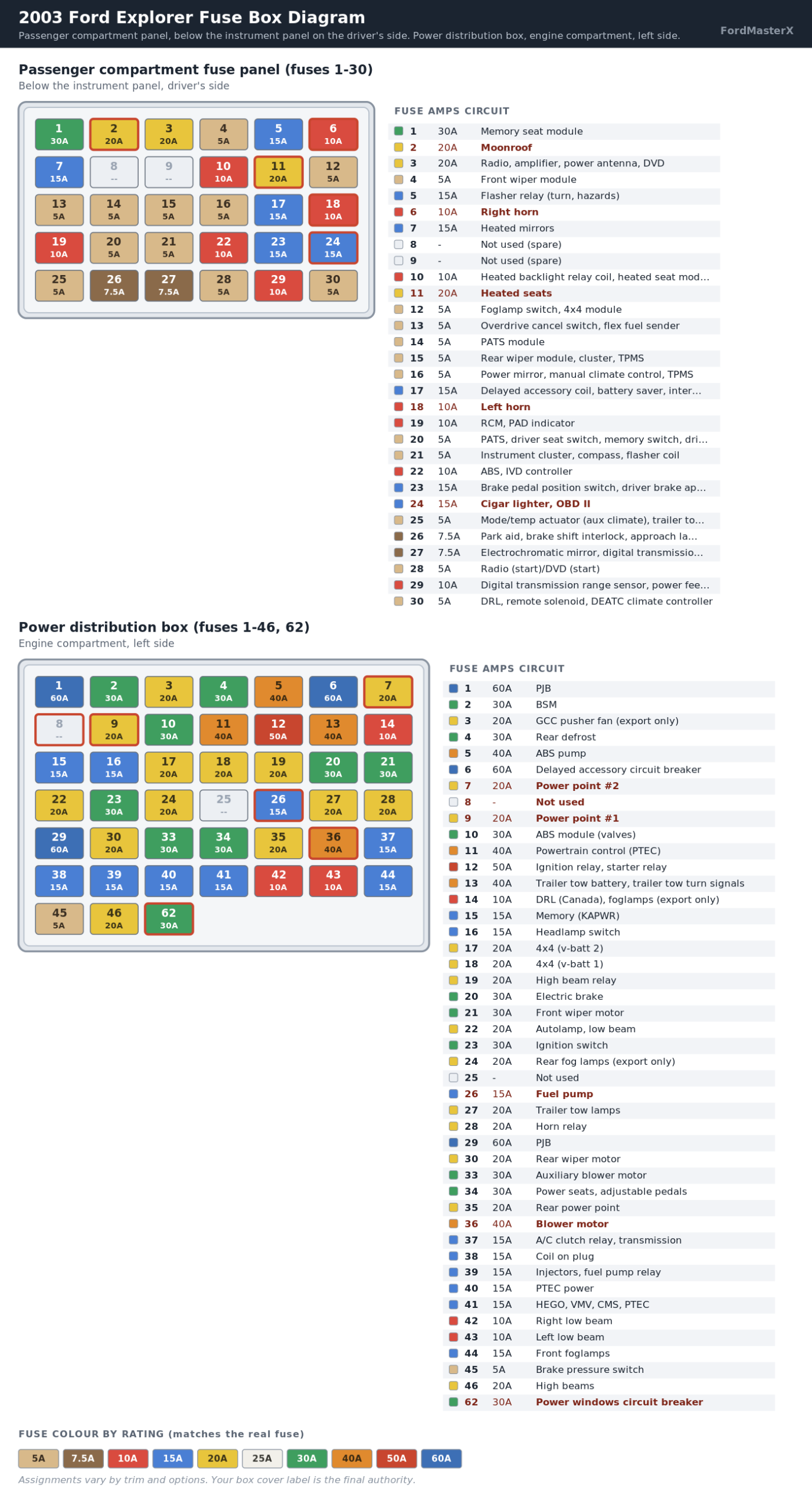
| Fuse | Amps | Circuit protected |
|---|---|---|
| 1 | 30A | Memory seat module |
| 2 | 20A | Moonroof |
| 3 | 20A | Radio, amplifier, power antenna, DVD |
| 4 | 5A | Front wiper module |
| 5 | 15A | Flasher relay (turn signals, hazards) |
| 6 | 10A | Right horn |
| 7 | 15A | Heated mirrors |
| 8 | – | Not used (spare) |
| 9 | – | Not used (spare) |
| 10 | 10A | Heated backlight relay coil, heated seat module, temp blend actuator, A/C clutch contact |
| 11 | 20A | Heated seats |
| 12 | 5A | Foglamp switch, 4×4 module |
| 13 | 5A | Overdrive cancel switch, flex fuel sender |
| 14 | 5A | PATS module |
| 15 | 5A | Rear wiper module, cluster, TPMS |
| 16 | 5A | Power mirror, manual climate control, TPMS |
| 17 | 15A | Delayed accessory coil, battery saver, interior lamps, glove box lamp |
| 18 | 10A | Left horn |
| 19 | 10A | Restraint Control Module (RCM), PAD indicator |
| 20 | 5A | PATS, driver seat switch, memory switch, driver seat module, BSM, sunload sensor |
| 21 | 5A | Instrument cluster, compass, flasher coil |
| 22 | 10A | ABS, IVD controller |
| 23 | 15A | Brake pedal position switch, driver brake applied relay, cruise deactivate switch |
| 24 | 15A | Cigar lighter, OBD II |
| 25 | 5A | Mode/temp actuator for auxiliary climate control, trailer tow battery charge coil |
| 26 | 7.5A | Park aid, brake shift interlock, approach lamp relay coil, IVD switch |
| 27 | 7.5A | Electrochromatic mirror, digital transmission range sensor, backup lamps |
| 28 | 5A | Radio (start), DVD (start) |
| 29 | 10A | Digital transmission range sensor, power feed to fuse 28 |
| 30 | 5A | Daytime Running Lamps (DRL), remote solenoid, DEATC climate controller |
Fuse assignments vary with trim and options. A base XLS may not populate every position shown here.

Audible — Listen Free for 30 Days
One free credit a month and thousands of titles included.
Listen Free for 30 Days As an Amazon Associate I earn from qualifying purchases.Power distribution box: fuses 1 to 46 and 62
Recommended Best Deal Products


These are the high-current fuses, protecting the engine, drivetrain, and exterior lighting circuits. Mini fuses and larger cartridge fuses share the same box.
| Fuse | Amps | Circuit protected |
|---|---|---|
| 1 | 60A | PJB (power junction box feed) |
| 2 | 30A | Body Security Module (BSM) |
| 3 | 20A | GCC pusher fan (export market only) |
| 4 | 30A | Rear defrost |
| 5 | 40A | Anti-lock Brake System (ABS) pump |
| 6 | 60A | Delayed accessory circuit breaker |
| 7 | 20A | Power point #2 |
| 8 | – | Not used |
| 9 | 20A | Power point #1 |
| 10 | 30A | ABS module (valves) |
| 11 | 40A | Powertrain control (PTEC) |
| 12 | 50A | Ignition relay, starter relay |
| 13 | 40A | Trailer tow battery, trailer tow turn signals |
| 14 | 10A | DRL (Canada), foglamps (export market only) |
| 15 | 15A | Memory (keep alive power) |
| 16 | 15A | Headlamp switch |
| 17 | 20A | 4×4 (v-batt 2) |
| 18 | 20A | 4×4 (v-batt 1) |
| 19 | 20A | High beam relay |
| 20 | 30A | Electric trailer brake |
| 21 | 30A | Front wiper motor |
| 22 | 20A | Autolamp, low beam |
| 23 | 30A | Ignition switch |
| 24 | 20A | Rear fog lamps (export market only) |
| 25 | – | Not used |
| 26 | 15A | Fuel pump |
| 27 | 20A | Trailer tow lamps |
| 28 | 20A | Horn relay |
| 29 | 60A | PJB (power junction box feed) |
| 30 | 20A | Rear wiper motor |
| 33 | 30A | Auxiliary blower motor |
| 34 | 30A | Power seats, adjustable pedals |
| 35 | 20A | Rear power point |
| 36 | 40A | Blower motor |
| 37 | 15A | A/C clutch relay, transmission |
| 38 | 15A | Coil on plug |
| 39 | 15A | Injectors, fuel pump relay |
| 40 | 15A | PTEC power |
| 41 | 15A | HEGO, VMV, CMS, PTEC |
| 42 | 10A | Right low beam |
| 43 | 10A | Left low beam |
| 44 | 15A | Front foglamps |
| 45 | 5A | Brake pressure switch |
| 46 | 20A | High beams |
| 62 | 30A | Power windows circuit breaker |
Positions 31, 32, and 47 through 61 in this box hold relays and diodes rather than fuses. None of them carry an amperage rating on their own.
What changes between a 2002, a 2003, and a later 3rd generation Explorer? The single most important correction on this page
Most combined “2002-2005” charts treat the whole generation as one table. Ford actually moved these circuits in two separate steps, a year apart.
| Circuit | 2002 | 2003 | 2004-2005 |
|---|---|---|---|
| Fuse 2 | Heated seats, moonroof (20A) | Moonroof only (20A) | Moonroof only (20A) |
| Fuse 11 | Not used | Heated seats (20A) | Heated seats (20A) |
| Fuse 6 | Right horn (10A) | Right horn (10A) | Key-in-chime (10A) |
| Fuse 18 | Left horn (10A) | Left horn (10A) | Flexible fuel pump (10A) |
| PDB fuse 26 (fuel pump) | 15A | 15A | 20A |
| PDB fuse 62 | CB, delayed accessory | Power windows circuit breaker | Power windows circuit breaker |
The heated seat circuit moved first. On a 2002 truck it shares fuse 2 with the moonroof.
On a 2003 truck it already has its own fuse 11. That is a full year before the horn fuses or the fuel pump fuse changed.
The horn fuses, the fuel pump fuse amperage, and two spare positions in the power distribution box wait until 2004. Your 2003 truck still runs its horns off fuses 6 and 18, same as 2002. The fuel pump fuse is still 15A too.
I checked this against six sources, three of which cite the 2003 Owner’s Manual directly for the cabin panel.
| Source | What it shows for 2003 |
|---|---|
| A fuse reference site citing the Ford Explorer 2003 Owner’s Manual as its source | Fuse 2 moonroof only, fuse 11 heated seats (20A), fuse 6 and 18 still horns, fuel pump fuse 15A |
| A second site whose own text states it reproduces the “2003 Explorer Owners Guide” | Matches the first source on fuse 2 and fuse 11. Position numbering for the power distribution box appears shifted on this source, so it was used only to confirm the cabin panel split, not the engine box amperages |
| A third site printing explicit year ranges in parentheses for every circuit that moves | Confirms fuse 2 and fuse 11 moved by 2003, but shows the fuel pump fuse already at 20A for 2003, one year earlier than the other two sources |
| A fourth and fifth site, both printing one combined 2002-2005 table or a 2003-specific section without year ranges | Show the 2002 cabin layout (fuse 2 shared, fuse 11 not used) still in place for 2003, and the 15A fuel pump fuse |
| A sixth site covering fuse box locations and the fuel pump fuse specifically | 15A for 2003, independent of the other five |
Four of six sources agree, including both manual-sourced ones. The heated seat circuit had already moved by 2003, while the fuel pump fuse had not. That combination is used here.
Two sources disagree on each point individually. That is exactly the single-table, no-year-split error already documented on the 2002 version of this page.
A dead heated seat with a dead moonroof on a 2003 or 2004 Explorer means you have a 2002 chart. If your heated seats work fine but you cannot find a dedicated fuse for them, you have a 2004-2005 chart. On this point that chart is fine: fuse 11 is already populated by 2003.
Your box cover label is the final authority if what you find does not match either column.
Audible Premium Plus — Annual Membership
12 audiobook credits up front, plus the full Audible catalogue.
See Annual Plans As an Amazon Associate I earn from qualifying purchases.Which fuse is the cigar lighter and the power points?
Recommended Best Deal Products


The cigar lighter and OBD II diagnostic connector share cabin fuse 24, rated 15A. This position did not move within the 2002-2005 generation.
The two auxiliary 12V power points live in the engine bay power distribution box, not the cabin panel. Power point #1 is PDB fuse 9, power point #2 is PDB fuse 7, both 20A. A rear power point, if your trim has one, runs on PDB fuse 35, also 20A.
Which fuse controls the radio?
Two different fuses feed the radio, and which one blew tells you what to expect.
- Fuse 3, 20A: radio, amplifier, power antenna, DVD. Blow this and the whole system goes dark, no display and no sound.
- Fuse 28, 5A: radio start signal. This wakes the radio with the ignition key. Blow it and the radio may stay silent even though it still has power.
- Fuse 17, 15A: delayed accessory power. This is why the radio keeps playing briefly after you shut the engine off.
Which fuse controls the heat, A/C, and the blower?
Climate control on this truck splits across several circuits, so the right fuse depends on exactly what stopped working.
| Symptom | Check this |
|---|---|
| No blower at any fan speed | PDB fuse 36, 40A: blower motor |
| A/C compressor clutch never engages | PDB fuse 37, 15A: A/C clutch relay, transmission |
| A/C clutch contact or temp blend actuator dead | Cabin fuse 10, 10A: heated backlight relay coil, heated seat module, temp blend actuator, A/C clutch contact |
| Manual climate control panel unresponsive | Cabin fuse 16, 5A: power mirror, manual climate control, TPMS |
| Heated seats dead, moonroof still fine | Cabin fuse 11, 20A: heated seats (2003 onward) |
| Rear wiper or rear defrost not working | Cabin fuse 15, 5A (rear wiper module) or PDB fuse 4, 30A (rear defrost) |
Fuse 36 is a 40A cartridge fuse in the power distribution box, not a mini blade fuse. If the blower is silent on every speed, pull that one first.
Replacing a fuse yourself takes a minute with the right tool. A cheap fuse assortment kit costs less than a single dealer fuse and saves the second trip. Any brand meeting the ATO/ATC mini fuse standard fits this truck.
What is in the auxiliary and rear relay boxes?
Both boxes hold relays, not fuses, so they rarely need opening.
Auxiliary relay box, front right fender well. On a US-market 2003 truck, this box sits mostly open, reserved for police package AdvanceTrac equipment. Canadian and export trucks populate more of it.
Rear relay box, rear passenger side quarter trim panel. It covers trailer tow back-up lamps, trailer tow park lamps, trailer tow battery charge, and approach lamps. Only worth opening if you are chasing a trailer wiring fault.
How do you tell if a fuse is actually blown?
Pull it and look through the plastic window at the thin metal strip inside. An intact fuse shows an unbroken strip. A blown one shows a visible gap, or the window looks smoked.
A hairline break is easy to miss by eye. Test continuity with a multimeter set to ohms. Near zero resistance means the fuse is still good.
Never guess the replacement rating. Match the number printed on the fuse itself, and cross-check your own box cover label. A higher rated fuse lets the wiring act as the fuse instead, which costs far more to repair.
Cartridge fuses in the power distribution box need a puller, not pliers. A small plastic puller usually clips inside the box cover. Pliers tend to crack the housing.
Why does the same fuse keep blowing?
A fuse that blows once is usually a one-time surge. One that blows again within days is telling you something upstream is wrong.
Unplug whatever you added most recently. Trailer wiring, a phone charger left in a power point, an aftermarket stereo or amplifier. Added accessories cause most repeat blows on a truck this age.
Look for chafed insulation where the harness flexes. Door jambs and anywhere routed near the steering column take the most wear over 20-plus years.
Check for water intrusion. A connector that only shorts when wet explains a fuse that survives a dry week and fails in the rain.
If a fuse blows the instant you push it in, that circuit has a hard short. Stop replacing fuses and trace the wiring with a proper diagnostic tool instead of guessing.
A parasitic draw that drains the battery overnight is a different problem from a blown fuse. If your truck is dying between drives rather than tripping a fuse, start with a battery health check. Do that before you chase the wiring.
2003 Ford Explorer fuse quick reference
The fuses owners look up most, in one place.
| What you want | Fuse | Amps |
|---|---|---|
| Cigar lighter, OBD II | 24 | 15A |
| Power point #1 | PDB 9 | 20A |
| Power point #2 | PDB 7 | 20A |
| Radio, amplifier, DVD | 3 | 20A |
| Blower motor | PDB 36 | 40A |
| A/C clutch relay | PDB 37 | 15A |
| Fuel pump | PDB 26 | 15A |
| Heated seats | 11 | 20A |
| Moonroof | 2 | 20A |
| Right horn | 6 | 10A |
| Left horn | 18 | 10A |
| Horn relay | PDB 28 | 20A |
| Front wiper motor | PDB 21 | 30A |
| Rear defrost | PDB 4 | 30A |
| High beams | PDB 46 | 20A |
| Low beams | PDB 22 | 20A |
| ABS pump | PDB 5 | 40A |
| Starter relay | PDB 12 | 50A |
Have a 2002 instead? Check the 2002 Ford Explorer fuse box diagram, which still shares fuse 2 between the heated seats and the moonroof.
Have a newer Explorer? The 2013 Ford Explorer fuse box diagram is a different generation with its own panel and numbering entirely.