
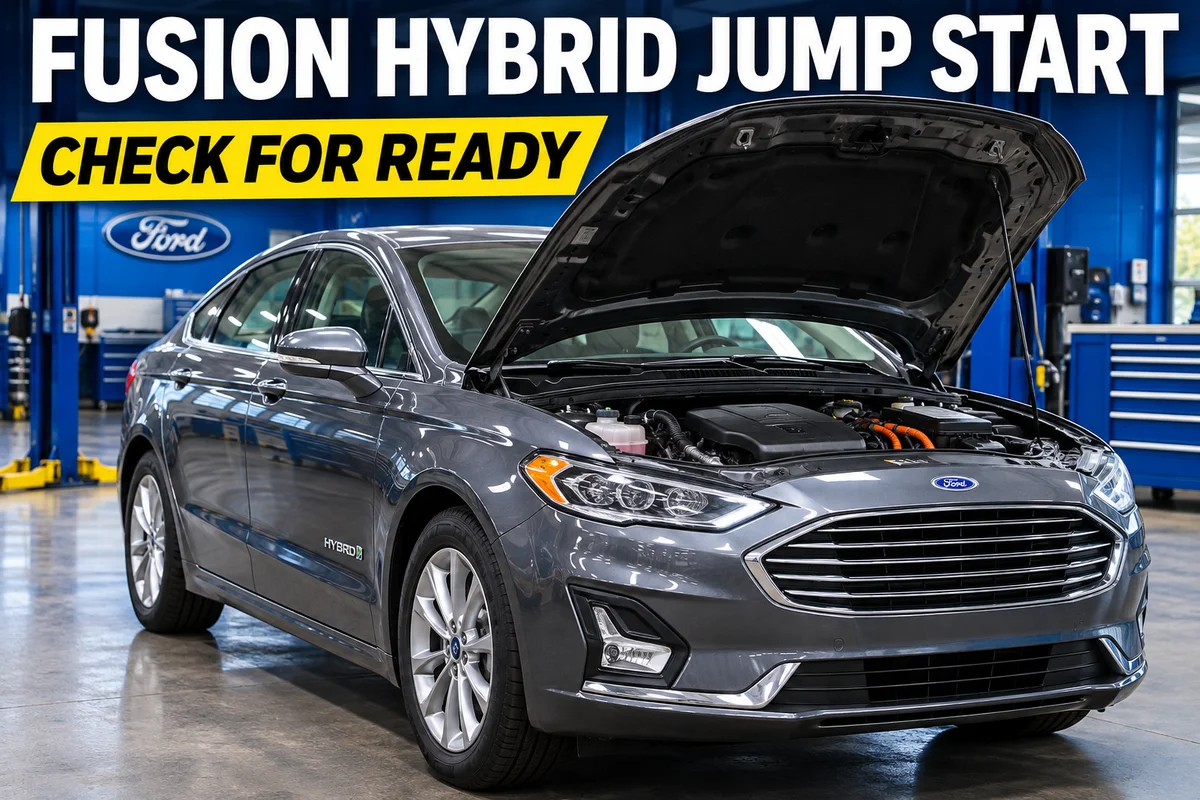
How to Jump-Start a Ford Fusion Hybrid and Confirm READY

To jump-start a 2020 Ford Fusion Hybrid or Fusion Energi, use a compatible 12-volt booster and the jump connections Ford identifies under the hood. After you press the brake and start button, check the instrument cluster for Ready to Drive. The gasoline engine can stay quiet even when the hybrid has started successfully.
Ford’s procedure uses the low-voltage electrical system. Leave the high-voltage equipment alone and use the manual to identify the positive connection and the final ground. If you cannot recognize the points with certainty, or if the car has been damaged, arrange roadside assistance. The distinction between a live dashboard and a vehicle that is ready to drive matters before you remove the cables.
Confirm You Have the Fusion Hybrid or Energi
The gasoline Fusion, Fusion Hybrid, and plug-in Fusion Energi share a name and similar bodywork. A video showing a Fusion is therefore a poor substitute for the manual that came with your car. Check the vehicle paperwork or the Ford owner’s manual for your vehicle. This procedure applies to the U.S. 2020 Hybrid and Energi covered in the same Ford manual. Owners of another model year should use their own manual before transferring a connection location or starting instruction.
The 2020 Fusion Hybrid and Energi owner’s manual covers jump-starting under Roadside Emergencies on printed pages 232–234. Its drawing shows the 12V prongs accessible from the engine bay even though Ford places the 12V battery in the trunk. Keep the manual open to the drawing where you can see the picture and the cable instructions together.
That remote connection is useful if the trunk release has no power. If the only problem is getting a closed trunk open, start with our Fusion trunk access guide to identify which access issue you have. This article deals with restoring power to start the hybrid, including what to check once the cluster comes on.
Decide if a 12V Jump Is a Sensible Next Step
A dark cluster, weak interior lights, or locks that respond slowly are useful observations to tell roadside assistance. They can be consistent with a discharged 12V battery. They do not prove it. A loose connection or another electrical fault can leave you with similar symptoms. If the display is bright and the car shows an explicit key or starting warning, write down that warning before trying a jump.
Both the Hybrid and Energi use a separate high-voltage battery for the hybrid system. A 12V jump gives the vehicle a chance to power its controls and enter its normal operating state. It does not charge the high-voltage battery from the booster vehicle. An Energi charge-port connection does a different job. Never try to reach high-voltage components to solve a dead dashboard.
The word “start” can mean several things from the driver’s seat. Interior lights and the radio may come on before the hybrid system is ready. A brief chime can also occur while warning text remains on the display. If you have someone helping, have them look at the cluster with you and read the message aloud. A clear report such as “the display woke up, but Ready to Drive didn’t appear” gives a technician more to work with than “it still seems dead.”
Prepare the Cars and Check for Damage
With a suitable 12-volt booster vehicle, work in an open, well-ventilated place with enough room to stand clear of traffic. If there is no safe working area, have the vehicle attended by roadside assistance. Park the vehicles within reach of the leads without letting them touch. Set their parking brakes, select Park, and switch them off before making connections. Review the booster manufacturer’s directions first. Some vehicles are unsuitable donors.
Wear face and eye protection and use adequately sized cables with intact insulation and insulated clamps. Keep children, sparks, flames, and smoking materials away. Put aside damaged leads. Do not push-start the Fusion. Stop if the 12V battery may be frozen, appears damaged, or is leaking, or if there are signs of recent impact or electrical damage. Follow Ford’s separate instructions for a crashed or damaged hybrid and tell responders which powertrain is involved.
An enclosed garage is a poor place to assume either car will stay quiet. A hybrid’s gasoline engine can run or restart when the vehicle is ready. Arrange the work outdoors and keep people away from the engine and moving parts. Clear away loose material before connecting and keep the disconnected ends apart.
Identify the Under-Hood Positive Point and Ground
Open the hood and match the remote terminals to Ford’s drawing E226509. Identify the protected positive prong marked B in the drawing and verify the polarity markings on the car. Ford directs you to remove that prong’s cap before using it. The manual specifically warns against attaching the positive cable to the studs or L-shaped eyelet above the positive terminal.
Locate the applicable ground before connecting the first cable. Ford specifies a suitable ground connection point if provided, or suitable exposed engine metal away from the battery and fuel injection system. The negative terminal of the discharged battery is off limits for the final connection. Ford also rules out the hood latch, fuel lines, wiper arms, engine valve covers, and intake manifold as grounds. If the appearance of the bay prevents you from identifying the correct point, stop and ask a qualified person to confirm it.
Use both the drawing and the written sequence. A drawing shows the reference equipment, while the text tells you the required order and where the last connection belongs. A clamp can close firmly on an unsuitable surface. A matching hardware shape on another car is also insufficient evidence. Take the extra moment to establish the exact points on both the disabled vehicle and the booster.
Before attaching the first lead, run through where you will stand for the last connection and for cable removal. Keep leads out of the fan and belt area, away from hot parts and clear of hinges. Starting a vehicle can make a cable route unsafe if it rests where parts will move. If a lead will only reach by stretching or crossing a hazard, reposition the booster with all leads disconnected.

Connect the Four Clamps in Ford’s Order
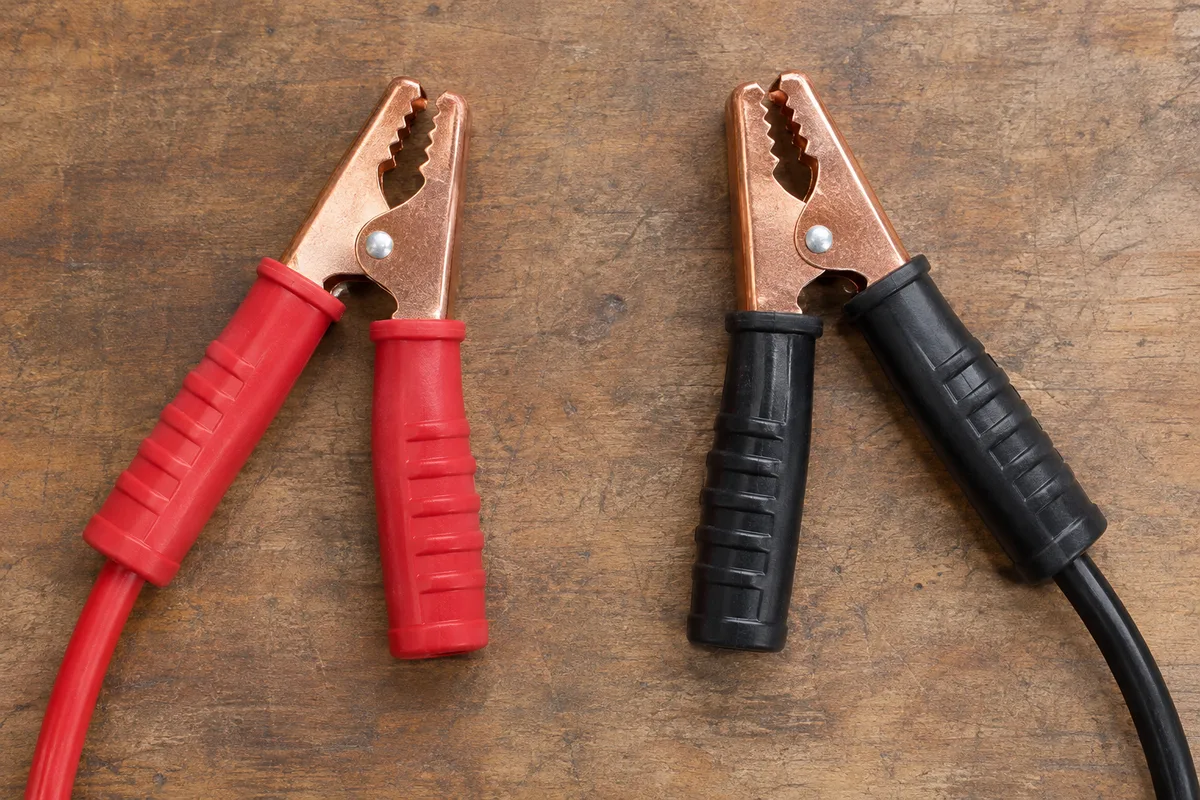
- Attach one positive clamp to the approved positive connection on the disabled Fusion.
- Attach the other positive clamp to the booster vehicle’s approved positive connection.
- Attach the first negative clamp to the booster vehicle’s approved negative connection.
- Attach the remaining negative clamp to the approved ground on the disabled Fusion.
Watch which car you are standing next to for each step. The two negative connections are on different vehicles, and the last one belongs at the disabled Fusion’s safe ground. Hold the clamps by the insulated handles and keep leads from touching unintended metal. Do not disconnect the Fusion’s own battery to attempt the jump. If a clamp slips or you discover a mismatch before starting, stop and get help if you are uncertain how to disconnect safely.
The sequence above assumes a compatible donor vehicle with conventional cables. If a technician or portable jump-pack manufacturer supplies different operating controls, follow the equipment-specific instructions and verify compatibility with the vehicle. A pack does not have an engine to run at a specified speed. Ford’s donor-engine directions cannot be carried over word for word to a pack.
Start the Booster and Check Ready to Drive
Confirm READY on a Fusion Hybrid
- Match the vehicle to Ford’s 12-volt connection diagram.
- Follow the cable order and make the normal start request.
- Look for Ready to Drive on the cluster before timing the wait.
A quiet gasoline engine can be normal with Ready to Drive showing. Check the 2020 US Hybrid and Energi owner’s manual for details.
For the conventional booster-vehicle procedure, start the booster first. The Ford hybrid manual gives a moderate increase to 2,000–3,000 rpm when using a tachometer. That instruction concerns the booster engine. Check the donor manufacturer’s directions beforehand and use a different source or roadside service if they do not permit the setup.
With the Fusion still safely in Park, use its normal start procedure and check for the Ready to Drive indicator in the cluster. The engine can remain off while the hybrid system is active. Leave the vehicle safely secured and treat it as running. Keep hands clear of moving components, even when the gasoline engine sounds quiet.
If you see only accessory activity, such as the radio turning on or the instrument cluster lighting up without Ready to Drive, check whether your normal start request was actually made with the brake depressed. If a proper attempt still does not reach Ready or produces a warning, stop and contact roadside assistance. A repeated attempt does not resolve uncertainty about the battery, the connection point, or the starting system.
Once the disabled vehicle starts, Ford calls for three additional minutes before disconnecting the leads. Keep the Fusion in Ready to Drive during this interval. It may choose to run the gasoline engine. If an unsafe condition develops, such as smoke or a hot lead, move clear and seek help.
Remove the Clamps and Check the Next Restart
Take off the disabled Fusion’s ground clamp first, then the booster’s negative clamp, then the booster’s positive clamp, and finally the Fusion’s positive clamp. Keep the removed clamps apart while any lead remains attached. Restore the positive prong cover once the cables are clear and make sure the hoods are secured before moving a vehicle.
Ford also says to let the Fusion remain in Ready to Drive for several minutes after removing the leads. In this state the car can supply its 12V system from the high-voltage battery, even when the gasoline engine is off. That short period is part of Ford’s instructions. It is not a diagnosis of why the battery discharged or a guarantee of another restart.
Think about where the car can be safely checked. If the warning indicators remain active, the vehicle loses electrical power again, or you cannot reliably reach Ready to Drive, seek assistance. A dealer or qualified hybrid technician can check the 12V battery, its connections, and the charging system for the applicable powertrain.
| What you observe | What to tell the technician |
|---|---|
| Cluster and lights stay dark | Say whether the car showed any response at all and whether the equipment showed an error. |
| Cluster wakes up, but no Ready to Drive indicator appears | Read the exact display message and mention whether the start request was made with the brake depressed. |
| Ready to Drive appears while the gasoline engine is quiet | Report the indicator state and any warning that remains. Quiet operation alone can be normal. |
| The car goes dark or needs another boost after shutting down | Note how long it was off, what was left on, and whether the battery recently went flat. |
This record is more valuable than a guess about which battery needs replacement. If a helper handled the cables, include whether the last connection came off the intended ground and if anything unexpected happened during the attempt. A repeat no-start warrants diagnosis even if today’s jump worked.
Can You Treat a Hybrid Like a Gasoline Fusion?
The outline of Ford’s jumper-cable order is similar, but the checks differ in two practical ways. The hybrid manual shows how to reach the low-voltage prongs under the hood and tells you to judge startup by the Ready to Drive light. A conventional Fusion procedure calls for an engine start. Using engine sound as the sole test can leave you leaning over a car that has already started in its hybrid operating mode.
Avoid assuming the Fusion Hybrid is safe to use as a booster for another car. The fact that Ford specifies how to receive a jump is not permission to provide one. The donor’s own manuals and equipment limits control that separate decision. If you cannot confirm a suitable donor, use roadside service instead of experimenting.
If the start button responds with a key-related message and the rest of the electronics appear normal, look up that message for your exact powertrain. A weak key fob and a discharged vehicle battery are different problems. A known-good spare key, used as directed in the owner’s manual, can be a simpler first check when the evidence points to key recognition. Our Fusion backup key-slot guide explains how to recognize a key-related warning and check your manual for the applicable starting procedure.
What to Check Before You Close the Hood
Use the 2020 hybrid manual to match the two vehicles, the accessible positive terminal and the final ground. Confirm the area is safe and the leads are clear of the fan and belts. Once the cables are connected, follow Ford’s order and judge the result by the Ready to Drive indicator. After you follow the prescribed wait and disconnect sequence, note any persistent warning or loss of power. If the Fusion needs another jump, its 12V system needs a proper diagnosis. A clear account of what happened at the first attempt will help the technician decide where to start.