
How to Get a Ford Everest in the US and What to Check First

Ford’s U.S. lineup does not list the Everest, so you cannot order one as a regular new U.S.-market Ford. If you want an Everest for permanent road use, start with the exact vehicle. Confirm its federal safety and emissions entry paths, then ask your state how it would title and register that vehicle. A listing with a price, an overseas export certificate, or even a vehicle physically sitting in the United States answers only part of the question.
As of November 2026, a current-generation overseas Everest is nowhere near the federal safety exemption for vehicles at least 25 years old. A buyer who wants that recent model needs a documented basis for lawful entry that applies to its specific configuration. An early Everest can eventually age into that exemption. For example, a vehicle actually manufactured in August 2003 reaches its 25th anniversary in August 2028. Its build date, paperwork, and the rules at the time of entry still matter.
Decide what you want the vehicle to do
This guide addresses a buyer who lives in the United States and wants to use the vehicle on public roads. That usually means permanent importation, state title, plates, and access to ordinary repair and inspection services. A temporary visit by a nonresident or permission to display a particular collector vehicle has a different purpose. If your goal is a vehicle you can drive to work or take on family trips, evaluate all proposals against that actual use.
Ford Australia offers the Everest as an SUV in its own lineup. Ford’s U.S. catalog lists familiar alternatives including the Explorer, Bronco, and Expedition. A U.S. Ford dealer can discuss the vehicles it sells here, but seeing a Ford badge on a vehicle abroad tells you little about U.S. certification, warranty coverage, or parts availability. The Everest trim comparison covers the overseas lineup. Use the checklist here to assess an individual vehicle before deciding how to buy it.
Ask any seller or broker to identify the actual U.S. entry basis for the VIN and name who will document it. If the response describes only a shipping method or tells you other buyers succeeded, ask them to provide the applicable safety and emissions documentation. Make that inquiry before bidding at an auction. Payment and removal deadlines can start long before an agency or specialist has reviewed the vehicle’s paperwork.
Four checks before you buy an overseas Everest
- Federal safety. Confirm the date of manufacture or the documented eligibility route.
- Federal emissions. Confirm the applicable EPA declaration and engine configuration.
- Customs entry. Verify the ownership records, declarations and entry costs.
- State registration. Ask the destination DMV to identify its title and inspection steps.
For a purchase decision, tie each answer to the exact VIN or chassis number.
Get the manufacture date before counting years
Ask for a clear photograph of the manufacturer’s identification plate, the build month and year if available, and ownership documents identifying the same VIN or chassis number. A seller may advertise by model year, and a first registration may be months after manufacture. Treat those records as different dates. If the manufacturer’s label does not show a date, ask CBP or the specialist handling the entry what other documents they would accept. Avoid relying on the listing date alone.
The NHTSA vehicle import hub explains the Department of Transportation’s process and provides the HS-7 declaration. Under the federal safety age exemption, the vehicle must be at least 25 years old at importation, based on when it was made. A vehicle that will qualify next year is still too young to use that basis today. When the arrival is close to an anniversary or your paperwork shows only a month, have the importer and port confirm when they can accept the entry before choosing the shipment date.
The EPA uses a separate rule. Code E in EPA Form 3520-1 generally applies to vehicles at least 21 years old in original, unmodified configuration. To calculate age, subtract the calendar year of manufacture from the import year. The form specifies restrictions for replacement engines. Ask a specialist or EPA about repairs or changes whose eligibility is unclear, including engine swaps, emission-system changes, or undocumented work. Seek documentation for a seller’s claim that an engine is factory spec.
| Question | Record to check | Why it matters |
|---|---|---|
| When does it reach 25 years? | Evidence of the manufacture date | NHTSA’s age exemption depends on age at importation. |
| Can it use EPA Code E? | Manufacture year, engine identification and modification history | EPA applies a separate 21-year calendar calculation and configuration test. |
| Can your state register it? | Your DMV’s requirements for that VIN and entry basis | Federal release and a state title are separate decisions. |
Consider a hypothetical Everest with an August 2003 manufacture date and an original emissions configuration. In 2026, its calendar-year difference is 23, so it may pass the EPA age calculation. Its 25th safety anniversary still falls in August 2028. A 2004 example with a September 2004 build record would reach its 25th anniversary in September 2029. These examples illustrate the timing. The state inspection and condition of the engine still require individual checks. Never buy solely on the advertised model year.
Establish the path for a newer Everest before paying
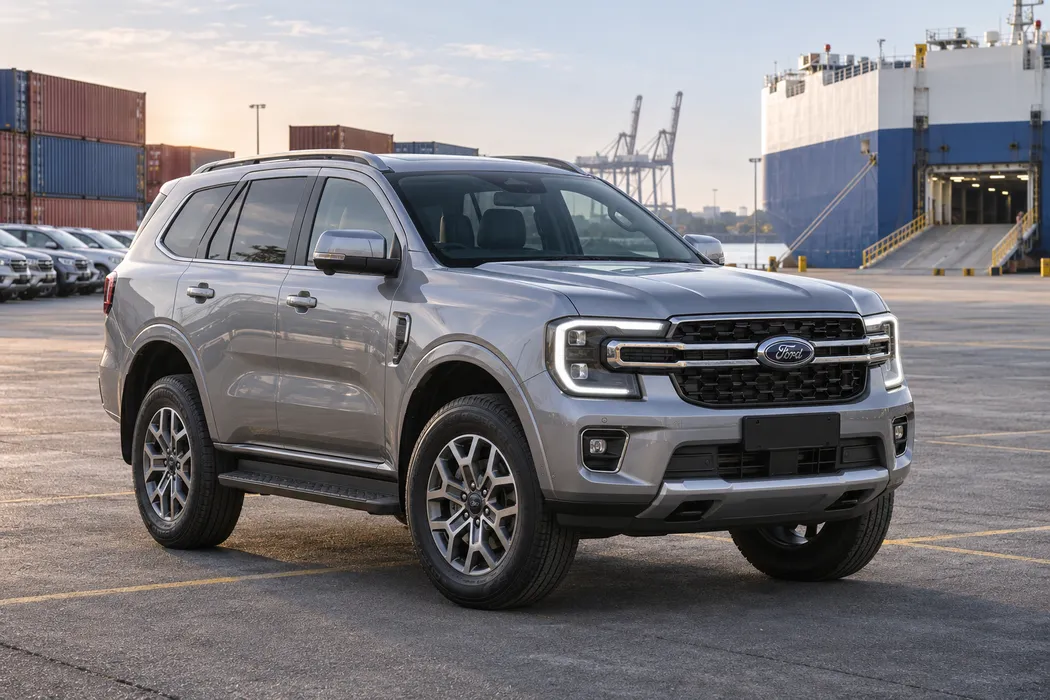
Most overseas-market vehicles under 25 years old need evidence of compliance for unrestricted permanent U.S. importation. A genuine manufacturer’s U.S. FMVSS certification label is the ordinary evidence on the safety side. If a seller says a particular Everest meets U.S. standards, ask for a photograph of the manufacturer’s certification, the emissions label or relevant confirmation, and documents identifying the exact vehicle. A foreign homologation statement, a sticker with a VIN, and a label listing tire pressures do not establish U.S. certification.
For a nonconforming vehicle, a Registered Importer is the professional to ask about NHTSA eligibility and any permitted safety conversion. Ask for the applicable NHTSA eligibility determination or a written explanation of the path they propose. Eligibility may depend on the exact make, model, model year, and specifications. Sharing engineering with the Ranger gives you no eligibility determination for an Everest. If someone proposes a petition instead of pointing to an existing determination, find out how that uncertainty affects timing and your deposit. A petition can fail. Ask your customs broker to identify who will handle the vehicle’s eligibility assessment if that falls outside the broker’s services.
Emissions are a separate conversation. EPA generally requires an Independent Commercial Importer for a nonconforming vehicle that is ineligible for an applicable exemption or exclusion. Ask the professional handling your purchase what documentation will apply to the actual engine and emissions equipment. A Registered Importer handles the safety route under NHTSA. Confirm who will handle EPA separately before the vehicle leaves the seller.
A temporary import or Show or Display approval has its own requirements and restrictions. Ask anyone offering one of these to identify the exact authority, the specific written approval where required, who may use the vehicle, and what happens at the end of the permitted use. If someone offers to handle the safety and emissions paperwork after the vehicle arrives, wait for a documented plan that applies before entry. Storage or return costs may exceed the initial shipping quote.
Build a paperwork file before arranging shipment
Keep one record of the VIN or chassis number and compare it character by character across documents. Ask for legible photos of the original identification markings, the build record, ownership or registration evidence, and the engine identification. Request invoices for engine replacements or emissions work and photographs sufficient for a specialist to identify the configuration. Have the seller correct errors while they still control the paperwork. If the ownership chain is incomplete, seek authoritative confirmation before transferring funds.
For a typical entry, you should be ready to discuss a purchase invoice or bill of sale, ownership records, shipping documents, the DOT HS-7 and EPA 3520-1 declarations, and the applicable customs entry paperwork. CBP’s guidance on registering a foreign vehicle explains the importance of proof of lawful entry and ownership, including CBP Form 7501, Entry Summary. Ask the broker what record you will receive and whether it will identify the same vehicle you intend to title. Keep originals and legible copies. A carrier’s delivery receipt documents transportation, so obtain the customs record separately.
Get a written itemized quote before spending. Separate the price of the SUV from foreign inland transport, shipping, marine coverage if selected, customs brokerage, port handling, duties or additional applicable tariffs, storage, pickup, any conversion or inspection work, and title and registration charges. Ask the broker which items are estimates and what will change them. Customs classification, country of origin, and the policies effective when the vehicle enters can change the calculation. Use a quote for the exact vehicle and entry date.
Then run a delay scenario. Ask who pays port storage if a customs filing is held, who arranges movement from the port, and which charges are due before release. Compare the broker’s written services with the seller’s terms so both parties know who will handle documentation. If you and the seller agree on conditions tied to inspection or eligibility, put them in writing before making a deposit. Make sure you understand how an unresolved agency question affects the refund.
Check the state before you call it road-ready
Federal import eligibility gives you a path to enter the United States. Your state handles the title, registration, and any state inspection or emissions conditions. Ask the DMV or the agency it designates for imported vehicles about the proposed VIN, model year, foreign documentation, your intended use, and the specific federal entry basis. Ask separately if the state requires additional records, a physical VIN inspection, an emissions check, or other evidence. Keep the answer with the purchase documents.
If a seller advertises an Everest already in the United States, check the current title and the federal entry file before buying. Ask who imported it and when. Match the VIN on the vehicle, title, and entry paperwork. Confirm whether there were restrictions on use or transfer. An old registration from another state can establish past transactions. You still need to know whether your own state will issue a title and registration. Its answer may depend on whether the vehicle was lawfully entered and what documents you can produce.
Think ahead to maintenance too. Give a local shop the model, engine, and market and ask whether it can source routine parts and diagnose the vehicle. Verify compatibility by VIN or original part number. A U.S. Ranger component may sound similar while having a different connector, dimensions, or calibration. If repairability matters for a daily driver, obtain availability and lead-time estimates for the components you would need after ordinary use or collision damage.
Choose an option that matches your actual goal
If you specifically want the Everest body and layout, identify an early vehicle, confirm its build date and configuration, and calculate when it qualifies on the federal safety side. Use that time to learn what your state requires and how the market you are shopping in documents ownership. Verify everything again at purchase and entry, since the vehicle and rules can change.
If you mainly want a family-sized Ford SUV, compare the U.S.-market Explorer and Expedition for the seating and everyday use you need. If trail use is the priority, compare the Bronco separately. Look at the actual seat count, payload, towing requirements, and service options for the individual trim, using its U.S. label and Ford’s published specifications. You can then compare a vehicle you could buy now against the full cost and uncertainty of importing an Everest.
Questions buyers ask
Can I get a Ford Everest through Mexico or Canada?
Buying from a seller in a neighboring country gives you no new evidence of U.S. safety or emissions status. A land crossing still requires lawful entry and the applicable paperwork. Ask whether the vehicle was certified for the U.S. and which entry basis applies to that VIN. If the seller cites a special Canadian provision, have a qualified importer verify it for that vehicle before you travel or pay. Passing through another country leaves the vehicle’s original certification status unchanged.
Can I buy an Everest from someone who already imported it?
Potentially. Request the customs entry, declarations, and title information, then check their match to the SUV and your state’s instructions. If there are use limits, outstanding conditions, or questions about its entry, resolve those first. If the only proof is a classified ad or a photo of a plate, ask for the entry and title documents before committing to the purchase.
Is a Ford Everest purchase realistic right now?
The practical answer depends on the VIN and on the road use you need. A recent unverified overseas Everest should stay off your shopping shortlist until an importer can document its route and your state can explain how registration would work. For an older example, count both age rules from documented dates, check configuration, and confirm each handoff before shipping. Those records let you compare a written import proposal against buying a U.S.-market Ford on the basis of the complete cost.