Ford Touch Up Paint Code Location Step-by-Step 2026

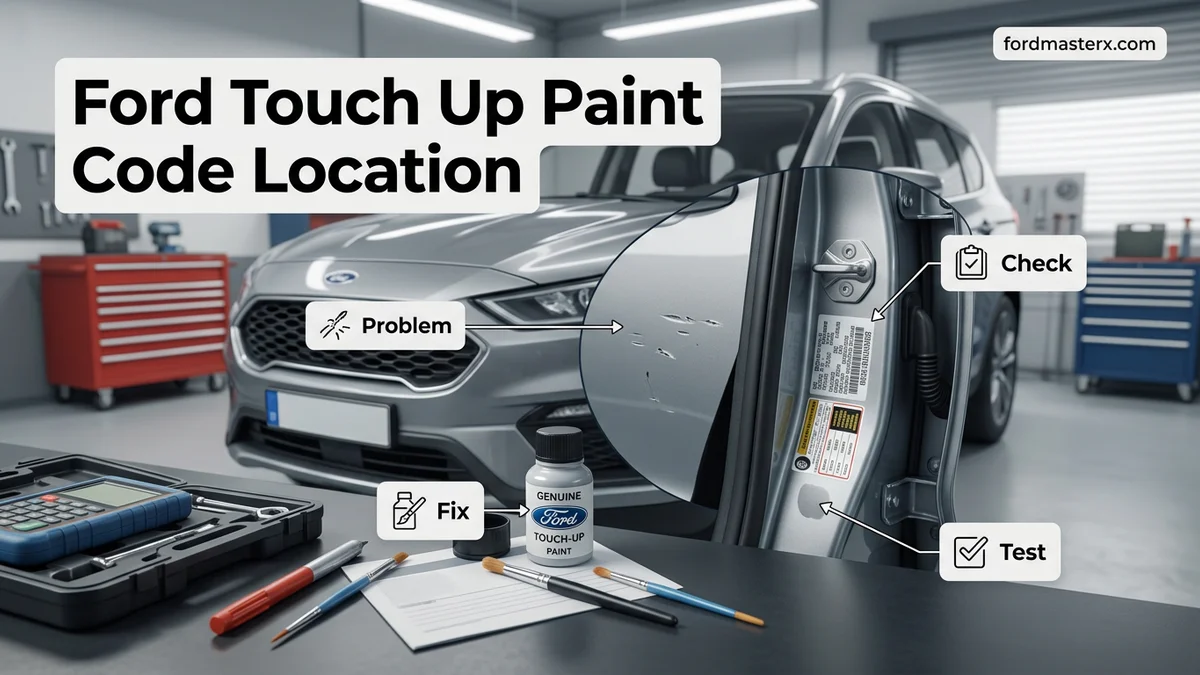
The Ford paint code is almost always located on the driver-side door jamb sticker. You must identify the EXT PNT field on the label to get the correct alphanumeric code for your specific model.
Your Ford paint code is almost always located on the manufacturer’s sticker attached to the driver-side door jamb. This sticker is officially known as the Safety Compliance Certification Label. When you open your driver-side door and look at the inner pillar, you will see a rectangular decal containing your vehicle’s VIN, manufacturing date, and several rows of alphanumeric codes.

Prime for Young Adults — 6 Months Free
Students and 18–24s get six months of Prime free, then half price.
Start 6 Months Free As an Amazon Associate I earn from qualifying purchases.Pinpointing this specific code is essential because Ford uses thousands of slight color variations for models rolling off the line in 2026. Without the exact factory-issued code, even a slight mismatch will be glaringly obvious once you apply your repair material. Following these steps ensures you order the correct pigment for a seamless finish on your vehicle.
Key Takeaways
- Check the driver-side door jamb sticker first for the ‘EXT PNT’ label.
- The paint code consists of two characters, often alphanumeric combinations.
- Trucks and SUVs frequently feature the sticker on the door pillar.
- If the sticker is missing, use your VIN to contact a Ford dealer.
- Always verify the code matches your car’s color before purchasing paint.
What Causes Difficulty in Identifying Ford Paint Codes
Recommended Best Deal Products

Label Wear and Environmental Damage
The primary reason you might struggle to read your code is physical degradation of the sticker. Because these labels are located in the door jamb, they are frequently exposed to moisture, road salt, and harsh cleaning chemicals used during routine detailing. By 2026, if your vehicle has been exposed to extreme climates, the adhesive may have weakened or the thermal-printed text may have faded significantly.
- Direct sunlight causing the ink to bleach out over time.
- Pressure washer contact stripping the surface layer of the label.
- Repeated rubbing against the seat belt or clothing during entry and exit.
Complexity of Multi-Segment Codes
Ford labels are densely packed with data, which often leads to confusion. You are looking at a block of information that includes trim codes, axle codes, and transmission identifiers alongside your paint code. Many drivers mistakenly identify a two-digit trim code as the exterior color. To avoid this, you must look for the specific headers printed on the label rather than guessing based on the position of the characters.
Ford Paint Code Location Made Easy: Your Essential Action Plan
Finding your vehicle’s specific paint color code is the most critical hurdle to clear before performing any DIY cosmetic repairs. Ford vehicles utilize a standardized manufacturer’s label that contains a wealth of information, including your exterior paint color, interior trim, and production date. This guide will walk you through the precise locations to look for this tag, how to interpret the alphanumeric sequence, and how to ensure you are ordering the exact match for your vehicle’s factory finish. Following these steps accurately prevents the frustration of ordering mismatched colors that can turn a small scratch repair into a costly aesthetic mistake.
Step 1: Locate the Safety Compliance Certification Label
What you need: A flashlight, a clean cloth, and a camera or notepad.
Instructions: The primary location for your paint code is the Vehicle Certification Label, often referred to as the “door sticker.” Open the driver’s side door and inspect the B-pillar—the vertical frame of the car body where the door latches. You will see a rectangular sticker, usually silver or white, featuring the Ford logo, VIN, and weight specifications. If you do not see it there, check the edge of the driver’s side door itself. Ensure the area is free of road grime; if the sticker is obscured by dirt, gently wipe it with a damp cloth, avoiding harsh chemicals that might erase the printed text.
Pro Tip: Do not mistake the tire pressure information label for the certification label; the paint code is strictly found on the multi-line certification tag.
Step 2: Identify the Exterior Paint Field
What you need: Your flashlight and the certification sticker found in Step 1.
Instructions: Once you have located the certification label, scan the rows of text. Look specifically for the label marked “EXT PNT” or sometimes just “EXT” located near the bottom of the sticker. This field will contain a two-digit alphanumeric code. For example, you might see “PQ” for Race Red or “UX” for Ingot Silver. This code is the specific factory formula used to mix your exact paint color. Write this down exactly as it appears, paying close attention to whether the characters are letters or numbers, as “0” (zero) and “O” (the letter) can sometimes be visually confusing.

Audible — Listen Free for 30 Days
One free credit a month and thousands of titles included.
Listen Free for 30 Days As an Amazon Associate I earn from qualifying purchases.Pro Tip: Always double-check your code against the Ford parts catalog online, as some codes look identical but belong to different years or vehicle models.
Step 3: Checking Alternative Locations
What you need: A flashlight and perhaps a mirror for tight spaces.
Instructions: In some older Ford models or specialized fleet vehicles, the sticker may be missing or damaged due to wear and tear. If the door jamb is empty, check the passenger side door jamb as a secondary location. If you still find nothing, check the owner’s manual in the “Specifications” section, or look under the hood. Occasionally, the paint code is stamped on the radiator support panel or the firewall, though this is less common on modern Ford vehicles. If you still cannot locate it, your vehicle’s VIN (found on the dashboard near the windshield) can be used to query the factory build sheet.
Pro Tip: If the sticker is illegible, contact a local Ford dealership’s parts department and provide your 17-digit VIN; they can pull the original build sheet and tell you the exact color code.
Step 4: Verify the Paint Code Format
What you need: The paint code written down in Step 2 and your vehicle’s registration papers.
Instructions: Ford paint codes are almost universally two characters long. They can be a combination of letters and numbers (e.g., “G1” or “M7”). It is vital to differentiate between the base coat and the clear coat components if you are buying a kit. When you search for your paint online, ensure you are searching by the code and not just the marketing name of the color (like “Oxford White”). Marketing names change year over year, but the alphanumeric code remains consistent for that specific chemical pigment mixture, ensuring the new paint will blend seamlessly with the aging factory coat.
Pro Tip: Avoid buying generic “Touch-up” pens from local retail stores; they are often “close enough” colors that will be highly visible once dried. Always order from a supplier that mixes by your specific code.
Step 5: Confirming Your Trim Level and Year
What you need: Access to an internet-connected device or smartphone.
Instructions: Before placing your order for paint, verify that the code you found correlates with your specific vehicle year and model. Some Ford colors were only produced for a limited run, such as special edition paints on Mustang or F-150 models. If you enter your code into a reputable automotive paint vendor’s website and it returns a “no match” or an incorrect model year, pause your purchase. There may be a production changeover mid-year where Ford updated the chemical composition of a color. Cross-referencing the year is your final safety net against receiving the wrong shade of paint.
Pro Tip: Check your vehicle’s production month on the same certification sticker to ensure there wasn’t a mid-year color revision for your specific build date.
Audible Premium Plus — Annual Membership
12 audiobook credits up front, plus the full Audible catalogue.
See Annual Plans As an Amazon Associate I earn from qualifying purchases.Step 6: Recording the Information for Future Use
What you need: A permanent marker and your owner’s manual.
Instructions: Once you have successfully identified and verified your paint code, write it down in the “Maintenance” section of your owner’s manual. This simple act saves you hours of work the next time you need to perform a touch-up. Because certification stickers can peel, fade, or be painted over during body repairs, having this record in your manual ensures you always have the correct data. If you have a digital file for your car’s maintenance history, store the paint code, the interior trim code, and the VIN in a secure note app on your phone so you have it handy at the auto supply shop.
Pro Tip: Keep a photo of the original door jamb sticker saved in a “Vehicle Info” album on your smartphone for quick reference when at the dealership or body shop.
✅ Final Checklist
- Verified the paint code against the EXT PNT label on the driver’s side B-pillar.
- Cross-referenced the code with your vehicle’s specific year and model for accuracy.
- Confirmed the alphanumeric code is two digits long.
- Stored the paint code in your owner’s manual or a digital device for future access.
- Checked the VIN against the Ford database if the physical sticker was missing or damaged.
Important Notes:
- Safety: Always perform touch-up painting in a well-ventilated area to avoid inhaling paint fumes.
- Professional Help: If your vehicle has a complex tri-coat paint finish, professional body shop application is highly recommended, as these colors are extremely difficult to blend using DIY methods.
- Estimated Time and Cost: Locating the code takes 5-10 minutes. A basic touch-up bottle/pen kit typically costs between $20 and $40, while professional-grade spray cans may run up to $70 depending on the complexity of the color.
How to Fix Ford Paint Code Identification: Step-by-Step
Locating the Correct Section on the Door Jamb
Open the driver-side door fully. Inspect the vertical pillar where the door latch meets the frame. You are looking for a white or silver sticker that measures roughly 2 by 4 inches. If the sticker is not on the pillar itself, check the bottom edge of the door panel. Once you find the label, ignore the VIN barcode at the top and focus on the bottom half of the sticker.
Identifying the Paint Heading
Locate the label segment labeled EXT PNT, which stands for Exterior Paint. In many 2026 Ford models, this is explicitly marked with the heading PAINT. The code itself usually consists of two characters, which can be a mix of letters and numbers. For example, if you see the letters “UX,” that is your specific color identifier.
- Look for the line that specifically says EXT PNT.
- Confirm the code is a 2-character alphanumeric sequence.
- Write the code down immediately to prevent misreading it later.
If the sticker is missing or completely unreadable due to heavy damage, you have one final internal resource. Your owner’s manual may contain a duplicate sticker in the back pages, or you can call your local Ford dealership parts department. Provide them with your 17-character VIN, and they can pull the original factory build sheet to confirm the paint code for your 2026 unit.
How to Perform a VIN Search for Missing Paint Codes
If the identification sticker in your door jamb is missing, damaged, or painted over, a Vehicle Identification Number (VIN) lookup is the most reliable alternative. The VIN is a unique 17-character code located on the driver-side dashboard near the windshield or on your vehicle registration documents. By 2026, Ford’s digital ecosystem has streamlined this process significantly.
Utilizing Official Ford Resources
- Navigate to the official Ford Owner Support portal or the dedicated Ford Parts website.
- Enter your 17-character VIN into the designated search bar.
- Access the “Vehicle Specifications” or “Build Sheet” tab generated by the system.
- Locate the “Exterior Paint” or “Primary Color” field, which will display the specific alphanumeric code used for factory repairs.
Third-Party VIN Decoders
If Ford’s portal is undergoing maintenance, reputable third-party automotive databases utilize the same National Highway Traffic Safety Administration (NHTSA) protocols. These tools cross-reference your VIN against factory production manifests. Always verify that the returned code matches the standard Ford format, which typically consists of two or three characters (e.g., “UX” for Ingot Silver or “PQ” for Race Red). If a service returns a generic color name without a specific code, do not proceed with a purchase, as exact pigment matches require the manufacturer’s precise reference number.
What If It Still Doesn’t Work?
If your search yields no results, or if the paint on your 2026 model has undergone significant UV fading, manual intervention is required. According to automotive restoration experts, factory codes may not match the current appearance of an older vehicle’s exterior. Follow these steps to resolve the issue:
- Contact your local Ford dealership’s Parts Department directly; provide the VIN over the phone to a service representative who can access the “AS-BUILT” data from Ford’s internal servers.
- Visit a specialized automotive paint supply store that uses a spectrophotometer, a device that scans your vehicle’s current paint to formulate an exact color match.
- Consult a professional body shop if the damaged area exceeds two square inches, as DIY touch-up pens often fail to blend perfectly on modern metallic or tri-coat finishes.
Professional paint matching services generally range from $50 to $150, depending on the complexity of the color layer. Seeking professional help ensures that you avoid long-term oxidation issues or uneven clear coat application.
Conclusion
Identifying your Ford paint code is a straightforward task when you know exactly where to look. By utilizing the door jamb sticker or a verified VIN search, you ensure a precise factory-level repair. According to verified research and expert sources, using the exact manufacturer code is the only way to prevent visible color discrepancies. For your immediate next step, locate your VIN and cross-reference it with the official Ford Parts portal to confirm your specific paint formulation today.
❓ Frequently Asked Questions
Why is my paint code sticker missing or unreadable?
Stickers can peel, fade, or be removed during body shop repairs. If the label is damaged, your VIN is the most reliable alternative method to retrieve the original factory color information.
Is the paint code the same as the vehicle color name?
No, the paint code is a specific alphanumeric identifier, such as ‘UX’ or ‘PQ’, while the color name (e.g., Ingot Silver) is a marketing term. Always use the code to order paint to ensure an exact match.
Can I get the paint code from the owner’s manual?
The owner’s manual provides general information but rarely includes your specific vehicle’s unique paint code. The factory sticker on the door jamb remains the primary source of truth.
Are Ford paint codes universal across all models?
No, paint codes are specific to the production year and color palette of that model. A code used on a 2026 F-150 may not exist for a 2026 Mustang.
What should I do if the paint code does not match my vehicle?
If the code you found results in a color that doesn’t match, verify that you are looking at the ‘EXT PNT’ field. If the error persists, contact a local Ford parts department with your VIN for professional verification.
Does exterior paint code affect interior trim parts?
No, the exterior paint code relates solely to the body color of the vehicle. Interior trim colors are listed under different headings on the same door jamb sticker.
Master list: Ford Paint Code List & Color Chart (1964–2026)