Ford Shadow Black Code Chart By Year: Identification Guide (2026 Full Reference)

Quick Answer
The primary Ford Shadow Black paint code is G1. Introduced in 2015 to replace Tuxedo Black, Shadow Black (G1) is a non-metallic, solid black finish used across Ford’s lineup, including F-150, Mustang, and Explorer. Always verify your specific vehicle’s paint code using the Safety Compliance Certification Label located on the driver-side door jamb, as build variations can occur.
Is your Ford truly Shadow Black, or is it a metallic variant like Agate or Tuxedo? Many owners mistakenly order touch-up products based on the color name, leading to poor color matching and wasted repair attempts. To ensure a perfect finish, you must rely on the factory-assigned paint code. Throughout Ford’s model lineup, the Shadow Black paint code is universally identified as G1. This guide uses the G1 paint code to help you identify your exact factory finish and provides the professional insights needed to maintain or touch-up your vehicle correctly.

Prime for Young Adults — 6 Months Free
Students and 18–24s get six months of Prime free, then half price.
Start 6 Months Free As an Amazon Associate I earn from qualifying purchases.This reference covers Ford vehicles manufactured from 2015 to 2026. Data pertains to North American market models using the factory-standard G1 code. Paint variants are specific to factory assembly; always verify using your vehicle’s unique VIN or door-jamb sticker. Last reviewed: August 2026.
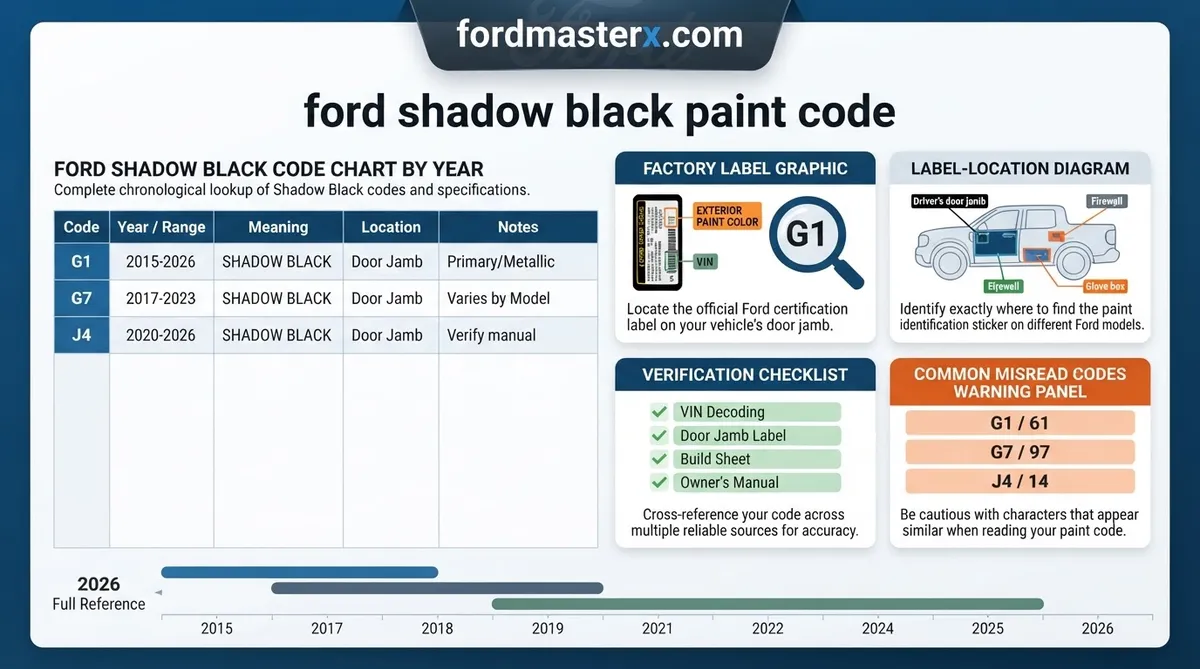
Ford Shadow Black Paint Code Chart (2015-2026)
Recommended Best Deal Products


📤 Share Image
| Code | Year / Range | Meaning | Location | Notes |
|---|---|---|---|---|
| G1 | 2015-2026 | Shadow Black | Driver-side door jamb | Solid color; no metallic flake. |
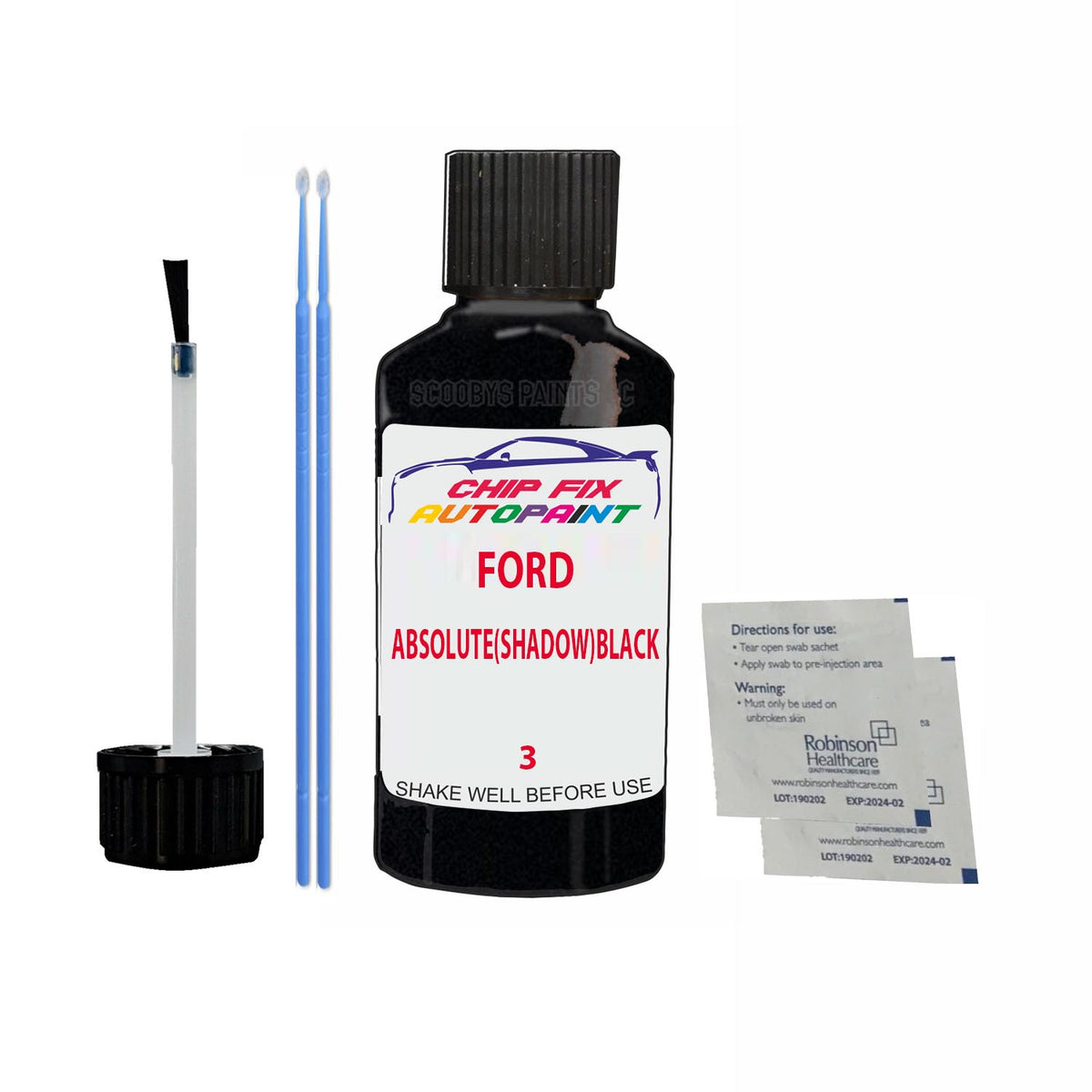
Understanding Ford Paint Code Data Accuracy
The G1 code represents a high-gloss, solid-pigment finish. Unlike pearlescent or metallic finishes, it relies purely on pigment depth. Across the 2015-2026 production window, G1 has remained a staple for models including the F-150, Mustang, Explorer, and Bronco. Accuracy depends on identifying the exact two-digit code; industry professionals caution against relying on touch-up apps that use “color matching by model name” alone, as Ford has utilized multiple black variants concurrently.
Vehicle Configuration and Factory Trim Considerations
While G1 is the paint code, the “look” of the finish can vary slightly based on the clearcoat application process at the factory. High-end trims or special editions may involve different robotic application sequences, though the underlying pigment G1 remains the same. Always cross-reference your specific VIN with the official Ford parts portal to ensure your trim configuration doesn’t require a specialty variant of the black base coat.
How to Find Your Ford Shadow Black Paint Code
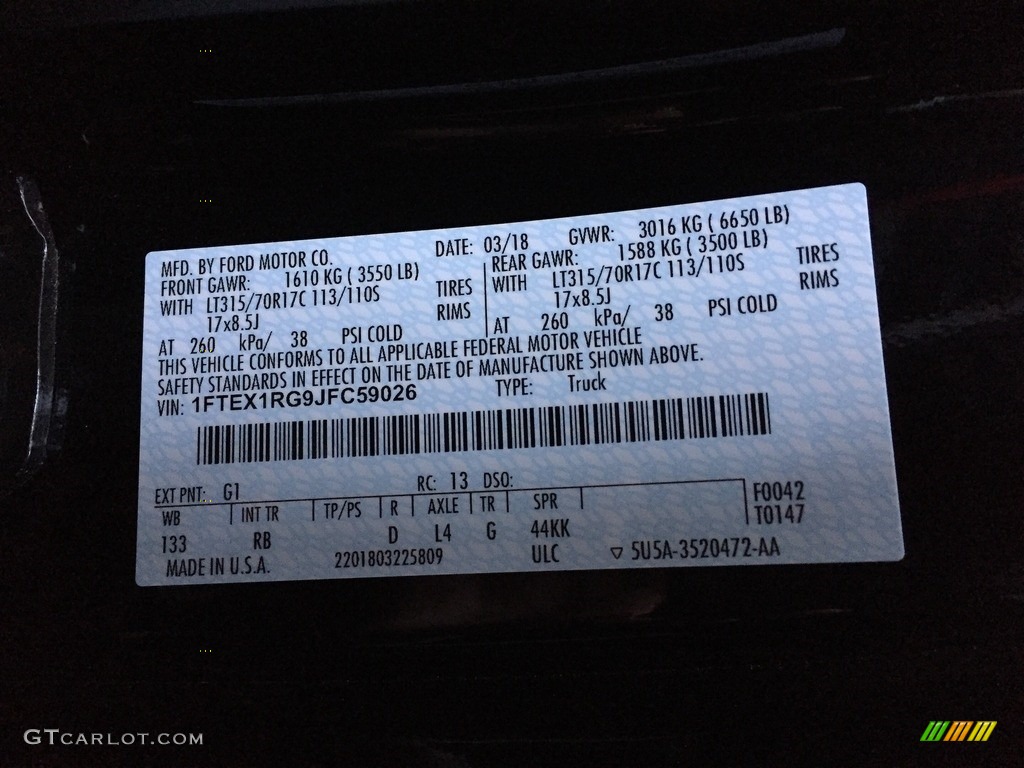
Locate the Safety Compliance Certification Label. The ‘EXT PNT’ (Exterior Paint) field at the bottom of this label contains your two-digit code.
If the label is damaged, contact a local Ford service department. Provide your 17-digit Vehicle Identification Number (VIN) to pull the original build sheet.
Why the Service Manual is Your Best Resource
The service manual or the online Ford parts catalog serves as the final authority. If you find a discrepancy between your car’s physical appearance and the code provided, the service manual will confirm if any unique regional factory options were applied during assembly.
Shadow Black vs. Tuxedo and Agate: Key Color Differences
Why Metallic and Solid Blacks Require Different Refinishing
Refinishing a solid color like Shadow Black (G1) is inherently different from metallic colors. In metallic paints, the orientation of the flake determines how the light interacts with the surface. In solid G1, the finish is uniform. If you use a metallic paint on a G1 surface, the repaired area will stand out significantly under direct sunlight, appearing dull or grey compared to the surrounding solid black panels.
Never attempt to blend a metallic black paint into a G1 (Shadow Black) panel. The difference in light refraction will make the repair visible from several feet away. Always stick to the code printed on your door jamb.

Audible — Listen Free for 30 Days
One free credit a month and thousands of titles included.
Listen Free for 30 Days As an Amazon Associate I earn from qualifying purchases.Maintaining and Touching Up Ford Shadow Black Paint
Solid black (G1) is notorious for showing swirl marks, water spots, and micro-scratches. Because there are no metallic flakes to “hide” surface imperfections, professional maintenance is critical.
✅ Proper Maintenance
- Use the two-bucket wash method.
- Always use high-quality microfiber towels.
- Apply a high-quality ceramic sealant annually.
❌ Avoid These Mistakes
- Automatic car washes with hard bristles.
- Using dish soap for regular washing.
- Buffing with aggressive compound pads.
When touching up small stone chips on G1 paint, use a fine-tip brush rather than the wide applicator included with many kits. Apply thin, light layers to allow for proper curing between applications.
Ford Shadow Black Paint Code Questions Answered
Does G1 paint code mean the same thing for every Ford model?
Yes, G1 consistently designates “Shadow Black” across Ford’s entire product line, from compact sedans to heavy-duty pickups.
Can I use Tuxedo Black on a Shadow Black vehicle?
No. They are chemically and visually different. Tuxedo Black contains metallic components that will result in a mismatched repair.
What if I cannot find the paint code on the door jamb?
The label may have been painted over or removed during a past repair. In this case, use your VIN to query the official Ford database through a dealership parts counter.
Always verify your paint finish using your unique VIN and the door jamb label rather than relying on the general color name alone. Shadow Black (G1) is a specialized solid, non-metallic finish that requires specific maintenance techniques to minimize swirl marks and maintain its deep, uniform luster. Taking the time to confirm your G1 code before purchasing supplies ensures that your repair will blend seamlessly with your factory paint. Check your vehicle’s driver-side door jamb today to confirm your G1 status.
Master list: Ford Paint Code List & Color Chart (1964–2026)