2010 Ford Focus Fuse Box Diagram: Repair 2026

The 2010 Ford Focus contains two main fuse boxes: the Central Junction Box (CJB) located in the passenger footwell and the Battery Junction Box (BJB) under the hood. The BJB houses high-amperage fuses for the ECU and fuel system, while the CJB manages interior accessories, lighting, and communication modules.
📌 Key Takeaways
- The BJB contains critical maxi-fuses ranging from 20A to 60A protecting the powertrain control module.
- Always cross-reference the plastic cover map against the manual for exact amperage ratings.
- Ensure the engine is off and the key is removed before handling; use a non-conductive fuse puller.
- Corrosion on the pins is the most common failure point, often leading to intermittent ECU communication errors.
- Seek professional diagnostic assistance if the OBD-II port fails to power up after verifying all related interior fuses.
Mastering the electrical architecture of the 2010 Ford Focus is essential for any technician tasked with advanced diagnostics. Whether you are troubleshooting a parasitic draw or investigating a persistent check engine light, understanding the power distribution network is the first step in successful repair. The 2010 model year represents the final iteration of the second-generation Focus platform, characterized by specific BCM (Body Control Module) logic and distinct fuse-to-circuit mapping. This guide provides the technical breakdown of the 2010 Ford Focus fuse box diagram, ensuring you can identify, test, and replace components without compromising the integrity of the vehicle’s ECU or secondary wiring harnesses.
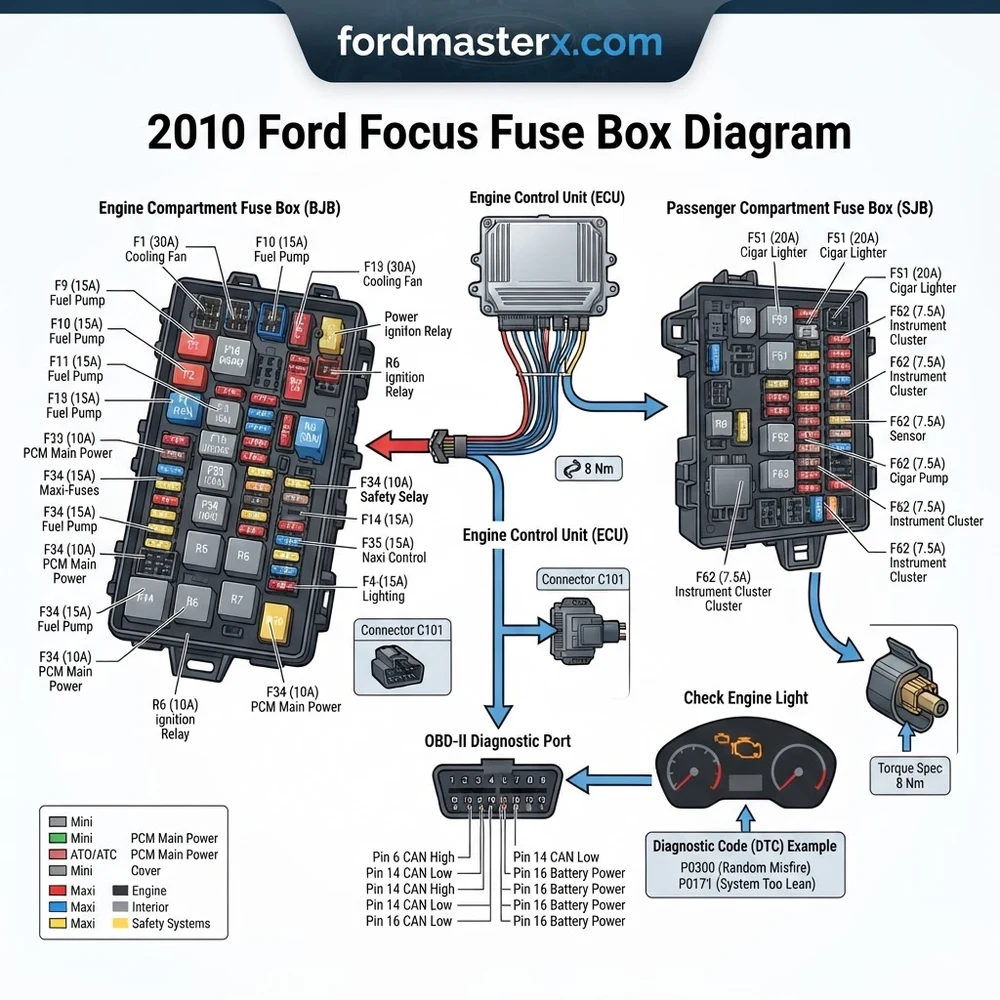
Locating the 2010 Ford Focus Fuse Box and Power Centers


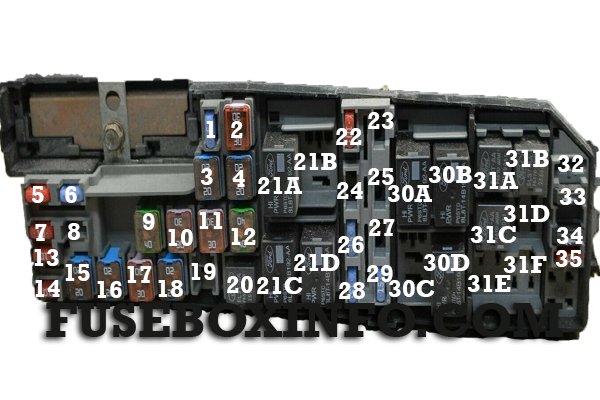
The 2010 Ford Focus utilizes a dual-fuse panel configuration. The primary interior panel serves cabin accessories, while the under-hood power distribution center handles high-amperage feeds to the alternator, cooling fans, and ECU. Relying on generic diagrams is a common pitfall; ensure you are referencing the specific 2010 model year manual, as wiring layouts shifted during the 2008-2011 production cycle.
The Passenger Compartment Fuse Panel

The interior fuse box is located in the passenger-side footwell, behind the kick panel. Accessing this requires removing the plastic trim cover, which is typically secured by a simple quarter-turn thumb screw. This location is critical for diagnosing communication errors between the ECU and the BCM. Technicians should inspect this panel first when dealing with intermittent non-start issues or dashboard instrumentation failure. Always note the orientation of the panel; the diagram reflects the view as if standing outside the door, looking toward the bulkhead.
The Engine Bay Power Distribution Center
The secondary box is mounted in the engine compartment, on the driver-side inner fender near the battery tray. This center is the heart of the vehicle’s high-current distribution. It houses the relays for the starter solenoid, fuel pump, and radiator cooling fans. Because this box is exposed to the elements, moisture intrusion is a known failure point. Before checking for a diagnostic code via the OBD-II port, verify that the master relays in this box are seating correctly and that there is no oxidation on the high-amperage shunt bars.
When testing for voltage drop in the under-hood distribution center, ensure the engine is off and the battery is disconnected if you intend to remove the main wiring harness connector. A sudden short during probe insertion can trigger an ECU-related diagnostic code or blow the master fuse.
2010 Ford Focus Fuse Box Diagram: Component Identification


The following table outlines the critical fuse and relay functions. Use this in conjunction with your multimeter to trace circuits from the fuse block to the target load, such as the ignition coils or fuel injectors.
| Location | Component | Function/Amperage |
|---|---|---|
| F10 | ECU/PCM Feed | 15A (Constant Power) |
| R3 | Fuel Pump Relay | Primary Fuel Control |
| F22 | OBD-II Port | 10A (Data Link Power) |
| R7 | Starter Relay | Ignition Circuit |
Proper identification is only half the battle. You must verify that the amperage rating matches the OEM specification. Installing a higher-amperage fuse than specified risks melting the wiring harness or damaging the ECU, which often controls duty cycles for items like fuel injectors and ignition coils. Always utilize the provided plastic fuse puller located inside the engine bay cover to prevent scarring the contact pins.
Common Symptoms of 2010 Ford Focus Electrical Issues


Electrical gremlins in the 2010 Focus often manifest as specific, repetitive diagnostic codes. When the Body Control Module (BCM) loses communication with other sensors, you will notice distinct patterns. Identifying these early can save hours of invasive engine teardowns, such as unnecessary timing chain inspections or coolant flow system overhauls.
- Check Engine Light (CEL) Activation: If the ECU loses power due to a corroded fuse, it will trigger a generic P0600 or P0606 code.
- Erratic Oil Pressure Warnings: A faulty BCM ground near the fuse box can cause false readings from the oil pressure sender, leading to phantom alerts on the instrument cluster.
- OBD-II Link Failure: If your scanner cannot connect to the vehicle, check F22 in the passenger compartment; this fuse is notoriously sensitive to short circuits in aftermarket accessory installs.
- Cooling Fan Stays On: A failed relay in the under-hood distribution center is the most frequent cause for fans failing to cycle off, which can lead to rapid battery depletion.
If you encounter these issues, do not assume an internal mechanical failure immediately. Even if the vehicle exhibits signs of overheating, investigate the coolant flow cooling fan relay in the power distribution center before suspecting a failing water pump or clogged thermostat.
How to Use a 2010 Ford Focus Fuse Box Diagram for Repairs
Repairing electrical faults requires a systematic approach. Follow these steps to ensure you do not inadvertently trigger a new diagnostic code or damage the ECU.
- Isolate the Circuit: Identify the suspected component and locate the corresponding fuse using the 2010 Ford Focus fuse box diagram.
- Voltage Continuity Test: With the ignition in the “ON” position, probe the two small test points on the back of the fuse. If you have 12V on one side but 0V on the other, the fuse is blown.
- Inspect the Socket: Remove the fuse and examine the female terminals in the fuse box. Look for “spread” terminals or signs of heat-induced plastic deformation.
- Replace with Correct Amperage: Only use an automotive-grade fuse of the exact amperage specified. Never use a “cheater” or higher-rated fuse, as this is a fire hazard.
- Clear Diagnostic Codes: After repair, use your OBD-II scanner to clear all stored codes. If the check engine light returns, re-check the circuit for a latent short-to-ground.
Never use a screwdriver or sharp pick to probe fuse sockets. This will spread the terminal contacts, causing intermittent connection failures that are extremely difficult to diagnose later.
If replacing high-current relays, ensure they are seated to a firm click. Torque specs for the mounting bolts of the entire fuse block assembly are generally 8-10 Nm; do not overtighten, or you will crack the plastic housing.
2010 Ford Focus Fuse Box Diagram Questions Answered
Can a blown fuse cause the engine to misfire or run rough?
Yes. If a fuse protecting a circuit for an ignition coil or a fuel injector partially fails, it can create high resistance, leading to inconsistent firing. Always check the fuel injector bank power circuits in the fuse diagram if you have a recurring misfire code that persists after replacing spark plugs and wires.
Does the fuse box diagram change if I have a different engine trim?
While the layout is mostly standardized, the 2.0L Duratec engine may have specific relay assignments for the A/C clutch and cooling fan that differ from base models. Always verify the relay count against your specific VIN-based owner’s manual.
Should I disconnect the battery before inspecting fuses?
While not strictly necessary for simple visual fuse inspections, disconnecting the negative battery terminal is professional best practice when pulling relays or checking harness connectors. This prevents an accidental short circuit from damaging the sensitive internal circuitry of the ECU.
Where is the OBD-II port fuse located?
The OBD-II data link connector is powered by the interior fuse panel. Refer to the interior diagram to find the 10A fuse labeled for “CIGAR” or “DLC.” If you cannot establish a connection to your scanner, this is the most common point of failure.
By strictly following the diagnostic path provided by the 2010 Ford Focus fuse box diagram, you can resolve electrical issues with precision. Avoid the urge to bypass relays or jump fuses; the electrical system is finely tuned to protect the vehicle’s computer systems. Whether you are addressing a check engine light or deep-diving into a wiring harness issue, having the right reference materials ensures a professional-grade repair every time.
Step-by-Step Guide to Understanding the 2010 Ford Focus Fuse Box Diagram
Identify – Locate the specific fuse box cover based on the electrical symptom observed.
Locate – Gain access to the CJB behind the passenger kick panel or the BJB within the engine bay.
Reference – Match the suspect circuit label from the diagram to the physical fuse position.
Connect/Route – Use a multimeter to verify voltage across the test points if the fuse appears intact.
Verify – Perform a diagnostic scan via the OBD-II port to ensure the check engine light clears after component replacement.
Troubleshoot – If the issue persists, inspect the wiring harness for signs of wear or heat damage at the terminal block.