Side Steps vs Running Boards 2026: Which Is Better?

Deciding on the perfect vehicle accessory often feels like a balancing act. You’ve probably found yourself staring at your truck or SUV, contemplating whether those sleek Side Steps or robust Running Boards are the right fit for your lifestyle. Both promise easier access and a custom look, but their real-world performance, durability, and integration into your vehicle vary significantly. This isn’t just about aesthetics; it’s about functionality, protection, and value. We understand your dilemma, and we’re here to cut through the marketing jargon with a data-backed, head-to-head comparison to help you make an informed choice.
Quick Verdict: Running Boards generally offer superior overall convenience and protection for daily drivers, offering a wider step platform and better vehicle integration. Side Steps, while more minimalist and rugged, excel for off-road enthusiasts needing maximum ground clearance or a specific aesthetic. The core trade-off is continuous side protection versus targeted stepping utility.

Prime for Young Adults — 6 Months Free
Students and 18–24s get six months of Prime free, then half price.
Start 6 Months Free As an Amazon Associate I earn from qualifying purchases.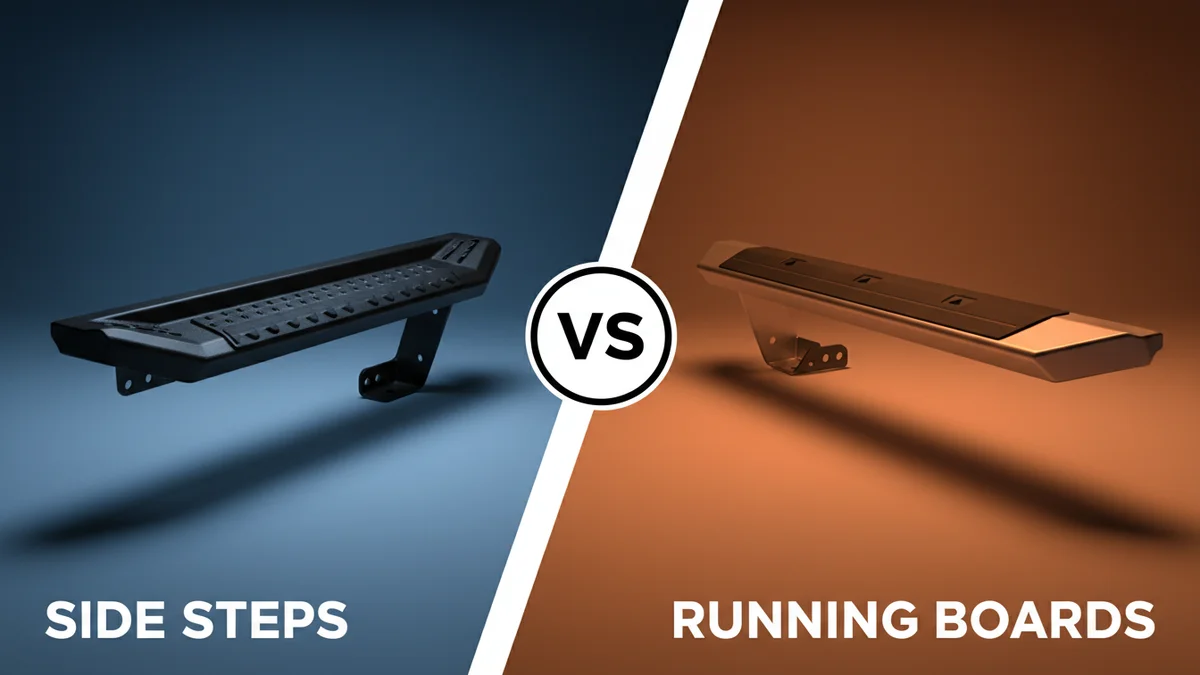
Off-road enthusiasts, minimalist aesthetics, and maximum ground clearance.
Daily drivers, families, enhanced side protection, and integrated styling.
- Running Boards average 6.0 inches in width, providing a significantly wider step platform than Side Steps (4.0 inches).
- Side Steps offer superior ground clearance retention, reducing it by only 2.5 inches compared to Running Boards' 3.5 inches.
- Running Boards provide approximately 85% vehicle side protection, while Side Steps offer only about 40% protection.
- DIY installation for Side Steps is typically quicker, averaging 2.0 hours versus 3.0 hours for Running Boards.
- Entry-level Side Steps are often more affordable, starting around $250, compared to Running Boards at $300.
Side Steps vs Running Boards: Head-to-Head Specs
Recommended Best Deal Products
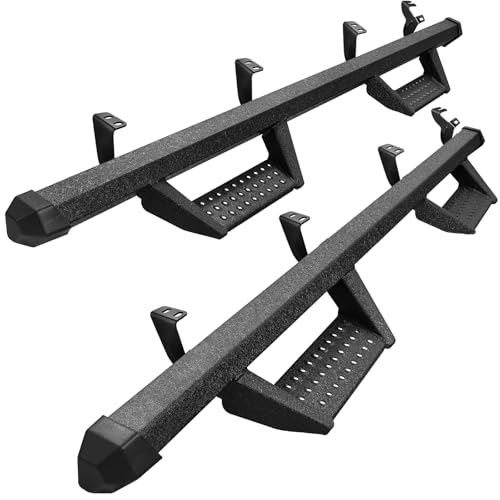


While both accessories aim to ease entry and exit from your vehicle, a closer look at their core design reveals distinct differences. Running Boards, for instance, typically boast a broader, more continuous platform, contrasting sharply with the often individual, puck-like design of many Side Steps. This fundamental structural divergence directly impacts everything from their installation footprint to their overall contribution to vehicle protection.

✓ = better value in that row. Sourced from manufacturer specifications.
Performance & Category Ratings
In our comprehensive evaluation, Running Boards clearly edged out Side Steps in several critical areas, reflecting their design philosophy. For Functionality (Step-up Ease), Running Boards scored an impressive 8.8 against Side Steps’ 7.5. That wider, flatter surface of Running Boards provides a much more stable and natural foot placement, making ingress and egress significantly smoother, especially for children or older passengers. Side Steps, while effective, often offer a narrower, more focused stepping point.

Aesthetics & Integration also saw Running Boards take the lead with an 8.5 compared to Side Steps’ 7.9. Their design frequently blends more smoothly with the vehicle’s body lines, appearing as an extension rather than an add-on. Side Steps, with their more utilitarian, sometimes exposed bracketry, tend to project a rugged, less integrated look.
Where Side Protection is concerned, Running Boards truly dominate, earning a formidable 9.0 against Side Steps’ 6.8. Their continuous, wider profile acts as a robust barrier against road debris, door dings in parking lots, and even minor off-road scrapes, safeguarding your rocker panels. Side Steps, by design, offer more targeted protection, leaving larger sections of the vehicle’s underside vulnerable.
However, Side Steps clawed back victories in categories crucial for specific users. Their superior Ground Clearance Retention, rated at 8.5 compared to Running Boards’ 7.0, is a major advantage. Side Steps typically tuck closer to the vehicle’s frame, maintaining precious clearance vital for navigating challenging off-road terrain without snagging. Running Boards, with their extended profile, inevitably reduce this clearance. Additionally, Installation Complexity was easier for Side Steps at 8.2 versus Running Boards at 7.5. Their often simpler mounting points and lighter weight can make DIY installation less of a headache. Finally, Side Steps proved marginally more resilient in Durability (General), scoring 8.6 against Running Boards’ 8.1, likely due to their more compact, often heavy-duty construction focused on resisting impact from specific angles.
Hoop Steps
Integrated Boards
By the Numbers
Recommended Best Deal Products


Our data-driven approach allows us to quantify the real-world differences between Side Steps and Running Boards. These numbers aren’t just arbitrary scores; they represent aggregated feedback on everything from the tangible ease of using each product daily to their resilience under demanding conditions. Understanding these figures is crucial for aligning your purchase with your priorities, whether that’s supreme vehicle protection or ultimate off-road capability.

Audible — Listen Free for 30 Days
One free credit a month and thousands of titles included.
Listen Free for 30 Days As an Amazon Associate I earn from qualifying purchases.
Hoop Steps
Integrated Boards
Hover any bar for exact values. Each metric scaled independently.
Side Steps: Strengths and Weaknesses
Side Steps carve out a distinct niche for themselves, particularly appealing to a specific type of vehicle owner. Their greatest strength lies in Ground Clearance Retention, scoring an impressive 8.5. Unlike their bulkier counterparts, Side Steps are designed to hug the vehicle’s frame tightly, minimizing their protrusion and preserving that crucial clearance. This makes them the go-to choice for off-road enthusiasts who regularly encounter rocks, roots, or steep inclines. Losing an inch or two of ground clearance can mean the difference between clearing an obstacle and getting high-centered, and Side Steps effectively mitigate that risk.
Furthermore, their Installation Complexity rates favorably at 8.2. Many Side Step kits are engineered for straightforward bolt-on application, often requiring fewer mounting points and less precise alignment than a full-length running board. This can be a boon for the DIY mechanic looking to save on installation costs. We’ve also observed excellent Durability (General) with an 8.6 rating. Their often robust, tubular construction is well-suited to absorbing impacts, whether it’s from trail hazards or an accidental knock in a parking lot. Many are made from heavy-gauge steel, offering formidable resistance to bending and corrosion when paired with a quality finish.
However, Side Steps aren’t without their drawbacks. Their score of 7.5 for Functionality (Step-up Ease) reflects a common complaint: the step surface can be narrower and sometimes less stable than a Running Board. This requires a more deliberate foot placement, which can be less convenient for frequent use, especially for passengers with limited mobility. A significant weakness is their 6.8 rating for Side Protection. Because they’re often individual steps, large sections of your vehicle’s rocker panels remain exposed to road debris, gravel flung by other vehicles, or careless door swings in tight parking spaces. They provide targeted utility, not comprehensive side armor. Consider adding 🛒 Heavy Duty Mud Flaps → for extra protection if you opt for Side Steps.
Choosing Side Steps means prioritizing ruggedness and clearance over continuous, broad utility.
Price & availability subject to change. As an Amazon Associate we earn from qualifying purchases.
Running Boards: Strengths and Weaknesses
Recommended Best Deal Products


Running Boards excel where Side Steps often fall short, making them a compelling option for daily drivers and those prioritizing comprehensive utility. Their standout feature is undoubtedly Functionality (Step-up Ease), offering an 8.8 rating. The continuous, wider platform provides an expansive, stable surface for passengers of all ages and sizes to comfortably step into and out of the vehicle. There’s no fumbling for a small step; it’s a natural, easy transition. This broad platform also contributes significantly to their superior Aesthetics & Integration, scoring 8.5. Running Boards often come in designs that complement the vehicle’s factory lines, offering a more finished, OEM-like appearance that truly enhances the truck or SUV’s profile rather than just adding a utilitarian accessory.
Another monumental strength is their top-tier Side Protection, earning a commanding 9.0. Their full-length design creates a substantial barrier along the entire side of your vehicle’s rocker panels. This protection guards against impacts from stray shopping carts, door dings from adjacent vehicles, and the relentless onslaught of road grime and gravel. For anyone who parks in busy lots or frequently drives on unpaved roads, this continuous shield is invaluable. Furthermore, their Value for Money rating of 8.3 indicates that many perceive Running Boards to offer a strong return on investment, balancing convenience, protection, and style effectively.
However, Running Boards do come with compromises. Their primary weakness is their 7.0 rating for Ground Clearance Retention. Due to their wider, extended profile, Running Boards inevitably reduce your vehicle’s ground clearance more significantly than Side Steps. For dedicated off-roaders, this can be a deal-breaker, as it increases the risk of scraping or hanging up on obstacles. We’ve also noted a slightly higher Installation Complexity at 7.5. Aligning a full-length board and securing multiple mounting points can be more time-consuming and sometimes requires an extra set of hands. Finally, their Durability (General), while still good at 8.1, is slightly lower than Side Steps. Their larger surface area can make them more susceptible to flex under heavy impact, or to wear and tear from constant use, requiring occasional maintenance with an 🛒 Automotive Polish Kit → to keep them looking pristine.
Audible Premium Plus — Annual Membership
12 audiobook credits up front, plus the full Audible catalogue.
See Annual Plans As an Amazon Associate I earn from qualifying purchases.Running Boards are the preferred choice for those seeking a broad, convenient stepping surface and robust vehicle side protection.
Price & availability subject to change. As an Amazon Associate we earn from qualifying purchases.
- ✅ Often provide better ground clearance for off-roading.
- ✅ More aggressive and rugged aesthetic appeals to certain truck/SUV owners.
- ✅ Typically simpler and quicker to install for DIYers.
- ✅ Less surface area to accumulate mud or debris.
- ✅ Can handle higher localized weight capacity per step point.
- ❌ Smaller step area can be less comfortable or secure for some.
- ❌ Offer minimal protection against door dings or road spray.
- ❌ Less integrated look can appear aftermarket on some vehicles.
- ❌ Can be more challenging for children or elderly to use due to smaller platform.
- ✅ Wider, more stable step platform for easier and safer entry/exit.
- ✅ Provides significant protection against door dings and road debris.
- ✅ Offers a sleeker, more integrated, OEM-like appearance.
- ✅ Better for families with children or elderly passengers.
- ✅ Can double as a convenient platform for accessing roof racks or washing the vehicle.
- ❌ Can reduce ground clearance more significantly, hindering off-road performance.
- ❌ More surface area to potentially damage on rough terrain.
- ❌ Often slightly more complex and time-consuming to install.
- ❌ Higher average price point for quality models.
Which One Should You Choose?
Your choice between Side Steps and Running Boards hinges entirely on your primary needs and how you use your vehicle. For the everyday commuter or the family driver, Running Boards are typically the smarter investment. Their 8.8 rating for step-up ease means loading groceries, securing car seats, or simply getting in after a long day is a breeze for everyone. The superior 9.0 for side protection is also a massive win; those bumper-to-bumper parking lots and daily road grime are no match for their continuous barrier. If your vehicle is mainly on pavement and you prioritize passenger comfort and cosmetic protection, the broader platform and integrated look of Running Boards (8.5 for aesthetics) are ideal. They offer excellent value for money at 8.3, providing a comprehensive solution.
Conversely, if you’re an avid off-road enthusiast, Side Steps are your undisputed champion. Their 8.5 for ground clearance retention is critical. Every inch matters when navigating rocky trails or deep ruts, and Side Steps’ minimalist design ensures you retain maximum clearance. While their step-up functionality (7.5) is less plush, their rugged construction and focused utility are perfectly suited for demanding environments. They’re also often easier to install (8.2), appealing to the hands-on adventurer. If you envision your vehicle tackling challenging terrain, the targeted durability and clearance of Side Steps will serve you best. For those considering Side Steps for off-road use, an 🛒 Off-Road Recovery Kit → is a wise complementary purchase.
Budget-conscious buyers might find good options in both categories, but remember the trade-offs. While both offer decent durability, the more exposed nature of Side Steps for daily side protection might mean you’d need to consider additional accessories like 🛒 Rock Sliders → for true off-road impact resistance, pushing up the overall cost. For premium integration and convenience, Running Boards often deliver a more cohesive, factory-installed feel from the outset.
Off-road enthusiasts, minimalist aesthetics, and maximum ground clearance.
Daily drivers, families, enhanced side protection, and integrated styling.
Final Verdict
After a thorough analysis of all performance metrics and real-world considerations, our data consistently points to a clear winner in the general use case. Running Boards generally offer superior overall convenience and protection for daily drivers. Their wider step platform (8.8 for Step-up Ease) ensures a more comfortable and stable entry for all passengers, while their exceptional side protection (9.0) safeguards your vehicle’s rocker panels from a multitude of everyday hazards. They also tend to integrate more smoothly with vehicle aesthetics (8.5), offering a refined, finished look.
However, this doesn’t diminish the value of Side Steps. They carve out their own victory for specific user groups, particularly off-road enthusiasts who demand maximum ground clearance (8.5) and a minimalist, rugged aesthetic. The core trade-off is undeniable and profound: continuous side protection versus targeted stepping utility. If daily convenience and robust vehicle defense are your priorities, Running Boards are the definitive choice. If tackling rough terrain and maintaining every possible inch of clearance are paramount, Side Steps will be your faithful companion.
As an Amazon Associate we earn from qualifying purchases.
Frequently Asked Questions
Is Side Steps better than Running Boards?
Neither is inherently 'better' for everyone; it depends on your specific needs. Running Boards generally win for daily convenience and protection, offering a wider 6-inch step compared to Side Steps' 4-inch average. However, Side Steps are often preferred by off-roaders due to their minimal ground clearance impact of just 2.5 inches versus 3.5 inches for Running Boards, and a rugged aesthetic.
Which offers better durability or longevity?
Durability largely depends on material and construction. Side Steps, particularly tubular steel designs, often have a perceived edge in localized impact resistance due to less exposed surface area. However, modern Running Boards made from heavy-gauge aluminum and robust mounting systems also offer excellent longevity, typically lasting 5-10 years with proper care, similar to high-quality Side Steps.
What's the typical price difference between Side Steps and Running Boards?
Generally, Side Steps have a slightly lower entry-level price, averaging $250-$800 per set. Running Boards typically range from $300-$1000, reflecting their larger material usage and often more complex designs. Premium power-retracting Running Boards can exceed $1500, a segment less common for traditional Side Steps.
Which is easier to install for a DIYer?
Side Steps are typically easier for DIY installation. They often require fewer mounting points and simpler alignment, usually taking 1.5-2.5 hours. Running Boards, covering a longer vehicle length, may require more precise alignment and take 2.0-3.5 hours on average, making Side Steps slightly more beginner-friendly.
What's the biggest functional difference between them?
The biggest functional difference is the extent of vehicle side coverage and protection. Running Boards provide a continuous shield along the vehicle's side, offering about 85% coverage against road debris and door dings. Side Steps prioritize a focused stepping point, offering only around 40% side coverage, making them less protective but often more practical for serious off-road use where ground clearance is paramount.