P1000 Ford F150 5.4 Code: Resolved & Explained

Seeing a P1000 code on your scan tool might look like a major engine failure, but for your Ford F-150 5.4L, it tells a much simpler story. Owners frequently encounter this code after disconnecting the battery or performing repairs, often leading to unnecessary panic or repetitive, counterproductive attempts to “clear” the system. The reality is that the P1000 is not a fault code—it is an informational signal confirming your vehicle’s computer is simply finishing its homework. This guide clarifies exactly what this code signifies, why it isn’t an engine defect, and the specific Ford drive cycle steps required to clear it so you can pass your emissions testing with confidence.

Understanding the P1000 Ford F150 5.4 Code Functionality
Recommended Best Deal Products



📤 Share Image
The P1000 code is a standard component of the OBD-II diagnostic system in Ford vehicles. It essentially functions as a “system in progress” flag. When the battery is disconnected or the memory of the Powertrain Control Module (PCM) is wiped, all stored diagnostic data is erased. The PCM must then perform a series of self-tests to ensure that the emissions-related systems—such as the catalytic converters, EVAP system, and O2 sensors—are operating within factory specifications.

Why the PCM Stores the P1000 Status Code
The PCM is programmed to monitor the health of your 5.4L Triton engine continuously. However, if the power is cut, the PCM loses the “history” of those tests. To prevent the vehicle from being operated in an unmonitored state, the PCM sets the P1000 code. This is not an indication of a broken component; rather, it is a notification that the computer is currently gathering new data to verify that the engine is running cleanly. Until these monitors reach a “ready” status, the P1000 code will remain as a snapshot of this active process.
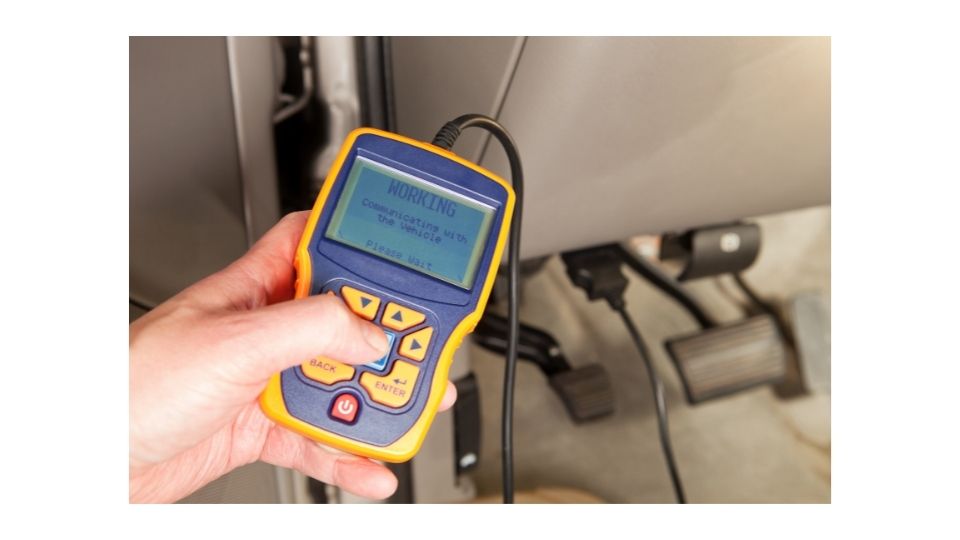
P1000 vs. P1001: Understanding the Difference
While P1000 and P1001 are often seen together, they serve different functions. The P1000 indicates that the readiness monitors are incomplete, which is a normal state after a power interruption. In contrast, P1001 signifies that the system is unable to complete the OBD-II self-test during a specific drive cycle. If you see both, it is a professional indicator that there may be a persistent logic error or a recurring condition preventing the PCM from successfully finishing its diagnostic routine.
How to Resolve the P1000 Ford F150 5.4 Code via Drive Cycle
The only reliable method to clear the P1000 status is by performing a manufacturer-specified “Drive Cycle.” Simply driving to work or idling in the driveway is often insufficient to trigger all the specific monitors. You must subject the 5.4L engine to a variety of operating conditions so the PCM can sample data from every sensor.
📋
Step-by-Step Ford Drive Cycle Sequence
Recommended Best Deal Products


Start the vehicle after it has been sitting for at least 8 hours. Allow the engine to idle for two minutes. This allows the PCM to initialize its cold-start monitoring parameters.
Drive the truck at 45–60 mph for roughly 15 minutes. Steady throttle input is crucial here, as it allows the O2 sensors and catalytic converters to reach optimal operating temperatures for testing.
Conclude the drive with 10–15 minutes of city driving, including several stops and varying acceleration rates. This helps the PCM verify EGR system functionality and purge valve operations.
Required Conditions for Success
For this drive cycle to be successful, fuel levels must be between 15% and 85%. If the tank is completely full or nearly empty, certain EVAP monitors will not initiate, and the P1000 code will persist. Additionally, avoid using high-drain electrical accessories like high-intensity light bars or large aftermarket audio systems during the drive, as these can create voltage fluctuations that interfere with the sensitive monitoring process.
Never use an OBD-II scan tool to “clear” the P1000 code manually. Doing so simply resets the PCM’s memory again, effectively forcing you back to square one. Patience is the only way to resolve this status code.

Audible — Listen Free for 30 Days
One free credit a month and thousands of titles included.
Listen Free for 30 Days As an Amazon Associate I earn from qualifying purchases.Emissions Testing and the P1000 Status Code
The presence of a P1000 code is a guaranteed failure for most state emissions inspections. Because the vehicle’s diagnostic system hasn’t “voted” on whether the car is clean or polluting, the inspector’s computer will automatically mark the vehicle as “Not Ready.”
Why Inspectors Reject Vehicles with P1000
- Compliance Regulation: Inspectors require all emissions monitors to report a “Ready” status to verify that the catalytic converters and fuel systems are functioning correctly.
- Fraud Prevention: The system is designed to prevent owners from simply clearing a Check Engine Light just before an inspection.
- System Integrity: If a car shows P1000, it confirms that the historical data has been wiped, making it impossible for the inspector to verify the long-term emissions performance of the engine.
Testing Standards for 5.4L Triton Engines
For your 5.4L F-150, ensure you have completed at least two full cold-start cycles before heading to the testing center. Most states allow for one or two “Not Ready” monitors depending on the year of your truck, but P1000 indicates that all monitors are potentially incomplete. Always check your readiness status using a reliable scan tool before paying for an inspection appointment.
By The Numbers
Required Cold Starts
Ideal Fuel Level
Common Pitfalls When Troubleshooting the P1000 Ford F150 5.4 Code
Recommended Best Deal Products


One of the most frequent mistakes professional technicians see in the shop is the “shotgun” approach to repairs. Owners assume that if a code persists, a part must be broken, leading to unnecessary replacement of O2 sensors or EGR valves.
Stop Replacing Sensors Unnecessarily
The 5.4L engine is known for its robust but sensitive monitoring system. Replacing an expensive O2 sensor because your scanner shows P1000 is a waste of money. If your truck has no other active fault codes (like a P0420 or P0171), the sensors are likely functioning perfectly. The P1000 code does not point to a specific component failure; it only points to a lack of data. If the sensor were actually faulty, the PCM would generate a specific diagnostic code (e.g., P0135) alongside the P1000.
When to Seek Professional Diagnostic Assistance
If you have performed the recommended drive cycle three or four times and the P1000 code still persists, it is time to involve a professional. There may be a “pending” fault code that isn’t yet triggering the Check Engine Light but is preventing the monitor from “closing.” A professional-grade scan tool can read these pending codes, which will identify which specific system (EVAP, Catalyst, or O2) is failing the self-test, allowing for a targeted, cost-effective repair rather than blind part swapping.
✅ Why Trust Drive Cycles
- Ensures valid sensor data.
- Avoids unnecessary shop fees.
- Confirms emission compliance.
❌ Dangers of Rushing
- Replacing healthy parts.
- Repeated inspection failures.
- Wasted time and fuel.
Ultimately, managing the P1000 code on your Ford F-150 requires a blend of mechanical patience and an understanding of how your vehicle’s PCM interacts with its environment. Remember that the P1000 is a status code confirming the PCM is still learning, not a mechanical defect. Patience is your best tool, as drive cycles require real-world conditions to complete correctly. Stop clearing the codes—let the truck finish its diagnostic sequence naturally. If your monitors remain ‘incomplete’ after a week of mixed driving, have a professional scan the PCM for pending fault codes that might be preventing the test from finishing.
p1000 Ford f150 5.4 Code: Frequently Asked Questions
Will P1000 cause me to fail an emissions test?
Yes, in most states, a P1000 code will cause an automatic failure. Emissions testing facilities require your vehicle’s OBD-II monitors to be in a ‘Ready’ state to ensure the vehicle’s emissions control systems are functioning correctly. If the computer has not finished its self-test, it cannot verify that your truck is running cleanly, and you will be rejected until the monitors complete.
Does P1000 mean there is a problem with my 5.4L engine?
No, it does not. The P1000 code is an informational code that simply tells you the PCM (Powertrain Control Module) has been reset and has not yet completed its required self-diagnostic drive cycle. It signifies that the computer’s memory is ‘incomplete.’ It is not a symptom of a mechanical failure like a bad spark plug or a faulty ignition coil.
How long does it take to complete the Ford drive cycle?
A complete Ford drive cycle typically requires a combination of highway driving and city driving over a period of 15 to 30 minutes, provided the vehicle has undergone a ‘cold soak’ of at least 8 hours beforehand. While some monitors clear within a few miles, others require specific steady-state cruise conditions to satisfy the PCM’s diagnostic criteria.
Why does P1000 keep coming back after I clear codes?
If the P1000 keeps returning, it is usually because you are clearing the codes manually with a scan tool, which restarts the readiness monitor process from scratch. Alternatively, if there is a pending fault—such as a failing thermostat keeping the engine too cold—the monitors will never complete, and the PCM will remain stuck in a P1000 status indefinitely.
Audible Premium Plus — Annual Membership
12 audiobook credits up front, plus the full Audible catalogue.
See Annual Plans As an Amazon Associate I earn from qualifying purchases.Can I bypass the Ford drive cycle?
There is no ‘shortcut’ or software bypass for the drive cycle. The Ford PCM is programmed to only flip those readiness monitors to ‘Ready’ once it has verified the specific sensors and actuators through real-world driving conditions. Using a professional scan tool to ‘force’ a monitor test is possible in a shop environment, but this requires specialized software and equipment.