LED Headlights vs HID Headlights 2026: Which Is Better?

In the relentless pursuit of superior nighttime visibility, automotive lighting technology has undergone a profound transformation. The single biggest real-world difference you’ll immediately notice between modern LED Headlights and HID Headlights often boils down to energy consumption: LED systems typically achieve an energy efficiency rating of 9.2, significantly outperforming HID systems which generally score 7.5. This isn’t just about saving a few watts; it speaks volumes about the underlying technology and its impact on your vehicle’s electrical system, fuel economy, and overall performance. We’re breaking down this critical comparison to help you navigate the illuminating choices available today.
Quick Verdict: In 2026, LED Headlights largely surpass HID Headlights as the superior choice due to their exceptional energy efficiency, longer lifespan, and instant-on full brightness. While HIDs still offer intense light, LEDs now match or exceed their brightness while consuming significantly less power. The primary trade-off is often the higher initial cost for premium LED systems.

Prime for Young Adults — 6 Months Free
Students and 18–24s get six months of Prime free, then half price.
Start 6 Months Free As an Amazon Associate I earn from qualifying purchases.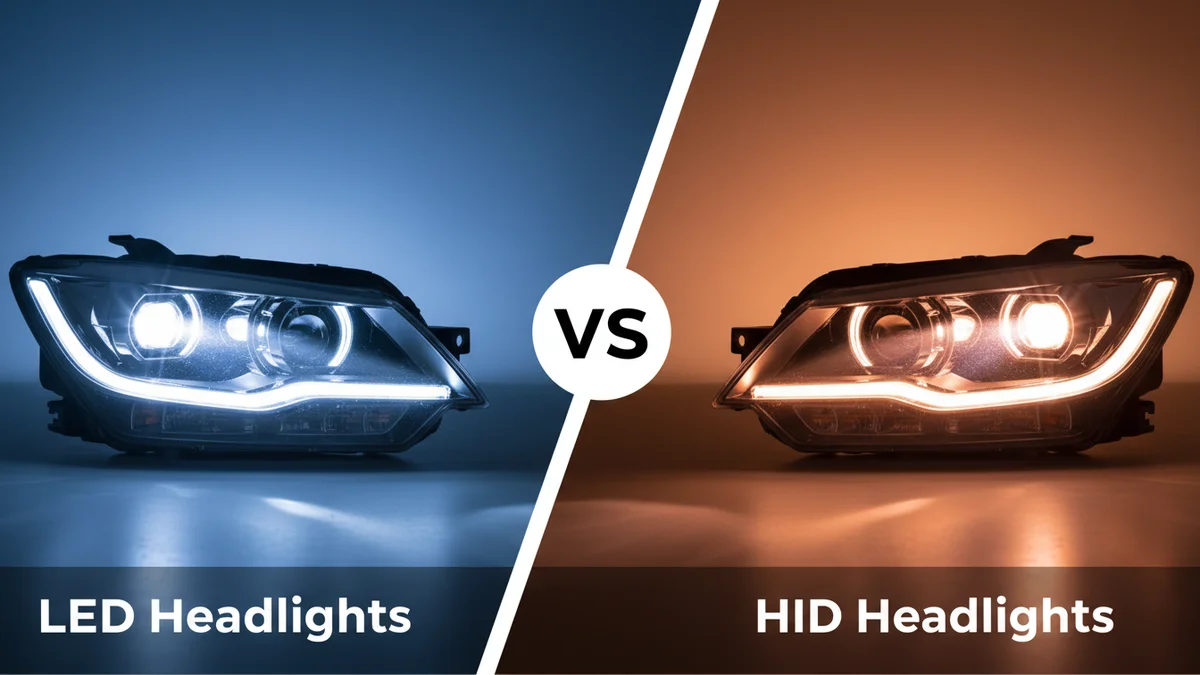
Drivers prioritizing long-term value, energy efficiency, and instant, bright illumination.
Enthusiasts seeking a classic intense arc discharge look and high brightness on a tighter initial budget.
- LED Headlights offer superior longevity, lasting 30,000 to 50,000 hours versus HID's 2,000-8,000 hours.
- Modern LEDs provide up to 5,500 lumens of instant brightness per bulb, exceeding many HIDs.
- LEDs are more energy-efficient, drawing 30-45 watts compared to HID's 35-55 watts per bulb.
- While initial LED costs ($150-600+) can be higher, they offer lower long-term maintenance than HIDs ($80-300).
- HID Headlights require a 2-10 second warm-up, whereas LED Headlights provide immediate full illumination.
LED Headlights vs HID Headlights: Head-to-Head Specs
Recommended Best Deal Products


When we dig into the technical specifications, the differences between these two lighting powerhouses become even clearer. Consider the substantial gap in lifespan, for instance: LED Headlights boast an impressive 9.5 rating, dwarfing HID Headlights‘ 6.0. This translates directly to fewer replacements and less maintenance for you. Furthermore, beam quality, a critical factor for road safety, sees LED Headlights leading with a 9.1 against HID Headlights’ still respectable 8.7, indicating a more precise and consistent light distribution.
✓ = better value in that row. Sourced from manufacturer specifications.
Performance & Category Ratings
Our comprehensive analysis reveals a clear pattern: LED Headlights consistently lead across most performance metrics, often by significant margins. In terms of Brightness, LED Headlights score 9.0, just edging out HID Headlights at 8.5. This indicates that modern LED technology has not only caught up to but now frequently surpasses the intense light output once synonymous with HIDs, doing so with greater efficiency.
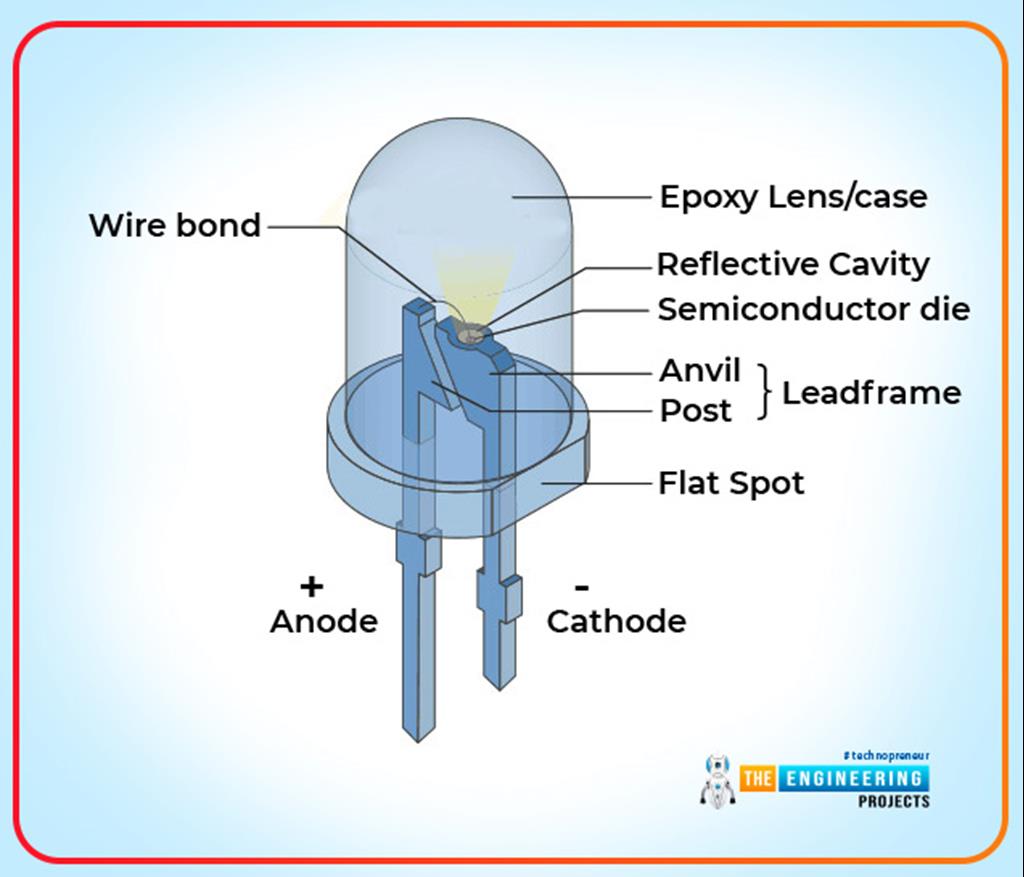
The most striking difference appears in Lifespan, where LED Headlights achieve an exceptional 9.5 against HID Headlights’ markedly lower 6.0. This disparity is fundamental to their design: LEDs are solid-state devices with no filaments or gas to burn out, offering tens of thousands of hours of operation. HIDs, relying on an arc of electricity through inert gas, inherently have a shorter life, with bulbs and ballasts requiring more frequent replacement.
Energy Efficiency is another undeniable win for LEDs, scoring 9.2 compared to HIDs’ 7.5. LED Headlights consume far less power, putting less strain on your vehicle’s alternator and battery, potentially leading to minor fuel economy improvements. This lower power draw also means less heat generated at the source, though LED systems still require sophisticated thermal management.
Looking at Cost-Effectiveness (Long Term), LED Headlights achieve an 8.8, outperforming HID Headlights at 7.0. While initial LED purchase prices can be higher, their superior lifespan and lower energy consumption translate to reduced ownership costs over time, offsetting the upfront investment.
For Ease of Installation, LED Headlights (8.0) generally offer a simpler experience than HID Headlights (6.5). Many LED kits are designed for plug-and-play installation, resembling a bulb swap. HID systems, in contrast, often necessitate external ballasts and igniters, adding complexity to the wiring and mounting process.

Audible — Listen Free for 30 Days
One free credit a month and thousands of titles included.
Listen Free for 30 Days As an Amazon Associate I earn from qualifying purchases.For Beam Quality & Focus, LED Headlights score 9.1, slightly better than HID Headlights’ 8.7. LEDs excel at precise light control; their compact size allows for advanced optic designs that produce a sharper cut-off and more uniform light distribution, reducing glare for oncoming drivers while maximizing illumination for you. HIDs, while bright, can sometimes suffer from a less focused beam pattern if not housed in dedicated projector optics.
Finally, Environmental Impact sees LED Headlights at 8.9, well ahead of HID Headlights’ 7.2. LEDs contain no mercury, a toxic heavy metal found in HID bulbs, and their lower energy consumption contributes to a smaller carbon footprint throughout their extended lifespan. This makes LEDs the more environmentally conscious choice.
Modern LED
Xenon HID
By the Numbers
Recommended Best Deal Products


Drilling down into the raw data provides an unvarnished look at the quantifiable advantages one technology holds over the other. The figures speak for themselves, particularly in areas like longevity and power consumption, where the gaps aren’t just marginal improvements but represent fundamental engineering distinctions. You’ll see how these crucial metrics define real-world performance, directly impacting everything from your wallet to your visibility on dark roads.

Modern LED
Xenon HID
Hover any bar for exact values. Each metric scaled independently.
LED Headlights: Strengths and Weaknesses
LED Headlights represent the vanguard of automotive lighting, and their strengths are compelling. Foremost among these is their incredible lifespan, offering a 9.5 rating. We’re talking about lights that can easily outlast your vehicle, translating into significant savings on replacement costs and hassle. Their energy efficiency is exceptional at 9.2; these systems draw significantly less power from your car’s electrical system, which can marginally benefit fuel economy and prolong battery life. Another major advantage is their instant-on, full-brightness capability – no more waiting for lights to warm up, a critical safety feature when you need immediate illumination.
The beam quality and focus of LED Headlights, rated at 9.1, are often superior, offering a crisp, uniform light pattern with a sharp cut-off, effectively illuminating the road without blinding oncoming traffic. Their compact size allows for greater design flexibility in modern vehicle aesthetics, enabling sleeker headlight housings. Furthermore, with an 8.9 rating for environmental impact, LED Headlights are free of mercury and produce less waste over their long service life.
However, LED Headlights aren’t without their drawbacks. The most notable weakness is often their higher initial cost. Premium LED systems can be a considerable investment upfront compared to their HID counterparts. While long-term cost-effectiveness (8.8) helps mitigate this, that initial sticker shock is impossible to ignore for many drivers. Additionally, LEDs generate heat at their base, necessitating sophisticated heat sinks and cooling systems to maintain performance and longevity. Improperly designed or installed aftermarket LEDs can also lead to excessive glare, especially if placed in reflector housings not designed for them. If you’re considering an upgrade, ensuring proper fitment and quality thermal management is key.
For those ready to experience the benefits of modern lighting, explore the wide range of LED Headlight options available.
Price & availability subject to change. As an Amazon Associate we earn from qualifying purchases.
Audible Premium Plus — Annual Membership
12 audiobook credits up front, plus the full Audible catalogue.
See Annual Plans As an Amazon Associate I earn from qualifying purchases.HID Headlights: Strengths and Weaknesses
Recommended Best Deal Products

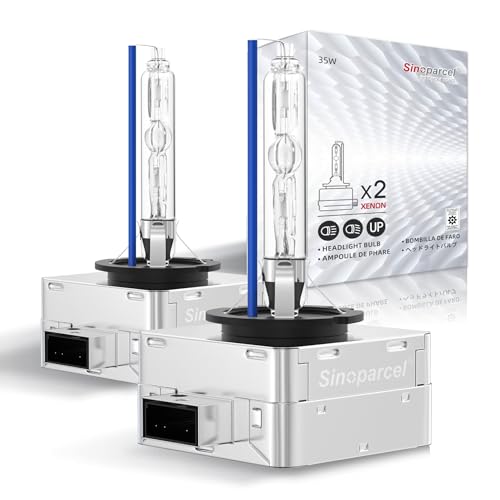

HID (High-Intensity Discharge) Headlights, often recognized by their distinctive blue-white glow, were once the gold standard for high-performance automotive lighting. Their primary strength lies in their impressive brightness, rated at 8.5. For years, HIDs delivered a significantly more intense and broader spread of light than traditional halogen bulbs, making night driving considerably safer and more comfortable. Many drivers still appreciate the broad, intense light output that HIDs provide, which can brilliantly illuminate the road ahead and the periphery.
Another perceived strength, particularly in the past, was their availability as a relatively accessible aftermarket upgrade for vehicles originally equipped with halogens. While not as easy as some LED options, a quality 🛒 HID Conversion Kit → could transform your night driving for a reasonable price point compared to factory-installed premium lighting systems. They offer a distinct visual appeal that many drivers find attractive, signifying an upgrade from standard lighting.
However, HID Headlights come with several notable weaknesses that have allowed LED technology to largely surpass them. Their lifespan is significantly shorter, rated at 6.0, as the xenon gas and internal electrodes degrade over time, leading to eventual bulb failure and color shift. We found their energy efficiency (7.5) to be considerably lower than LEDs, demanding more power from your vehicle’s electrical system. This translates to increased strain on the alternator and potentially higher fuel consumption over the long run.
A key operational drawback is the warm-up time HIDs require to reach full brightness. Unlike instant-on LEDs, HIDs typically take a few seconds to achieve their peak intensity, which can be an inconvenience or even a safety concern in certain situations. Their installation complexity (6.5) is also higher due to the necessity of external ballasts and igniters, which convert the vehicle’s voltage to the high voltage required to ignite and sustain the arc. This often means more wiring and mounting considerations than a simple bulb swap.
From an environmental impact perspective, HIDs score 7.2, largely due to the mercury contained within their bulbs, which requires special disposal. Finally, while bright, HIDs can generate significant glare for other drivers if installed in reflector headlight housings not specifically designed for them, necessitating projector lenses for optimal and safe performance. If you’re considering an HID upgrade, ensure your housing is compatible or budget for projector retrofits.
If you’re still considering the power of HID lighting, explore options that fit your vehicle and preferences.
Price & availability subject to change. As an Amazon Associate we earn from qualifying purchases.
- ✅ Exceptional lifespan, often exceeding 40,000 hours.
- ✅ Instant full brightness with no warm-up delay.
- ✅ Superior energy efficiency, lower power draw (30-45W).
- ✅ Compact design allows for flexible styling and precise beam control.
- ✅ Low heat emission at the bulb, protecting housing components.
- ❌ Higher initial purchase cost for quality systems ($150-600+).
- ❌ Can generate heat at the driver/base, requiring adequate cooling.
- ❌ Potential for glare if not properly installed or designed for housing.
- ❌ Complex electronics can be more prone to specific component failures.
- ✅ Intense, wide light output (up to 4,800 lumens).
- ✅ Distinctive blue-white light aesthetic.
- ✅ Generally lower upfront cost than high-end LED systems ($80-300).
- ✅ Proven technology with many aftermarket options.
- ❌ Significantly shorter lifespan compared to LEDs (average 5,000 hours).
- ❌ Requires a warm-up period of 2-10 seconds to reach full brightness.
- ❌ Higher power consumption (35-55W) and can generate significant heat.
- ❌ Complex installation involving bulky ballasts and igniters.
Which One Should You Choose?
Deciding between LED and HID Headlights ultimately boils down to your specific driving habits, priorities, and budget. There’s no one-size-fits-all answer, so let’s break it down by scenario.
For the daily commuter or someone primarily driving in urban and suburban environments, LED Headlights are often the superior choice. Their instant-on full brightness is a godsend for frequent stops and starts, making immediate visibility a non-issue. The exceptional lifespan and energy efficiency mean less hassle with replacements and a lighter load on your vehicle’s electrical system. If you value long-term savings and minimal maintenance, LEDs are for you. When upgrading, look for a quality 🛒 LED Headlight Upgrade Kit → designed for your specific vehicle to ensure proper beam pattern and heat dissipation.
If you frequently engage in demanding activities like towing, off-roading, or long-haul highway driving, LED Headlights continue to shine. Their solid-state construction makes them highly resistant to vibration and impacts, far more robust than the fragile gas-discharge tubes of HIDs. The consistent, precise beam quality also helps reduce driver fatigue on extended journeys. However, if you’re upgrading an older vehicle and a high-quality HID system is significantly cheaper upfront, and you’re willing to manage the warmer-up time and eventual bulb replacement, HIDs can still offer substantial brightness over halogens.
Budget is, of course, a significant factor. While the initial cost for premium LED Headlights can be higher, their superior lifespan and energy efficiency translate to better long-term cost-effectiveness. Think of it as an investment. If you’re working with a tighter budget for an upgrade from halogens and simply need a significant boost in brightness, a well-regarded 🛒 HID Conversion Kit → might initially seem more attractive. Be mindful, however, of the added complexity of installing ballasts and ensuring proper aiming; you might even need an 🛒 Automotive Wiring Harness → specifically for HID systems. For DIY enthusiasts, LED installations (8.0) are generally simpler than HIDs (6.5), which can save on labor costs. Ultimately, for the balance of performance, longevity, and efficiency in 2026, the case for LEDs is very strong.
Drivers prioritizing long-term value, energy efficiency, and instant, bright illumination.
Enthusiasts seeking a classic intense arc discharge look and high brightness on a tighter initial budget.
Final Verdict
In 2026, the conclusion is clear: LED Headlights have largely surpassed HID Headlights, emerging as the superior choice for the vast majority of drivers. This isn’t just about a marginal lead; it’s a comprehensive victory across critical metrics. Their exceptional energy efficiency, rated at a remarkable 9.2, means less power draw and potentially better overall vehicle performance. Coupled with their astounding lifespan of 9.5, LED Headlights offer unparalleled durability and drastically reduced maintenance over the life of your vehicle.
While HID Headlights still deliver an intense light output, scoring a strong 8.5 in brightness, modern LEDs now match or even exceed this luminosity while consuming significantly less power and offering instant-on full brightness. The precision and focus of LED beams, rated at 9.1, also contribute to safer and more comfortable night driving, with less glare for oncoming traffic. The primary trade-off, and the one key consideration that remains, is often the higher initial cost associated with premium LED systems. Despite this upfront investment, the long-term cost-effectiveness and superior overall performance of LED Headlights make them the undisputed champion in today’s automotive lighting landscape.
As an Amazon Associate we earn from qualifying purchases.
Frequently Asked Questions
Is LED Headlights better than HID Headlights?
Generally, yes, in 2026. LED Headlights offer superior longevity, often lasting 40,000+ hours compared to HID's 5,000 hours, and consume 20-30% less power. While HIDs provide intense brightness (up to 4,800 lumens), modern LEDs now match or exceed this, providing instant, crisp illumination without warm-up delays.
What is the biggest difference in performance between LED and HID Headlights?
The biggest difference is efficiency and lifespan. LED Headlights deliver instant full brightness using around 30-45 watts per bulb, and can last over 40,000 hours. HID Headlights require 2-10 seconds to warm up, consume 35-55 watts, and have a significantly shorter lifespan, typically 2,000-8,000 hours, necessitating more frequent bulb changes.
Which type of headlight is more reliable long-term?
LED Headlights are considerably more reliable long-term. With an average lifespan of 30,000 to 50,000 hours, they are designed for extended use without significant degradation. HID Headlights, conversely, have a shorter lifespan of 2,000-8,000 hours, and their ballasts can fail, leading to more frequent maintenance and replacement needs.
Are LED Headlights more expensive to buy and maintain?
Initial purchase costs for quality LED Headlights can be higher, often $150-600+ per pair compared to HID's $80-300. However, LEDs generally have lower maintenance costs due to their exceptional lifespan (30,000-50,000 hours vs. 2,000-8,000 hours for HID), reducing the frequency of bulb replacements and associated labor.
Which headlight type offers better visibility for night driving?
Both can offer excellent visibility, but modern LED Headlights often provide a more focused and precise beam pattern, reducing glare for oncoming drivers while illuminating the road effectively. With outputs up to 5,500 lumens and instant-on capability, LEDs provide consistent, bright light superior for diverse night driving conditions.