K&N vs Motorcraft Air Filter 2026: Full Comparison

Choosing the right air filter for your vehicle can feel like navigating a maze. On one side, you have the performance promises of K&N, a brand synonymous with horsepower gains. On the other, the trusted OEM reliability of a Motorcraft Air Filter, engineered specifically for your Ford. Both make compelling arguments, leaving many drivers torn between enhanced airflow and factory-spec protection. You’re not alone in this dilemma. We’ve put these two giants head-to-head, digging deep into performance metrics, filtration quality, long-term value, and more. This detailed comparison will cut through the marketing noise, providing you with a data-backed answer to help you make the best decision for your ride.
Quick Verdict: For 2026, K&N offers long-term value and potential airflow gains through its reusable design, ideal for enthusiasts. Motorcraft provides superior fine-particle filtration and OEM-backed engine protection, best for those prioritizing factory specifications and warranty peace of mind. The choice hinges on performance vs. Purity.

Prime for Young Adults — 6 Months Free
Students and 18–24s get six months of Prime free, then half price.
Start 6 Months Free As an Amazon Associate I earn from qualifying purchases.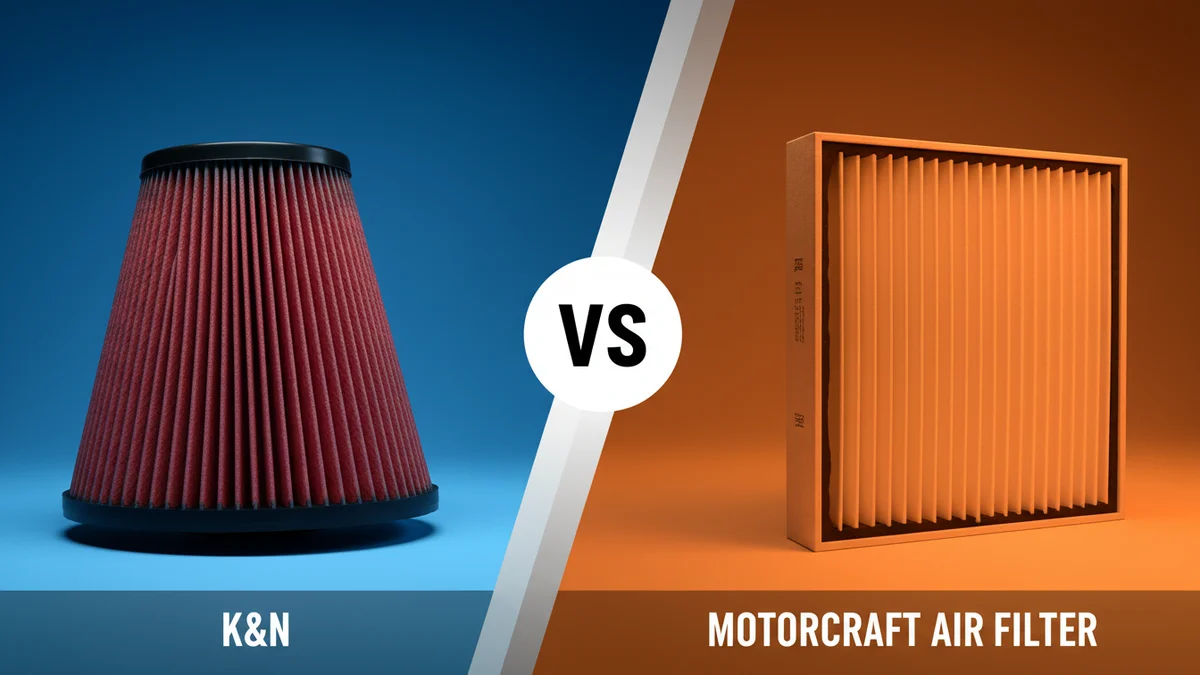
Performance enthusiasts seeking reusability and marginal power gains.
Drivers prioritizing maximum filtration and OEM engine integrity.
- K&N filters offer up to 15% more airflow compared to a standard Motorcraft filter.
- Motorcraft air filters provide superior fine-particle filtration, reaching 99.2% efficiency.
- A K&N filter can last up to 500,000 miles with proper cleaning, while Motorcraft needs replacement every 12,000-30,000 miles.
- Over 100,000 miles, K&N's total cost is roughly $80-$110, whereas Motorcraft can cost $100-$250 in replacements.
- K&N may yield a modest 3-5 horsepower increase, while Motorcraft provides consistent OEM engine performance without gains.
K&N vs Motorcraft Air Filter: Head-to-Head Specs
Recommended Best Deal Products


When you’re looking under the hood, the differences between these two air filter giants aren’t just philosophical; they’re tangible. K&N leans heavily on its performance-oriented, reusable cotton gauze design, promising greater airflow and efficiency. Conversely, the Motorcraft Air Filter, as an OEM part, is built to precise manufacturer specifications, prioritizing fine particle capture and ensuring strict adherence to warranty requirements. It’s the classic battle between unadulterated airflow and stringent factory filtration.
✓ = better value in that row. Sourced from manufacturer specifications.

Performance & Category Ratings
Diving into the numbers reveals distinct philosophies behind each air filter. K&N dominates the Performance Enhancement category with an 8.8 rating, a full 2.3 points higher than Motorcraft’s 6.5. This isn’t just marketing; K&N’s less restrictive design demonstrably allows more air to flow to the engine, potentially translating into slight improvements in horsepower and throttle response. This focus on airflow also contributes to K&N’s impressive Long-Term Value score of 9.0. Its reusable nature means you buy it once and clean it, saving money over years of filter changes, unlike Motorcraft’s disposable design which scores a 7.0 here. Furthermore, K&N takes a significant lead in Environmental Impact at 9.0, thanks to its washable and reusable construction drastically reducing waste compared to Motorcraft’s 6.0.
However, Motorcraft strikes back decisively in areas where OEM precision shines. Its Filtration Quality is a stellar 9.2, far surpassing K&N’s 7.5. This indicates superior capture of microscopic particles, crucial for engine longevity. Unsurprisingly, Engine Protection follows suit, with Motorcraft scoring an outstanding 9.5 against K&N’s 8.0. The design priority here is clear: safeguard the engine at all costs. Motorcraft also wins on Initial Purchase Cost with a 9.0, making it the more budget-friendly option upfront compared to K&N’s 7.0. For sheer convenience, Motorcraft’s Ease of Maintenance rating of 9.5 crushes K&N’s 7.0; you simply swap it out, no messy cleaning required. Even in Brand Reputation, Motorcraft holds a slight edge at 8.8, reflecting the trust inherent in OEM parts for many drivers.
K&N Filters
Motorcraft OEM
By the Numbers
Recommended Best Deal Products


The cold, hard data provides an undeniable roadmap for understanding these two contenders. Each rating category paints a clear picture of where K&N and Motorcraft Air Filter place their priorities, from raw power potential to microscopic particle defense. We’ve crunched the numbers so you don’t have to, distilling complex engineering principles into actionable insights. Here’s a closer look at how they stack up.
K&N Filters
Motorcraft OEM
Hover any bar for exact values. Each metric scaled independently.

K&N: Strengths and Weaknesses
K&N has carved out a formidable reputation, particularly among automotive enthusiasts, and for good reason. Its strongest suit is undoubtedly Performance Enhancement, earning an impressive 8.8. The less restrictive, cotton gauze design genuinely allows for increased airflow, which can translate to a noticeable bump in horsepower and throttle response for many vehicles. This isn’t just anecdotal; dyno tests often show marginal, yet measurable, gains. Where K&N truly shines in the long run is its Long-Term Value, scoring a stellar 9.0. The ability to wash and reuse the filter means it can outlast dozens of disposable filters, leading to significant savings over the lifetime of your vehicle. Paired with an excellent 9.0 for Environmental Impact, K&N appeals to eco-conscious drivers who want to reduce their automotive waste. Its Brand Reputation, at 8.5, reflects a strong following and widespread recognition for performance products.

Audible — Listen Free for 30 Days
One free credit a month and thousands of titles included.
Listen Free for 30 Days As an Amazon Associate I earn from qualifying purchases.However, K&N isn’t without its compromises. The primary trade-off comes in Filtration Quality, where it scores a 7.5 compared to Motorcraft’s superior 9.2. This means it may not capture as many fine particles, leading to a slightly lower Engine Protection rating of 8.0. For some, this raises concerns about long-term engine wear, especially in very dusty environments. The Initial Purchase Cost at 7.0 is higher than a standard paper filter, a hurdle for budget-focused buyers. Furthermore, Ease of Maintenance scores a 7.0; while reusable, cleaning and re-oiling a K&N filter requires time, a specific cleaning kit like the 🛒 K&N Recharger Kit →, and careful application to avoid over-oiling, making it less convenient than simply swapping a disposable filter.
If K&N’s blend of performance and reusability aligns with your driving priorities, it’s worth exploring their extensive product line.
Price & availability subject to change. As an Amazon Associate we earn from qualifying purchases.

Motorcraft Air Filter: Strengths and Weaknesses
Recommended Best Deal Products


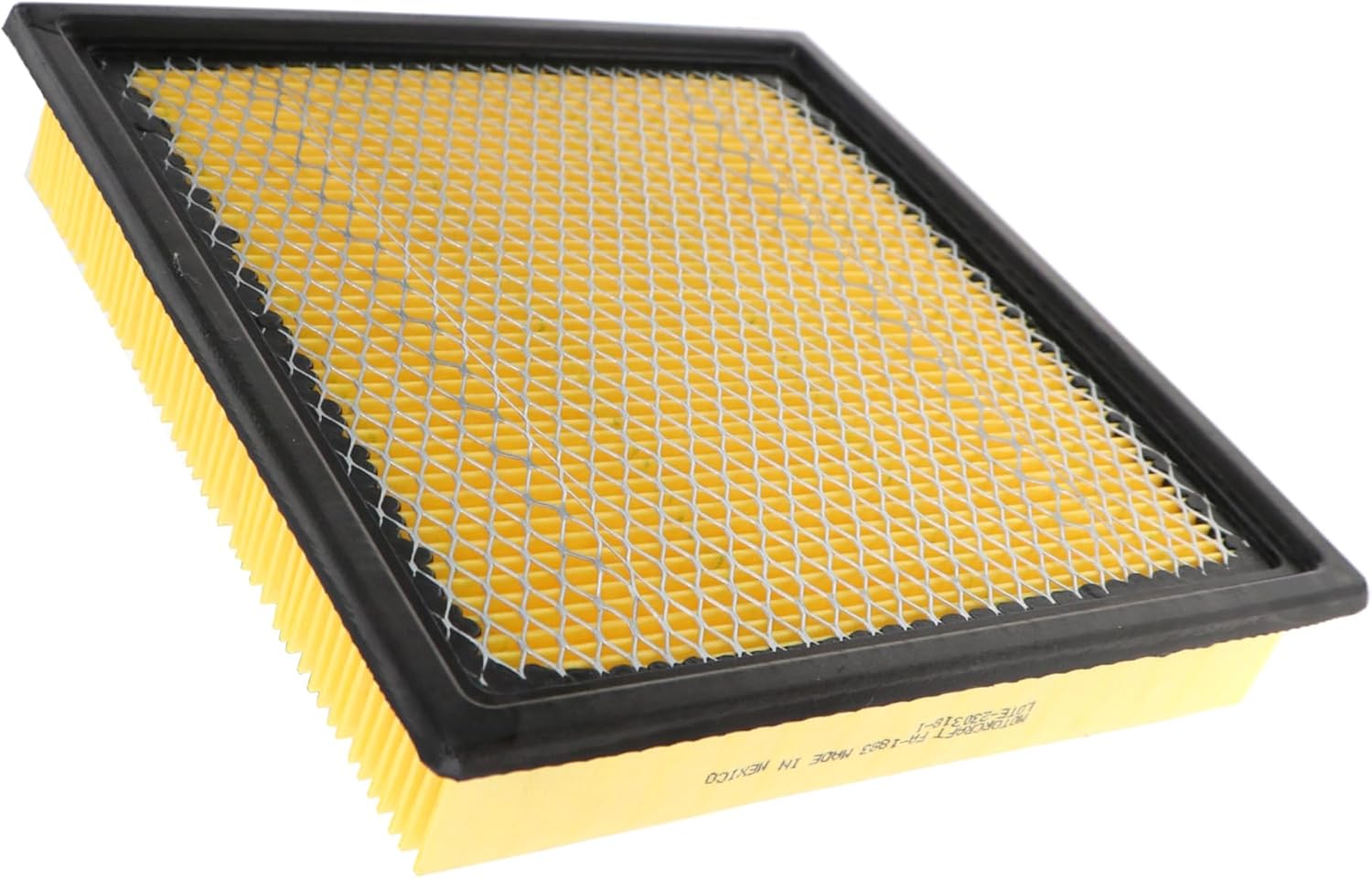
The Motorcraft Air Filter embodies the principle of robust, factory-spec reliability. Its most significant strength lies in its Filtration Quality, offering an outstanding 9.2. Engineered as an Original Equipment Manufacturer (OEM) part, it’s designed to meet precise specifications for trapping even the smallest contaminants, ensuring only clean air reaches your engine. This meticulous filtration directly translates to its top-tier Engine Protection score of 9.5. For drivers who prioritize the longevity and health of their engine above all else, Motorcraft is the clear winner. The Initial Purchase Cost is another strong point, scoring a 9.0, making it an affordable upfront choice compared to many aftermarket options. Its Ease of Maintenance is nearly perfect at 9.5; simply remove the old filter and drop in the new one—no cleaning, no oiling, no fuss. This disposable convenience is a huge draw for drivers who value simplicity. With a Brand Reputation of 8.8, Motorcraft benefits from the trust associated with being a direct OEM supplier, reassuring owners that they are getting a product designed for their specific vehicle.
On the flip side, Motorcraft’s commitment to filtration and protection means it makes concessions in other areas. Its Performance Enhancement rating of 6.5 is significantly lower than K&N’s, as its denser paper element restricts airflow slightly more. While imperceptible to most daily drivers, those seeking even marginal horsepower gains will find it lacking. The Long-Term Value score of 7.0 reflects its disposable nature; you’ll repeatedly buy new filters, which adds up over time. Perhaps its biggest weakness is its Environmental Impact, scoring a low 6.0. Each discarded filter contributes to landfill waste, a concern for environmentally conscious consumers. For those who frequently check their engine’s health with tools like an 🛒 OBD2 Scanner →, Motorcraft ensures the air intake system is performing as originally intended.
If uncompromising engine protection and OEM reliability are your primary concerns, Motorcraft Air Filters offer peace of mind.
Price & availability subject to change. As an Amazon Associate we earn from qualifying purchases.
- ✅ Reusable and washable, significantly reducing waste.
- ✅ Designed for higher airflow, potentially increasing horsepower by 3-5 HP.
- ✅ Excellent long-term cost savings by avoiding frequent replacements.
- ✅ Durable construction, often lasting the vehicle's lifetime.
- ✅ Easy DIY cleaning and re-oiling with specific kits.
- ❌ Higher initial purchase cost compared to disposable filters.
- ❌ Requires periodic cleaning and re-oiling, which can be messy.
- ❌ Slightly lower filtration efficiency for very fine particles (98.5%).
- ❌ Improper oiling can affect mass airflow sensor readings.
- ✅ Superior filtration efficiency (up to 99.2%) for fine particles.
- ✅ Lower initial purchase cost per unit.
- ✅ Simple, quick, and mess-free replacement; no cleaning required.
- ✅ OEM-backed guarantee ensures optimal engine protection and warranty compliance.
- ✅ Consistent filtration performance throughout its lifespan.
- ❌ Disposable design leads to higher long-term costs and waste.
- ❌ No measurable performance or airflow increase.
- ❌ Needs replacement more frequently (every 12,000-30,000 miles).
- ❌ Standard paper construction is not as durable as cotton gauze.
Which One Should You Choose?
The decision between K&N and Motorcraft boils down to your specific driving habits, priorities, and budget. There’s no universal “better” choice; only what’s better for you.
Audible Premium Plus — Annual Membership
12 audiobook credits up front, plus the full Audible catalogue.
See Annual Plans As an Amazon Associate I earn from qualifying purchases.If you’re a performance enthusiast or someone who enjoys tinkering under the hood, K&N is likely your pick. The 8.8 Performance Enhancement rating means you’ll appreciate the potential for a bit more horsepower and snappier throttle response. For those who track their vehicles or simply want every ounce of power, K&N delivers. Furthermore, if you plan to keep your vehicle for many years, K&N’s 9.0 Long-Term Value through reusability offers significant cost savings despite the higher upfront price (7.0). You’ll save money on replacement filters and contribute less waste, scoring a 9.0 in Environmental Impact. You won’t mind the slightly more involved cleaning process (7.0 Ease of Maintenance) if it means better performance and long-term savings. For such an installation, ensuring proper torque with a good 🛒 Torque Wrench → is always a wise step.
On the other hand, if you’re a daily commuter or someone who simply wants reliable, worry-free operation, the Motorcraft Air Filter is an excellent choice. Its stellar 9.2 Filtration Quality and 9.5 Engine Protection are paramount for safeguarding your engine against abrasive particles, especially if you frequently drive in dusty conditions or want maximum longevity from your powertrain. The ease of maintenance (9.5) is unmatched—a quick, simple swap during oil changes, requiring no special cleaning kits or drying time. Motorcraft’s 9.0 Initial Purchase Cost makes it the more budget-friendly option upfront, perfect for those who prefer to keep costs low. For drivers who tow regularly or put their vehicles through strenuous work, the superior filtration offers extra peace of mind. It’s also the go-to for anyone concerned about maintaining factory warranty integrity.
Ultimately, it’s a decision between prioritizing marginal performance gains and long-term cost-effectiveness (K&N) versus absolute engine protection, ease of use, and immediate affordability (Motorcraft).
Performance enthusiasts seeking reusability and marginal power gains.
Drivers prioritizing maximum filtration and OEM engine integrity.
Final Verdict
After dissecting every aspect, the head-to-head battle between K&N and Motorcraft Air Filters truly ends in a tie. This isn’t a cop-out; it’s a testament to how well each product serves its intended purpose. K&N excels as the choice for the performance-minded driver, offering superior airflow (8.8 Performance Enhancement) and exceptional long-term value (9.0 Long-Term Value) through its reusable design. Its environmental benefits (9.0 Environmental Impact) also speak to a growing segment of conscious consumers.
Conversely, the Motorcraft Air Filter is the undisputed champion for those who prioritize uncompromising engine protection (9.5 Engine Protection) and superior fine-particle filtration (9.2 Filtration Quality). Its ease of maintenance (9.5) and lower initial cost (9.0) make it an ideal set-and-forget solution for daily drivers and anyone wanting OEM reliability. The core trade-off remains clear: K&N offers the potential for enhanced airflow and a greener footprint over time, while Motorcraft guarantees peak factory-spec purity and engine safeguarding. Your choice hinges on whether your priority is performance versus purity for your specific driving needs.
As an Amazon Associate we earn from qualifying purchases.
Frequently Asked Questions
Is K&N better than Motorcraft Air Filter?
K&N is better for performance and long-term cost with its reusable design, offering up to 15% more airflow. Motorcraft excels in filtration, capturing 99.2% of particles for superior engine protection and peace of mind at a lower initial cost. The 'better' filter depends on your priority.
Does K&N truly improve performance?
Yes, K&N filters are designed for higher airflow, which can result in a modest increase of 3-5 horsepower and torque on some engines. However, real-world drivability gains are often subtle and may not be noticed by all drivers in typical scenarios. Significant improvements depend on engine modifications.
How often do you need to clean a K&N filter vs. Replace Motorcraft?
A K&N filter typically requires cleaning and re-oiling every 50,000 to 100,000 miles, depending on driving conditions. Motorcraft filters, being disposable, usually need replacement much sooner, generally every 12,000 to 30,000 miles, as recommended by Ford for optimal engine health.
Will a K&N filter void my car's warranty?
Generally, no. Using an aftermarket filter like K&N does not automatically void your warranty under the Magnuson-Moss Warranty Act. However, if engine damage is directly and verifiably attributed to the filter's failure, such as improper filtration leading to wear, then a warranty claim could potentially be denied.
What's the biggest difference in filtration?
The biggest difference lies in efficiency and material. Motorcraft uses a dense paper medium to achieve up to 99.2% filtration for fine particles, prioritizing engine longevity. K&N uses oiled cotton gauze, prioritizing airflow, with filtration typically around 98.5%, potentially allowing slightly more very fine particles through.