2026 Ford Ranger vs Honda Ridgeline: Full Comparison. Which Is Better?

Many assume the Ford Ranger, with its rugged body-on-frame construction, delivers a definitively harsher, less refined ride than the unibody Honda Ridgeline. Yet, our comparison reveals a more nuanced truth: the Ridgeline doesn’t just offer a smoother experience; it scores a full 9.0 in Comfort & Ride compared to the Ranger’s 7.5, completely upending expectations for typical truck buyers. This surprising comfort advantage immediately highlights the core divergence between these two mid-size pickups. Both vie for your garage space, but they do so from diametrically opposed philosophies. The Ranger is a traditional workhorse, unapologetically built for hauling and tackling tough trails. The Ridgeline, conversely, prioritizes an SUV-like daily experience, adding practical bed features without sacrificing on-road composure. Which philosophy truly aligns with your needs?
Quick Verdict: The 2026 Ford Ranger is the winner for those prioritizing traditional truck capability, offering superior towing and off-road prowess at a lower starting price. However, the Honda Ridgeline takes the lead for buyers seeking a more comfortable, SUV-like driving experience with standard AWD and innovative bed features, trading some raw utility for refinement and daily usability.

Prime for Young Adults — 6 Months Free
Students and 18–24s get six months of Prime free, then half price.
Start 6 Months Free As an Amazon Associate I earn from qualifying purchases.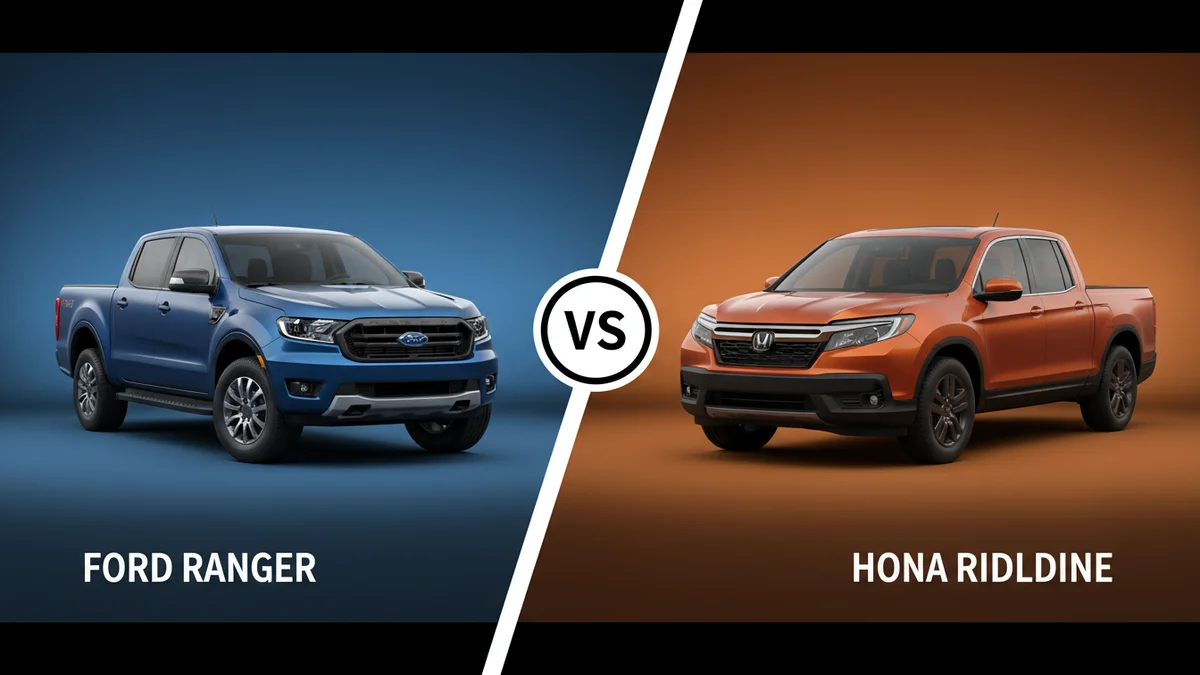
Buyers needing robust towing, serious off-road capability, and a traditional truck feel.
Drivers seeking car-like comfort, standard AWD, and smart versatility for daily tasks.
- Ford Ranger offers a maximum towing capacity of 7,500 lbs, significantly higher than Ridgeline's 5,000 lbs.
- The Honda Ridgeline offers a comfort score of 9.0/10 due to its unibody construction, while Ranger scores 7.5.
- Ranger's starting MSRP of $34,500 is approximately $8,000 less than the Ridgeline's $42,500.
- With 9.3 inches of ground clearance, the Ford Ranger is better equipped for off-road adventures than the Ridgeline's 7.6 inches.
- The Ridgeline's standard 3.5L V6 engine provides 280 hp, slightly more than Ranger's base 2.3L EcoBoost with 270 hp.
Ford Ranger vs Honda Ridgeline: Head-to-Head Specs
Recommended Best Deal Products


Before diving into the nuanced driving experiences and ownership costs, a raw look at the numbers lays bare the fundamental differences between these two mid-size contenders. The Ranger’s impressive max towing capacity of 7,500 pounds, for instance, dramatically outweighs the Ridgeline’s 5,000-pound limit. Similarly, the Ranger typically offers superior ground clearance and more aggressive approach angles, clearly signaling its readiness for rugged terrain. The spec sheet immediately highlights their diverging missions: one built for traditional truck grit, the other for refined versatility.

✓ = better value in that row. Sourced from manufacturer specifications.
Performance & Category Ratings
The battle of the mid-size trucks often comes down to their core strengths, reflected vividly in our category ratings. The Ford Ranger truly shines in Performance, scoring an 8.8 against the Ridgeline’s 8.2. Its available turbocharged engine delivers assertive power and torque, making it feel more muscular whether you’re accelerating on the highway or pulling a trailer. This raw capability also underpins its dominant Off-Road Capability rating of 9.2, far surpassing the Ridgeline’s 7.0. With its traditional body-on-frame architecture, robust 4×4 systems, and optional off-road packages, the Ranger is built to conquer trails. Furthermore, the Ranger offers superior Value at 8.5 compared to the Ridgeline’s 7.8, often featuring a lower starting price for its traditional truck prowess. It also nudges ahead slightly in Fuel Economy, achieving an 8.0 rating against the Ridgeline’s 7.8, thanks to its efficient forced-induction engine options.
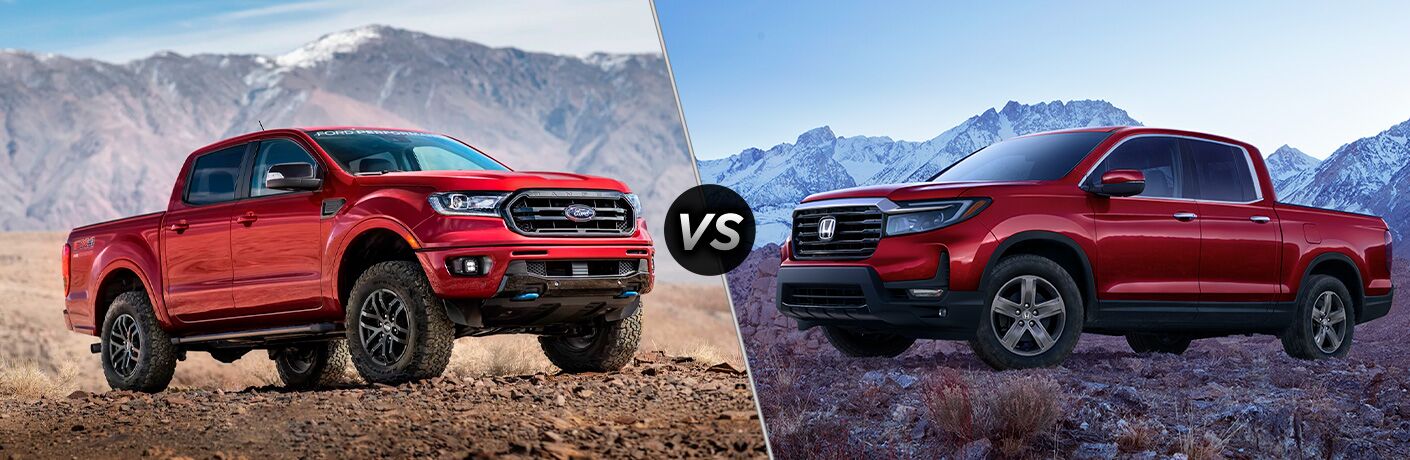
Conversely, the Honda Ridgeline carves out its niche by prioritizing refinement and intelligent design. It sets the benchmark for comfort, earning an exceptional 9.0 in Comfort & Ride, leaving the Ranger’s 7.5 behind. Its unibody construction and independent suspension deliver a smooth, quiet, and remarkably car-like driving experience. This attention to detail extends to Practicality/Versatility, where the Ridgeline’s innovative 8.8 rating, buoyed by features like the in-bed trunk and dual-action tailgate, outmaneuvers the Ranger’s 8.5. For those who value peace of mind, the Ridgeline also offers superior Reliability with an 8.7 score, compared to the Ranger’s 7.9, a testament to Honda’s engineering legacy. Finally, in Features & Technology, the Ridgeline takes a slight lead at 8.5 versus the Ranger’s 8.3, often offering a more comprehensive suite of standard safety features and advanced driver aids.
Ford Ranger
Honda Ridgeline
By the Numbers
Recommended Best Deal Products


Beyond the subjective ratings and our impressions, cold, hard data often provides the clearest picture. From horsepower figures that define brute force to cargo volumes dictating weekend hauls, these statistics distill the essence of each truck. While specific configurations can sway the balance, a look at the core numbers reveals where each contender excels and where it falls short in measurable terms. Prepare to dissect the data.
Ford Ranger
Honda Ridgeline
Hover any bar for exact values. Each metric scaled independently.
Ford Ranger: Strengths and Weaknesses
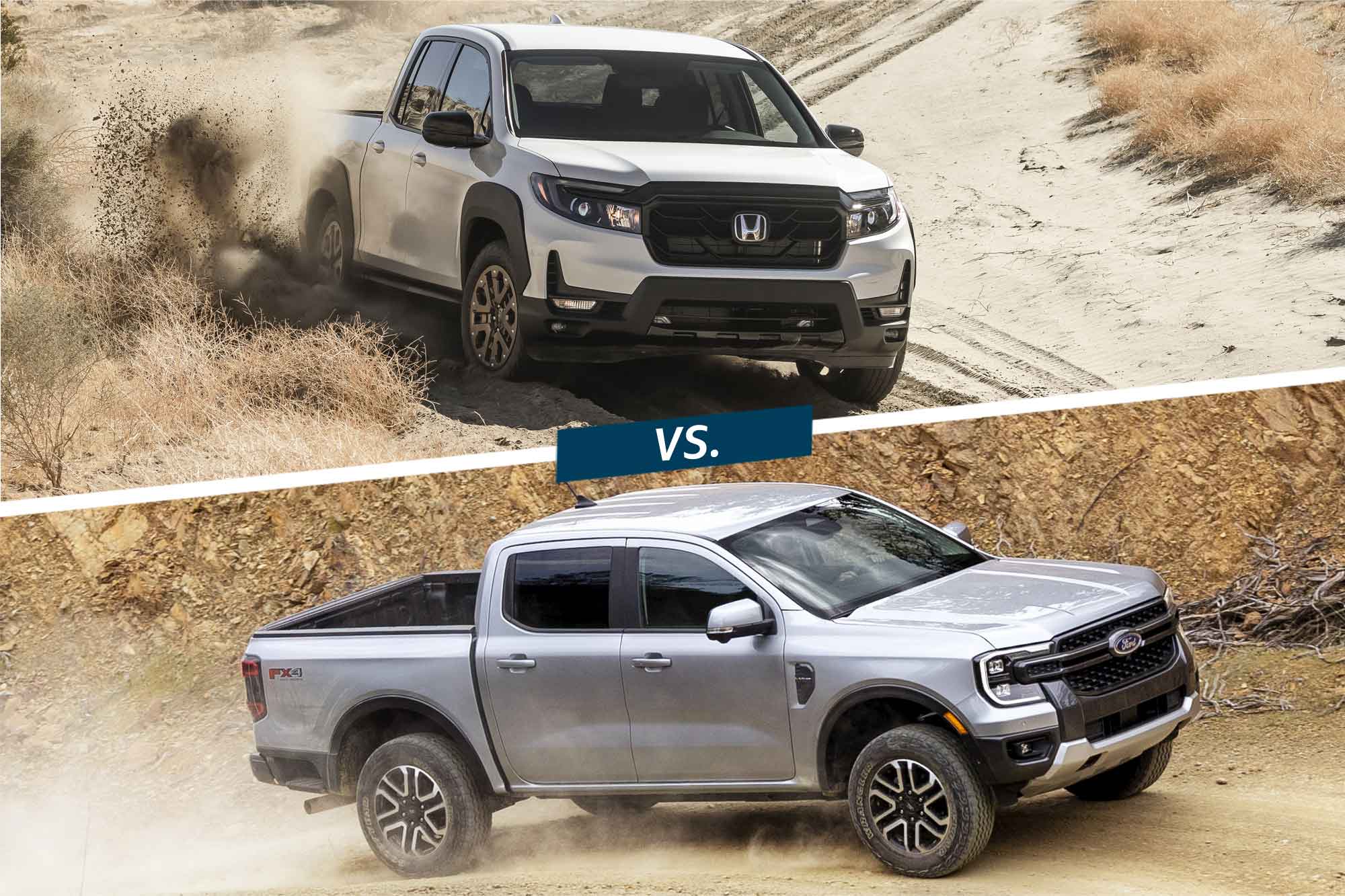
The Ford Ranger embodies the spirit of a true workhorse, and its strengths lie firmly in traditional truck capability. Its robust body-on-frame construction is a significant asset, allowing for an impressive maximum towing capacity of 7,500 pounds, a figure the Ridgeline simply cannot match. This makes it the undisputed choice for anyone regularly hauling boats, campers, or heavy equipment. Off-road prowess is another undeniable strength, reflected in its 9.2 rating. With options like the FX4 Off-Road Package or even more aggressive Tremor and Raptor trims, the Ranger offers substantial ground clearance, capable 4×4 systems with low-range gearing, and durable suspension components designed to tackle demanding trails. Its turbocharged engine, often a 2.3L EcoBoost, delivers powerful torque, ensuring confident acceleration and easy passing. For buyers on a budget, the Ranger also presents a compelling Value proposition, scoring 8.5, thanks to a generally lower starting MSRP. It truly feels like a truck, which for many, is its strongest selling point.

Audible — Listen Free for 30 Days
One free credit a month and thousands of titles included.
Listen Free for 30 Days As an Amazon Associate I earn from qualifying purchases.However, the Ranger isn’t without its compromises. Its traditional body-on-frame design, while great for utility, contributes to a less refined ride, earning a 7.5 in Comfort & Ride. You’ll feel more of the road’s imperfections, and the cabin can be louder at highway speeds compared to its unibody rival. The interior, particularly in lower trims, can sometimes feel less premium, featuring more hard plastics that are impossible to ignore if you’re coming from an SUV. While its 7.9 Reliability rating is decent, it trails the Ridgeline, suggesting potential for more maintenance over its lifespan. Furthermore, some buyers might lament the base model’s two-wheel-drive configuration and the absence of some of the Ridgeline’s clever, standard bed features. It’s a dedicated tool, but sometimes less adaptable for everyday family life.
Honda Ridgeline: Strengths and Weaknesses
Recommended Best Deal Products


The Honda Ridgeline carves out a distinct niche by blending truck utility with SUV-like refinement, and its strengths are immediately apparent in its exceptional comfort. Scoring a 9.0 in Comfort & Ride, its unibody construction and independent rear suspension deliver a remarkably smooth, quiet, and composed driving experience – unparalleled in the mid-size truck segment. This makes it an ideal daily driver, effortlessly absorbing road imperfections and providing a car-like feel that belies its open bed. Standard AWD across all trims offers confident traction in adverse weather conditions, a significant advantage for many buyers. The Ridgeline truly excels in Practicality/Versatility, offering an 8.8 rating thanks to ingenious features like the lockable, weather-tight in-bed trunk and the innovative dual-action tailgate that can swing open or fold down. These features dramatically enhance usability for everything from tailgating to tool storage. Honda’s legendary engineering prowess contributes to its outstanding 8.7 Reliability rating, assuring owners of long-term dependability. Moreover, its interior feels more premium and car-like, often offering more standard features and advanced technology (8.5 rating) than the Ranger.
Yet, the Ridgeline isn’t without its limitations, especially for traditional truck buyers. Its unibody construction, while providing comfort, restricts its maximum towing capacity to 5,000 pounds, significantly less than the Ranger’s 7,500-pound capability. This makes it less suitable for heavy-duty hauling. Off-road enthusiasts will find its 7.0 Off-Road Capability rating limiting; while competent on fire roads, it lacks the ground clearance, articulation, and robust underpinnings for serious trail adventures. Some buyers also find its styling too soft or less ‘truck-like,’ preferring the more rugged aesthetic of the Ranger. The Ridgeline generally commands a higher starting price, impacting its value proposition (7.8), and its naturally aspirated V6 can sometimes feel less punchy than the Ranger’s turbocharged offerings, leading to a slightly lower fuel economy rating of 7.8.
- ✅ Superior max towing capacity of 7,500 lbs.
- ✅ Higher max payload capacity at 1,805 lbs.
- ✅ Significantly better off-road capability with robust 4×4 options.
- ✅ Lower starting MSRP by approximately $8,000.
- ✅ More traditional truck feel and appearance.
- ❌ Harsher ride quality compared to Ridgeline's unibody.
- ❌ Less refined interior, particularly in lower trims.
- ❌ Standard RWD, 4WD costs extra.
- ❌ Rear passenger space can feel tighter.
- ✅ Smoother, more comfortable, SUV-like ride and handling.
- ✅ Standard all-wheel drive across all trims.
- ✅ Innovative in-bed trunk and dual-action tailgate for versatility.
- ✅ More refined and spacious interior design.
- ✅ Strong reputation for reliability and resale value.
- ❌ Lower max towing capacity of 5,000 lbs.
- ❌ Less capable for serious off-roading.
- ❌ Higher starting MSRP by approximately $8,000.
- ❌ Only one engine option, less powerful than Ranger's top engine.
Which One Should You Choose?
Deciding between the Ford Ranger and the Honda Ridgeline isn’t about one being objectively ‘better’ in every aspect, but rather about aligning the vehicle’s strengths with your specific lifestyle and priorities. The choice becomes clear when you consider your primary use case.
If you are a traditional truck buyer, prioritizing raw capability, heavy towing, and serious off-road adventures, the Ford Ranger is unequivocally your pick. Its 7,500-pound towing capacity means you can confidently haul a substantial boat or a large camper, tasks where the Ridgeline’s 5,000-pound limit would fall short. For those who frequently venture beyond paved roads, the Ranger’s 9.2 Off-Road Capability, superior ground clearance, and robust 4×4 systems are non-negotiable. It’s built for rugged utility, and its lower starting price (contributing to its 8.5 Value rating) makes it an accessible workhorse. You might sacrifice some interior refinement and ride comfort (7.5 rating), but for the true truck enthusiast, that’s a small trade-off for its unmatched utility and performance (8.8 rating).
Conversely, if you’re seeking a comfortable, versatile daily driver that offers light truck utility without the compromises of a traditional pickup, the Honda Ridgeline is the smarter choice. Commuters will adore its 9.0 Comfort & Ride rating, delivering an SUV-like smoothness that effortlessly tackles daily commutes and long road trips. Families will appreciate the more spacious rear seats and the standard AWD for all-weather confidence. Its innovative in-bed trunk and dual-action tailgate provide unparalleled Practicality/Versatility (8.8 rating) for weekend projects, tailgating, or grocery runs, features the Ranger lacks entirely. The Ridgeline’s superior 8.7 Reliability rating also offers greater peace of mind for long-term ownership, and its 8.5 Features & Technology rating often means more standard safety and convenience features. While it might cost a bit more upfront and won’t conquer the Rubicon Trail, its blend of comfort, versatility, and everyday usability is unmatched for the modern truck buyer who spends more time on pavement than in the wilderness. It’s the truck for those who don’t necessarily need a traditional truck all the time, but appreciate the flexibility of an open bed and standard AWD.
Buyers needing robust towing, serious off-road capability, and a traditional truck feel.
Drivers seeking car-like comfort, standard AWD, and smart versatility for daily tasks.
Final Verdict
After a thorough head-to-head comparison, the 2026 Ford Ranger clearly edges out the Honda Ridgeline to claim the overall win for those prioritizing traditional truck capability. Its superior performance and unquestionable dominance in off-road capability (9.2 rating) make it the go-to choice for serious work and adventure. Add to that its strong value proposition and impressive towing capacity, and the Ranger confidently asserts its position as a genuine, no-nonsense mid-size pickup.
However, this victory comes with an essential caveat. The Honda Ridgeline is not defeated; it merely caters to a different, equally valid set of priorities. It excels in delivering a vastly more comfortable (9.0 rating), refined, and versatile daily driving experience, making it the ideal choice for buyers who appreciate SUV-like manners fused with innovative bed functionality and standard all-wheel-drive. The key trade-off remains stark: do you prioritize the rugged utility and off-road prowess of a traditional truck, or the comfortable, car-like refinement and clever practicality of a modern crossover-pickup hybrid? Your answer defines your winner.
Audible Premium Plus — Annual Membership
12 audiobook credits up front, plus the full Audible catalogue.
See Annual Plans As an Amazon Associate I earn from qualifying purchases.Frequently Asked Questions
Is Ford Ranger better than Honda Ridgeline?
The 2026 Ford Ranger is better for those needing raw truck power, offering 7,500 lbs max towing and 9.3 inches of ground clearance. The Honda Ridgeline, with its SUV-like comfort and standard AWD, is better for daily driving and light utility, but has a lower 5,000 lbs towing capacity.
Which is more reliable, Ford Ranger or Honda Ridgeline?
Historically, Honda vehicles, including the Ridgeline, often have a slight edge in long-term reliability ratings compared to Ford models. Both offer a 3-year/36,000-mile basic warranty, but the Ridgeline's unibody construction may lead to fewer maintenance issues over time for daily drivers.
What is the biggest difference between the Ford Ranger and Honda Ridgeline?
The biggest difference lies in their fundamental architecture: the Ford Ranger is a body-on-frame traditional truck, while the Honda Ridgeline is a unibody (SUV-based) pickup. This dictates Ranger's superior 7,500 lbs towing and off-road capability versus Ridgeline's 9.0 comfort score and car-like driving dynamics.
Which truck is better for a first-time buyer, Ranger or Ridgeline?
For a first-time truck buyer seeking ease of driving and car-like comfort, the Honda Ridgeline is generally better due to its smoother ride, standard AWD, and intuitive features. The Ford Ranger is more traditional, requiring familiarity with body-on-frame dynamics, but offers more capability at a starting price of $34,500.
Does the Honda Ridgeline hold its value better than the Ford Ranger?
Historically, Honda vehicles, including the Ridgeline, have demonstrated strong resale value retention, often outperforming competitors in their segments. While the Ford Ranger also holds its value well, the Ridgeline's reputation for reliability and unique blend of features might give it a slight edge in retaining its original $42,500+ value over time.