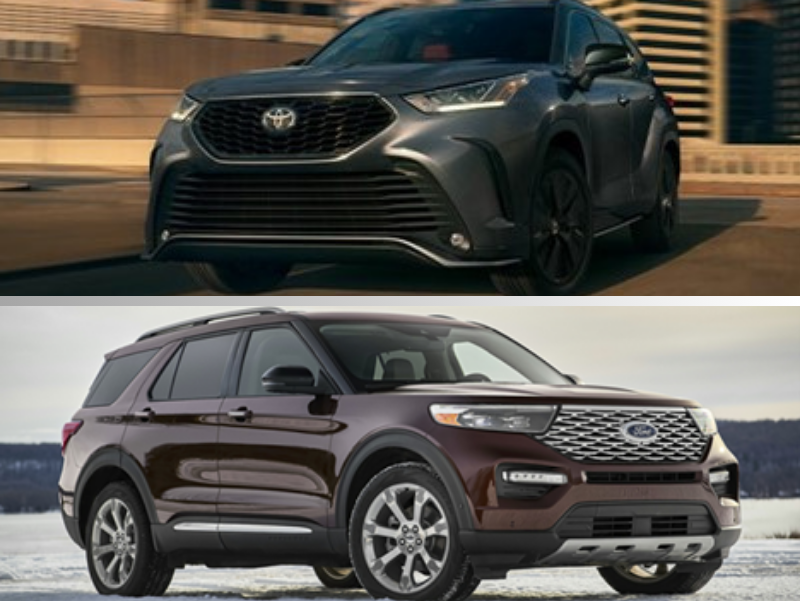
2026 Ford Explorer vs Toyota Highlander: Which Is Better?

When comparing family-friendly SUVs, a crucial real-world difference often emerges quickly: long-term running costs. The Toyota Highlander, for instance, earns a remarkable 9.0 for fuel economy, a stark contrast to the Ford Explorer’s 6.8. This disparity translates directly into noticeably lower fuel expenses for the average family, a significant factor in today’s economy. Both vehicles vie for supremacy in a crowded segment, yet their approaches differ substantially. The Explorer leans into a more dynamic driving experience and superior interior space, while the Highlander prioritizes efficiency, comfort, and an unwavering commitment to reliability. Your choice depends heavily on which of these priorities resonates most with your family’s needs and lifestyle.
Quick Verdict: The 2026 Toyota Highlander edges out the Ford Explorer for most family buyers due to its superior fuel efficiency, renowned reliability, and strong resale value. However, the Ford Explorer offers more potent engine options and a higher towing capacity, making it the better choice for those prioritizing performance and utility over long-term cost of ownership.

Prime for Young Adults — 6 Months Free
Students and 18–24s get six months of Prime free, then half price.
Start 6 Months Free As an Amazon Associate I earn from qualifying purchases.
Buyers prioritizing strong performance, higher towing, and more interior space.
Families seeking exceptional reliability, fuel efficiency, and strong resale value.
- The 2026 Toyota Highlander Hybrid achieves an impressive 36 MPG combined.
- Ford Explorer offers stronger performance, with its ST model offering 400 horsepower.
- Highlander holds a stronger long-term resale value due to its reliability.
- Explorer provides more cargo space, maxing out at 87.8 cubic feet.
- Max towing capacity for Explorer reaches 5,600 lbs, surpassing the Highlander's 5,000 lbs.
Ford Explorer vs Toyota Highlander: Head-to-Head Specs
Recommended Best Deal Products


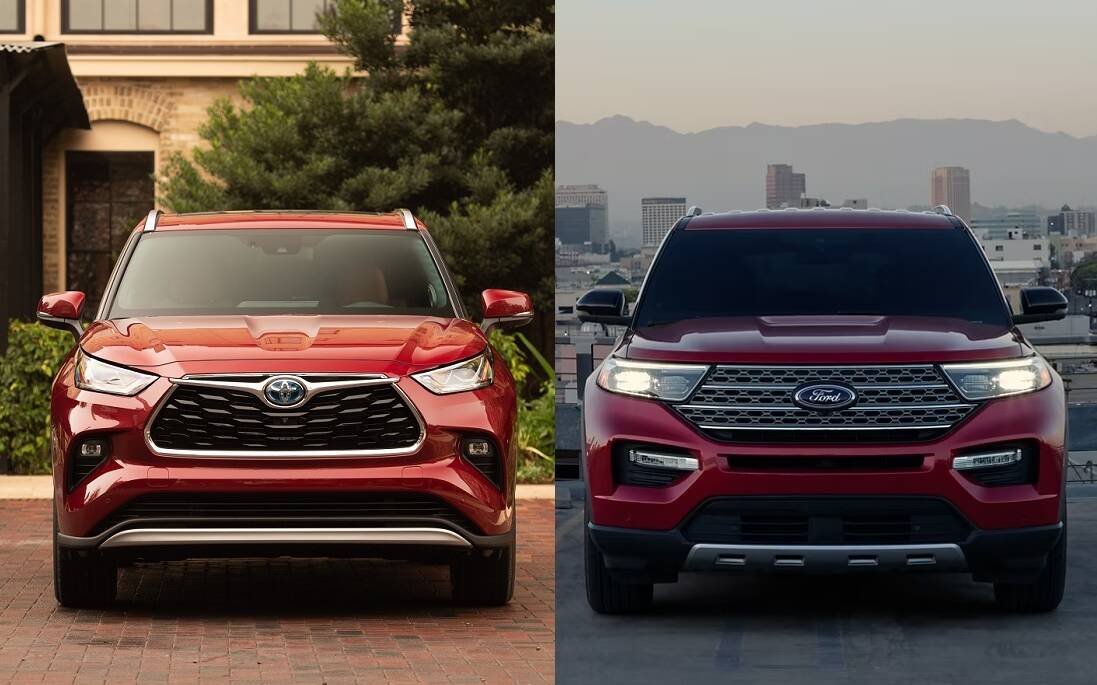
Digging into the raw specifications reveals immediate differences that foreshadow their overall character. The Ford Explorer typically offers more powerful engine options and a higher towing capacity, a clear nod to buyers prioritizing capability. Conversely, the Toyota Highlander often presents a more compact exterior footprint while still offering commendable interior comfort, albeit with slightly less overall cargo volume than its Ford counterpart. These fundamental design philosophies guide everything from their driving dynamics to their everyday usability.
✓ = better value in that row. Sourced from manufacturer specifications.
Performance & Category Ratings
Performance is where the Ford Explorer truly shines, earning an 8.8 against the Toyota Highlander’s 7.5. Its available turbocharged engines deliver robust acceleration and confident highway passing, feeling genuinely potent. If you enjoy a more engaging drive or need substantial power for hauling, the Explorer easily takes the lead. The Highlander, while perfectly adequate for daily duties, focuses more on a smooth, serene experience rather than outright thrills, providing sufficient power without excitement.
For Value, the Toyota Highlander pulls ahead with an 8.5 compared to the Explorer’s 7.9. This isn’t just about the initial purchase price; it’s about long-term ownership. The Highlander’s stellar resale value and lower projected maintenance costs make it a financially sounder choice over many years. While the Explorer offers strong feature sets, its overall long-term value proposition can’t quite match Toyota’s consistent performance.
Reliability is a critical battleground, and the Highlander dominates here, scoring a phenomenal 9.2 against the Explorer’s 7.0. Toyota’s reputation for building durable, trouble-free vehicles is well-earned, offering owners peace of mind and fewer unexpected trips to the service center. The Explorer, while improved, simply cannot compete with the Highlander’s consistent track record for dependability.
The Comfort ratings are close, but the Highlander edges out the Explorer with an 8.4 to 8.2. The Toyota provides a notably smoother ride, soaking up road imperfections with grace, making long journeys more pleasant. Its cabin is well-isolated from road noise, contributing to a more serene atmosphere. The Explorer is comfortable, offering supportive seats, but its ride can sometimes feel a touch firmer, especially over rougher pavement.
In Features & Tech, the Ford Explorer takes the lead with an 8.6 over the Highlander’s 8.3. Ford often packs its vehicles with cutting-edge infotainment systems, larger touchscreens, and a more extensive suite of standard driver-assistance technologies. Its user interface is modern and intuitive. The Highlander’s tech is robust and reliable, but it often feels a step behind the Explorer in terms of visual flair and advanced capabilities.

Audible — Listen Free for 30 Days
One free credit a month and thousands of titles included.
Listen Free for 30 Days As an Amazon Associate I earn from qualifying purchases.Fuel Economy is another decisive win for the Toyota Highlander, scoring a significant 9.0 against the Explorer’s 6.8. The Highlander’s available hybrid powertrain is a big deal, delivering exceptional MPG ratings that directly translate to substantial savings at the pump. Even its standard gasoline engine is more efficient than the Explorer’s generally more powerful offerings, making it the clear choice for fuel-conscious buyers.
Regarding Build Quality, the Highlander once again demonstrates its superiority with an 8.7 compared to the Explorer’s 7.8. From the tactile feel of interior materials to the precise fit and finish of panels, the Toyota exhibits a higher degree of craftsmanship. The Explorer’s interior is functional and attractive, but some cheaper plastics are impossible to ignore in certain areas, detracting slightly from its overall premium feel.
Finally, Interior Space sees the Ford Explorer reclaim some ground with an 8.5 against the Highlander’s 7.9. The Explorer typically offers more generous third-row legroom, making it a more viable option for regularly transporting seven passengers. Its cargo capacity, especially with the third row folded, also tends to be greater, providing more utility for family adventures or big shopping trips. The Highlander’s third row is tighter, best suited for children or occasional adult use.
Ford Explorer
Toyota Highlander
By the Numbers
Recommended Best Deal Products


The figures speak volumes, translating subjective impressions into objective truths about these two popular SUVs. Here, you’ll see a side-by-side comparison of specific metrics, highlighting where each vehicle truly excels or falls short. Understanding these concrete differences is key to making an informed decision, showing exactly how the Ford Explorer and Toyota Highlander stack up in various critical areas.
Ford Explorer
Toyota Highlander
Hover any bar for exact values. Each metric scaled independently.
Ford Explorer: Strengths and Weaknesses
The Ford Explorer enters this segment with a bold, American stance, showcasing several distinct advantages. Its most compelling strength lies in its performance, offering powerful engine options, including robust V6s that deliver exhilarating acceleration and a satisfyingly dynamic driving experience. This translates directly into confident highway cruising and superior towing capabilities for boat owners or those with trailers. Furthermore, the Explorer excels in interior space, offering one of the most accommodating third rows in its class, making it a genuine seven-seater. Cargo room behind all three rows is ample, a huge plus for growing families. Ford’s dedication to features and tech is also apparent; its infotainment systems are often cutting-edge, featuring large, responsive touchscreens and a comprehensive suite of driver-assistance technologies that enhance both safety and convenience. We appreciate its commitment to a modern digital experience.
However, the Explorer isn’t without its compromises. Its most significant drawback is its reliability, consistently scoring lower than many competitors, including the Highlander. This can lead to higher long-term maintenance costs and potential headaches for owners. Its fuel economy is another area of concern; those powerful engines consume more gasoline, making frequent fill-ups a reality that impacts the wallet. While its interior is spacious, aspects of its build quality can sometimes feel a step below rivals, with some noticeable hard plastics in less visible areas. This affects its overall value proposition, as its resale value typically doesn’t hold up as strongly as the Highlander’s.
Toyota Highlander: Strengths and Weaknesses
Recommended Best Deal Products


The Toyota Highlander stands as a paragon of sensibility and reliability in the mid-size SUV segment, winning over countless families with its undeniable strengths. Its most outstanding quality is its reliability, consistently earning top marks and providing owners with an almost unmatched sense of peace of mind. Toyota’s engineering prowess ensures fewer mechanical issues and a longer lifespan for the vehicle. This directly contributes to its exceptional value, as Highlanders famously hold their resale value remarkably well, making them a smart long-term investment. Crucially, the Highlander delivers outstanding fuel economy, particularly with its highly efficient hybrid powertrain, which sets a benchmark for the class and significantly reduces running costs over the years. Its build quality is another highlight, with a finely crafted interior that uses high-quality materials and offers excellent fit and finish throughout, feeling genuinely premium. Passengers consistently praise its comfort, enjoying a smooth, quiet ride that glides over road imperfections.
Despite its many virtues, the Highlander does have areas where it concedes ground. Its performance is adequate but rarely exciting; the engines are capable but prioritize efficiency over exhilaration, lacking the raw power and dynamic feel of the Explorer. This translates to a somewhat less engaging driving experience for those who appreciate more pep. While its cabin is comfortable, interior space, especially in the third row, is tighter than many competitors, making it less ideal for regularly transporting older children or adults in the very back. Cargo volume also trails some rivals. Lastly, while its features and tech are solid and intuitive, they often lack the cutting-edge flash and sheer screen size that Ford offers, feeling a bit more conservative in comparison.
- ✅ Powerful engine options, including the 400 hp ST model.
- ✅ Higher maximum towing capacity of 5,600 lbs.
- ✅ More generous third-row legroom and cargo space.
- ✅ Sportier driving dynamics and available RWD platform.
- ✅ Modern infotainment system and advanced tech features.
- ❌ Lower fuel economy compared to Highlander, especially the hybrid.
- ❌ Perceived long-term reliability often trails Toyota.
- ❌ Interior materials in lower trims can feel less premium.
- ❌ Higher starting price for desirable higher trims.
- ✅ Exceptional fuel efficiency, especially with 36 MPG Hybrid.
- ✅ Outstanding reputation for long-term reliability and durability.
- ✅ Strong resale value, leading to lower depreciation.
- ✅ Comfortable and smooth ride quality suitable for families.
- ✅ Comprehensive suite of standard safety features.
- ❌ Less powerful engine options, especially compared to Explorer ST.
- ❌ Third-row seating is noticeably tighter for adults.
- ❌ Maximum towing capacity is lower at 5,000 lbs.
- ❌ More conservative styling may not appeal to all buyers.
Which One Should You Choose?
Deciding between the Ford Explorer and Toyota Highlander comes down to prioritizing your family’s specific needs and your driving preferences. If you’re a commuter or primarily drive in urban environments, the Toyota Highlander is almost certainly your champion. Its superior fuel economy, particularly with the hybrid option, will save you significant money at the pump week after week. Combine that with its stellar reliability and strong resale value, and you have a vehicle that’s fiscally responsible over its lifespan. The Highlander’s smooth, quiet ride also makes it an excellent choice for daily errands and comfortable road trips, especially if your passengers appreciate a refined journey.
Audible Premium Plus — Annual Membership
12 audiobook credits up front, plus the full Audible catalogue.
See Annual Plans As an Amazon Associate I earn from qualifying purchases.However, if your lifestyle demands more raw capability and space, the Ford Explorer steps forward as the better contender. For those who frequently tow a boat, camper, or utility trailer, the Explorer’s more potent engine options and higher towing capacity are invaluable. It’s built for bigger jobs and feels more robust when handling heavy loads. Furthermore, if you regularly use the third row for older children or adults, or if you simply need maximum cargo space for gear, the Explorer’s more generous interior dimensions will prove far more accommodating. This SUV also appeals to drivers who appreciate a more engaging and powerful driving experience, feeling more dynamic behind the wheel. The Explorer is the choice for the family that embraces adventure and needs serious utility, willing to trade some long-term savings for immediate performance and space. Ultimately, the Highlander is the logical choice for many, but the Explorer offers distinct advantages for those with specific performance and utility requirements.
Buyers prioritizing strong performance, higher towing, and more interior space.

Families seeking exceptional reliability, fuel efficiency, and strong resale value.
Final Verdict
The 2026 Toyota Highlander clearly edges out the Ford Explorer for most family buyers. Its superior fuel efficiency, renowned reliability, and strong resale value present an undeniable long-term appeal, making it the smarter financial choice over time. Toyota’s commitment to consistent quality and worry-free ownership shines brightly. However, the Ford Explorer firmly holds its ground for a specific type of buyer. With its more potent engine options and higher towing capacity, it remains the better choice for those prioritizing raw performance, dynamic driving, and significant utility over long-term cost of ownership. Your ideal SUV will truly depend on whether you value pragmatic, economical dependability or robust, spacious capability.
Frequently Asked Questions
Is Ford Explorer better than Toyota Highlander?
For performance and space, the 2026 Ford Explorer offers up to 400 horsepower and 87.8 cubic feet of max cargo. However, the Toyota Highlander excels in fuel economy with 36 MPG for its hybrid, and superior reliability. The choice depends on your priorities: power and space, or efficiency and dependability.
Which SUV has better resale value, Explorer or Highlander?
The Toyota Highlander consistently demonstrates superior resale value compared to the Ford Explorer. Historically, Highlanders retain a higher percentage of their original MSRP after five years, making it a more financially sound long-term investment. This is largely attributed to Toyota's reputation for reliability and lower maintenance costs.
Which is more fuel efficient, Ford Explorer or Toyota Highlander?
The 2026 Toyota Highlander is significantly more fuel-efficient, especially its hybrid model which achieves an impressive 36 MPG combined. The gas-powered Highlander also slightly surpasses the Explorer's 24 MPG base combined rating, offering better economy across its lineup, making it the clear winner for fuel savings.
Which has more space, the 2026 Ford Explorer or Toyota Highlander?
The 2026 Ford Explorer generally offers more interior space than the Toyota Highlander. It offers 32.2 inches of third-row legroom compared to Highlander's 28.0 inches, and a maximum cargo volume of 87.8 cubic feet versus Highlander's 84.3 cubic feet. For growing families needing more room, the Explorer is the better choice.
What's the biggest difference between the Ford Explorer and Toyota Highlander?
The biggest difference lies in their core strengths: the Explorer prioritizes performance and robust utility with up to 400 hp and 5,600 lbs towing, while the Highlander focuses on efficiency and reliability, offering a 36 MPG hybrid and Toyota's renowned dependability. Your preference for power versus long-term cost and eco-friendliness dictates the better fit.