
How to Read Ford Door Sticker Transmission and Axle Codes

The Ford door sticker transmission code appears in the TR field of the Safety Compliance Certification Label near the driver’s door latch. Look up that character in the transmission code designation table for your Ford’s exact model and model year. Read the neighboring AXLE field separately and use the matching towing or axle chart.
For example, a 2020 F-150 with TR code G was built with a 10R80. A 2020 Explorer manual lists U for its 10R80. Both codes can be correct because Ford assigns them in vehicle-specific documents. If a transmission was replaced, use the unit’s own identification label and the repair record to confirm what is installed now.


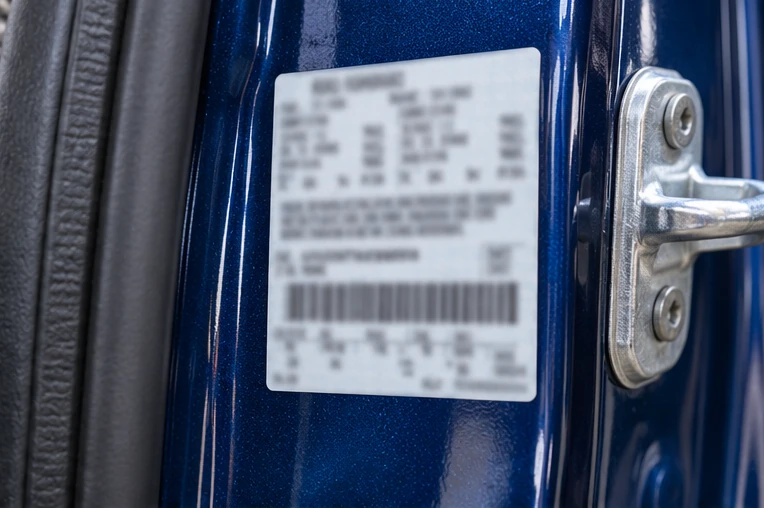
Which Ford door sticker has the transmission code?
Start at the driver’s door opening. Look on the door edge near the latch and the pillar the door closes against. Ford’s certification-label illustrations show the manufacturer, production date, VIN, and weight ratings. A tire-pressure label may be nearby and can be identified by its tire-size, loading, and cold-pressure information.
Find the cluster of short fields lower on the certification label. TR identifies the original transmission code. AXLE identifies the factory axle code. INT TR, where printed, is the interior trim field. It is easy to see the letters TR inside INT TR and copy the wrong value when the label is small.
Take one photo of the whole label and a second close-up of the code row. Save the full picture for your own records. If asking for help publicly, crop or cover the VIN and any other information you do not need to share. Send the complete VIN privately to the dealer or supplier when a build lookup is necessary.
Read the column labels before writing down the codes. On some illustrations Ford uses rows of Xs to show the layout. The manual’s picture tells you where to look. Use the characters on your vehicle’s own label to do the lookup.
Ford door sticker transmission code examples by model year


TR identifies the factory transmission. AXLE is a separate field. The unit tag helps confirm a replacement transmission.
| Model and year | TR code | Transmission designation in the cited Ford manual |
|---|---|---|
| 2020 F-150 | 6 | 6R80 six-speed automatic |
| 2020 F-150 | G | 10R80 ten-speed automatic |
| 2020 Explorer | T | 10R60 ten-speed automatic |
| 2020 Explorer | U | 10R80 ten-speed automatic |
| 2020 Explorer | B | A10R80-MHT ten-speed automatic |
| 2020 Escape | 7 | 8F24 eight-speed automatic |
| 2020 Escape | 8 | 8F35 eight-speed automatic |
Ford documents these examples in the 2020 F-150 owner’s manual, the 2020 Explorer owner’s manual, and the 2020 Escape owner’s manual. In each, look for Transmission Code Designation under Capacities and Specifications. The examples focus on the codes shown. Check the matching edition and powertrain section for your build.
The F-150 example demonstrates why an online list can appear to disagree with the sticker. G and U both resolve to 10R80 in the cited examples, with different model applications. Lookups that start with the transmission family can collect both codes. A parts order should start with the model year, model, engine, and the code copied from the vehicle.
The Explorer example shows why “ten-speed” is too broad for a parts order. Ford lists three ten-speed designations in that manual. T and U point to different unit families, and B identifies the hybrid designation listed there. Record the full name in the table. Keep the letter as supporting information so the parts counter can reproduce your lookup.


The Escape example illustrates that a short code can be a numeral. Copy 7 or 8 as printed and confirm it against the correct table. Keep the engine or hybrid designation beside the code, especially if more than one powertrain is described in the same owner’s manual.


How to check the AXLE field and read a towing chart

Write the AXLE code on a separate line. A two-character value in the axle column can contain letters, numbers, or both. Treat leading characters as part of the code. A typed 9 gives the person looking up a printed L9 less information than the label provides.
Open Ford’s towing guide for the correct year and find the vehicle line in its axle-ratio section. Ford’s 2024 RV and Trailer Towing Guide shows how to locate the label and organizes the axle codes by vehicle. Read across the correct model row and keep any footnotes attached to the result. A ratio is one element of the towing configuration.
After decoding the axle, find the trailer-weight table for the exact truck configuration. Use the engine, cab, box, drivetrain, applicable equipment, and other details that Ford requires for that row. Then account for the truck’s own loading and the trailer you plan to tow. An axle-code match supplies one input to that larger check.


A used truck may also have received replacement axle hardware or different gears. If records show differential work or a complete axle swap, ask the shop to confirm the ratio and the axle now fitted. The label describes the original build. It can still be useful for insurance, restoration records, or diagnosing a mismatch between factory and current configuration.
For additional examples of code format and axle identification, use the Ford axle code chart alongside the manufacturer’s year-specific table.
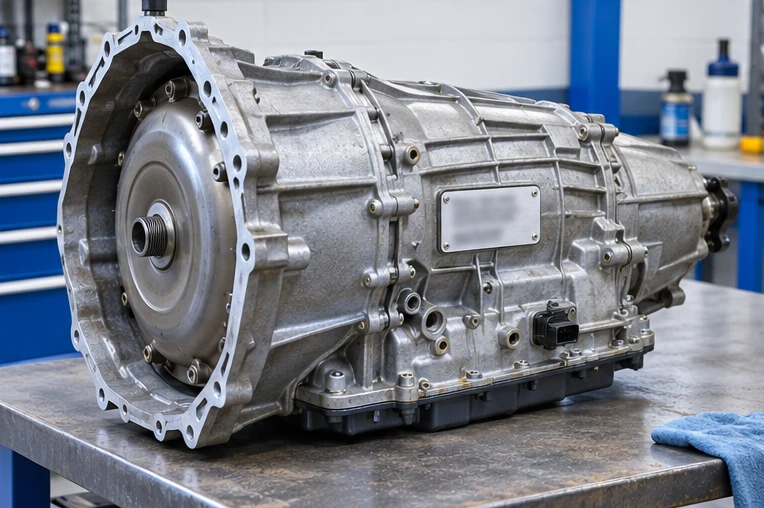
How to verify the transmission before ordering parts
Use the model year and market in the manual lookup
Search for the vehicle by model year and market before opening the manual. Check the cover page or vehicle selection screen. The production date on the door label is useful context, while the owner’s manual is normally organized by model year. If those years differ, match the vehicle’s model year and check any build-date instructions in the source.
Look for a specific transmission designation rather than a generic description. If the door says G and the 2020 F-150 manual says 10R80, write both. For a parts order, include the VIN privately, describe the specific part needed, and give the supplier any label number it requests.
Confirm the unit if it may have been swapped


Review old invoices for a replacement transmission, a remanufactured assembly, or a donor vehicle. A shop can inspect the unit’s identification label or tag and document its engineering or assembly number. This gives the supplier a second route to the application, particularly when the vehicle has an incomplete service history.
Use the Ford transmission identification chart for the broader sequence of checking the factory record and the physical unit. When a case label is obscured or access would require going under the vehicle, let a properly equipped shop read it. A clear shop photo can be enough to resolve the order without guessing from pan shape alone.
Match the specific service information
The transmission family is useful for narrowing the search. The applicable parts catalog or service procedure can still distinguish builds, revisions, and equipment. Check the fitment notes for the part, and use the specified fluid and fill procedure for the exact application. A dry capacity printed in a specification table may describe a different service condition from a routine drain and refill.
For a repair diagnosis, record the symptoms, warning messages, and scan results separately from the door-label code. The label is a factory equipment identifier. A diagnostic trouble code is a report from a vehicle control module and needs its own diagnostic process.
What to do when the sticker and other records disagree
Start with the easiest conflict to resolve. Compare the VIN on the certification label with the VIN used for the manual or parts lookup. A mismatched door label can result from a replacement door. A matched VIN with a differently identified current transmission can point toward a replacement assembly, an ambiguous catalog entry, or a misread code.
If the label is worn, view the original photo on a larger screen and check similar-looking characters. Read the printed field heading too. An AXLE code copied from the adjacent column can produce a completely different lookup result. Make sure the result came from the model-year table for the same vehicle.
If the certification label is gone, ask a Ford parts department to look up the factory build with the VIN. A window sticker or original paperwork can provide supporting configuration details. The text of the VIN alone may supply less detail than the Ford build record associated with it. For the current assembly, ask for the transmission case identification and service history.
When the parts counter and an online listing disagree, request the specific assembly number or fitment rule the counter used. Compare it to the vehicle and the supplier listing before authorizing the order. An unresolved fitment question is cheaper to handle before opening a kit or committing the vehicle to a repair.
How to handle handwritten codes and used parts listings
A handwritten code on a salvage-yard assembly is usually an inventory clue. Ask the seller for a photo of the transmission identification label and the donor vehicle’s year, model, engine, and drivetrain. If it supplies a parts interchange number, ask which assemblies that number covers and whether the one in the photo is the actual unit being offered.
When a listing offers several transmissions for the same Ford, check what changes among its options. A drivetrain selector, a build-date cutoff, or a distinction between a hybrid and a conventional powertrain can affect which listing applies. If the vendor can verify only the model name and number of gears, keep looking for application-specific information before buying.
On a shop estimate, ask whether the written transmission family describes your current unit or the proposed replacement. That distinction can prevent a mix-up when a work order contains both a diagnostic entry and an assembly quote. Keep both designations with their purpose so you can trace the repair later.
A door-label photo helps explain the vehicle’s original equipment when you sell it. Add records for any changed assembly and any altered axle ratio. That lets the next owner use the Ford chart to understand the factory configuration and the service documentation to order for the vehicle as it sits.
Three examples of a useful parts-counter note
| Situation | What to send privately | What to confirm |
|---|---|---|
| Original 2020 F-150 with TR G | Model year, VIN, TR G, manual designation 10R80 and the requested part | Application and any build-date breaks |
| Used 2020 Explorer with TR U and a replacement invoice | VIN, factory 10R80 designation, current unit tag and invoice | Fitment to the current assembly |
| Ford pickup being checked for towing | Year, model, engine, drivetrain, cab, bed, AXLE code and installed towing equipment | Vehicle-specific towing table and loading limits |
These notes are useful even when you are only comparing quotes. The same information lets two suppliers evaluate the same configuration. Save the verified designation and tag photo in the vehicle’s maintenance folder so future orders begin with a repeatable identification.
Keep the Ford label and the unit ID together
A Ford door sticker transmission code gives you a reliable way to check the original build when you match it to the right owner’s manual. Find TR beside the other certification fields, decode it by model and model year, and use the separate AXLE field for the axle lookup. On a used or modified vehicle, keep the original label information alongside the current unit tag and any replacement paperwork. That combination gives the parts counter the information it needs to check a filter, fluid, seal, or assembly. Start with a readable photograph of both the code row and the full certification label.
Frequently asked questions
What does TR mean on a Ford door sticker?



TR is the transmission code field on the Safety Compliance Certification Label. Copy the code and check it in the vehicle’s Transmission Code Designation table. INT TR refers to interior trim and has a different purpose.
Does G always mean a 10R80 transmission?
The cited 2020 F-150 manual identifies G as 10R80 for that application. Ford uses U for the 10R80 in the cited 2020 Explorer manual. Check the vehicle-specific table before applying either code.
Can the VIN tell me which transmission is in my Ford?


A Ford dealer or parts supplier can use the VIN to look up the original build. For a vehicle that has had a replacement transmission, the unit tag and repair records are the stronger evidence for the assembly now installed.
Can I use the AXLE code to find towing capacity?
The axle code helps determine the factory axle ratio. Use that result with the rest of the vehicle configuration in the appropriate Ford towing table, then check the truck’s loading and trailer requirements.
Is the door sticker transmission code a diagnostic trouble code?
The door sticker records factory equipment. A diagnostic trouble code comes from a control module and describes a condition the vehicle detected. Bring both the equipment identification and the scan results when a technician is diagnosing a fault.