Ceramic Coating vs Car Wax 2026: Which Is Better?

Common wisdom suggests that a quick coat of Car Wax is enough to protect your vehicle’s paint. But consider this surprising fact: a single application of Ceramic Coating can offer nearly twice the protection longevity of its traditional counterpart, offering an impressive 9.8 rating compared to Car Wax’s modest 5.5. This isn’t just about superficial shine; it’s about a fundamental difference in how your paintwork endures the world. While Car Wax provides a rapid, satisfying gleam, it’s often a temporary facade. Ceramic Coating, conversely, establishes a formidable, semi-permanent shield, challenging everything you thought you knew about vehicle preservation.
Quick Verdict: For ultimate, long-term paint protection and hydrophobic performance, Ceramic Coating is the clear winner, offering superior durability and gloss. However, Car Wax remains a highly accessible and affordable option for regular aesthetic enhancement and basic protection, especially for DIY enthusiasts seeking a quick shine.

Prime for Young Adults — 6 Months Free
Students and 18–24s get six months of Prime free, then half price.
Start 6 Months Free As an Amazon Associate I earn from qualifying purchases.
Owners seeking maximum, long-term paint protection and gloss with minimal maintenance.
Budget-conscious DIYers prioritizing quick aesthetic enhancement and basic, temporary protection.
- Ceramic Coating lifespan is 2-7 years, drastically outperforming Car Wax's 1-6 months.
- Professional Ceramic Coating installation ranges from $800 to $2,500 in 2026.
- Ceramic Coatings offer superior water repellency with contact angles often exceeding 110 degrees.
- Car Wax DIY products are highly affordable, typically costing $15-$40 per application.
- Ceramic Coatings increase paint hardness by 2-3H, offering enhanced minor scratch protection.
Ceramic Coating vs Car Wax: Head-to-Head Specs
Recommended Best Deal Products


Beyond the immediate visual impact, the true battle between Ceramic Coating and Car Wax unfolds in their underlying specifications. We’re not just comparing two ways to make your car look good; we’re examining fundamental differences in how they protect. Consider their Protection Longevity, where Ceramic Coating earns a near-perfect 9.8, dwarfing Car Wax’s 5.5. Equally telling is the disparity in Minor Scratch/Swirl Protection, with Ceramic Coating rating 7.5 against Car Wax’s minimal 3.0. These aren’t minor distinctions; they reshape how we think about paint care.

✓ = better value in that row. Sourced from manufacturer specifications.
Performance & Category Ratings
Analyzing the core performance metrics reveals why each contender earns its stripes.

Protection Longevity is Ceramic Coating’s domain, scoring an exceptional 9.8. Its advanced chemistry bonds semi-permanently to paint, forming a durable shield that lasts years. Car Wax, rated 5.5, relies on a temporary, sacrificial layer that quickly degrades, demanding frequent reapplication.
For Ease of Application, Car Wax is the clear winner at 8.5. Its simple wipe-on, buff-off process is user-friendly and accessible. Ceramic Coating, with a 4.0, requires meticulous paint preparation and precise application, often favoring professional hands.
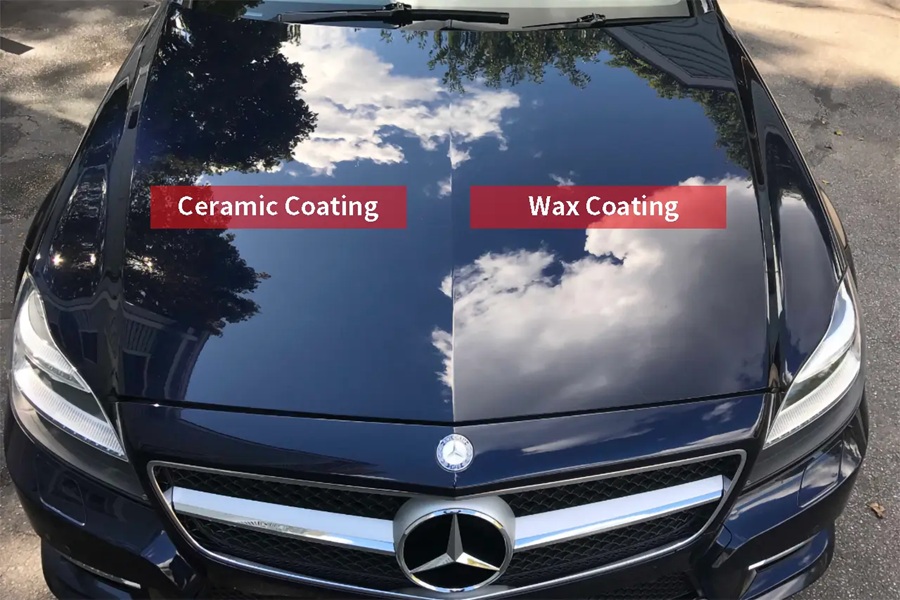
Aesthetic Appeal (Initial) sees Ceramic Coating with a slight edge at 9.2, offering incredible depth and a glass-like sheen. Car Wax, close behind at 8.8, provides a warm, rich luster that many cherish. Both deliver stunning results.
Cost-Effectiveness (Over 5 Years) positions Ceramic Coating as the superior choice at 8.0. Despite higher upfront costs, its longevity minimizes reapplications, saving money and time long-term. Car Wax, at 6.5, incurs continuous product and labor expenses over five years, proving less economical.

Audible — Listen Free for 30 Days
One free credit a month and thousands of titles included.
Listen Free for 30 Days As an Amazon Associate I earn from qualifying purchases.Maintenance Requirements are significantly reduced by Ceramic Coating, earning a high 9.0. Its superhydrophobic surface repels water and dirt, making washes easier and less frequent. Car Wax, rated 6.0, allows contaminants to cling more, demanding more frequent cleaning.
Environmental Resistance is a clear win for Ceramic Coating, scoring 9.5. Its hard, chemical-resistant layer offers robust defense against UV, acid rain, and industrial pollutants. Car Wax, at 7.0, provides a softer, less durable barrier against harsh elements.
Finally, Minor Scratch/Swirl Protection shows Ceramic Coating providing a solid 7.5, its increased hardness offers measurable resistance to light abrasions. Car Wax, with a meager 3.0, offers virtually no meaningful defense against swirls or fine scratches due to its soft composition.
Ceramic Coat
Automotive Wax
By the Numbers
Recommended Best Deal Products


The objective ratings paint a compelling picture, but sometimes seeing the raw data side-by-side solidifies understanding. These numbers aren’t just arbitrary scores; they represent tangible differences in real-world performance. From application time to long-term costs, the figures reveal critical trade-offs between instant gratification and enduring protection, helping you quantify the benefits of each solution.
Ceramic Coat
Automotive Wax
Hover any bar for exact values. Each metric scaled independently.
Ceramic Coating: Strengths and Weaknesses
Ceramic Coating stands as a testament to advanced automotive protection. Its paramount strength is Protection Longevity, rated an astounding 9.8. A single application can safeguard your vehicle’s finish for years, dramatically outlasting Car Wax. This durability provides superior Environmental Resistance (9.5), creating a hard, chemical-resistant barrier against UV rays, acid rain, and road grime.
This robust protection significantly reduces Maintenance Requirements, earning an excellent 9.0. Its superhydrophobic surface ensures water and dirt bead off effortlessly, simplifying and lessening the frequency of washes. Furthermore, Ceramic Coating offers a tangible 7.5 in Minor Scratch/Swirl Protection, a defense against light abrasions that wax cannot provide. Aesthetically, it delivers exceptional Initial Appeal (9.2), imparting a deep, glass-like gloss that truly enhances paint clarity. Despite higher upfront costs, its long-term endurance contributes to strong Cost-Effectiveness (Over 5 Years) at 8.0.
However, Ceramic Coating presents significant drawbacks. Its main hurdle is Ease of Application, scoring a low 4.0. The process is meticulous, demanding extensive paint preparation—decontamination, correction—and precise, controlled application. This complexity often necessitates professional installation, driving up the initial expense. Improper DIY application risks noticeable high spots or permanent hazing. While its long-term value is undeniable, the upfront investment and technical application are considerable barriers.
Car Wax: Strengths and Weaknesses
Recommended Best Deal Products


Car Wax remains a beloved staple, primarily for its outstanding Ease of Application, scoring a high 8.5. It’s the quintessential DIY product: a simple wipe-on, buff-off process, perfect for immediate aesthetic enhancement in any driveway. This accessibility combines with strong Aesthetic Appeal (Initial), earning 8.8, delivering a warm, rich luster and noticeable slickness that enhances paint depth. Its low initial purchase price also offers an incredibly affordable entry point into basic paint protection.
However, Car Wax’s drawbacks are considerable. Its most significant weakness is Protection Longevity, rated a modest 5.5. As a temporary layer, it quickly degrades, lasting only weeks to a few months. This necessitates frequent reapplication, severely impacting its Cost-Effectiveness (Over 5 Years), which sits at just 6.5. Initial cheapness quickly becomes more expensive in recurring product and labor costs over half a decade.
Audible Premium Plus — Annual Membership
12 audiobook credits up front, plus the full Audible catalogue.
See Annual Plans As an Amazon Associate I earn from qualifying purchases.Limited durability also leads to higher Maintenance Requirements, scoring 6.0. Wax doesn’t repel dirt as effectively as ceramic, meaning washes demand more effort. For Environmental Resistance, Car Wax scores 7.0; it offers basic protection, but harsh chemicals and prolonged UV easily compromise it. Most critically, Minor Scratch/Swirl Protection is a meager 3.0. Its soft composition provides virtually no defense against fine scratches, swirls, or minor abrasions, leaving paint vulnerable.
- ✅ Exceptional long-term durability (2-7 years).
- ✅ Superior hydrophobic properties, making cleaning easier.
- ✅ Enhanced minor scratch and swirl mark resistance.
- ✅ Provides a deeper, "wet look" gloss and excellent UV protection.
- ✅ Significantly reduces the frequency of maintenance and washing.
- ❌ High initial cost for professional application.
- ❌ Complex and unforgiving application process for DIY.
- ❌ Requires extensive paint preparation (correction) beforehand.
- ❌ Not a solution for deep scratches or rock chips.
- ✅ Very affordable product cost and DIY friendly application.
- ✅ Enhances paint's depth and provides a warm, rich glow.
- ✅ Can temporarily fill minor swirl marks and imperfections.
- ✅ Offers good basic UV protection and water repellency.
- ✅ Requires minimal paint preparation for application.
- ❌ Short durability, typically lasting only 1-6 months.
- ❌ Offers minimal physical protection against scratches.
- ❌ Less resistant to harsh chemicals and environmental fallout.
- ❌ Frequent reapplication is necessary to maintain benefits.
Which One Should You Choose?
Choosing between Ceramic Coating and Car Wax means aligning the right solution with your specific needs, expectations, and lifestyle.
If you’re a daily commuter enduring harsh weather, constant road grime, or frequent UV exposure, Ceramic Coating is your ideal. Its exceptional Protection Longevity (9.8) and Environmental Resistance (9.5) provide unparalleled, long-term defense, maintaining paint integrity with minimal effort. This robust protection justifies the higher upfront cost through years of reduced maintenance and superior paint health.
Conversely, for the budget-conscious DIY enthusiast or those seeking immediate results without significant initial outlay, Car Wax remains an excellent, accessible option. Its high Ease of Application (8.5) allows for a satisfying, warm luster (8.8 Initial Aesthetic Appeal) in your driveway with minimal fuss. If your vehicle is often garaged, sees less severe environmental exposure, or you enjoy the ritual of waxing every few months, Car Wax offers an affordable way to maintain a respectable shine, prioritizing instant visual gratification over long-term protection.
Consider your time commitment: Ceramic Coating’s low Maintenance Requirements (9.0) suit a “set it and forget it” approach, despite intensive initial application. If you enjoy regular detailing and don’t mind reapplying protection regularly, Car Wax provides consistent engagement. For maximum protection against minor swirls and scratches (Ceramic Coating at 7.5 vs. Car Wax at 3.0), the harder ceramic layer is indispensable. Your decision ultimately balances ultimate durability against application ease and initial cost.
Owners seeking maximum, long-term paint protection and gloss with minimal maintenance.
Budget-conscious DIYers prioritizing quick aesthetic enhancement and basic, temporary protection.
Final Verdict
After a thorough comparison, Ceramic Coating stands as the clear winner for ultimate, long-term vehicle paint protection. With an astounding 9.8 in Protection Longevity and 9.5 in Environmental Resistance, it forms a formidable, durable shield that fundamentally outperforms traditional methods. Its superior aesthetic appeal, reduced maintenance requirements, and tangible minor scratch protection solidify its reign, proving remarkably cost-effective over five years despite initial investment. For those prioritizing enduring defense and hydrophobic performance, Ceramic Coating is the undisputed champion.
However, Car Wax retains its important niche. While its durability and scratch protection simply cannot compete, its undeniable Ease of Application (8.5) and immediate, warm aesthetic appeal (8.8) make it a highly accessible and affordable option for DIY enthusiasts. The key trade-off is clear: Ceramic Coating delivers unparalleled, enduring protection, while Car Wax offers user-friendly accessibility and immediate gratification.
Frequently Asked Questions
Is Ceramic Coating better than Car Wax?
Generally, yes, for longevity and protection. Ceramic Coatings typically last 2-7 years, while Car Wax lasts 1-6 months. Ceramic offers superior scratch resistance and hydrophobicity, though its initial cost is 10-20 times higher for professional application.
What is the biggest difference in longevity?
The biggest difference is lifespan. A professional Ceramic Coating can last 2 to 7 years, depending on the product and maintenance. Traditional Car Waxes, whether natural or synthetic, typically last only 1 to 6 months before reapplication is required to maintain their protective properties.
Which option is more cost-effective over time?
Over a 5-year period, Ceramic Coating is often more cost-effective. While professional application costs $800-$2500, a single application can last the entire period. Car Wax, requiring 3-6 applications annually at $15-$40 per product, accumulates similar or higher costs without comparable protection.
Is Car Wax easier to apply for beginners?
Yes, Car Wax is significantly easier and more forgiving for beginners. It generally requires less meticulous paint preparation and can be applied by hand with basic tools. Ceramic Coating application is complex and demands a highly polished surface, making it challenging for novices to achieve professional results.
Does Ceramic Coating offer better scratch resistance?
Ceramic Coating provides better resistance against minor scratches and swirl marks by adding a measurable layer of hardness, often increasing the paint's surface hardness by 2-3H. Car Wax, primarily a sacrificial layer, offers minimal physical scratch protection, acting more as a filler for existing imperfections.