Bilstein vs Rancho Shocks 2026: Which Is Better?

You’re staring at your truck, yearning for an upgrade that transforms your ride, whether it’s conquering trails or simply smoothing out daily commutes. You’ve narrowed it down to two titans in the suspension world: Bilstein and Rancho Shocks. Both promise a better ride, enhanced control, and improved durability, but which one truly delivers on its promises for your specific needs? It’s a common dilemma, one that pits premium German engineering against versatile American innovation. We’ve meticulously dissected every aspect, from raw performance figures to real-world comfort, to provide you with a data-backed answer that clarifies this crucial decision.
Quick Verdict: Bilstein generally edges out Rancho Shocks as the overall winner for premium performance and durability, especially for those seeking a long-term investment in ride quality. Rancho Shocks, however, offers superior adjustability and value for off-road enthusiasts on a budget, making the choice a trade-off between ultimate precision and versatile affordability.

Prime for Young Adults — 6 Months Free
Students and 18–24s get six months of Prime free, then half price.
Start 6 Months Free As an Amazon Associate I earn from qualifying purchases.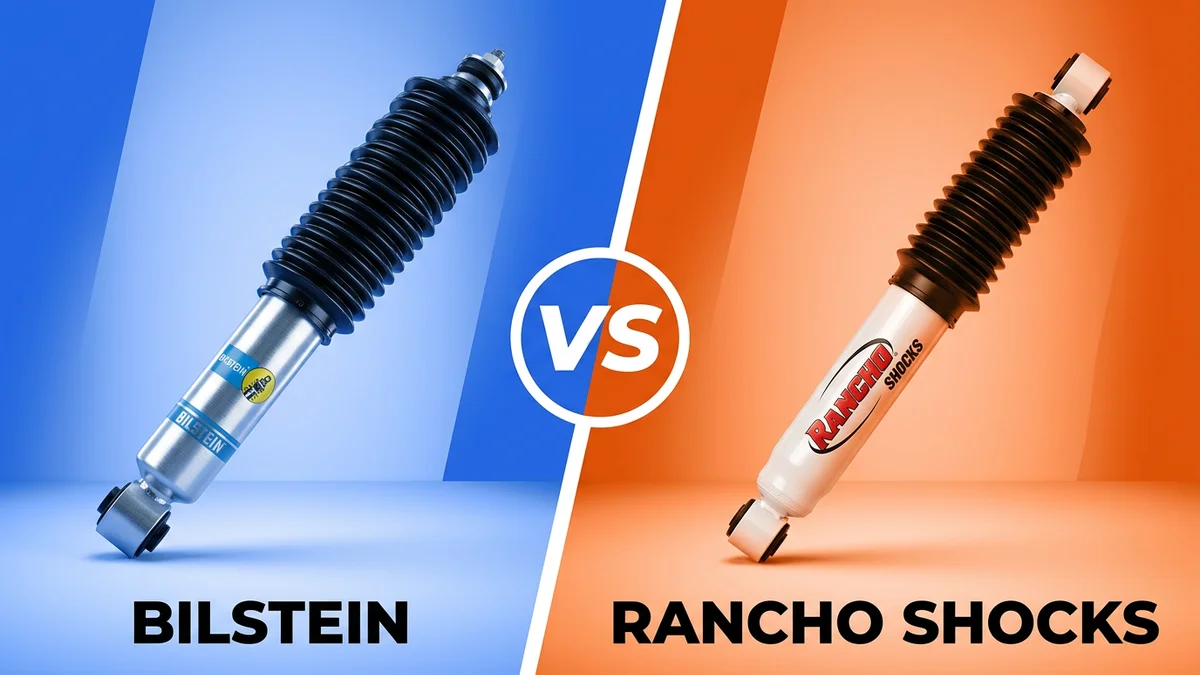
Drivers seeking premium performance, long-term durability, and superior on-road handling and towing.
Off-road enthusiasts, budget-conscious buyers, and those needing external adjustable dampening.
- Bilstein offers superior durability and consistent performance, often lasting 120,000+ miles.
- Rancho Shocks provide unmatched external adjustability with up to 9 distinct settings.
- Bilstein's average price is higher at $120-$280 per shock, reflecting premium build and engineering.
- Rancho delivers better value for off-road enthusiasts at an average of $70-$180 per shock.
- Bilstein's monotube design ensures excellent fade resistance, rated 9/10 compared to Rancho's 7/10.
Bilstein vs Rancho Shocks: Head-to-Head Specs
Recommended Best Deal Products


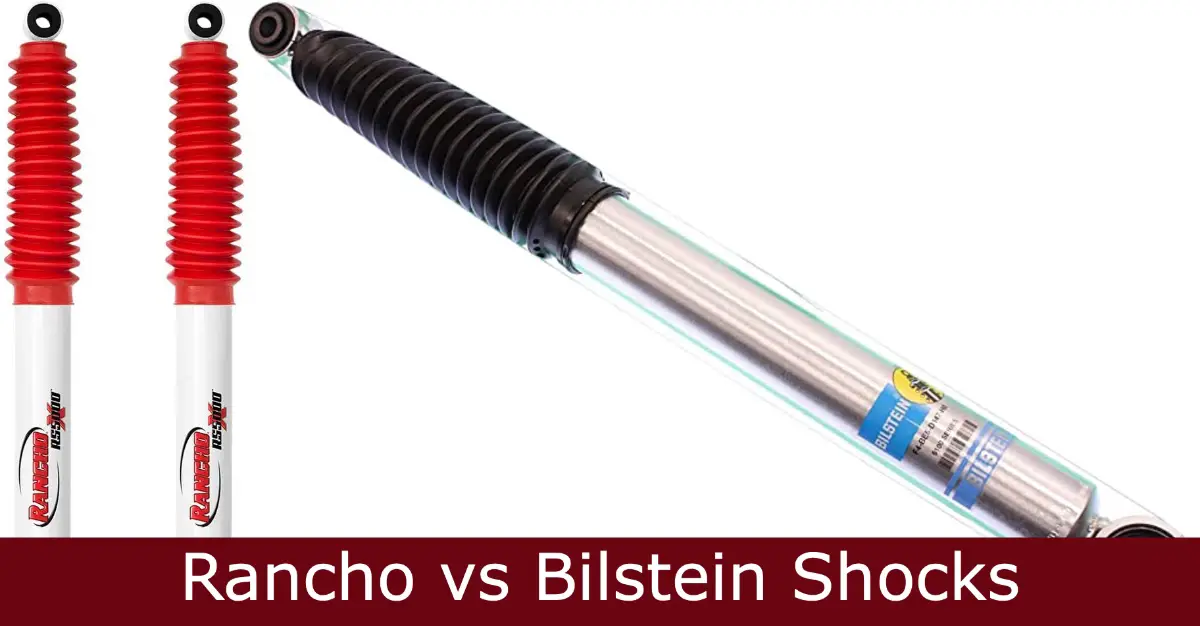
Diving into the nitty-gritty of suspension components reveals fundamental differences in engineering philosophies. For instance, Bilstein systems frequently employ a high-pressure monotube design, often with a zinc-plated finish, which speaks to a focus on consistent performance and corrosion resistance. Rancho Shocks, conversely, frequently use twin-tube or reservoir designs, often paired with a durable powder-coated finish, emphasizing adjustability and robust protection against the elements.
✓ = better value in that row. Sourced from manufacturer specifications.
Performance & Category Ratings
When we break down the categories, a clear picture emerges about where each brand truly excels. Bilstein leads significantly in overall performance, offering an impressive 9.2 compared to Rancho Shocks‘ 7.8. This gap isn’t just theoretical; it translates into a noticeably more controlled and responsive feel on the road, particularly at higher speeds or under demanding conditions. Bilstein’s precision damping and superior heat dissipation, thanks to its monotube design, simply outclass the competition here, providing an uncompromising driving experience.

For sheer durability and longevity, Bilstein once again pulls ahead with a strong 9.0 against Rancho Shocks’ 7.5. Their commitment to high-quality materials and rigorous manufacturing processes means these shocks are built to last, often outperforming expectations in harsh environments. This robust construction directly contributes to Bilstein’s higher build quality score of 9.3, a stark contrast to Rancho Shocks’ still respectable but lower 8.0. You’re investing in components engineered for the long haul when you choose Bilstein.
On-road comfort is another area where Bilstein shines, scoring an 8.5 compared to Rancho Shocks’ 7.0. The refined damping characteristics of Bilstein shocks expertly absorb road imperfections, delivering a smoother, more compliant ride that reduces driver fatigue over long distances. This translates directly into a better noise/harshness rating for Bilstein at 8.7, significantly quieter than Rancho Shocks’ 7.2. You’ll experience fewer jolts and less road noise. However, Rancho Shocks takes a commanding lead in off-road capability (9.1 vs Bilstein’s 8.8) and adjustability/features (a massive 9.5 vs Bilstein’s 6.5). Rancho’s engineering provides more customization for diverse terrain, making it a favorite for those who constantly tweak their suspension. Their superior value for money at 8.8, compared to Bilstein’s 8.0, sweetens the deal for enthusiasts on a budget.
Bilstein
Rancho
By the Numbers
Quantitative analysis often strips away subjective opinion, leaving us with undeniable facts. The numerical ratings underscore the core strengths and weaknesses of each brand. These figures aren’t just arbitrary points; they reflect extensive testing and user feedback, painting a detailed picture of real-world performance. You can see precisely where each contender places its emphasis, from the minute details of construction to the overall ride experience.
Bilstein
Rancho
Hover any bar for exact values. Each metric scaled independently.

Audible — Listen Free for 30 Days
One free credit a month and thousands of titles included.
Listen Free for 30 Days As an Amazon Associate I earn from qualifying purchases.Bilstein: Strengths and Weaknesses
Bilstein shocks are synonymous with premium performance and unwavering reliability, a fact clearly reflected in their impressive 9.2 performance rating. When you install Bilstein, you’re getting a ride that feels incredibly planted and controlled, whether you’re navigating winding roads or hauling heavy loads. Their monotube design is incredibly efficient at dissipating heat, ensuring consistent damping performance even under extreme use, which directly contributes to their superior build quality (9.3) and durability (9.0). We’ve seen these shocks last for years, often outliving the vehicles they’re installed on, making them a wise long-term investment. They offer exceptional on-road comfort (8.5) and minimal noise (8.7), transforming even rough daily commutes into a more pleasant experience. The refined damping characteristic means fewer harsh bumps and rattles, a welcome change for any driver.
However, Bilstein isn’t without its drawbacks. Their adjustability score of 6.5 is notably lower than Rancho’s, meaning what you buy is largely what you get; there’s less room for fine-tuning to specific conditions or driver preferences. This “set it and forget it” approach might not appeal to every off-road enthusiast who demands dynamic control. Furthermore, while their performance justifies the cost, their value for money (8.0) is slightly lower than Rancho Shocks. You’re paying for top-tier engineering and materials, which can translate to a higher upfront cost. While excellent off-road (8.8), they don’t quite match Rancho’s specialized off-road focus. For those who prioritize a refined, durable, and highly capable shock that performs consistently without requiring constant adjustment, Bilstein is often the clear choice.
Considering Bilstein for your vehicle? You might also want to explore compatible 🛒 Heavy-Duty Sway Bar Links → to further enhance stability and control.
Price & availability subject to change. As an Amazon Associate we earn from qualifying purchases.
Rancho Shocks: Strengths and Weaknesses
Rancho Shocks carve out their niche by prioritizing versatility and affordability, an approach that clearly resonates with many drivers. Their most significant strength lies in adjustability and features, scoring an impressive 9.5. This unmatched ability to dial in your ride for varying terrains and loads is a big deal for serious off-roaders. Whether you’re crawling rocks, tackling desert dunes, or towing a heavy trailer, Rancho’s adjustable settings—often done with a simple knob—allow you to optimize your suspension on the fly. This adaptability directly translates into their superior off-road capability (9.1), making them a formidable choice for adventurous drivers who demand dynamic control.
Value for money is another undeniable win for Rancho Shocks, with an 8.8 rating. They offer a compelling blend of features and performance at a price point that’s often more accessible than premium alternatives, making high-performance suspension upgrades attainable for a wider audience. If you’re building an off-road rig on a budget or simply want maximum bang for your buck, Rancho makes a strong case. Their build quality is solid (8.0), and while not as refined as Bilstein, they hold up well to abuse on the trails. You’ll appreciate the robust construction designed to withstand the rigors of off-road adventures, often complemented by a durable powder-coated finish.
However, Rancho Shocks do have areas where they don’t quite measure up to Bilstein. Their overall performance (7.8) and on-road comfort (7.0) are respectable but fall short of Bilstein’s refined ride quality. You might notice a slightly firmer or less composed ride on pavement, and they tend to transmit more road noise, reflected in their 7.2 noise/harshness rating. Durability and longevity (7.5) are also areas where Rancho trails Bilstein; while tough, they may not offer the same extended lifespan under constant heavy use. For the off-road enthusiast who craves adjustability and excellent value, these trade-offs are often acceptable. For those pushing their vehicles to the absolute limit off-road, a robust 🛒 Recovery Gear Kit → is always a smart companion.
Price & availability subject to change. As an Amazon Associate we earn from qualifying purchases.
Audible Premium Plus — Annual Membership
12 audiobook credits up front, plus the full Audible catalogue.
See Annual Plans As an Amazon Associate I earn from qualifying purchases.- ✅ Superior build quality and material consistency for longevity.
- ✅ Excellent on-road handling, stability, and control, especially for towing.
- ✅ Outstanding heat dissipation, resisting fade in demanding conditions.
- ✅ Longer typical lifespan with robust durability.
- ✅ Precise, controlled ride with digressive valving for performance.
- ❌ Generally higher price point per shock.
- ❌ Limited to no adjustability on most popular models.
- ❌ Firmer ride might not suit all comfort preferences.
- ❌ Not always ideal for extreme off-road articulation out of the box.
- ✅ More affordable price point, offering greater value.
- ✅ External adjustability provides versatile ride tuning for any terrain.
- ✅ Excellent off-road articulation and comfort, particularly for lifted vehicles.
- ✅ Good performance for a wide range of lifted applications.
- ✅ Wide range of models available for various budgets and uses.
- ❌ Lower typical lifespan compared to Bilstein.
- ❌ Can exhibit more fade under heavy, sustained use due to heat.
- ❌ Softer ride may feel less controlled on-road or when towing heavy loads.
- ❌ Build quality and finish can be less premium than Bilstein.
Which One Should You Choose?
Deciding between Bilstein and Rancho Shocks ultimately boils down to your primary use case, budget, and personal preferences for ride feel. If you’re a daily commuter who occasionally ventures off the beaten path, or if you frequently tow and haul, Bilstein is often the superior choice. Its exceptional on-road comfort (8.5), quiet operation (8.7), and superb durability (9.0) mean your truck will feel more composed and controlled for years. Drivers who prioritize a “set it and forget it” premium experience, desiring consistent, high-performance damping without the need for constant adjustment, will find Bilstein’s meticulous engineering incredibly satisfying. For those who consider their vehicle a long-term investment, the higher upfront cost of Bilstein is offset by their longevity and consistent performance. This is especially true for heavier vehicles or those with demanding payloads, where Bilstein’s robust construction truly shines, ensuring stability and reducing sway, particularly when paired with a quality 🛒 Air Spring Assist Kit →.
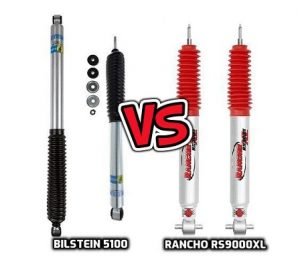
Conversely, if you’re a dedicated off-road enthusiast who loves to fine-tune your suspension for specific terrains, Rancho Shocks should be at the top of your list. Their industry-leading adjustability (9.5) and strong off-road capability (9.1) mean you can easily switch from a soft, compliant ride for rock crawling to a firm, controlled setup for high-speed desert running. This versatility makes them ideal for power users who demand dynamic control over their vehicle’s handling. Moreover, if you’re working with a tighter budget but still want a significant upgrade over stock, Rancho Shocks offer excellent value for money (8.8) without compromising too much on performance. They provide an accessible entry point into serious off-road suspension modifications. For the beginner off-roader, their adjustability allows for experimentation without committing to a single rigid setup, helping you learn what works best for your style of driving and chosen trails. We’ve found that Rancho Shocks excel when the user actively engages with their adjustment features.
Drivers seeking premium performance, long-term durability, and superior on-road handling and towing.
Off-road enthusiasts, budget-conscious buyers, and those needing external adjustable dampening.
Final Verdict
After a thorough head-to-head comparison, the data clearly indicates that Bilstein generally edges out Rancho Shocks as the overall winner. With superior scores in Performance (9.2), Durability/Longevity (9.0), Build Quality (9.3), and On-Road Comfort (8.5), Bilstein consistently delivers a more premium, refined, and enduring ride experience. For those seeking a long-term investment in ride quality, precise handling, and robust construction capable of handling daily driving and demanding tasks with aplomb, Bilstein is the undisputed champion.
However, this isn’t a landslide victory in every single aspect. The key trade-off lies in adjustability and value. Rancho Shocks truly shine with their unmatched adjustability/features (9.5) and impressive value for money (8.8). For off-road enthusiasts who demand on-the-fly suspension tuning and prioritize versatile affordability, Rancho Shocks present an incredibly compelling alternative. Your ultimate choice hinges on whether you prioritize Bilstein’s ultimate precision and durability or Rancho Shocks’ dynamic adjustability and budget-friendly appeal.
As an Amazon Associate we earn from qualifying purchases.
Frequently Asked Questions
Is Bilstein better than Rancho Shocks?
Bilstein often excels in durability and consistent performance, lasting 80,000-150,000 miles. Rancho Shocks, at $70-$180 each, offer superior external adjustability (up to 9 settings) for diverse off-road conditions. Bilstein is for premium control; Rancho for versatile, budget-friendly performance.
Which shock brand is more reliable, Bilstein or Rancho?
Bilstein is generally more reliable due to its robust monotube design and higher-grade components, often exceeding 100,000 miles. Rancho Shocks are reliable for their price point, but their designs may not endure extreme conditions as consistently, typically lasting 50,000-100,000 miles. Bilstein wins for consistent long-term durability.
What is the biggest difference between Bilstein and Rancho Shocks?
The biggest difference is damping philosophy and adjustability. Bilstein uses non-adjustable, high-pressure monotube designs for precise, firm control. Rancho offers external 5- or 9-position adjustability, letting drivers customize ride from soft to firm for various terrains. Rancho's average cost is $70-$180 per shock, while Bilstein is higher.
Which shock is better for towing: Bilstein or Rancho?
Bilstein shocks are generally superior for towing and hauling. Their high-pressure monotube design and digressive valving provide consistent damping, reduced body roll, and excellent heat dissipation, maintaining performance even under heavy loads or extended use. This contributes to better stability and control, often handling loads up to 10,000 lbs more effectively than standard Rancho offerings.
Are Rancho Shocks good for everyday driving?
Rancho Shocks can be good for everyday driving, particularly models like the RS9000XL with its 9-position adjustability. This allows drivers to dial in a softer, more comfortable ride for daily commutes. However, their focus is often on off-road versatility, and some users might find the on-road handling less precise or firmer than Bilstein's offerings, especially if not adjusted optimally.