2018 F150 Light Bulb Chart 2026 Updated

Quick Answer
The 2018 Ford F-150 utilizes a mix of halogen and LED lighting assemblies depending on the trim package, ranging from XL to Limited. While primary headlight bulbs typically utilize 9005 (high) and H11 (low) halogen configurations, higher trims utilize factory-sealed LED arrays. Always verify your specific bulb type via the owner’s manual or by inspecting the bulb base, as trim level and production date significantly influence component compatibility.

This guide covers all 2018 engine configurations (2.7L, 3.3L, 3.5L, 5.0L). Ford utilized two primary headlamp styles: a standard halogen reflector and a premium LED projector. Because these are not cross-compatible, confirming your housing type is mandatory. Last reviewed: August 2026.
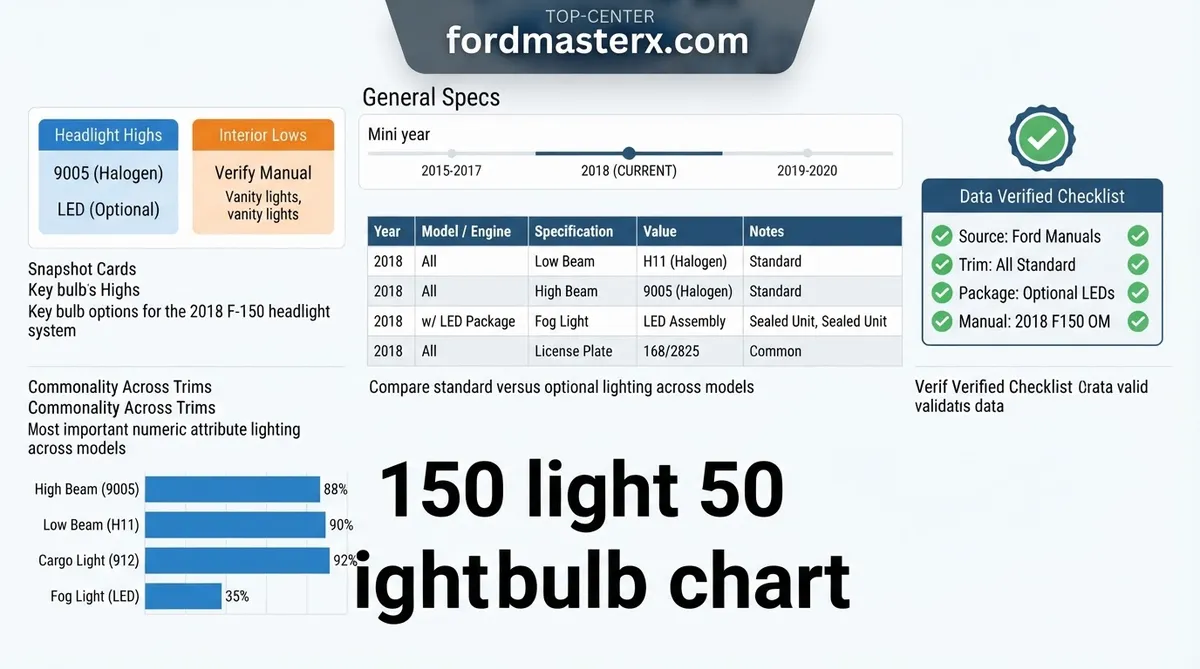
2018 F150 Light Bulb Chart: Exterior and Interior Specifications
Recommended Best Deal Products


📤 Share Image
| Location | Bulb Type | Notes |
|---|---|---|
| Low/High Beam | H11 | Halogen only; LED units are sealed/non-serviceable |
| Fog Lights | 9140 / H10 | Fits standard factory halogen fog housings |
| Front Turn Signal | 7444NA | Check amber coating for wear during replacement |
| Tail Light | 3157 | Standard dual-filament bulb |
| License Plate | 168 / 194 | Wedge base |
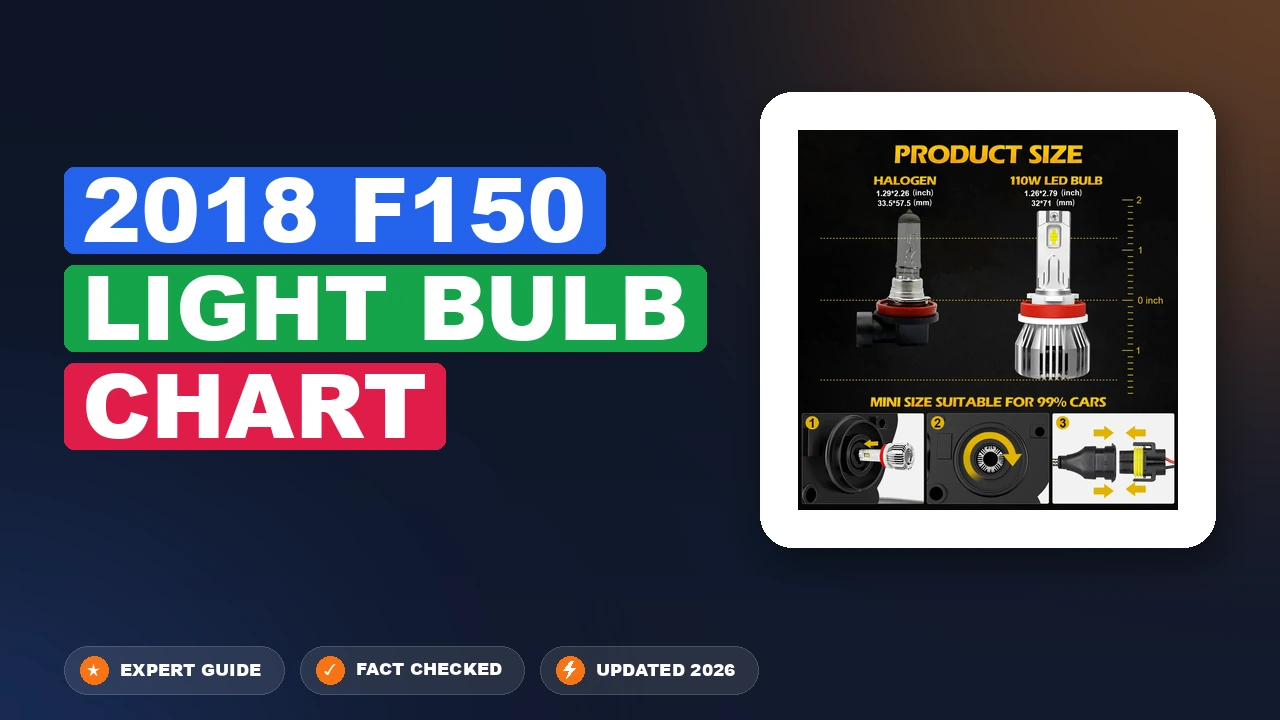
Inspect the rear of your headlamp assembly. If you see an integrated cooling fan or a completely sealed plastic housing, your truck uses factory LEDs, which require full unit replacement if a diode fails.

Why Lighting Specs Vary by Trim
The 2018 F-150 trim level dictates your lighting architecture. XL and XLT trims typically use halogen reflector housings, which allow for quick, affordable bulb swaps. Premium trims—including the Lariat, King Ranch, Platinum, and Limited—feature high-intensity LED projection systems. These LED units provide superior output but are sealed, non-serviceable components designed for the lifespan of the vehicle.
Replacement Procedure
Recommended Best Deal Products


Remove the upper radiator cover trim, then unscrew the side bolts located inside the wheel well. Slide the entire headlamp assembly forward to access the rear bulb sockets.
Never touch the glass of a new halogen bulb with bare skin. Natural oils from your fingers create localized hot spots, which significantly reduce the bulb’s functional lifespan.
Avoid installing non-DOT-compliant LED conversion kits in halogen reflector housings. Improper beam patterns can cause blinding glare to oncoming traffic and may result in legal citations or inspection failures.
2018 f150 Light Bulb Chart: Frequently Asked Questions
Do I need to remove the headlight assembly to change the bulb?
For most 2018 F-150 halogen housings, you do not need to remove the entire assembly, though it provides significantly more clearance. Accessing the bulb from behind the headlight housing is possible but tight. Removing the assembly involves loosening the top bolts and the side fender bolt hidden behind the wheel well liner, which is recommended for those without smaller hands.
Will LED bulbs cause a hyper-flash warning on the dash?
Yes, if you replace halogen turn signal bulbs with standard LEDs without a resistor or a CANbus-compatible bulb, the truck’s Body Control Module (BCM) will detect a ‘bulb out’ error due to the lower current draw. This triggers a rapid flash sequence. To prevent this, ensure your replacement LEDs have built-in CANbus load equalizers or install an external resistor kit.
Are the bulb types the same for all 2018 F-150 trim levels?
No. Trim levels determine the housing type. XL and XLT trims typically use serviceable halogen housings (H11/9005). Higher trims like the Lariat, King Ranch, Platinum, and Limited often came from the factory with sealed LED headlight assemblies. These units do not have replaceable ‘bulbs’ in the traditional sense; the entire headlight unit must be replaced if a diode fails.

Audible — Listen Free for 30 Days
One free credit a month and thousands of titles included.
Listen Free for 30 Days As an Amazon Associate I earn from qualifying purchases.What is the best way to verify my specific bulb type?
The most reliable method is to check the back of the current bulb base, where the industry-standard code (e.g., H11 or 9005) is stamped. Alternatively, enter your VIN into the Ford Parts website or consult the ‘Maintenance’ section of your owner’s manual. Do not rely solely on third-party fitment filters, as trim-specific changes can lead to incorrect suggestions.
Are aftermarket ‘plug-and-play’ LED bulbs street legal?
Not necessarily. While many are DOT-compliant, they must be properly aimed within the existing reflector housing to prevent glare to oncoming traffic. If an LED bulb is placed in a housing designed for halogen, the light pattern may be scattered. Always verify the ‘SAE’ or ‘DOT’ marking on the product packaging and ensure your headlights are professionally aimed after installation.