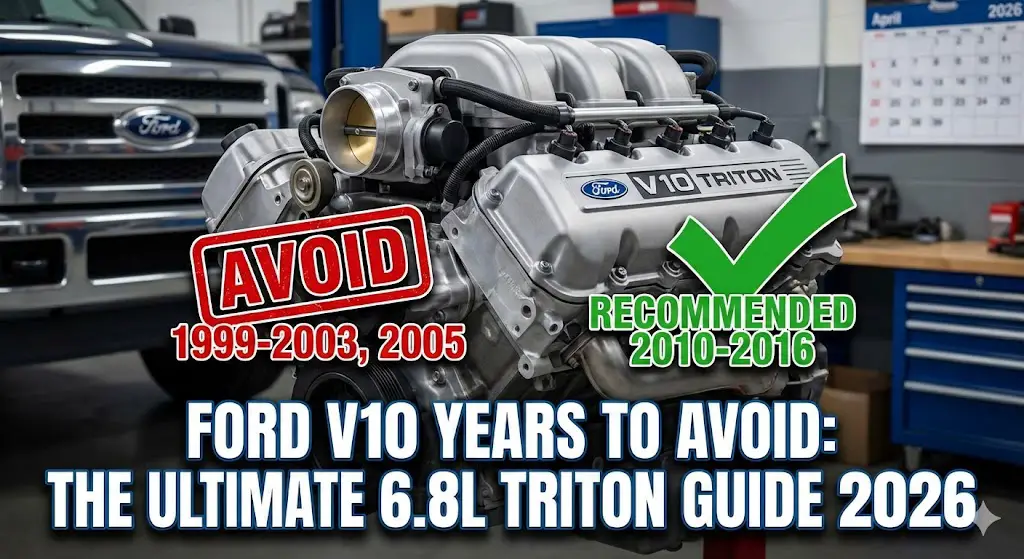
Ford V10 Years to Avoid (1997-2019) | F-250 & RV Guide 2026

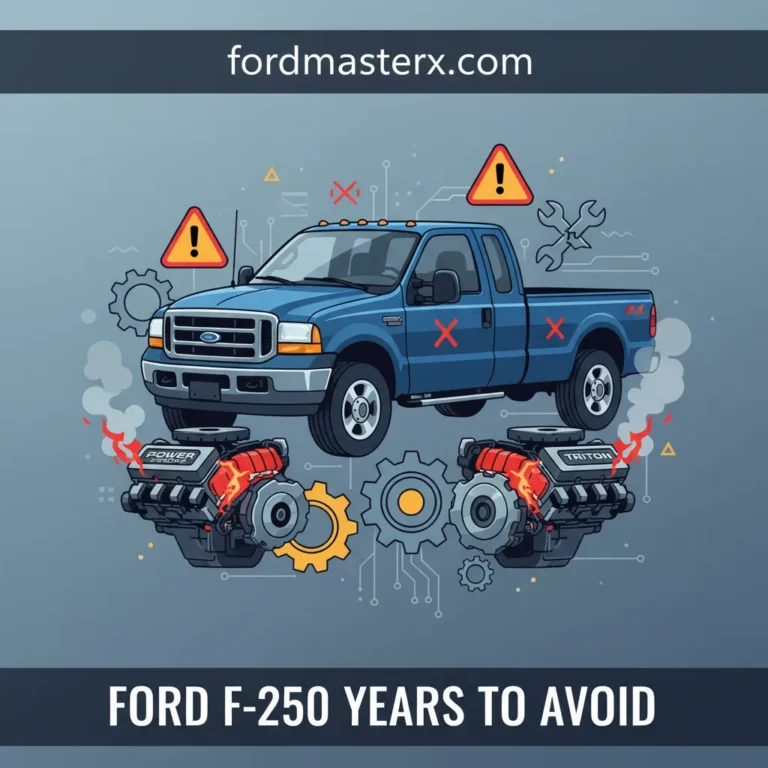
The Ford 6.8-liter Triton V10 is one of the most prolific heavy-duty gasoline engines ever manufactured. Introduced to replace the aging 7.5-liter pushrod V8, the Triton V10 served as the backbone of Ford’s commercial fleet, heavy-duty F-Series pickup trucks, and the vast majority of Class A and Class C motorhomes built in North America between 1997 and 2019.
Despite a reputation for exceptional lower-end durability—with commercial fleets and recreational vehicle (RV) owners frequently reporting lifespans exceeding 250,000 to 500,000 miles —the engine’s legacy is deeply complicated by severe cylinder head design flaws. Depending on the year of manufacture, owners face catastrophic spark plug ejections, impossible-to-remove spark plugs, and chronic exhaust manifold failures.
This analysis details the architectural history of the modular V10, distinctly categorizes the model years to avoid, examines the exact mechanical causes of its failures, and provides a total cost of ownership comparison for prospective buyers.
FORD 6.8L V10 TRITON
The Definitive Buyer’s Guide & Years to Avoid
The Workhorse with an Achilles Heel
The Ford Modular V10 is legendary for hauling heavy loads in Super Duties and Excursions. However, not all V10s were created equal. A design flaw in early cylinder heads caused spark plugs to literally blow out of the engine, while later updates caused them to snap off inside.
This guide dissects the data to ensure you buy a bulletproof tow rig, not a money pit.
Visualizing the Danger Years
Complaint data reveals two distinct spikes in failure rates. The first corresponds to the “Blowout Era” (insufficient threads), and the second to the “Stuck Plug Era” (3-Valve design issues).
The “Big Three” Expensive Failures
Spark Plug Blowout
Years: 1997 – 2003
Ford only machined ~4 threads into the aluminum head. Under pressure, the plug strips the threads and shoots out like a bullet, destroying the coil pack.
Repair Cost
$400 – $800
Time-Sert / HeliCoil
Seized Spark Plugs
Years: 2004 – 2008 (3V)
The 2-piece plug design accumulates carbon on the lower shield. When removing, the bottom half snaps off inside the head, requiring a special extraction tool.
Extraction Cost
$300 – $1,200
Depends on # broken
Manifold Studs
Years: All Years
Steel studs in an aluminum head combined with heat cycling leads to rust and snapping. Results in a distinct “ticking” noise often mistaken for lifter tick.
Repair Cost
$800 – $1,500
Labor intensive
2-Valve vs. 3-Valve: The Trade-off
In 2005, Ford introduced the 3-Valve cylinder head design (in Super Duty trucks). This massive upgrade increased airflow, bumping horsepower from ~310 to 362 and torque to 457 lb-ft.
The Catch: While the 3-Valve engine is significantly more powerful and capable for towing, it introduced the infamous 2-piece spark plug issue. The 2-Valve (used in vans until much later) remained less powerful but simpler to maintain once the thread count issue was resolved in late 2003.
- 1 2-Valve: Reliable workhorse, lower power.
- 2 3-Valve (Early): High power, high maintenance risk.
- 3 3-Valve (Late): The “Holy Grail” (2009+).
Verdict: Which Year Should You Buy?
DO NOT BUY
High Blowout Risk
Only buy if proof of thread inserts (Time-Serts) exists. High mileage units are ticking time bombs.
PROCEED WITH CAUTION
Broken Plug Risk
Great power, but factor in $1,000 for a spark plug change. Cam phaser issues also possible but rare on V10s.
GOOD VALUE
Fixed Threads
Ford added threads to the spark plug holes in late 2003/2004 2-Valve engines. Solid reliability.
✨ BEST CHOICE
Problem Solved
Ford redesigned the heads. No blowouts, no sticking plugs. Maximum power + Maximum reliability.
Estimated Repair Bill Impact
When negotiating the price of a used V10, use these figures as leverage. If a seller hasn’t replaced the exhaust manifold studs or addressed the spark plugs on a 3-valve model, deduct the cost from your offer.
Pro Tip:
Always listen to a cold start. A rhythmic “tick-tick-tick” that goes away after 2 minutes usually indicates a broken manifold stud.
Engine Architecture and Generational Evolution
When Ford introduced the modular overhead camshaft (OHC) engine family in the 1990s, the primary displacements were the 4.6L and 5.4L V8s. However, the heavy-duty truck and commercial van markets required superior low-end torque. Because the modular V8 blocks could not be bored out further due to a compact block design and close bore spacing, engineers expanded the 5.4L architecture by grafting two additional cylinders onto the block, resulting in the 6.8L V10. Throughout its production, the V10 was offered in two distinct valvetrain configurations: the 2-valve (2V) and the 3-valve (3V).
The original 2-valve iteration produced 275 horsepower and 425 lb-ft of torque upon its debut in 1997. By the 2000 model year, output was increased to 305–310 horsepower via "Performance Improved" (PI) cylinder heads. While the F-Series Super Duty trucks transitioned away from this engine in 2004, the E-Series vans (E-350 and E-450) and Class C motorhomes utilized the 2-valve engine until the V10 was entirely discontinued, as the 3-valve cylinder heads were physically too wide to clear the restrictive engine covers found in Ford's van cutaway chassis.
For the 2005 model year, Ford introduced a 3-valve per cylinder configuration accompanied by Variable Cam Timing (VCT). This substantially improved volumetric efficiency, raising output to 362 horsepower and 460 lb-ft of torque. The 3V variant was deployed exclusively in platforms with wider engine bays, specifically the F-250/F-350 Super Duty trucks, the F-450/F-550 chassis cabs, and the F-53 Class A motorhome stripped chassis.
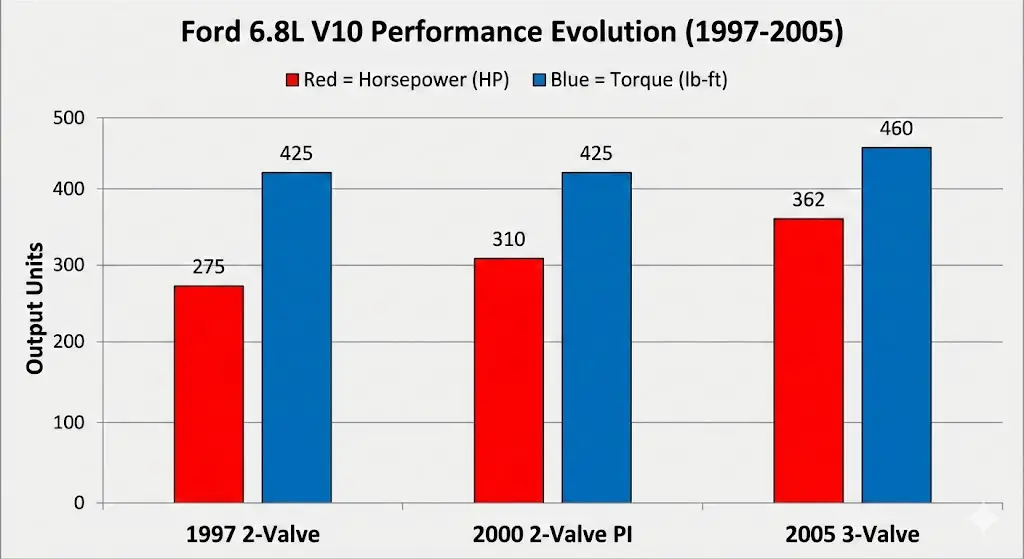
- 1997 2-Valve: 275 HP / 425 lb-ft
- 2000 2-Valve PI: 310 HP / 425 lb-ft
- 2005 3-Valve: 362 HP / 460 lb-ft
Ford V10 Years to Avoid: The Cylinder Head Crises
The reliability of the 6.8L Triton V10 is almost entirely dictated by the manufacturing year of its cylinder heads. The engine suffered from two distinct, chronologically separated spark plug defects. Consequently, the secondary market for these vehicles requires strict avoidance or immediate remediation of specific model years.
Avoid 1997–2002: The Spark Plug Blowout Anomaly
The earliest iterations of the Triton V10 are notorious for catastrophic spark plug blowouts. From 1997 to late 2002, the aluminum cylinder heads were machined with incredibly shallow spark plug wells, leaving only four to five threads of engagement for the steel spark plug.
The failure is rooted in dissimilar metal thermal expansion and inadequate factory torque specifications. Ford initially mandated a spark plug torque of merely 14 ft-lbs. Under the extreme thermal cycling of the engine, the aluminum head expands at a higher rate than the steel plug. Over thousands of miles, this causes the minimally torqued plug to loosen. Once loose, engine vibration and the immense pressure of the combustion chamber cause the plug to rattle against the soft aluminum threads, rapidly shearing them away until the plug is violently ejected from the cylinder head. This event often takes the ignition coil pack with it, destroying the coil wiring harness in the process.
Engines built after 2002 received redesigned PI cylinder heads (identifiable by casting numbers such as 1C2E or YC2E) featuring an eight-thread spark plug bore, permanently resolving the blowout defect. For vehicles manufactured between 1997 and 2002, the aftermarket has developed permanent thread repair inserts. Automotive technicians universally recommend the Cal-Van 38900 or the Time-Sert 5553 over-sized repair kits to tap new steel threads into the damaged aluminum block.
Avoid 2004–2008 (3-Valve): The Spark Plug Extraction Crisis
In an attempt to redesign the cylinder head for the 3-valve rollout, engineering swung the pendulum to the opposite extreme. Between 2004 and 2008, the 3-valve V10 was equipped with a proprietary High-Thread (HT) two-piece spark plug.
This two-piece plug featured a long, smooth, unthreaded steel shell that extended deep into the combustion chamber. During normal operation, carbon deposits accumulate in the tight clearance volume between this unthreaded snout and the aluminum cylinder head wall. When a technician attempts to unscrew the plug during routine maintenance, the threads release, but the carbon buildup effectively glues the lower snout to the cylinder head. The torsional force of the wrench causes the weak two-piece crimped shell to shear in half, leaving the porcelain and the steel snout permanently wedged in the engine block.
Ford issued multiple Technical Service Bulletins to address this crisis, culminating in a specialized. The official procedure requires mechanics to back the spark plug out by a fraction of a turn, flood the plug well with specially formulated carburetor cleaner, and allow the vehicle to soak so the solvent can dissolve the carbon lock. When the plugs inevitably break, specific extraction tools must be used to mechanically bite into the remaining steel shell to extract it.
Ford finally resolved this with an updated, one-piece spark plug design for engines built after October 9, 2007 (effectively the late 2008 and 2009 model years). An easy visual indicator for the updated heads is the ignition coil boot color: engines with the problematic two-piece plugs feature black coil boots, while the redesigned 2009+ engines feature brown coil boots.
Summary of Cylinder Head Flaws by Model Year
| Engine Platform | Model Years | Primary Flaw | Mechanical Root Cause | Recommended Remediation |
| 2-Valve V10 | 1997–2002 | Spark Plug Blowout | 4-thread aluminum heads, low factory torque spec (14 ft-lbs). | Over-torque to 24 ft-lbs or install Cal-Van / Time-Sert steel inserts. |
| 2-Valve V10 | 2003–2019 | None (Resolved) | Upgraded to 8-thread PI cylinder heads. | Standard maintenance. |
| 3-Valve V10 | 2004–2008 | Broken Spark Plugs | Two-piece plug design carbon-locks into the cylinder head and shears upon extraction. | TSB 08-7-6 carbon-soak procedure; Lisle extractor tool; replace with 1-piece plugs. |
| 3-Valve V10 | 2009–2019 | None (Resolved) | Ford redesigned heads for 1-piece spark plug (identifiable by brown coil boots). | Standard maintenance. |
Universal V10 Flaws (Applicable to All Years)
While the spark plug debacles are year-specific, the 6.8L Triton V10 suffers from several universal flaws that transcend generations and valve counts. Buyers evaluating any year of the Triton V10 must inspect for the following architectural weaknesses.
Exhaust Manifold Stud Failure
The most pervasive issue across all 22 years of V10 production is the failure of the exhaust manifold retaining studs. The engine generates massive localized heat, particularly when pulling heavy loads or motivating a 22,000-pound motorhome. The thermal expansion and contraction cycles cause the factory steel studs to fatigue, rust, and eventually snap off inside the cylinder head.
Once a stud breaks, the exhaust manifold warps away from the head, resulting in a loud ticking noise, a loss of backpressure, decreased volumetric efficiency, and toxic exhaust fumes entering the cabin. Fixing broken exhaust manifold studs is notoriously difficult. The broken steel studs must be precisely drilled out of the aluminum block without damaging the cylinder head threads. Because of the labor-intensive extraction process, average exhaust manifold replacement costs at independent shops range from $1,430 to $1,639, often ballooning to over $5,000 at dealerships if the entire manifold assembly requires replacement.
The failure rate is distinctly asymmetrical on F-53 Class A motorhome chassis. Architectural analysis suggests the F-53 chassis offsets the V10 engine slightly to the right, exposing the hot passenger-side manifold to cold road water and tire splash, resulting in rapid thermal quenching and accelerated stud fatigue.
Positive Crankcase Ventilation (PCV) Hose Degradation
A frequent source of rough idling, unmetered air leaks, and lean-condition misfires on the Triton V10 is the PCV vacuum hose. The original PCV elbow is manufactured out of non-reinforced plastic. Given the high ambient temperatures within the V10 engine bay, the plastic ages, embrittles, and develops severe cracks. Because it bypasses the Mass Air Flow (MAF) sensor, a cracked PCV hose allows unmetered air into the intake manifold, triggering lean codes (P0171, P0174) and rough running conditions. This is an inexpensive repair but requires diligent diagnosis to avoid unnecessary replacement of oxygen sensors or coil packs.
Fuel Injector Failure and Piston Melting
Older V10 engines face severe consequences from fuel injector degradation. Injectors on the Triton engine can suffer from internal electrical shorts or physical sticking due to particulate contamination. If an injector fails in the "open" position, it floods the cylinder with raw fuel, which strips away lubricating oil and destroys the piston rings. Conversely, if an injector clogs, it induces an extreme lean condition in a single cylinder. This lean condition drastically raises combustion temperatures, leading to localized detonation. The excess thermal load can physically melt the aluminum piston crown or cause the piston skirt to slap against the cylinder wall, resulting in a catastrophic engine knock. Cylinder #7 is frequently cited in failure reports, demanding immediate attention if a misfire code is localized to a single injector.
Transmission Pairings and Drivability
Because the 6.8L V10 is a high-revving modular engine rather than a traditional low-RPM pushrod block, it relies heavily on transmission gearing to maintain momentum on steep grades. The drivability, fuel economy, and acoustic comfort of the V10 are directly tied to the transmission it is mated to. Buying a later model year is highly advantageous simply to gain access to modern gearboxes.
The initial transmission pairing was the 4R100 4-speed automatic. While structurally robust, a 4-speed transmission mated to a high-revving V10 creates massive RPM gaps between shifts. When towing a heavy trailer or driving a motorhome up a steep grade, the transmission is forced to downshift from Overdrive directly into third or second gear, instantly spiking engine speeds to over 4,000 RPM.
Introduced alongside the 3-valve engine in 2005, the 5R110W TorqShift 5-speed transmission smoothed out the RPM bands, preventing the engine from screaming on highway inclines. The final, and best, transmission paired with the V10 was the 6R140 6-speed, introduced in 2016. This transmission features double overdrives (0.85 and 0.67 ratios), allowing the V10 to cruise at highway speeds at approximately 500 to 1,000 RPMs lower than previous iterations, drastically reducing cabin noise and providing a measurable improvement in fuel economy.
Core Data:
- 4R100 (1998-2004): 4 Speeds, high RPM gaps, poor towing acoustics.
- 5R110W (2005-2015): 5 Speeds, introduced Tow/Haul mode, vastly improved grade shifting.
- 6R140 (2016-2019): 6 Speeds, double overdrive, lowest highway cruising RPM.
Total Cost of Ownership: V10 Gas vs. 6.7L Powerstroke Diesel
The most heavily scrutinized aspect of the 6.8L V10 is its abysmal fuel economy. In an F-250 or F-350 pickup truck running empty, owners typically report 10 to 12 MPG on the highway. When heavily loaded, or when pushing the massive aerodynamic profile of a motorhome, fuel economy plunges to a staggering 6 to 8 MPG.
Because of the V10's voracious appetite for fuel, heavy-duty truck and RV buyers frequently debate whether a diesel engine—specifically the Ford 6.7L Powerstroke—is a more financially sound investment. While a diesel engine offers nearly double the fuel economy and over 1,000 lb-ft of torque , the Total Cost of Ownership paints a much different picture.
Diesel ownership entails massive preventative maintenance and emissions-system liabilities that the naturally aspirated V10 completely avoids. Over 100,000 miles, routine diesel maintenance (15 quarts of oil, primary/secondary fuel filters, and DEF replenishment) averages over $5,000, whereas the V10 averages around $1,480 for the same interval. Furthermore, the 6.7L Powerstroke carries the risk of high-pressure fuel pump failure, DPF regeneration issues, and EGR cooler replacements, where a single fuel system contamination event can cost upwards of $10,000. Ultimately, the fuel savings achieved by a diesel engine are entirely offset by the higher initial purchase price and exorbitant maintenance costs.
FAQs
What is the life expectancy of a Ford 6.8L V10 engine?
With rigorous 5,000-mile oil change intervals utilizing 5W-20 synthetic blend oil, the Triton V10 is highly durable. Commercial fleet operators and RV owners consistently report life expectancies between 250,000 and 300,000 miles, with well-maintained examples surpassing 400,000 miles before requiring major bottom-end overhauls.
Did Ford fix the V10 spark plug problem?
Yes, but the fixes were implemented in stages. The initial spark plug blowout issue—caused by a 4-thread cylinder head—was corrected in 2003 with an updated 8-thread PI cylinder head design. The second issue, involving 3-valve two-piece spark plugs seizing and breaking, was resolved for the 2009 model year via a redesigned one-piece spark plug.
Is the Ford V10 2-valve or 3-valve better?
The 3-valve engine is vastly superior in terms of towing performance, offering 362 horsepower and 460 lb-ft of torque compared to the 2-valve's 310 horsepower. However, from a sheer durability perspective, late-model 2-valve engines (2003–2019, found heavily in E-Series vans) are less complicated. They lack the failure-prone Variable Cam Timing (VCT) phasers and completely avoided the 2004-2008 two-piece spark plug extraction defect.
How do I know if my 3-Valve V10 has the improved spark plugs?
For 3-valve engines, Ford transitioned to the reliable one-piece spark plug on engines built after October 9, 2007. The simplest visual identifier for the updated 3-valve engine is the color of the ignition coil boot: brown boots indicate the updated head and plug, whereas black boots indicate the flawed 2004–2008 two-piece design.