How To Bulletproof A 6.0 Power Stroke Diesel Engine For Long-Term Reliability

The Ford 6.0L Power Stroke is often maligned as a mechanical nightmare, but for those who understand its architecture, it represents a powerhouse of untapped potential. While the factory configurations suffered from significant design compromises, the underlying International Navistar block is remarkably robust. The problem lies in factory design compromises in the cooling, fueling, and structural fastening systems that lead to high failure rates, costing owners thousands in avoidable repairs. This comprehensive guide will teach you how to systematically address these flaws through the ‘bulletproofing’ process, transforming your 6.0 into one of the most reliable diesel engines on the road today.
Understand the Common Failure Points of the 6.0L Architecture
📤 Share Image
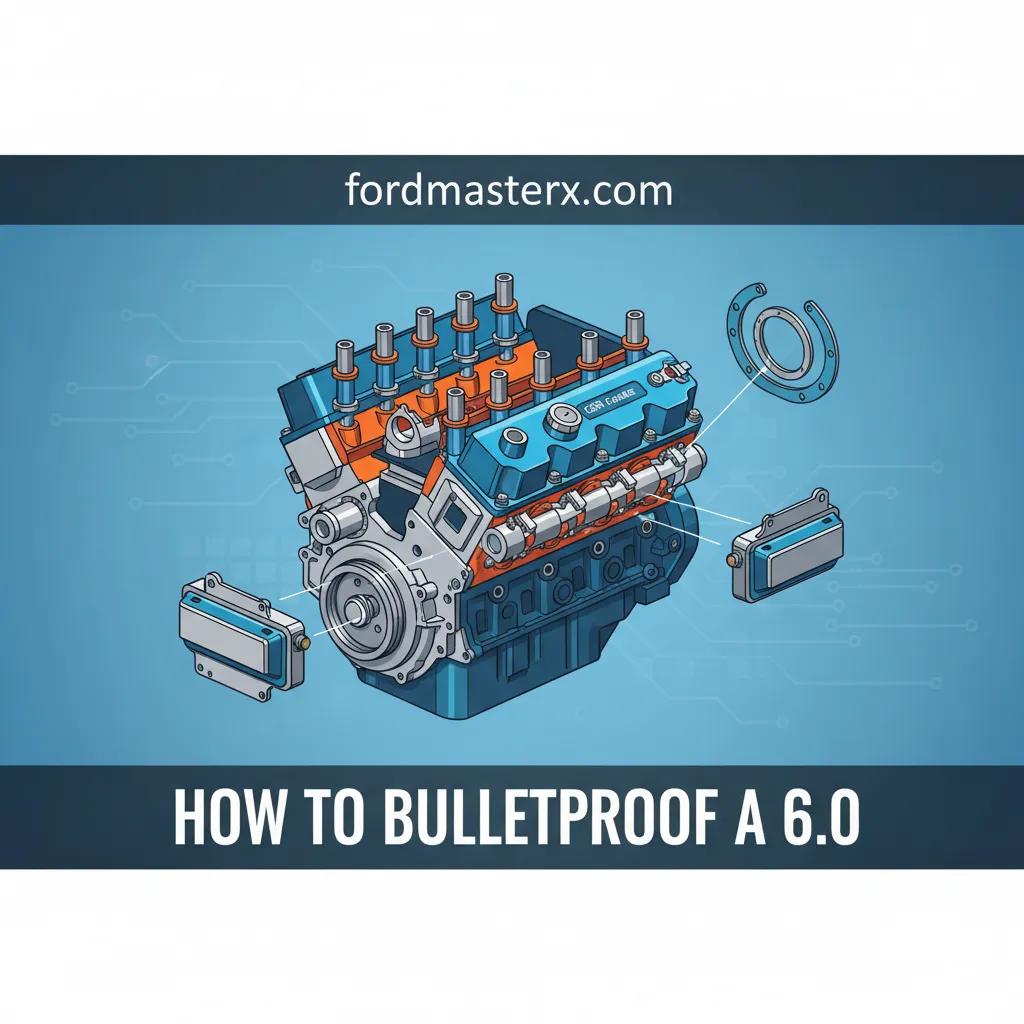
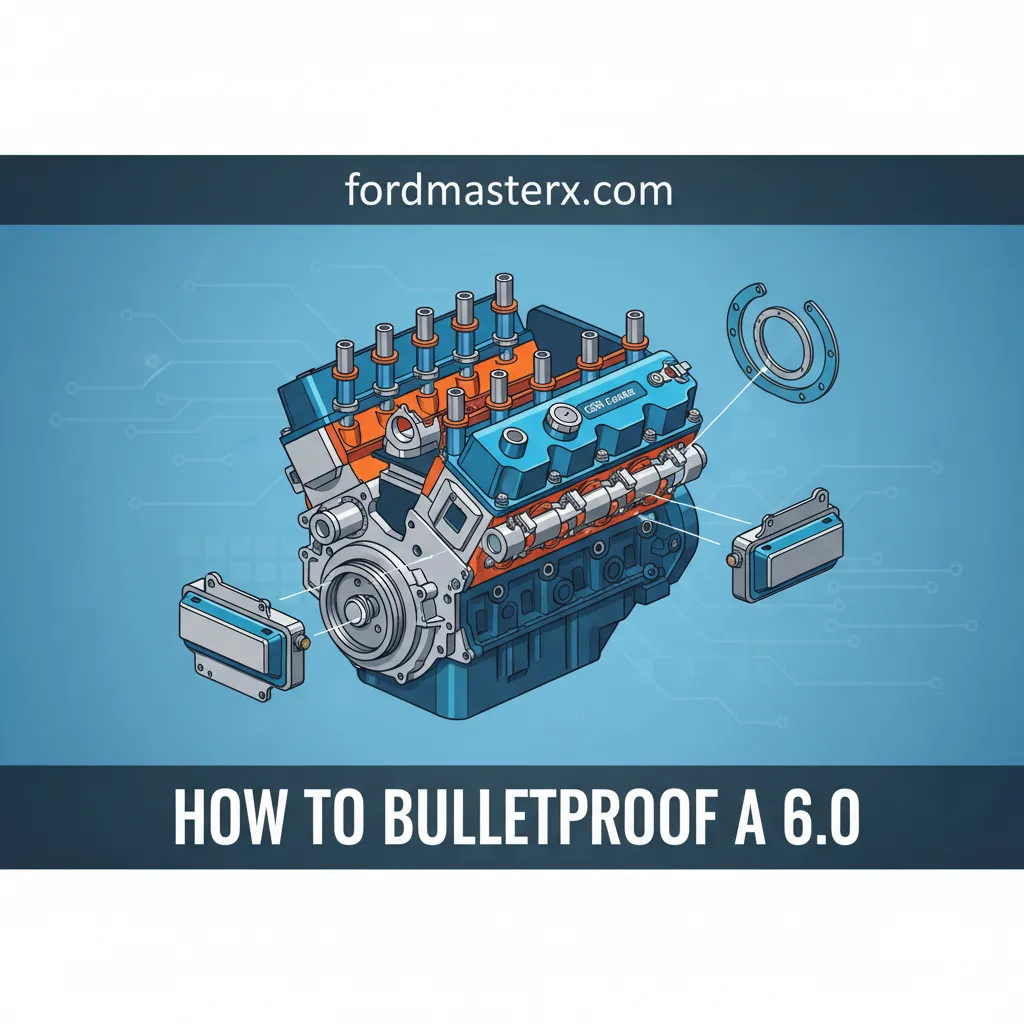
To master the 6.0L platform, one must first diagnose the engineering oversights present during its production run from 2003 to 2007. The most notorious flaw is the use of Torque-to-Yield (TTY) head bolts. Unlike traditional fasteners, TTY bolts are designed to stretch once to provide a specific clamping force—roughly 210,000 psi. However, under the high cylinder pressures of a diesel engine, especially when tuned, these bolts continue to stretch beyond their elastic limit. This allows the cylinder head to “lift” slightly, compromising the head gasket and leading to catastrophic coolant loss and combustion leaks.
Furthermore, the 6.0L employs an Exhaust Gas Recirculation (EGR) cooler that is highly susceptible to rupture. This is rarely the EGR cooler’s fault alone; rather, it is a symptom of oil cooler clogging. The engine block manufacturing process used sand casting, and residual “flash” or sand often remains in the coolant passages. Over time, this debris, combined with silicate dropout from the factory Ford Gold coolant, clogs the tiny passages in the oil cooler. When the oil cooler restricts coolant flow, the downstream EGR cooler becomes heat-soaked, causing the internal welds to fracture and leak coolant into the intake manifold.
The High-Pressure Oil Pump (HPOP) system also presents a vulnerability, specifically in 2005-2007 models. These engines utilized STC (Snap-to-Connect) fittings that are prone to separation or seal failure. When these fittings fail, the engine loses the hydraulic pressure required to fire the fuel injectors, resulting in a sudden “crank-no-start” condition. Discovering these issues early is the difference between a simple upgrade and a total engine rebuild.
Master the Cooling System Upgrades and Oil Cooler Management
Stabilizing engine temperatures is the essential first step in any bulletproofing strategy. The industry standard for monitoring the health of a 6.0L is the Delta-T: the temperature spread between the Engine Oil Temperature (EOT) and the Engine Coolant Temperature (ECT). Under normal highway cruising conditions, a temperature delta exceeding 15 degrees Fahrenheit is a primary indicator that your oil cooler is restricted and failure is imminent.
📋
Step-by-Step Cooling Stabilization
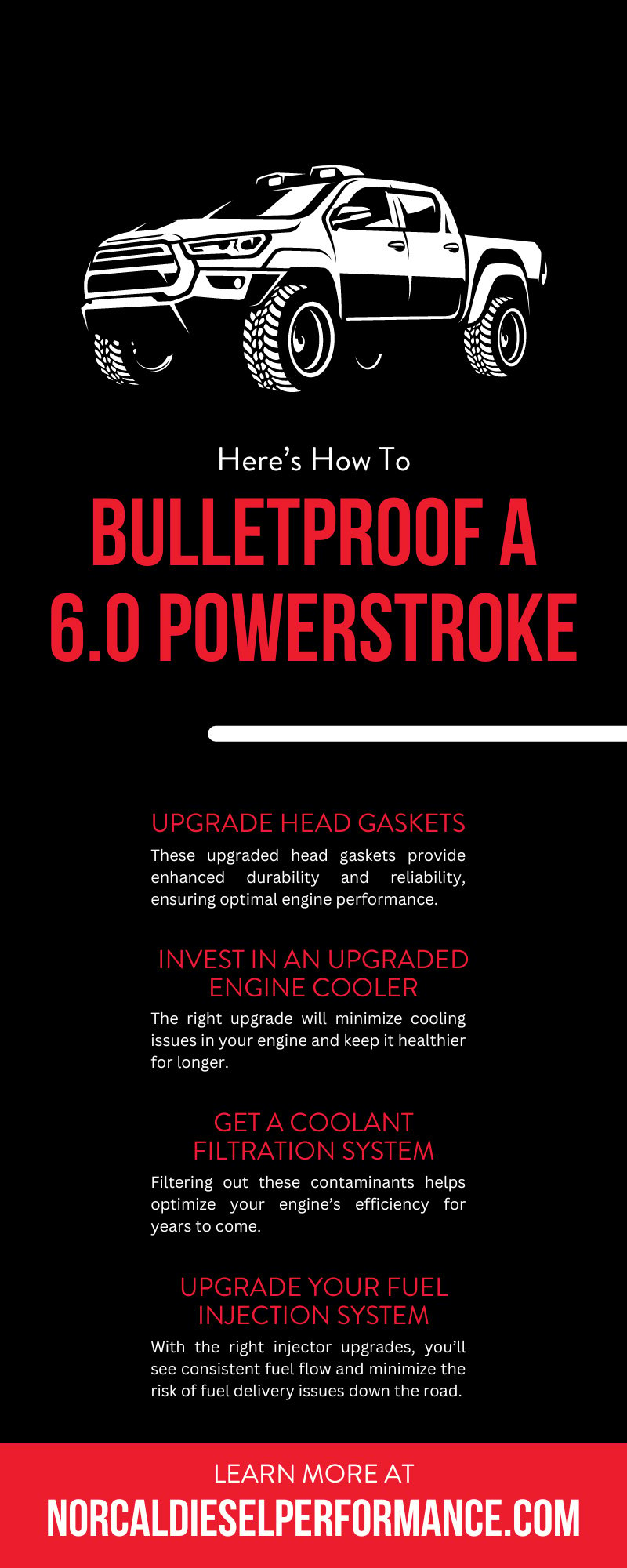
Perform a thorough cooling system flush using distilled water. Install a high-efficiency external coolant filtration system to capture residual casting sand and particulates.
Replace Ford Gold coolant with an EC-1 rated Extended Life Coolant (ELC). This prevents silicate dropout, which is the leading cause of oil cooler clogging.
To explore more advanced solutions, consider replacing the factory oil cooler with a heavy-duty OEM unit or an air-to-oil external relocation kit. External kits move the oil cooling process away from the coolant system entirely, effectively eliminating the risk of cross-contamination and clogging. Additionally, the factory water pump utilizes a plastic impeller that is known to crack or cavitate under high RPM. Upgrading to a steel-impeller variant ensures consistent flow and prevents the plastic blades from failing and sending debris through the engine.
When flushing the system, always use at least 20 gallons of distilled water. Tap water contains minerals that will react with the diesel engine’s heat, forming scale that will immediately begin to degrade your new oil cooler.
Discover Structural Stability Through ARP Head Studs and Gaskets
The pinnacle of bulletproofing is the installation of ARP2000 head studs. These fasteners provide a massive mechanical advantage over factory bolts. While a factory bolt is designed to stretch, an ARP stud is threaded into the block first, allowing the head to be clamped with a nut. This provides a more consistent and higher clamping force—boasting a tensile strength of 220,000 psi. This structural rigidity is what prevents the heads from lifting under high boost pressures.
Machining Specifications
Max Flatness Deviation
Max Material Removal
Simply replacing the bolts with studs is not enough. To ensure a lifetime seal, the cylinder heads must be sent to a machine shop to be checked for flatness. The 6.0L heads are notoriously thin; any deviation greater than .002 inches requires resurfacing. However, caution is required—the industry standard for resurfacing typically requires removing less than .008 inches of material to maintain proper valve-to-piston clearance. Combine this with Multi-Layer Steel (MLS) head gaskets for the ultimate seal.
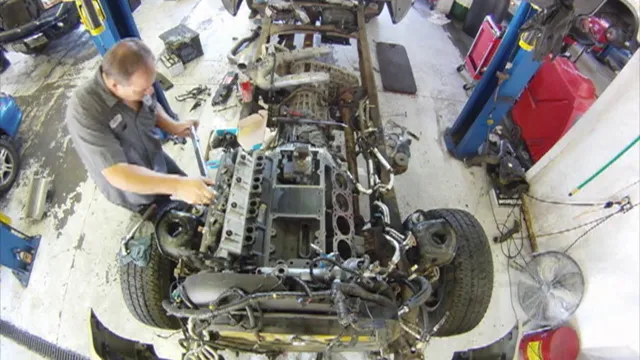
There are two primary installation methods: ‘cab-on’ and ‘cab-off’. While ‘cab-on’ is possible for the beginner mechanic, most seasoned professionals prefer ‘cab-off’. Removing the cab provides total access to the engine, allowing for a more precise cleaning of the block threads with a bottoming tap. This is a critical step; any debris in the bolt holes will cause false torque readings, leading to uneven clamping and future gasket failure.
Explore Electrical and Fuel System Optimization via the FICM
The Fuel Injection Control Module (FICM) is the “brain” of the 6.0L fuel system, managing the 48-volt signal that fires the injectors. Over time, heat and vibration cause the solder joints inside the FICM to degrade, leading to voltage drops. A healthy FICM should maintain a minimum of 45-48 volts at all times. If you understand the symptoms—such as rough cold starts, excessive white smoke, or the “limp mode” during acceleration—you can intervene before the FICM damages the injectors themselves.
58-Volt Upgrade
Increases injector response time and improves cold weather starting by providing a stronger inductive kick.
Blue Spring Kit
Increases fuel pressure by ~10 psi to ensure injectors never drop below 45 psi, preventing premature tip failure.
Beyond the FICM, the high-pressure oil system relies on dummy plugs and standpipes to deliver oil to the rails. The original seals were prone to “rolling” or tearing. The updated versions feature improved D-ring seals and a back-up washer that prevents these high-pressure leaks. Furthermore, maintaining fuel pressure is non-negotiable. Low fuel pressure (under 45 psi) acts like a sandpaper on the injector internals. Installing the Blue Spring Kit is a cheap, essential insurance policy to maintain the required pressure for long-term injector health.
Learn to Implement High-Pressure Oil System and EGR Solutions
The final stage of bulletproofing addresses the emissions and oil delivery systems. While many choose to delete the EGR, a more professional approach—especially for those needing to remain emissions compliant—is to install a BulletProof Diesel EGR cooler. These units use a stainless steel internal core with gas-to-liquid heat exchanger technology, making them virtually immune to the fatigue that destroys the factory “honeycomb” design. This allows the engine to function as designed without the risk of an internal rupture.
✅ Pros of Bulletproofing
- Eliminates head gasket failure
- Improved towing reliability
- Higher resale value
- Better cold-start performance
❌ Cons / Considerations
- High initial labor cost
- Requires specialized tools
- Sensitive to part quality
Regarding the high-pressure oil system, the IPR (Injection Pressure Regulator) valve must be inspected. The tiny screen on this valve often captures debris from a failing oil cooler or HPOP. If the screen is torn or clogged, the engine will suffer from erratic idling and power loss. For 2005+ models, replacing the two-piece STC fitting with an updated one-piece bracket is mandatory to eliminate the most common high-pressure leak point. Finally, no bulletproofed truck is complete without a real-time monitoring solution like the Edge Insight CTS3. Tracking parameters such as EBP (Exhaust Back Pressure), VGT (Turbo Vanes), and IPR duty cycle allows you to see a failure before it happens.
Even a fully bulletproofed 6.0L will fail if maintenance is neglected. Stick to a strict 5,000-mile oil change interval and a 10,000-mile fuel filter interval using only OEM Motorcraft filters. Aftermarket filters often lack the patented “standpipe” seal, which allows unfiltered fuel to bypass the filter and destroy your injectors.
In summary, addressing the cooling system delta is the first line of defense against catastrophic engine failure. High-tensile head studs and MLS gaskets provide the structural integrity required for long-term durability, while electrical and fuel system upgrades ensure the engine runs as efficiently as possible. Continuous monitoring and religious maintenance schedules are the final pieces of the bulletproofing puzzle. Begin your reliability journey by testing your oil temperature deltas today and identifying which stage of bulletproofing your truck requires next.
Frequently Asked Questions
What is the average cost to bulletproof a 6.0?
The cost varies significantly based on the scope of work. A basic kit addressing the oil cooler and EGR might cost $1,500 in parts, while a full ‘cab-off’ bulletproofing including head studs, machining, and FICM upgrades typically ranges from $5,000 to $8,000 including professional labor.
Can I bulletproof my 6.0 without removing the cab?
Yes, it is possible to perform a ‘cab-on’ bulletproofing. However, it requires specialized tools to reach the rear head bolts and significantly increases the difficulty of ensuring a clean environment for head gasket installation. Many technicians prefer ‘cab-off’ for better access and precision.
Does bulletproofing increase the horsepower of my engine?
Bulletproofing itself is focused on reliability rather than power. However, by installing head studs and a more efficient cooling system, you create a foundation that can safely support aftermarket tuning and higher boost levels which do increase horsepower and torque.
How do I know if my 6.0 is already bulletproofed?
Look for visible signs like an external coolant filter, aftermarket EGR cooler (often square or stainless steel), or the presence of nuts and studs instead of bolts on the cylinder heads. Checking maintenance records for ‘ARP’ or ‘BulletProof Diesel’ brand parts is the most reliable method.
Is a 6.0 worth bulletproofing in 2024?
Absolutely. Compared to the cost of a new diesel truck, investing in a 6.0L is highly cost-effective. Once bulletproofed, these engines are known for their responsiveness and lack of complex DPF/DEF systems found in newer trucks, making them excellent for towing and longevity.