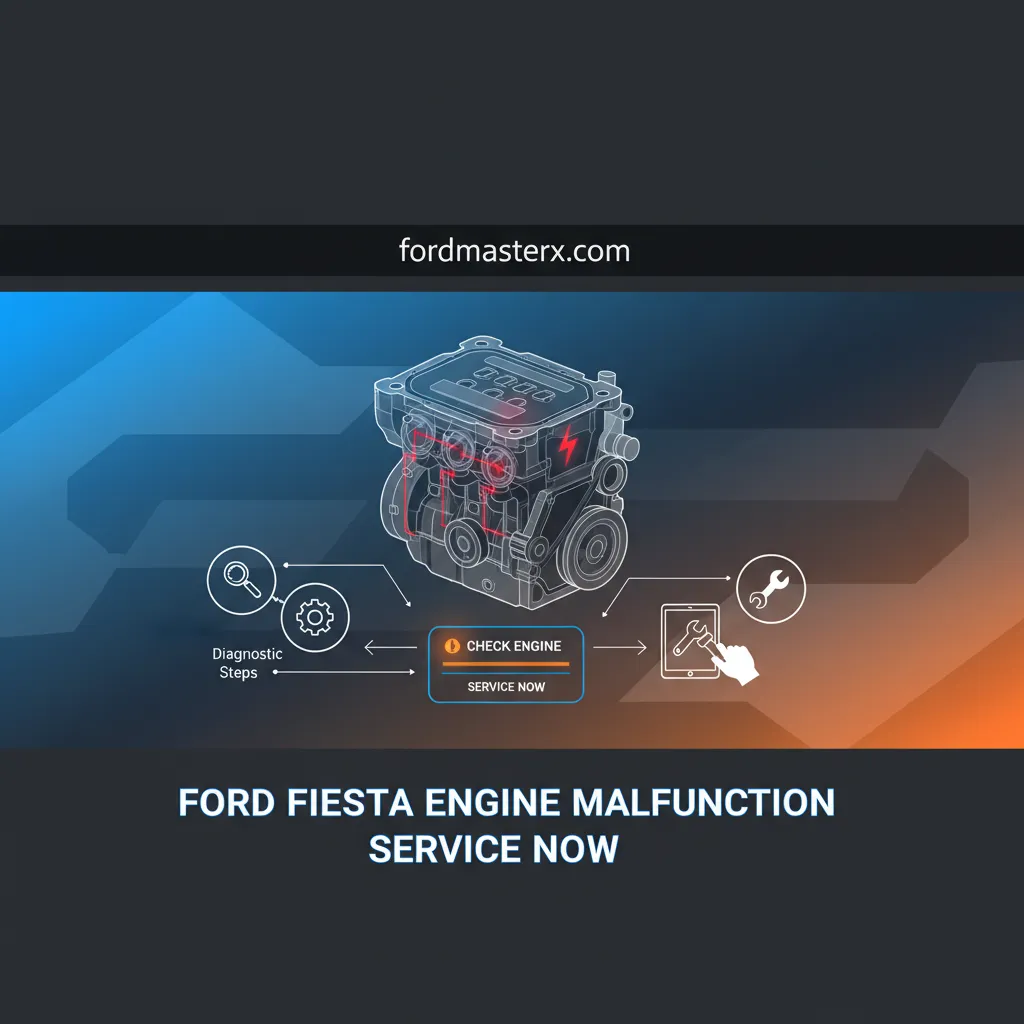
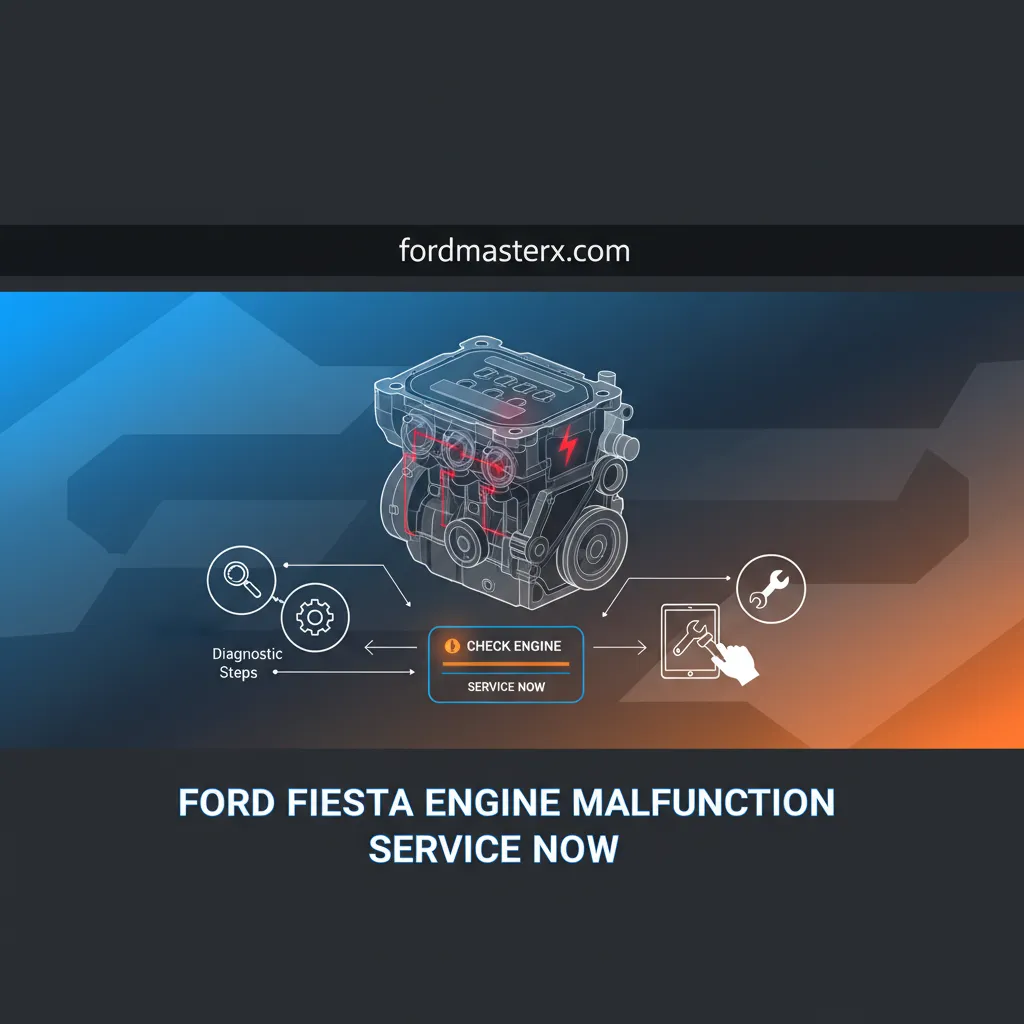
Ford Fiesta Engine Malfunction Service Now: Diagnostic Steps And Repair Solutions

The appearance of the ‘Engine Malfunction Service Now’ warning on your Ford Fiesta’s instrument cluster is a critical alert that requires immediate technical attention to prevent total vehicle immobilization. This specific warning often triggers a sudden loss of engine power known as ‘limp mode,’ leaving drivers frustrated by a lack of throttle response and concerned about costly repair bills. In this technical guide, you will learn the primary mechanical and electrical causes behind this warning, how to interpret the diagnostic codes involved, and the professional steps required to restore your vehicle to a reliable operating state. By understanding the expertise required for these systems, you can navigate repairs with confidence and ensure quality results.
Understanding the Ford Fiesta Engine Malfunction Service Now Warning
📤 Share Image
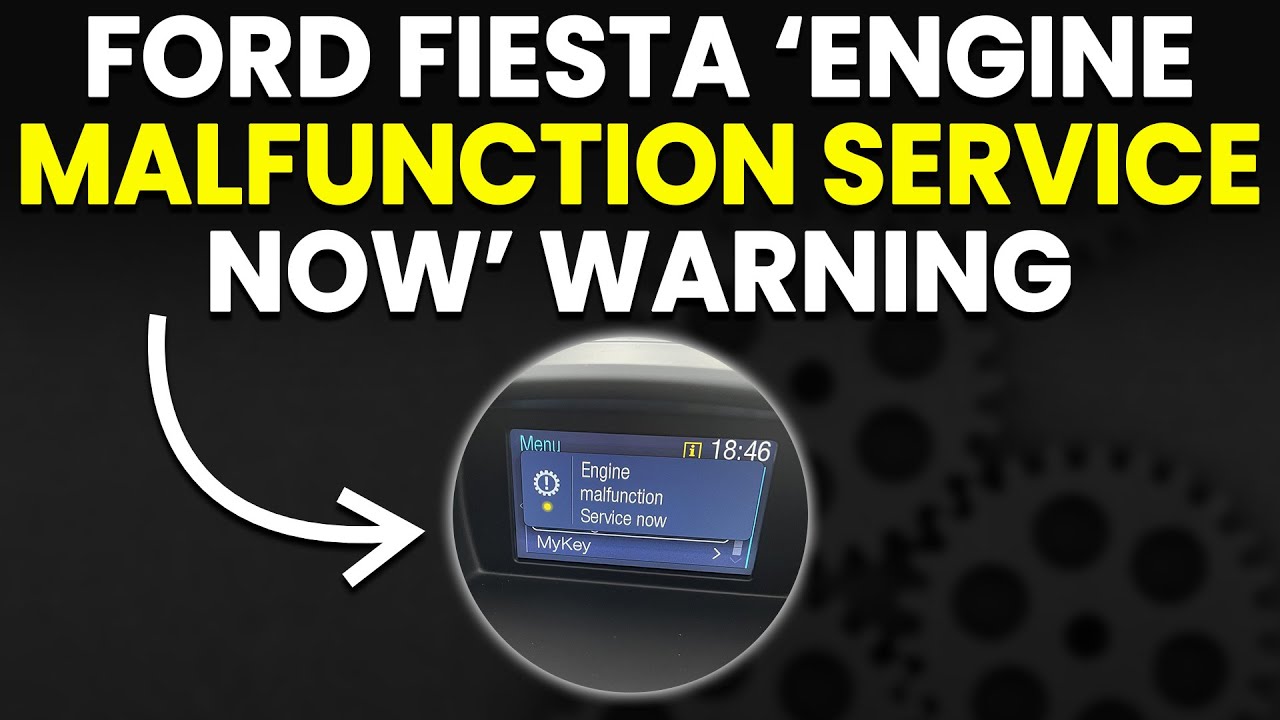
When the Ford Fiesta’s instrument cluster displays “Engine Malfunction Service Now,” it is not merely a suggestion for scheduled maintenance. This is a high-priority powertrain warning triggered by the Powertrain Control Module (PCM) when it identifies a fault that compromises the safe operation of the vehicle. The PCM acts as the brain of the vehicle, and once it detects an out-of-range signal from a critical sensor, it immediately initiates a protective protocol.
The most immediate consequence of this warning is the activation of ‘Limp Mode’ (Reduced Power Mode). In this state, the PCM restricts engine RPM and throttle response. By limiting the vehicle’s speed and torque, the system prevents internal mechanical damage to the engine or transmission components. For example, a driver navigating a highway might experience a sudden drop in speed to 20mph, regardless of how far the accelerator pedal is depressed, as the PCM forces a restricted performance state to safeguard the 1.6L Ti-VCT engine.
Driving a vehicle in Limp Mode for extended periods can cause secondary damage to the catalytic converter and exhaust system due to unburned fuel. If this warning appears, move to a safe location immediately and seek professional diagnosis.
It is vital to distinguish this text-based alert from a standard “Check Engine” (MIL) light. While a MIL may indicate an emissions-related fault like a loose gas cap, the “Engine Malfunction” text often points toward a critical failure in the electronic throttle control or the interface between the engine and transmission. The Controller Area Network (CAN bus) plays a pivotal role here; it is the high-speed communication highway that connects sensors to the PCM. If the CAN bus experiences interference or a sensor provides data that contradicts physical reality, the system triggers the alert within 100 milliseconds of fault detection.
By The Numbers
Sensors monitored by the PCM
Time to trigger Limp Mode
Common Mechanical and Electrical Triggers for Ford Fiesta Malfunctions
Years of hands-on experience with the B-platform Ford chassis reveal that several recurring issues trigger this specific alert. Identifying these early can save owners thousands in unnecessary part-swapping.
Electronic Throttle Body (ETB) Failure
The ETB is often the primary culprit. Over time, carbon deposits accumulate around the butterfly valve, causing it to stick or respond sluggishly to PCM commands. Furthermore, the internal plastic gears or the motor itself can fail. When the PCM detects that the actual position of the throttle plate does not match the commanded position, it defaults to a safety state. In a common case study, a Fiesta exhibiting codes P2110 (Throttle Actuator Control System – Forced Limited RPM) and P2112 (Throttle Actuator Control System – Stuck Closed) typically requires a thorough cleaning or a complete ETB replacement to restore quality performance.
Voltage Irregularities and Battery Health
Modern Fiestas are incredibly sensitive to voltage fluctuations. The PCM and TCM require a stable 12V supply to interpret sensor data correctly. Battery voltage drops below 10.5V during cranking are responsible for approximately 30% of false ‘Engine Malfunction’ alerts. A dying battery or a failing alternator creates ‘ghost’ codes—faults that appear in the system but have no physical mechanical cause. This highlights why a certified technician will always test the charging system before diagnosing deeper engine issues.
Grounding Points and Wiring Integrity
Corrosion at the chassis ground points is a notorious Ford Fiesta weakness. The electrical return path for the engine management system often relies on a few critical points near the battery tray and the shock tower. If these points oxidize, the electrical resistance increases, leading to “noise” in the sensor signals. This disruption can trick the PCM into thinking a sensor has failed, triggering the “Service Now” message.
Before replacing expensive sensors, have a licensed mechanic perform a “voltage drop test” on the main engine grounds. Cleaning a $0.50 ground point can often solve a “malfunction” that looks like a $500 repair.

The PowerShift Transmission and TCM Correlation
For owners of Ford Fiestas equipped with the DPS6 dual-clutch PowerShift transmission, the “Engine Malfunction Service Now” message is frequently intertwined with transmission health. The Transmission Control Module (TCM) communicates constantly with the PCM via the CAN bus. If the TCM detects a critical internal fault, it can request the PCM to trigger the engine malfunction warning to protect the drivetrain.
The identification of ‘Communication Lost’ codes, such as U0100 (Lost Communication with ECM/PCM) or U0101 (Lost Communication with TCM), is a hallmark of this correlation. Common symptoms include erratic shifting, the loss of odd or even gears, or a total no-start condition. Often, a diagnostic report will show a P0606 (ECM/PCM Processor) code, which is frequently misdiagnosed as a faulty engine computer when the root cause is actually the TCM’s inability to process clutch actuator data.
Due to the high failure rate of these modules, Ford extended the warranty on many 2011-2016 Fiesta TCMs to 10 years or 150,000 miles. An experienced technician will check the vehicle’s VIN against open field service actions (FSAs) before recommending a paid repair. Mechanical resistance in the clutch actuators themselves can also trigger the alert; if the motor has to pull too much amperage to move a stuck clutch fork, the TCM will shut down the circuit and trigger the malfunction alert.
Professional Diagnostic Procedures and OBD-II Code Interpretation
Accurate diagnosis is the cornerstone of reliable repair. While generic $20 OBD-II readers are common, they are often insufficient for this specific Ford warning. Generic OBD-II readers may miss up to 40% of Ford-specific proprietary codes that reside in the GEM (General Electronic Module) or the TCM.
📋
Professional Diagnostic Workflow
Use IDS (Integrated Diagnostic System) or FORScan to access manufacturer-specific “P1” codes and perform a self-test of the PCM and TCM.
Monitor Short Term Fuel Trim (STFT) and Long Term Fuel Trim (LTFT). Drastic deviations often point to vacuum leaks or fuel delivery issues rather than sensor failure.
Perform a ‘Battery Reset’ and ‘BMS Reset’ to recalibrate the Battery Management System, ensuring the PCM has an accurate baseline for voltage levels.
Advanced diagnostics also include conducting a ‘Pin-out’ test on the PCM wiring harness. This ensures signal integrity from the accelerator pedal position (APP) sensors. Since the Fiesta uses a “drive-by-wire” system, any resistance in the wiring between the pedal and the engine can trigger a safety malfunction. Professionals will use an oscilloscope to check for “dead spots” in the pedal’s potentiometer sweep, which might not be visible with a standard multimeter.
Reliable Repair Pathways and Long-Term Maintenance
Once the root cause is identified, the path to a trusted repair involves a combination of high-quality components and software calibration. In many instances, the “Engine Malfunction Service Now” alert is solved not through physical part replacement, but through a software flash. Ford frequently releases updates for the PCM and TCM to refine sensor tolerances and improve shift logic.
✅ Why Use OEM (Motorcraft) Parts
- Guaranteed sensor impedance matching
- Superior heat resistance for engine bay components
- Full compatibility with Ford diagnostic software
- Maintains vehicle resale value and reliability
❌ Risks of Cheap Aftermarket Parts
- Incorrect voltage reference signals
- High early-failure rates in throttle actuators
- Inconsistent CAN bus communication
- Often triggers ‘ghost’ codes immediately
Preventative maintenance is the most affordable way to avoid Limp Mode. Cleaning the Mass Air Flow (MAF) sensor and the throttle body every 30,000 miles prevents the carbon accumulation that leads to “Service Now” alerts. Consider the cost-benefit: A DIY throttle body cleaning costs approximately $10 in materials, whereas a full replacement at a dealership can exceed $400.
System Longevity
Vehicles receiving regular fuel system cleaning and ignition system checks show a 65% lower incidence of ‘Limp Mode’ events over a 100,000-mile lifespan.
Optimized Efficiency
Maintaining clean intake components ensures the air-to-fuel ratio remains within the PCM’s ideal window, maximizing MPG.
Finally, choosing a service center with Ford-certified technicians is paramount. The Fiesta’s electrical architecture is unique, and someone with a nuanced understanding of the DPS6 transmission and the Ti-VCT engine’s variable timing will solve the issue “right the first time.” By following a proactive maintenance schedule and responding promptly to dashboard warnings, you ensure your Ford Fiesta remains a reliable and safe vehicle for years to come.
The ‘Engine Malfunction Service Now’ alert is a critical safety feature that protects the engine and transmission from severe damage by restricting performance. Common causes range from simple battery voltage drops and dirty throttle bodies to complex Transmission Control Module (TCM) failures in PowerShift models. Accurate diagnosis requires Ford-specific software to extract deep-level fault codes that generic scanners often overlook. Do not ignore a powertrain warning; contact an experienced technician today for a comprehensive diagnostic scan to ensure your Ford Fiesta remains safe and reliable on the road.
Frequently Asked Questions
Can I drive my Ford Fiesta with the Engine Malfunction Service Now light on?
Driving with this warning is not recommended. When the message appears, the vehicle typically enters ‘Limp Mode,’ which significantly reduces engine power and throttle response for safety. Continuing to drive can exacerbate underlying issues, such as transmission damage or catalytic converter failure. It is best to pull over safely and have the vehicle transported to an experienced service center for a diagnostic evaluation.
Is the engine malfunction message always related to the transmission?
While the Ford Fiesta’s PowerShift transmission and TCM are frequent culprits, this warning is a general powertrain alert. It can be triggered by various components, including the electronic throttle body, oxygen sensors, ignition coils, or even a failing car battery. A professional diagnostic scan using specialized Ford software is required to distinguish between an engine-specific fault and a transmission-related communication error.
How much does it usually cost to fix an engine malfunction warning?
The repair cost varies significantly based on the root cause. Minor issues like cleaning a carbon-fouled throttle body or replacing a battery may cost between $150 and $300. However, more complex repairs, such as replacing the Transmission Control Module (TCM) or the entire throttle body assembly, can range from $600 to $1,500. Using a trusted technician with quality OEM parts ensures the repair is a long-term solution.
Can a weak battery cause the Ford Fiesta engine malfunction message?
Yes, Ford Fiestas are highly sensitive to voltage fluctuations. If the battery is weak or the alternator is underperforming, the Powertrain Control Module (PCM) may receive erratic signals from sensors, triggering a ‘false’ engine malfunction warning. Often, replacing an old battery and performing a Battery Management System (BMS) reset will clear the error and restore normal vehicle operation without further mechanical intervention.
How do I reset the engine malfunction warning on my Ford Fiesta?
Simply clearing the code with an OBD-II scanner will often only provide a temporary fix, as the PCM will re-trigger the alert once the fault is detected again. To properly reset the warning, the underlying mechanical or electrical issue must be repaired. Once fixed, a technician uses a diagnostic tool to clear the stored fault codes and may perform a ‘relearn’ procedure for the throttle or transmission.