Ford 2.3L 4-Cylinder Engine: Specs, Reliability & Performance

The Ford 2.3L 4-cylinder engine is a versatile powerhouse, most notably represented by the modern EcoBoost variant found in the Mustang and Ranger. Known for balancing turbocharged performance with fuel efficiency, it succeeds the reliable Duratec and legendary Lima engines in Ford’s historical lineup.
🎯 Key Takeaways
- Modern 2.3L EcoBoost engines deliver up to 310+ horsepower in many applications.
- Carbon buildup is a common maintenance concern for direct-injected EcoBoost models.
- The 2.3L Lima engine is famed for bulletproof reliability in older Rangers.
- Regular oil changes are critical for turbocharger longevity in newer versions.
- The Focus RS features a unique high-output variant of the 2.3L EcoBoost.
The Ford 2.3L 4-cylinder engine has evolved from a basic workhorse into a turbocharged powerhouse that dominates Ford’s modern performance lineup. Whether you are looking at the legendary 2.3L EcoBoost in the Mustang or the high-output version in the Focus RS, this engine delivers a specific blend of high torque and four-cylinder efficiency. It effectively bridged the gap for drivers who wanted the punch of a V6 without the weight or fuel penalty of two extra cylinders.
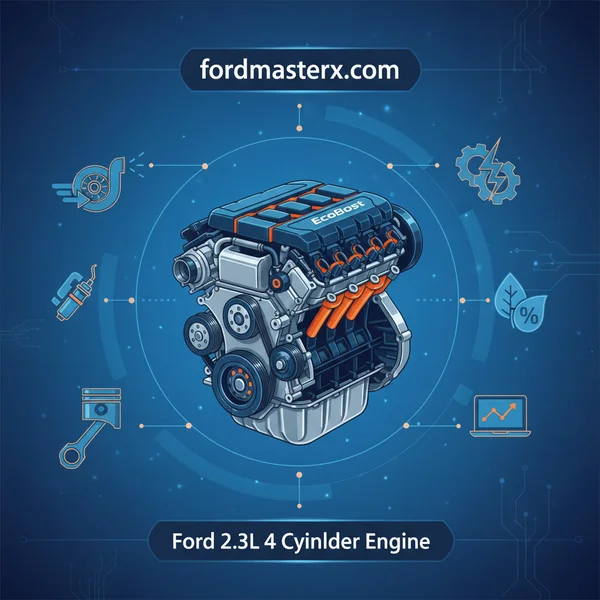
Understanding these specifications is critical because the 2.3L is no longer a one-size-fits-all engine. Depending on the model year and vehicle, you might be dealing with a naturally aspirated Lima block or a sophisticated twin-scroll turbocharged EcoBoost monster. Knowing these differences helps you make better decisions regarding tuning potential, maintenance schedules, and long-term vehicle reliability.
Evolution of the Ford 2.3L: From Lima to EcoBoost
The 2.3L displacement has a long history at Ford, starting with the Lima OHC engine introduced in the 1970s. This early version was famous for its cast-iron block and incredible durability. It was commonly found in the Ford Ranger and older Mustangs. It was not built for high-speed performance but for longevity and ease of repair. It set the standard for Ford using 2.3 liters as a sweet spot for balanced four-cylinder displacement.

The Shift to Modern EcoBoost Technology
In 2015, Ford reinvented the 2.3L using the EcoBoost platform. This was not just a simple upgrade; it was a complete ground-up redesign. Moving from cast iron to a high-strength aluminum block and head, Ford integrated gasoline direct injection (GDI) and advanced turbocharging. This shift allowed the engine to produce double the horsepower of its predecessors while meeting much stricter modern emissions standards.
- The Lima (1974–1997): Simple, heavy, and extremely reliable for high-mileage utility use.
- The Duratec 23 (2000s): A Mazda-derived design focused on smoothness and fuel efficiency in sedans like the Fusion.
- The EcoBoost 2.3L (2015–Present): A performance-oriented engine featuring a twin-scroll turbocharger and forged internal components.
The modern iteration is part of the Ford Global EcoBoost family. It shares some architectural DNA with the 2.0L EcoBoost but features a longer stroke and a strengthened block to handle higher boost pressures. This evolution represents Ford’s commitment to downsizing engine displacement while increasing power density through smarter engineering.
Technical Specifications and Performance Benchmarks
The modern 2.3L EcoBoost is the version most enthusiasts and buyers care about today. It is built on an all-aluminum block with high-strength cylinder liners and a forged steel crankshaft. The use of a twin-scroll turbocharger is the secret to its performance. This design separates the exhaust pulses, which significantly reduces turbo lag and provides instantaneous torque at low RPMs.
Core Architecture and Engineering
The engineering behind the 2.3L focuses on heat management and structural integrity. Because the turbocharger generates significant heat, Ford utilizes a ladder frame design for the lower block to increase stiffness. This ensures the engine can handle high boost pressures without compromising the internal seals. Additionally, the integrated exhaust manifold helps the turbo spool faster by shortening the distance exhaust gases must travel.
- Displacement: 2,261 cc (2.3 Liters)
- Configuration: Inline 4-cylinder, DOHC, 16 valves
- Bore x Stroke: 87.6 mm x 94.0 mm
- Compression Ratio: 9.5:1 (Turbocharged)
- Induction: Twin-scroll turbocharger with air-to-air intercooler
- Fuel System: High-pressure direct injection (GDI)
- Block/Head Material: Die-cast aluminum alloy
Real-World Performance Output
Performance varies significantly based on the specific vehicle application. In the Ford Mustang EcoBoost, the engine produces roughly 310 horsepower and 350 lb-ft of torque. However, the Focus RS variant was pushed even further, reaching 350 horsepower by utilizing a larger compressor wheel and a unique high-performance cylinder head. In applications like the Ford Ranger and Bronco, the engine is tuned differently to prioritize a broad torque curve for towing and off-roading.
- Mustang EcoBoost: 310 HP / 350 lb-ft Torque – Optimized for highway cruising and sports car acceleration.
- Focus RS: 350 HP / 350 lb-ft Torque – Features a high-tensile alloy head to withstand extreme track heat.
- Ford Ranger / Bronco: 270-300 HP / 310-325 lb-ft Torque – Tuned for low-end grunt and heavy load management.
- Explorer: 300 HP / 310 lb-ft Torque – Balanced for family hauling and smooth power delivery.
What makes this engine stand out is its torque-to-displacement ratio. You get maximum torque as low as 2,500 to 3,000 RPM. This means you don’t have to “scream” the engine to redline to get the vehicle moving, which improves both the driving experience and the engine’s lifespan during daily use. The direct injection system also ensures that every drop of fuel is used efficiently, providing a level of precision that older port-injected 4-cylinders simply cannot match.
Reliability Analysis and Common Mechanical Issues
Is the Ford 2.3L engine reliable? For the most part, yes, but it is not without its specific quirks. While the architecture is robust, the shift toward high-pressure turbocharging and direct injection means that owners must be more proactive with maintenance than they might have been with older, naturally aspirated designs. Understanding these potential weak points can help you stay ahead of costly repairs.
The EcoBoost Carbon Buildup Concern
Because the modern 2.3L EcoBoost utilizes Direct Injection (DI), fuel is sprayed directly into the combustion chamber rather than over the intake valves. In traditional engines, the fuel acts as a cleaning agent for the valves; in the 2.3L, oil vapor and carbon can bake onto the intake valves over time. If left unchecked, this can lead to restricted airflow, rough idling, and a noticeable dip in fuel economy. Many long-term owners recommend the following to mitigate this:
- Use high-quality synthetic oil: This reduces the amount of vapor passing through the PCV system.
- Install a catch can: This aftermarket modification helps trap oil particles before they reach the intake.
- Top-tier fuel: While it doesn’t wash the valves, high-quality fuel keeps the injectors themselves clean.
Head Gasket and Cooling System Integrity
One of the most publicized issues in the 2.3L family involved the early Ford Focus RS models. A manufacturing error led to the installation of the wrong head gaskets, causing coolant consumption and white smoke from the exhaust. While Ford addressed this through an extensive service campaign, it highlighted the importance of monitoring the cooling system. In high-mileage Explorer and Ranger models, keep an eye on the water pump and coolant hoses, as the turbocharger generates significant heat that can stress plastic components over time.
Vehicle Applications and Comparison Across Generations
The “2.3L” badge has appeared on Ford trunks for decades, but the technology has changed dramatically. The engine has evolved from a simple, low-output workhorse into a sophisticated power plant capable of rivaling much larger V6 and even V8 engines in terms of torque and drivability.
From the Ranger to the Mustang: A Versatile Workhorse
Ford has successfully “right-sized” this engine to fit almost every segment of their lineup. Its versatility is its greatest strength. In the Ford Mustang, the 2.3L provides a lightweight front end that improves handling while still delivering over 310 horsepower. In the Ford Ranger, the engine is tuned differently, emphasizing low-end torque (310 lb-ft) to ensure the truck can tow and haul without feeling strained. You will also find this engine powering the Ford Explorer, where it serves as a fuel-efficient alternative to the traditional V6 while offering superior pulling power for family adventures.
Comparing the Lima 2.3L vs. the Modern EcoBoost
It is important to distinguish the modern EcoBoost from the legendary “Lima” 2.3L engine used in the 80s and 90s. While they share a displacement, their philosophies are worlds apart:
- The Lima 2.3L: Known for being “unkillable,” this SOHC engine was simple and durable but produced very little power. It was the definition of “slow and steady.”
- The Modern EcoBoost: Uses dual overhead cams (DOHC), twin-independent variable cam timing (Ti-VCT), and a twin-scroll turbocharger. It produces triple the horsepower of its ancestor but requires much tighter tolerances and higher-grade fluids.
- Performance Potential: While the Lima was a commuter’s friend, the EcoBoost is a tuner’s dream, with the Focus RS variant pushing a staggering 350 horsepower from the factory.
Final Verdict on the Ford 2.3L Engine
The Ford 2.3L 4-cylinder engine is a testament to how far internal combustion technology has come. It successfully bridges the gap between fuel efficiency and genuine performance, making it a viable choice for sports car enthusiasts and truck owners alike. While the modern EcoBoost versions require diligent maintenance—particularly regarding oil changes and cooling system checks—the reward is a punchy, responsive driving experience that defies its small displacement.
If you are looking at a used 2.3L vehicle, always verify that the TSBs (Technical Service Bulletins) have been addressed and check for any signs of carbon buildup. With the right care, this engine is capable of providing many years of reliable service. Ready to see what all the hype is about? Get behind the wheel of a 2.3L-equipped Ford and feel the turbo boost for yourself!
💬 Quick Questions & Answers
Which Ford cars use the 2.3L EcoBoost?
It is currently found in the Mustang, Explorer, Ranger, Bronco, and previously the Focus RS.
Is the 2.3L EcoBoost engine reliable?
Generally yes, though early models had specific head gasket concerns and direct-injection carbon issues.
How much horsepower does the 2.3L EcoBoost make?
Output varies by vehicle model, typically ranging from 270 to 350 horsepower.
Does the 2.3L engine require premium fuel?
While most run on regular, premium fuel is highly recommended for achieving maximum rated performance.
What is the ‘Lima’ engine?
It is a vintage, naturally aspirated overhead cam engine used from the 1970s through the early 2000s.
❓ Frequently Asked Questions
What is the difference between the 2.3L EcoBoost and 2.3L Duratec?
The Duratec is a naturally aspirated engine based on a Mazda design used in the mid-2000s, while the EcoBoost features a turbocharger and direct injection for significantly higher power output.
Are there head gasket issues with the 2.3L engine?
Only the 2016-2017 Focus RS models were widely known for a specific head gasket manufacturing defect, which Ford addressed through a comprehensive service action and recall.
What is the average lifespan of a Ford 2.3L engine?
With proper maintenance and frequent oil changes, these engines typically last between 150,000 and 200,000 miles before requiring major internal work.
Why is carbon buildup an issue in the 2.3L EcoBoost?
Because it uses direct injection, fuel does not wash over the intake valves to clean them, leading to oil vapor ‘bake-on’ that can restrict airflow over time.
How does the 2.3L compare to the 2.7L EcoBoost V6?
The 2.3L is lighter and more fuel-efficient for daily driving, while the 2.7L V6 offers smoother power delivery and higher maximum towing capacities in trucks and SUVs.
Can the 2.3L EcoBoost be easily tuned for more power?
Yes, many owners use aftermarket ECU flashes to safely gain 30-50 horsepower, as the engine’s forged connecting rods and robust block handle boost well.