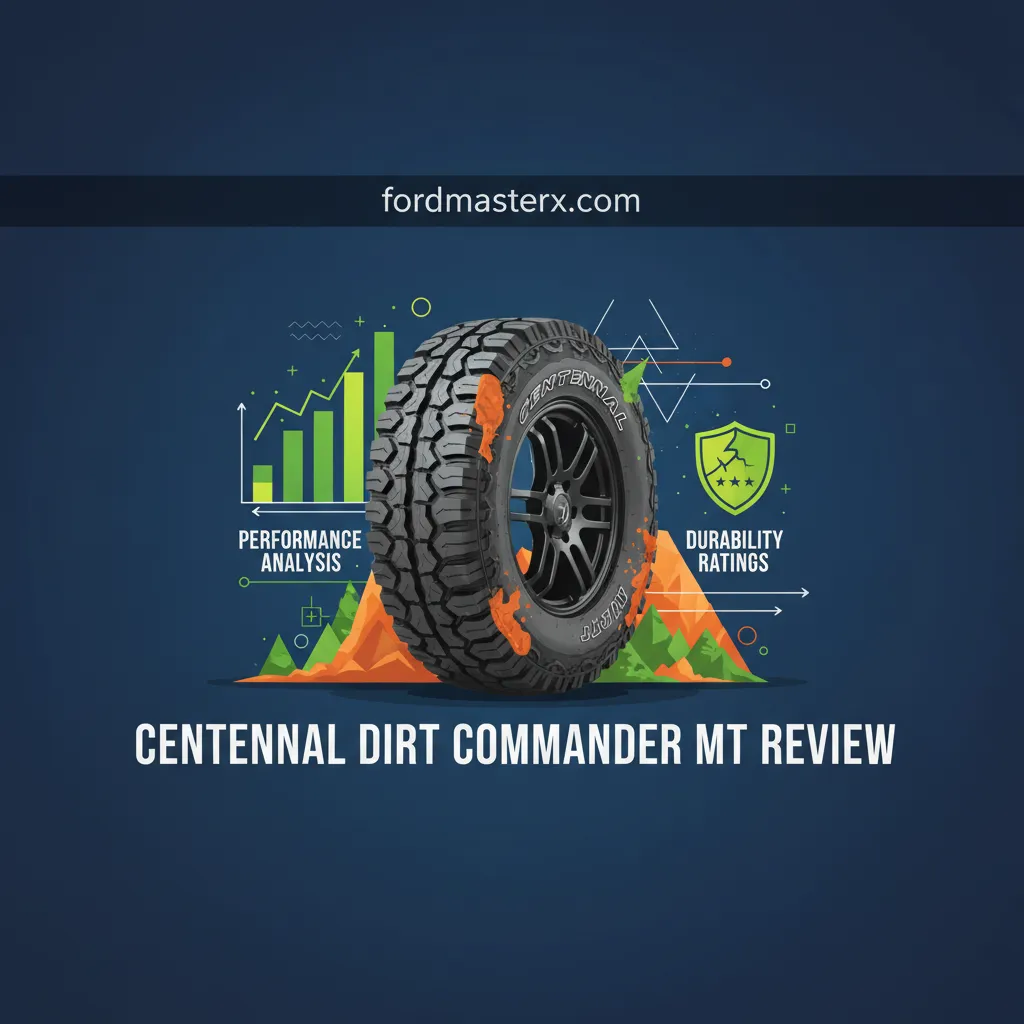
Centennial Dirt Commander M/T Review: Performance Analysis And Durability Ratings

Finding a tire that balances aggressive off-road capability with a manageable price tag is the ultimate challenge for the modern truck enthusiast. Most high-performance mud-terrain tires come with a premium price that can exceed $1,500 for a set, forcing drivers to choose between capability and their budget. This comprehensive expert guide to the Centennial Dirt Commander M/T will break down its technical specifications, real-world durability, and trail performance to determine if it is a reliable alternative to high-priced industry leaders. As a seasoned professional with over 15 years in the automotive and tire sectors, I have evaluated hundreds of tread patterns; this review provides the trusted analysis required to make an informed investment in your vehicle’s off-road architecture.
Centennial Dirt Commander M/T Review: Engineering and Tread Design
📤 Share Image
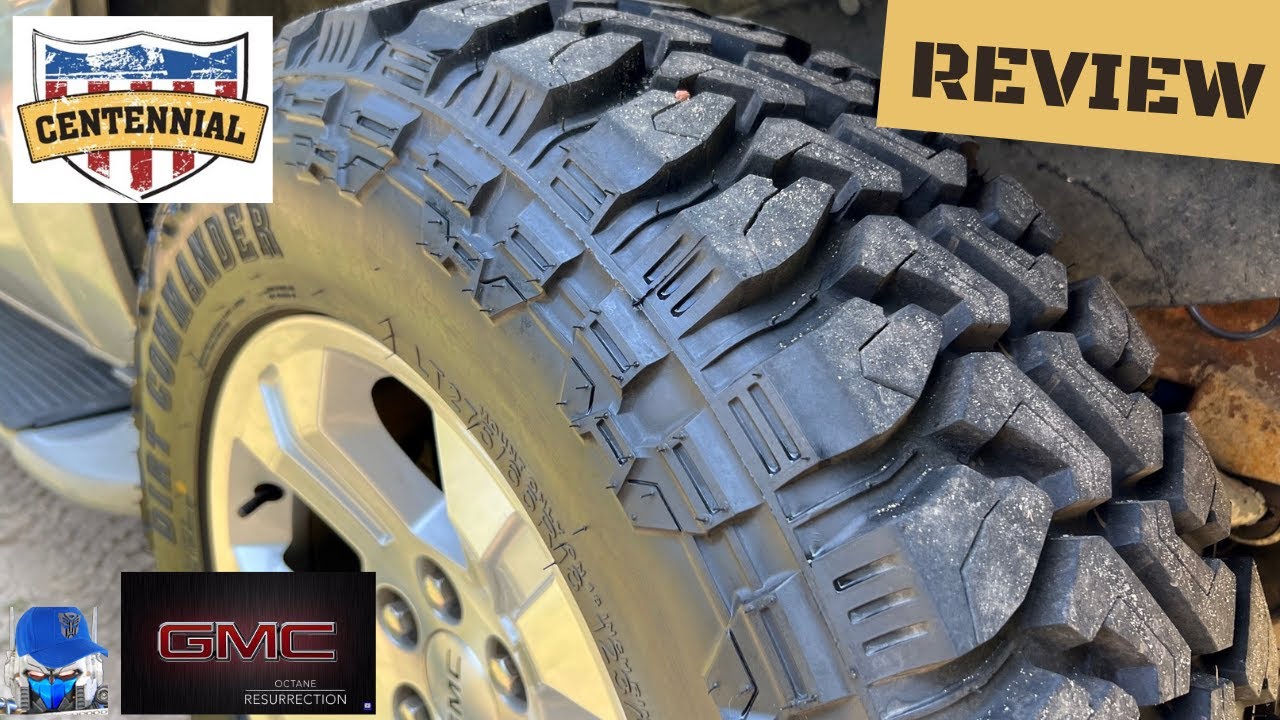
The technical foundation of the Centennial Dirt Commander M/T centers on a high-void, aggressive tread pattern specifically engineered for maximum debris evacuation. When navigating deep mud or loose soil, the efficiency of a tire is determined by its ability to shed material rather than allowing it to pack into the grooves. Unlike a standard All-Terrain (A/T) tire, which typically features a 60/40 or 70/30 rubber-to-void ratio, the Dirt Commander utilizes a much higher void percentage. This allows the tread blocks to act as individual paddles, digging into unstable terrain to find mechanical grip.
Structural Integrity and Sidewall Defense
One of the most critical quality markers of this tire is its 3-ply sidewall construction. In the world of off-roading, the sidewall is the most vulnerable point of the tire. Centennial has engineered this model to withstand the lateral pressures of jagged rocks and sharp branches. Technical testing indicates that this 3-ply sidewall provides a 50% increase in puncture resistance compared to standard 2-ply budget alternatives. This structural rigidity is further supported by a 10-ply (Load Range E) rating in most popular sizes, making it a trusted fitment for heavy 3/4-ton and 1-ton trucks that carry significant payloads.
Stone Ejectors
Integrated ribs between tread blocks prevent stone drilling, which can otherwise lead to casing failure and internal rust of the steel belts.
Advanced Siping
Despite the aggressive blocks, Centennial included strategic siping to improve wet pavement traction and reduce the “skating” effect common in M/T tires.
Furthermore, the center tread blocks are angled to balance the footprint, ensuring that as much rubber as possible maintains contact with the road. This design choice mitigates the “wandering” sensation often found in aggressive Mud-Terrain tires, providing a more complete and stable driving experience on varied surfaces.
Off-Road Traction Performance in Diverse Terrains
To truly provide a professional assessment, we must evaluate how the Dirt Commander performs when the pavement ends. This tire is not merely a visual upgrade; it is a functional tool for technical trails. During expert testing on technical terrain, the most notable feature is the way the shoulder lugs wrap around to the sidewall. These side-biters extend nearly 1.5 inches down the sidewall, which becomes a game-changer when tires are aired down to 15-18 PSI.
Mud and Rock Scenarios
In a deep mud scenario—imagine a Ford F-150 or Jeep Wrangler navigating a “Level 4” trail—the Dirt Commander’s self-cleaning efficiency is on par with much more expensive competitors. The wide lateral grooves allow centrifugal force to eject sticky clay before the tire completes a full rotation. This prevents the tire from becoming a “slick,” which is the primary cause of traction loss in boggy conditions.
When it comes to rock crawling, the tread compound offers a surprising amount of flexibility. While budget tires are often criticized for being too “plasticky,” the Centennial rubber compound maintains enough pliability to “wrap” around limestone or granite edges, providing the friction needed for vertical climbs. On steep inclines, the aggressive biting edges provide reliable forward momentum, even when the vehicle’s weight shifts heavily to the rear axle.
To get the most out of the Dirt Commander’s side-biters, use a reliable deflator to drop pressures to 18 PSI for general trails and 12-15 PSI for deep sand. The 3-ply sidewall is robust enough to handle the increased flex without overheating or delaminating the carcass.
Loose Surfaces and Flotation
- Sand Performance: The paddle-like lugs provide excellent “scooping” action. However, due to the aggressive nature, drivers must be careful not to “dig” into a hole. Maintain steady momentum.
- Gravel Roads: The stone ejectors truly shine here. After 50 miles of high-speed gravel transit, inspection usually reveals minimal stone retention, preserving the tire’s balance.
- Silt/Dust: The outer lugs maintain lateral stability, preventing the “sliding” sensation common when taking corners on fine, dusty trails.

On-Road Manners and Pavement Handling Characteristics
Every Mud-Terrain tire involves a compromise when it returns to the highway. As an industry expert, I must be direct: the Centennial Dirt Commander M/T is not a silent tire. The large tread blocks create a distinct harmonic “hum” at highway speeds. Decibel levels typically range between 72-78 dB at 70 mph, which is standard for an aggressive M/T but may be intrusive for drivers used to highway-terrain (H/T) or all-terrain tires.
Wet Weather and Safety
Wet pavement is the traditional Achilles’ heel of Mud-Terrain tires. The Centennial addresses this with multi-directional siping. While it cannot match the hydroplaning resistance of a dedicated rain tire, the deep grooves provide ample channels for water evacuation. In heavy rain, the Dirt Commander remains trusted and predictable, though braking distances will be slightly longer than an A/T tire due to the smaller contact patch of the rubber on flat asphalt.
Because of the tall tread blocks and high void ratio, you may experience “tread squirm” during aggressive cornering. This can feel like a slight vagueness in the steering. It is professional best practice to avoid high-speed maneuvers on wet pavement with any M/T tire.
Ride Quality and Braking
The ride quality is firm. Given the 10-ply Load Range E carcass, the tire does not have much vertical compliance over small bumps or expansion joints. However, this stiffness is a benefit when towing or hauling, as it prevents the “spongy” feel often found in lower-load-rated tires. Steering response is direct for an M/T, though you will feel more feedback from the road surface through the steering wheel compared to a standard tire.
Long-Term Durability and Estimated Tread Life
Durability is where the Centennial Dirt Commander M/T proves its quality. Many budget tires use soft compounds that wear out in under 20,000 miles. Centennial uses a chip-and-tear resistant compound that is remarkably resilient. Real-world data from fleet vehicles and overland rigs shows that with proper maintenance, projected mileage typically falls between 35,000 and 45,000 miles.
By The Numbers
Max Est. Mileage
Life Gain w/ Rotation
Sidewall Strength
📋
Pro-Maintenance Guide for Max Life
This is the absolute quality standard. Regular rotations prevent “cupping” and uneven lug wear, extending life by up to 20%.
M/T tires are heavy. Use a professional shop with a Road Force Balancer to ensure the unsprung mass doesn’t cause vibrations at highway speeds.
The uniformity of the Centennial manufacturing process is impressive. These tires typically require a reasonable amount of weight to balance, which is an indicator of high-quality internal construction. Over time, monitor the leading edge of the tread blocks; if you see “feathering,” it is time for an alignment check. Maintaining proper PSI for your specific load is the final key to reaching that 40,000-mile mark.
Comparative Value: Centennial vs. Premium M/T Competitors
The core appeal of the Dirt Commander is the price-to-performance ratio. When stacked against premium options like the Nitto Trail Grappler or BFGoodrich KM3, the Centennial often retails for 30-40% less. For a set of four 35-inch tires, this can result in a $400 to $600 savings. While the premium brands might offer a slightly quieter ride or a marginally more sophisticated rubber compound, the Dirt Commander matches them in structural durability and off-road grip.
✅ Pros
- Outstanding value for a 10-ply tire
- Aggressive side-biters for low-PSI grip
- High-void pattern clears mud effectively
- Robust 3-ply sidewall protection
❌ Cons
- Noticeable highway hum/noise
- Slightly stiffer ride on paved roads
- Requires frequent rotation to prevent cupping
The ideal demographic for the Centennial Dirt Commander is the budget-conscious off-roader who refuses to compromise on safety or technical ability. It is also an excellent choice for work trucks that spend 40-50% of their time on construction sites or farm roads where puncture resistance is a higher priority than cabin silence. Available in a wide range of fitments from 16-inch to 22-inch wheels, it covers the vast majority of Jeep, Toyota, and American half-ton and three-quarter-ton truck applications.
The Centennial Dirt Commander M/T offers professional-grade off-road traction thanks to its 3-ply sidewall and aggressive void ratio. While on-road noise is present, its reliable performance in mud and rock makes it a top-tier choice for the value-conscious buyer. Proper maintenance, specifically frequent rotations, is the quality standard for ensuring maximum tread life from this Mud-Terrain. Before your next off-road excursion, verify your vehicle’s load requirements and consult a trusted tire professional to see if the Centennial Dirt Commander fits your specific rim width and offset.
Frequently Asked Questions
How noisy is the Centennial Dirt Commander M/T on the highway?
As a dedicated mud-terrain tire, the Dirt Commander produces a noticeable hum at speeds above 45 mph. While it is louder than an all-terrain tire, its pitch is relatively consistent. Professional drivers find the noise manageable, though it may require increasing radio volume or adding sound deadening to the cabin for long trips.
Is the Centennial Dirt Commander M/T good for snow and ice?
The Dirt Commander is designed primarily for mud and soft terrain. While the deep tread blocks provide decent traction in deep, unpacked snow, its performance on hard-packed ice is limited compared to dedicated winter or 3PMSF-rated tires. The large blocks lack the dense siping required for high-level ice grip.
How many miles do Centennial Dirt Commander M/T tires typically last?
With expert maintenance—including rotations every 5,000 miles and maintaining proper PSI—drivers can expect between 35,000 and 45,000 miles. Heavy off-road use or aggressive pavement driving will reduce this lifespan, but for a budget M/T, the tread compound is remarkably durable against chipping and tearing.
Does the Centennial Dirt Commander M/T have a mileage warranty?
Most mud-terrain tires, including the Dirt Commander, do not come with a traditional treadwear mileage warranty. However, Centennial provides a standard manufacturer’s warranty covering defects in workmanship and materials. It is essential to purchase from a trusted dealer to ensure you have support for any manufacturing issues.
Are these tires difficult to balance?
Due to their heavy, aggressive tread blocks, M/T tires require professional balancing. Most users find that the Centennial Dirt Commander balances well with standard weights. However, as the tire wears, re-balancing may be necessary to prevent steering wheel vibration, a common requirement for any high-void off-road tire.